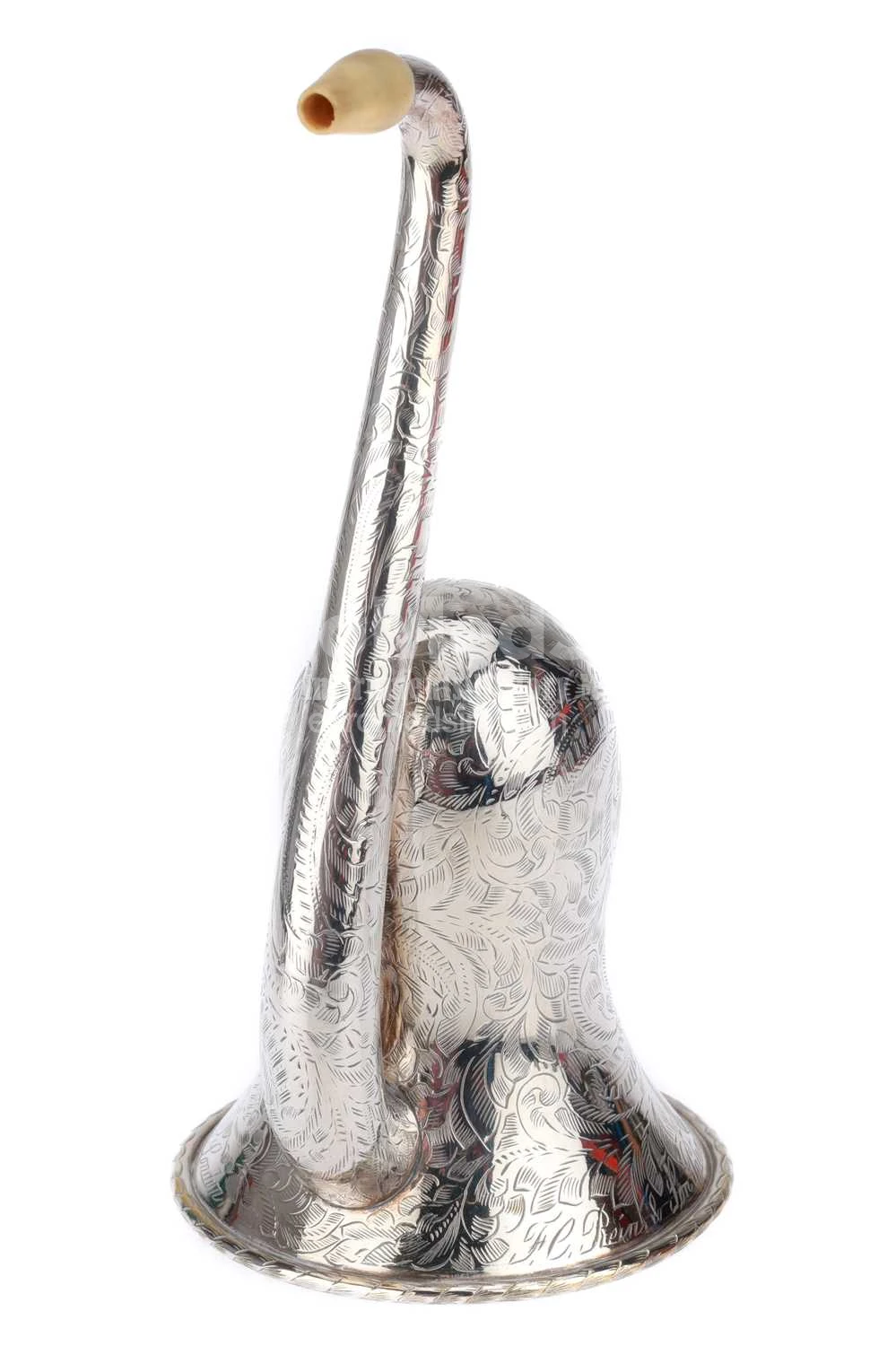
Rein and Sons Parabolic Bell Hearing Aid
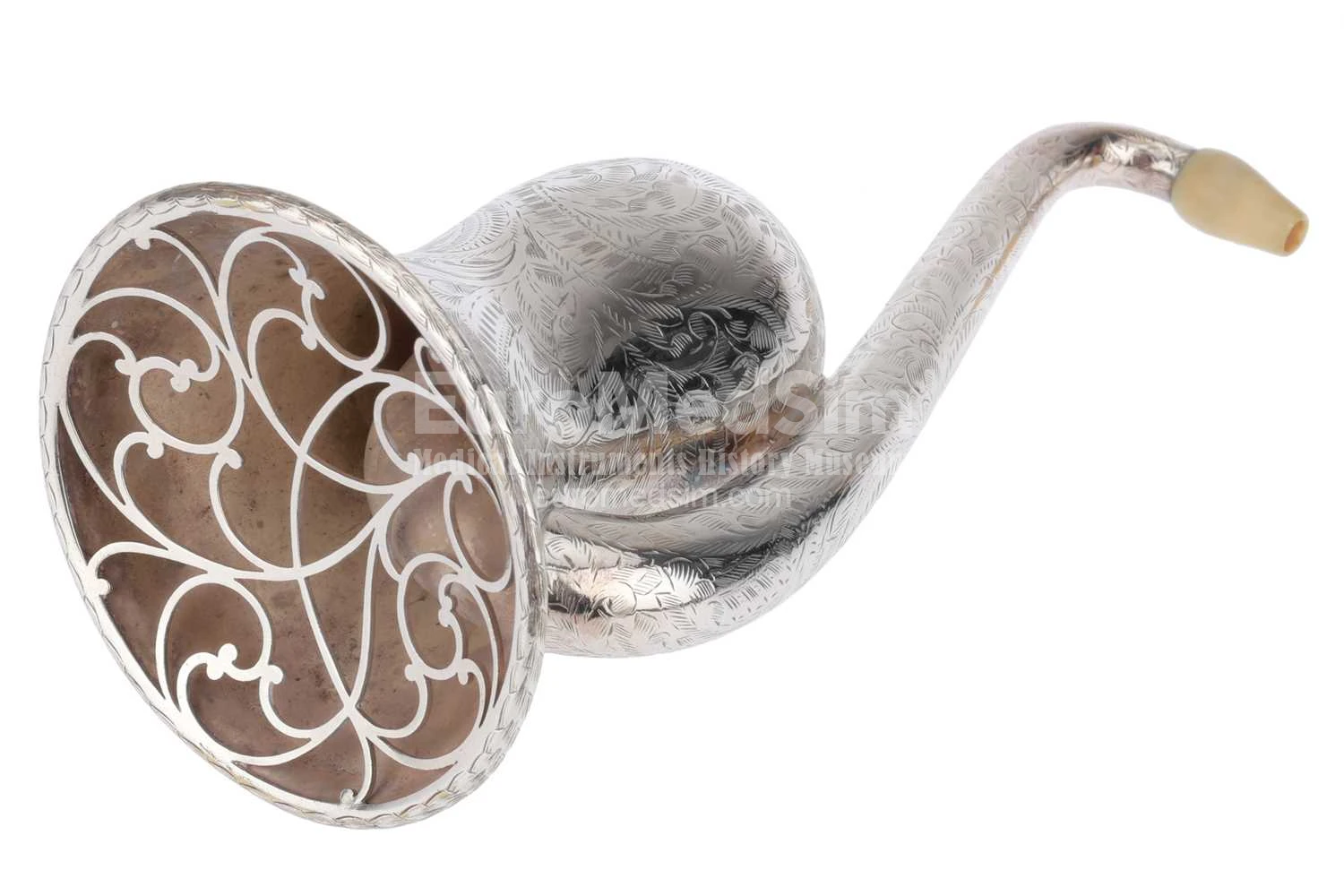
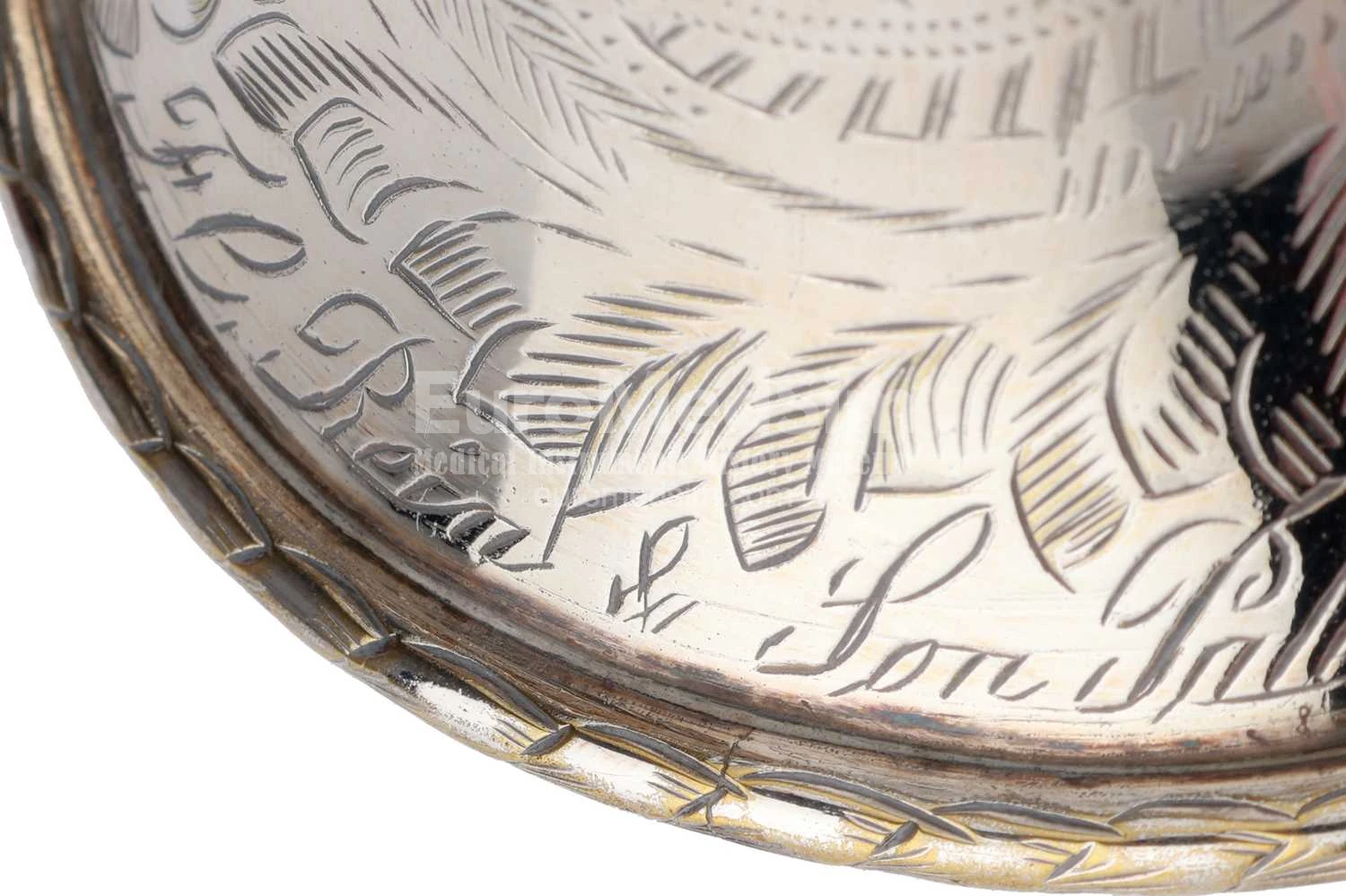
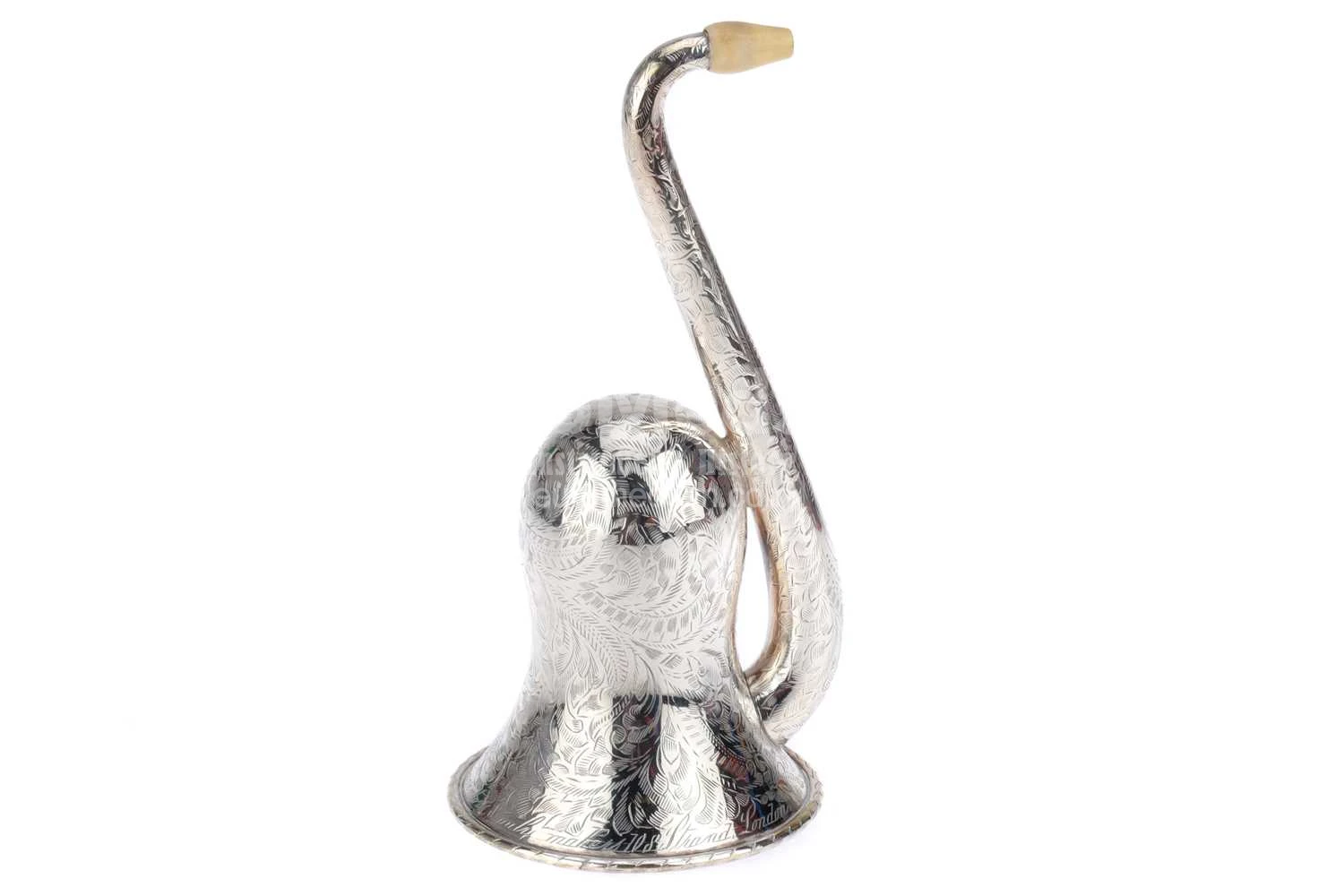
An elaborately-engraved plated white metal Rein & Sons Parabolic Bell Ear Trumpet Hearing Aid. English, ca. 1860. The bell-shaped earpiece ('London Dome') is coated in shiny white metal and adorned with intricate floral patterns across its entire surface. The curved earpiece is topped with a removable ivory earpiece (with a tiny crack). The opening of the wide trumpet part is featured by a decorative grille, also adorned with floral patterns. An inscription is engraved along the rim of the bell: F C Rein & Son, Patentees, sole inventors & only makers, 108, Strand, London.
The parabolic bell shape is not merely decorative. The ear trumpet functions as a parabolic reflector, projecting sound energy onto a focal point — in this case, enter opening of the curved tube located inside of the bottom of the bell, leading to the external ear and further — to the eardrum — through refraction and reflection, enabling effective amplification while keeping the device relatively compact.
Olive Earpiece
The detachable earpiece, mounted over the end of the ear tube, is made of ivory, ensuring comfort, a snug fit, better acoustics, and hygiene.
Metal is cold, hard, and lacks any “elasticity.” Ivory, or horn felt slightly warmer to the touch and could be finely hand-carved—a craftsman could shape the earpiece into a form that fit snugly, yet painlessly, into a specific patient’s ear canal. A tight fit is of fundamental importance: even the slightest gap between the earpiece and the canal wall drastically reduced sound transmission.
Metal, coming into contact with the skull bone, produced parasitic resonances and extraneous sounds. Materials with lower acoustic conductivity—ivory, horn, or ebony—served as a sort of 'isolator,' transmitting only the desired sound signal from the bell without adding extraneous sounds from the instrument’s body.
The ear tips wore out, became contaminated with earwax, and became saturated with skin oils. A removable earpiece made of organic material could be easily replaced separately—without having to replace the entire expensive instrument. Furthermore, metal in the ear canal could injure the delicate skin if handled carelessly, whereas polished bone or horn were significantly gentler.
Ivory was expensive and was seen as a marker of the owner’s wealth—just like the handles of canes or the cutlery of that era. The contrast between the shiny nickel-silver body and the creamy-white olive was intentionally beautiful.
Frederick Charles Rein
The address alone tells a story: the firm was established in 1800 at 108 Strand and became the earliest company known to manufacture hearing aids on a commercial basis — making Rein a name virtually synonymous with acoustic instruments throughout the nineteenth century.
What sets Rein's instruments apart is the tension between utility and vanity. The firm pioneered designs like "acoustic headbands" where the hearing device was concealed within hair or headgear, and hearing aids were also hidden in couches, clothing, and accessories — a drive toward invisibility that was often more about concealing disability from the public than about helping the wearer cope. The parabolic bell, with its ornate engraving, represents the opposite approach: a frankly visible device elevated into an object of craftsmanship and even status.
Frederick Charles Rein (ca. 1812-1896) was born in Leipzig, moved to London in the 1830s, opened an acoustic instrument shop on the Strand which he termed “Paradise for the Deaf,” and won a prize medal, the first of many, at the London Crystal Palace Exhibition of 1851. The firm became C. Rein & Son Rein in 1867. The firm continued manufacturing until 1963, making it both the first and last company of its kind.
Reference Object
Science Museum, London. Silver-plated ear trumpet hearing aid, with ivory earpiece and ornate decoration, made by F. C. Rein & Son, London, England, 1850-1900: collection.sciencemuseumgroup.org.uk/objects/co77857/ear-trumpet
National Museum of American History, Washington, DC, USA. Patented silver ear trumpet made by F. C. Rein & Son, 108 The Strand, London, England: https://americanhistory.si.edu/collections/object/nmah_737480