
Collection7 results
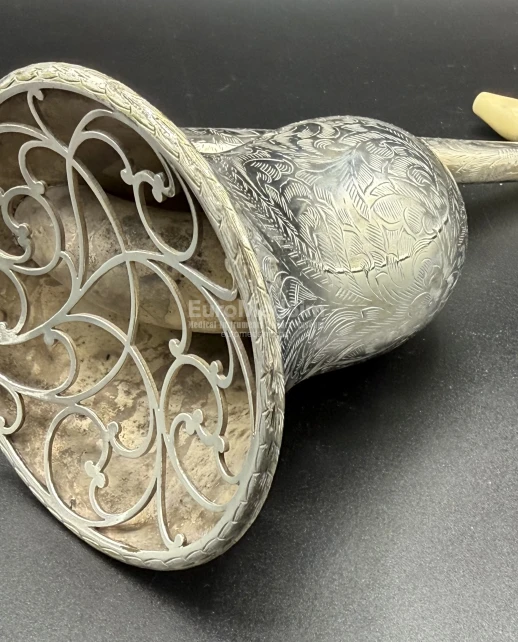
England , 1865
An elaborately-engraved silver-plated F.C.Rein & Son London Dome Hearing Aid. English, ca. 1865, engraved: 'F. C. Rein & Son Patentees, sole inventors, & only makers, 108 Strand, London.', ca. 20 cm, with ivory earpiece.
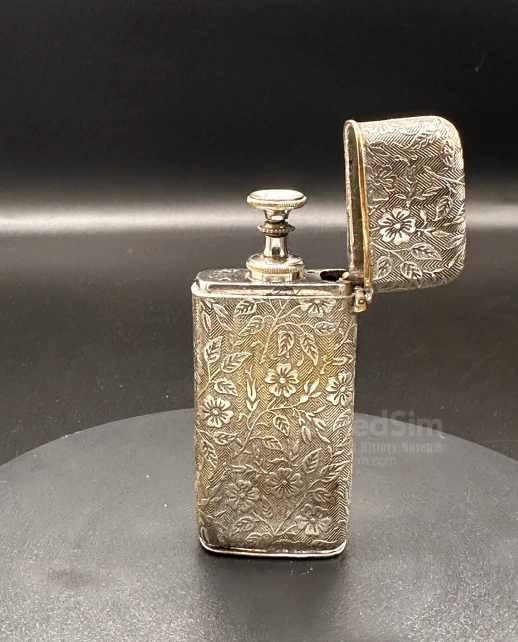
USA , 1901
Hypodermic Pravaz syringe in a rich floral ornamented metal case with an inscription on the bottom "T.A.M. Ear & Throat Class. 1901"
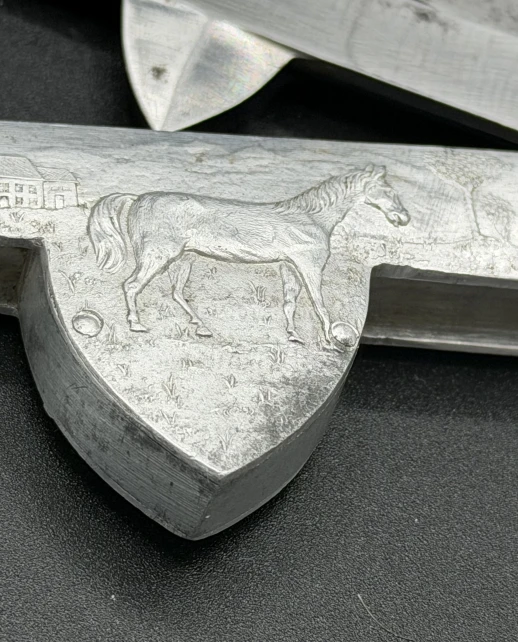
France , 1890
Veterinary folding multi-blade fleam with embossed aluminium scales (c. 1890–1910). Produced by Brene Guillaumot et fils (Nogent region, France), this four-blade folding instrument represents the final generation of veterinary bloodletting tools. It features Art Nouveau embossed aluminum scales depicting pastoral scenes of horses and cattle. While the trademark displays Napoleon III’s Legion of Honor, the use of industrial aluminum and the "Déposé" mark date the piece to the late Belle Époque. Origin: Damremont/Ney-l'Évêque, France.
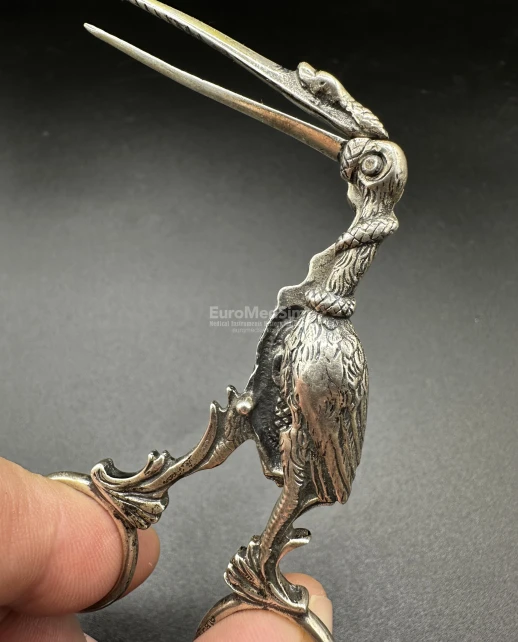
Germany , 1800
A umbilical clamp in the shape of a stork made of 835 silver. Inside the stork is a swaddled baby, which becomes visible when the handles are opened. Used by the midwifes in 19. century to compress and bind the umbilical cord.
England , 1880
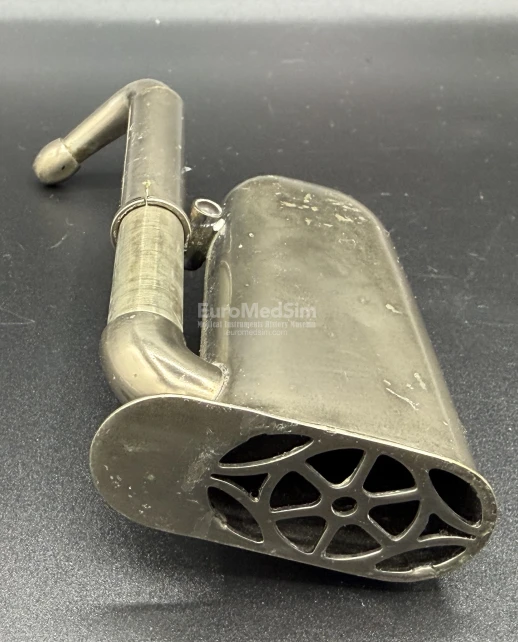
A nickel-plated brass Hawksley-Type сompact ear trumpet hearing aid, with telescopic earpiece-tube and decorative grille. Length 13,5cm. England, c.1880.
France , 1880
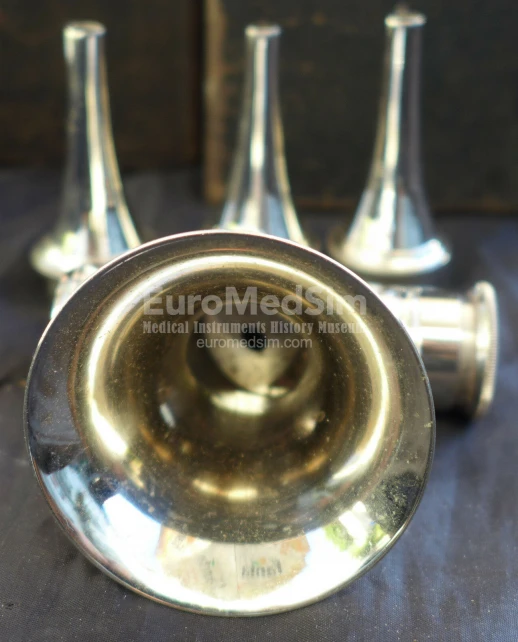
Bruton's otoscope with 3 mirrors (speculi auris) in a box. Manufacturer: PELLETIER Ainé, Paris, France, 19 century. The set is housed in a dark-grey calico box with a spring-loaded clasp, purple velvet interior and a padded lid with an embossed gold logo of the maker.
England , 1880
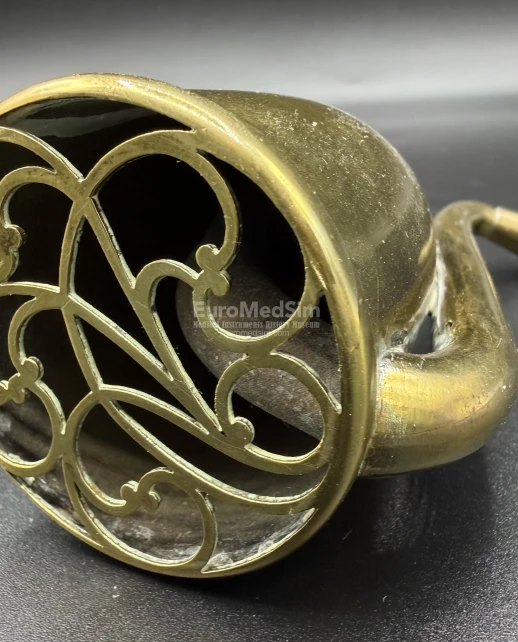
Hearing tube with a parabolic bell, brass. Bell-shaped sound collector (London Dome type) with a U-shaped hearing tube that originates from the bottom of the bell and exits from the side, curving back upward in a U-shape (“swan-shaped”). Decorative floral grill. No manufacturer’s markings. England, ca. 1880.