
Search results14 results
LIBRARY
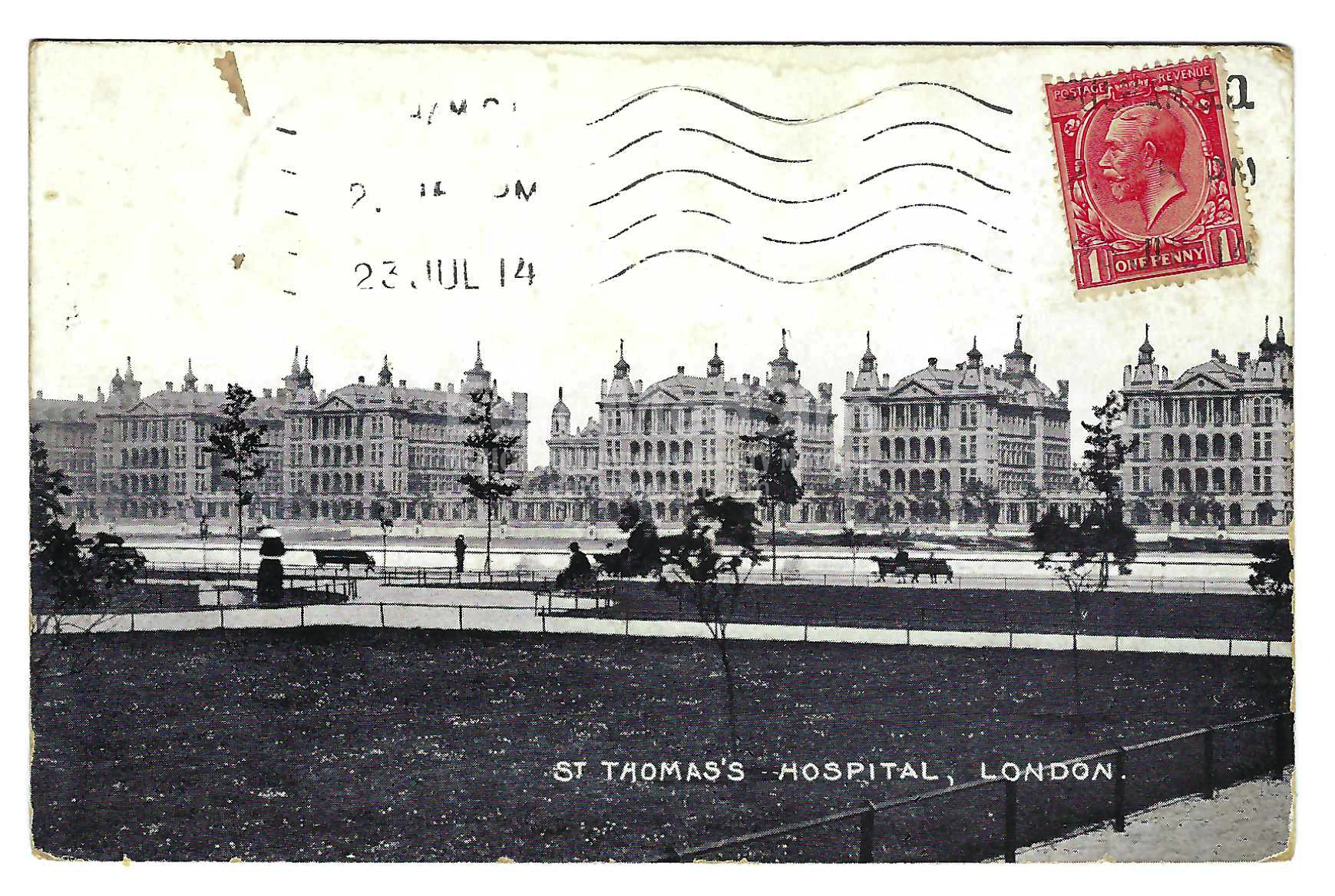
England, 1914
Nightingale, Florence
Black-and-white photographic postcard showing the historic riverside buildings of St. Thomas’s Hospital in London, viewed across the River Thames from the Westminster side, c. 1910–1914; postally used 23 July 1914. Publisher: W. Straker Ltd., London. The British postal cancellation on the front is dated 23 JUL 14. The card was addressed to Bessines in the French département of Haute-Vienne and bears a French receiving postmark apparently dated 24 July 1914. The object is particularly interesting because the postal date places an ordinary tourist postcard within an extraordinary historical moment. 23 July 1914 was the day on which Austria-Hungary delivered its ultimatum to Serbia, one of the decisive events of the July Crisis that led to the First World War.
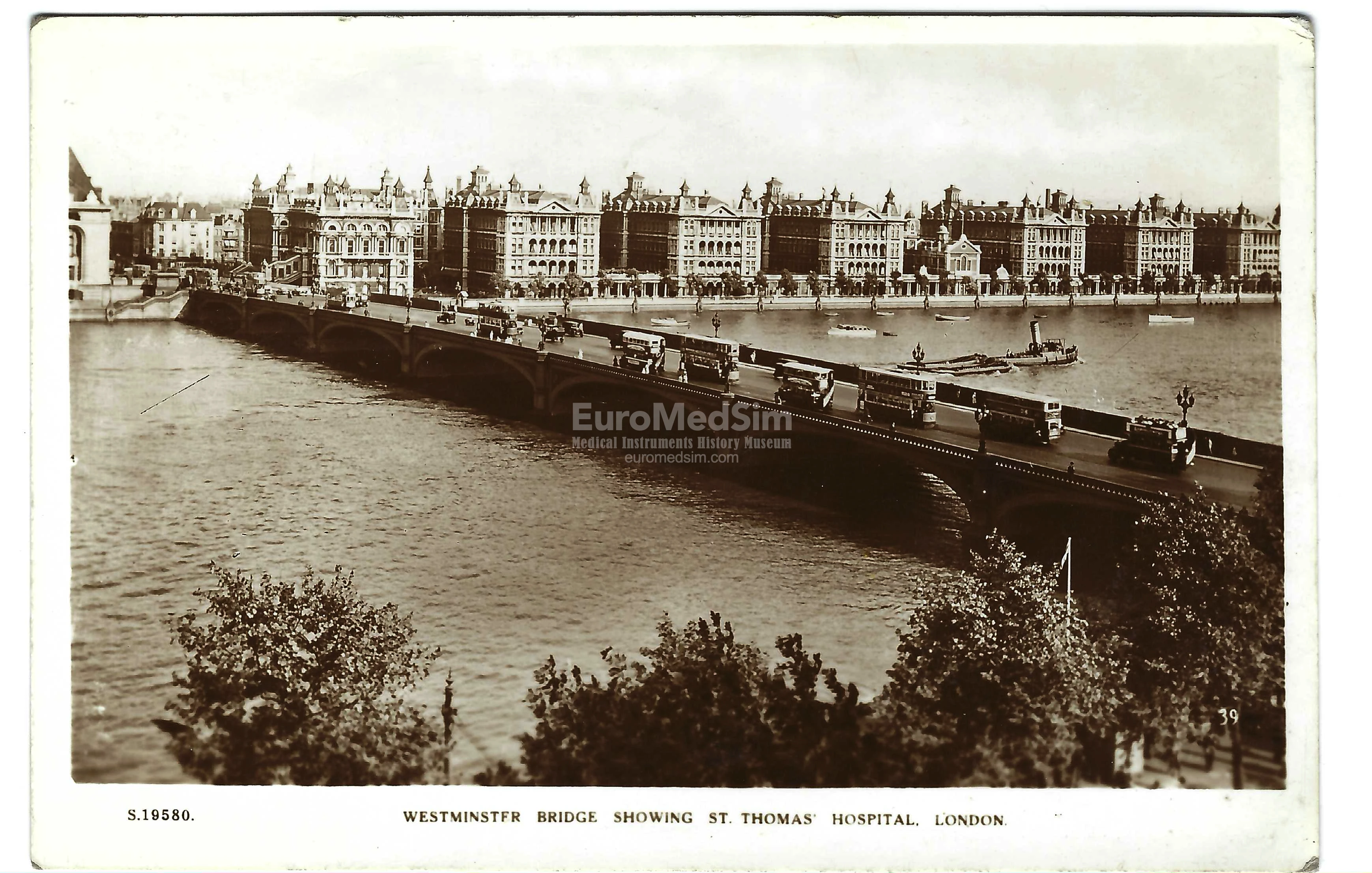
England, 1935
Nightingale, Florence
Westminster Bridge and St. Thomas’ Hospital in London, Scenic photographic postcard, presumably from the 1930s, not mailed. Original title: Westminster Bridge showing St. Thomas’ Hospital, London. Series: Bridge House Real Photo Series (1930s–1940) by publisher W. H. Smith & Son, London.
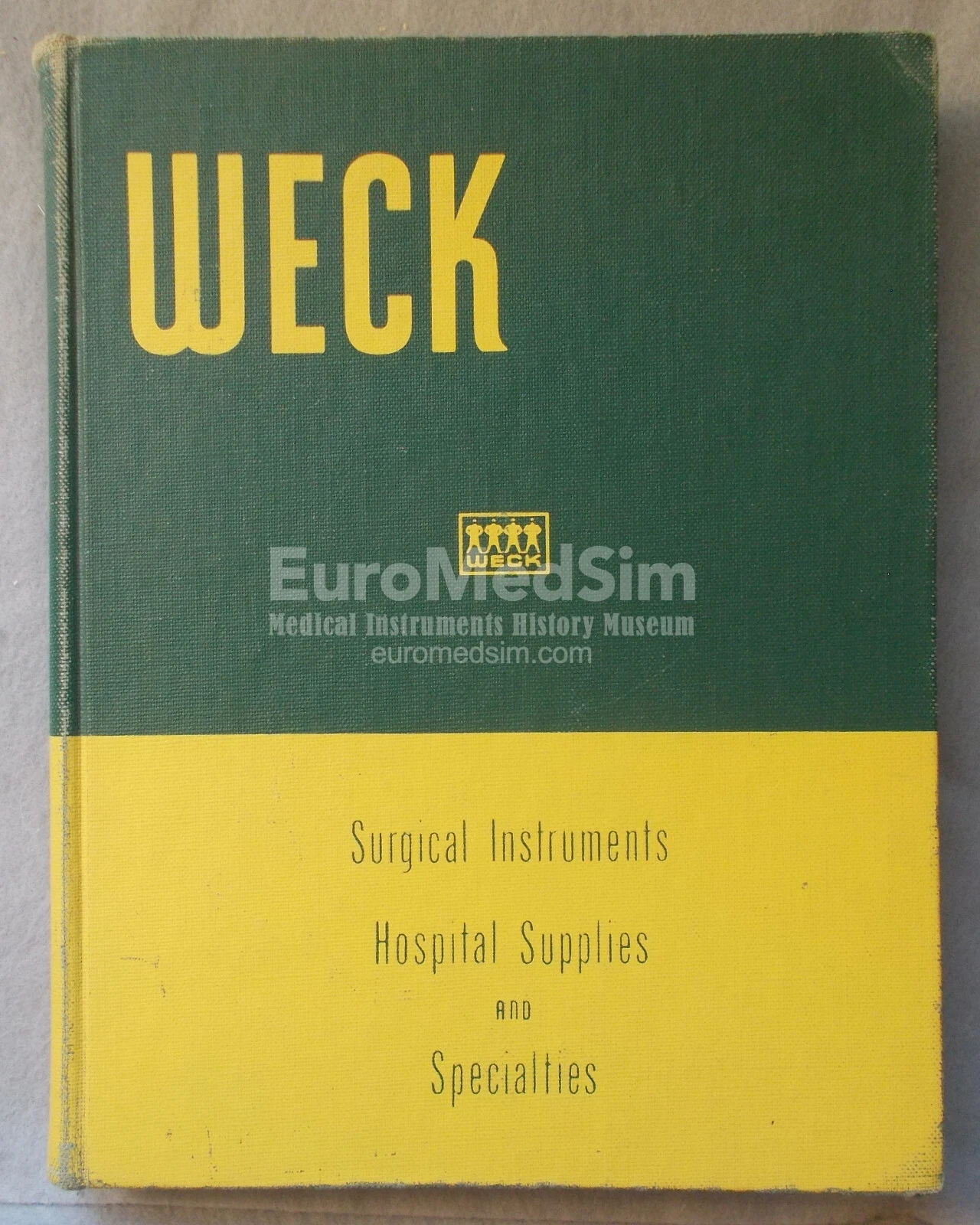
USA, 1961
Weck | Surgical Instruments | Hospital Supplies and Specialties
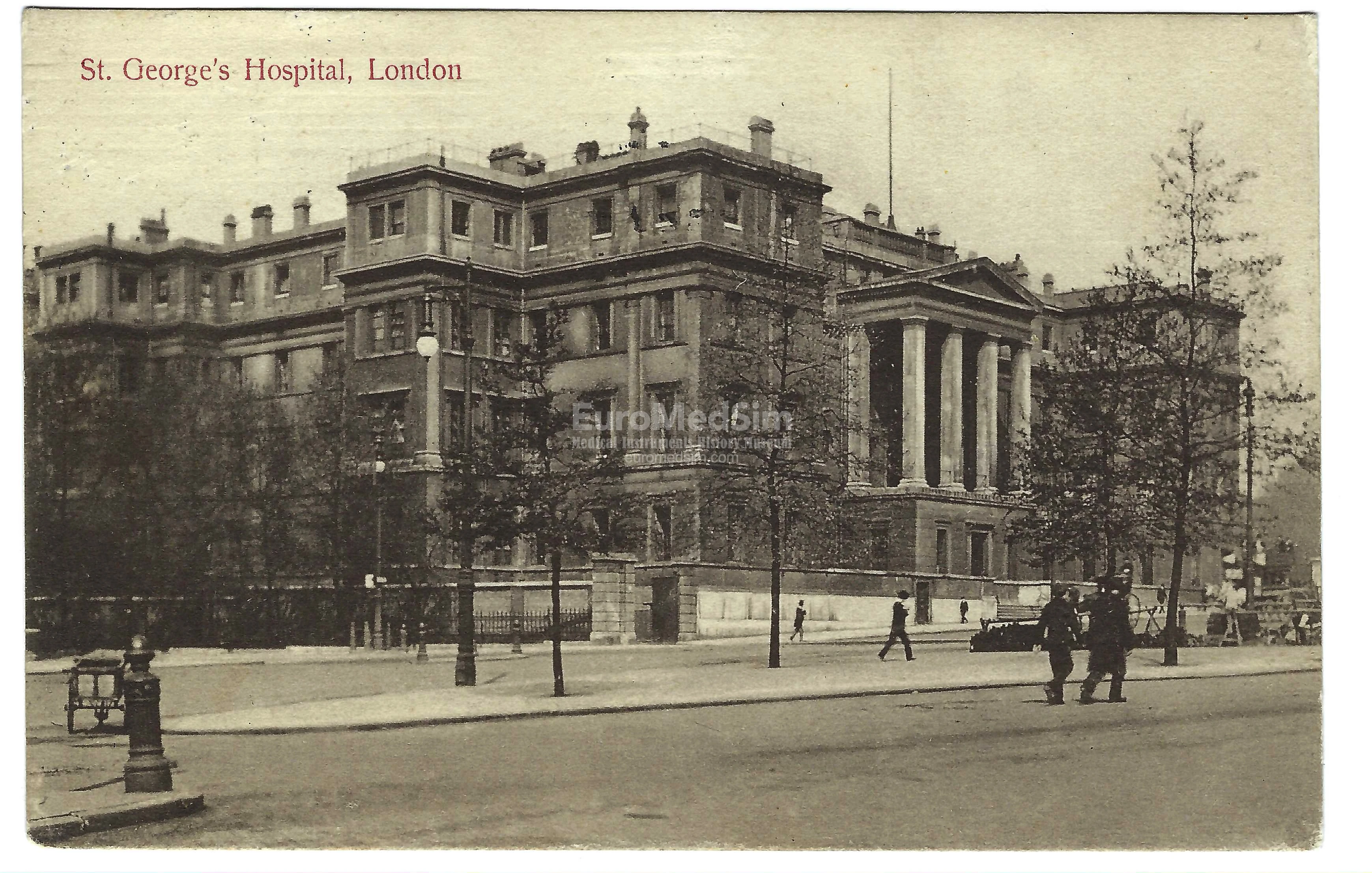
England, 1908
Postcard with depicted St. George’s Hospital in London, sent on April 2, 1908. St. George’s Hospital was founded in 1733 at Lanesborough House near Hyde Park Corner. From its very first decades of operation, the hospital was involved in training doctors: its surgeons and physicians took on apprentices. The medical school was officially established at 1834 and since 1868, it was housed directly within the hospital complex.
England, 1908
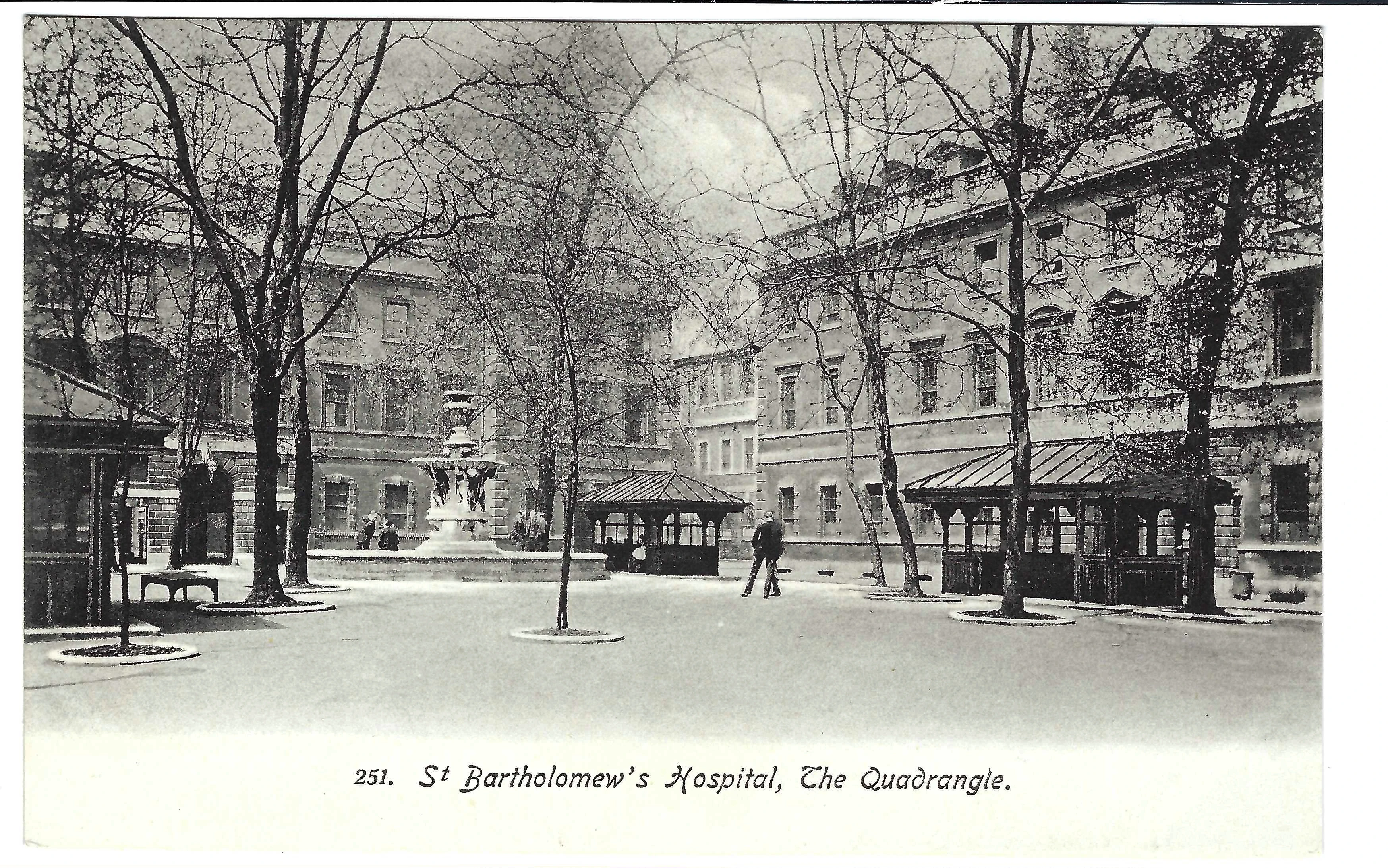
Black-and-white photographic postcard depicting the Quadrangle — the courtyard with the fountain in the centre — of St Bartholomew’s Hospital (also known as St Barts) in West Smithfield, London. Published by Gordon Smith, 15 Stroud Green Road, London N., and printed in Germany. Postcard No. 251. Presumably c. 1905–1910, probably around 1908.
England, 1905
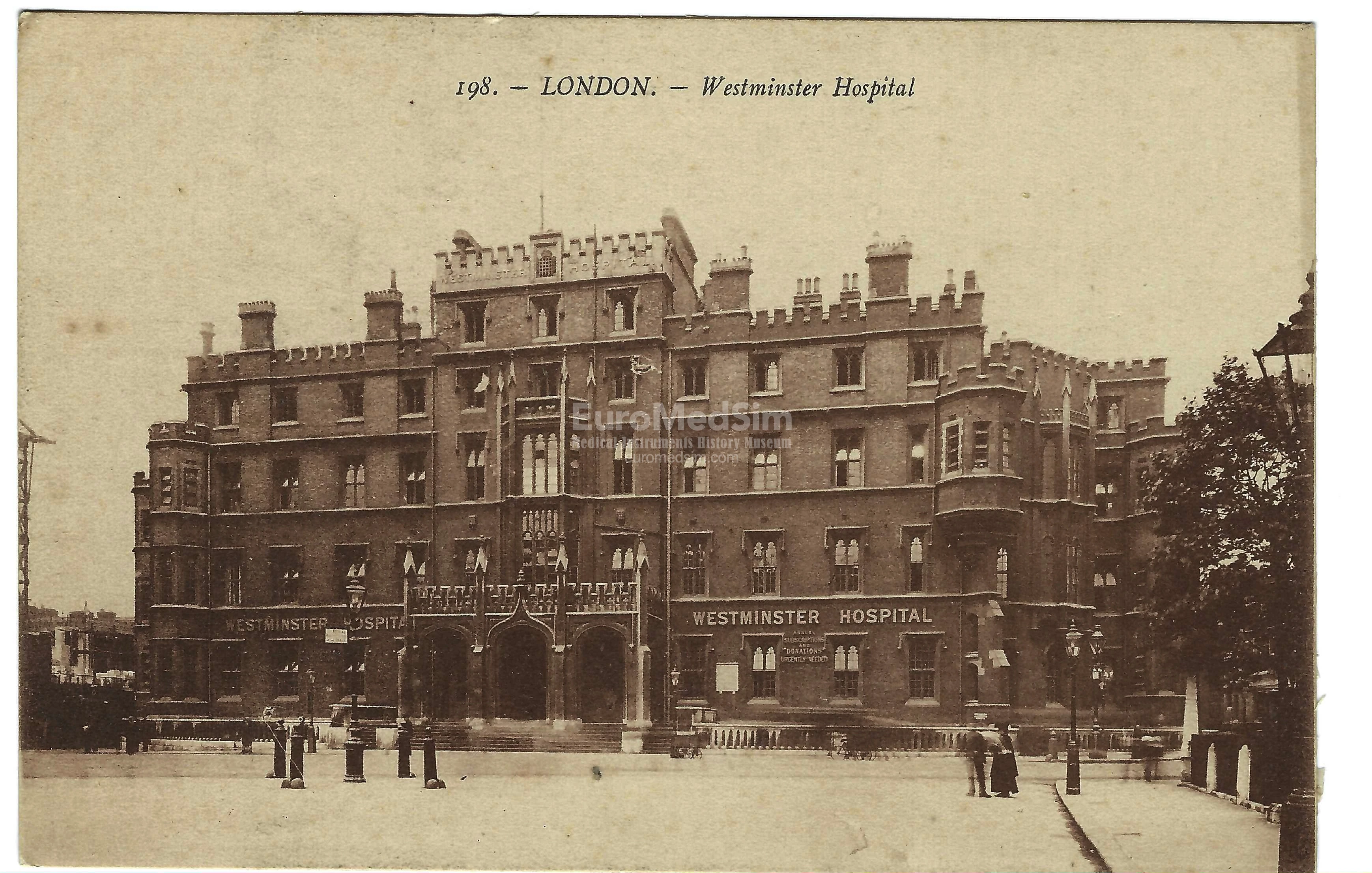
A postcard showing the old Westminster Hospital in Broad Sanctuary, directly opposite Westminster Abbey. The hospital had occupied this site since 1834. The imposing castellated Gothic building seen here was substantially rebuilt in 1895, giving the institution an architectural presence more reminiscent of a medieval civic palace than a modern hospital. Westminster Hospital remained at Broad Sanctuary until 1938, when it moved to new premises near Horseferry Road. The old building was later damaged by fire in 1950 and subsequently disappeared during redevelopment of the area. Today, the hospital’s former site corresponds approximately to the open space immediately in front of the Queen Elizabeth II Centre, on the north side of Broad Sanctuary, facing Westminster Abbey.
England, 20 C. 1 half
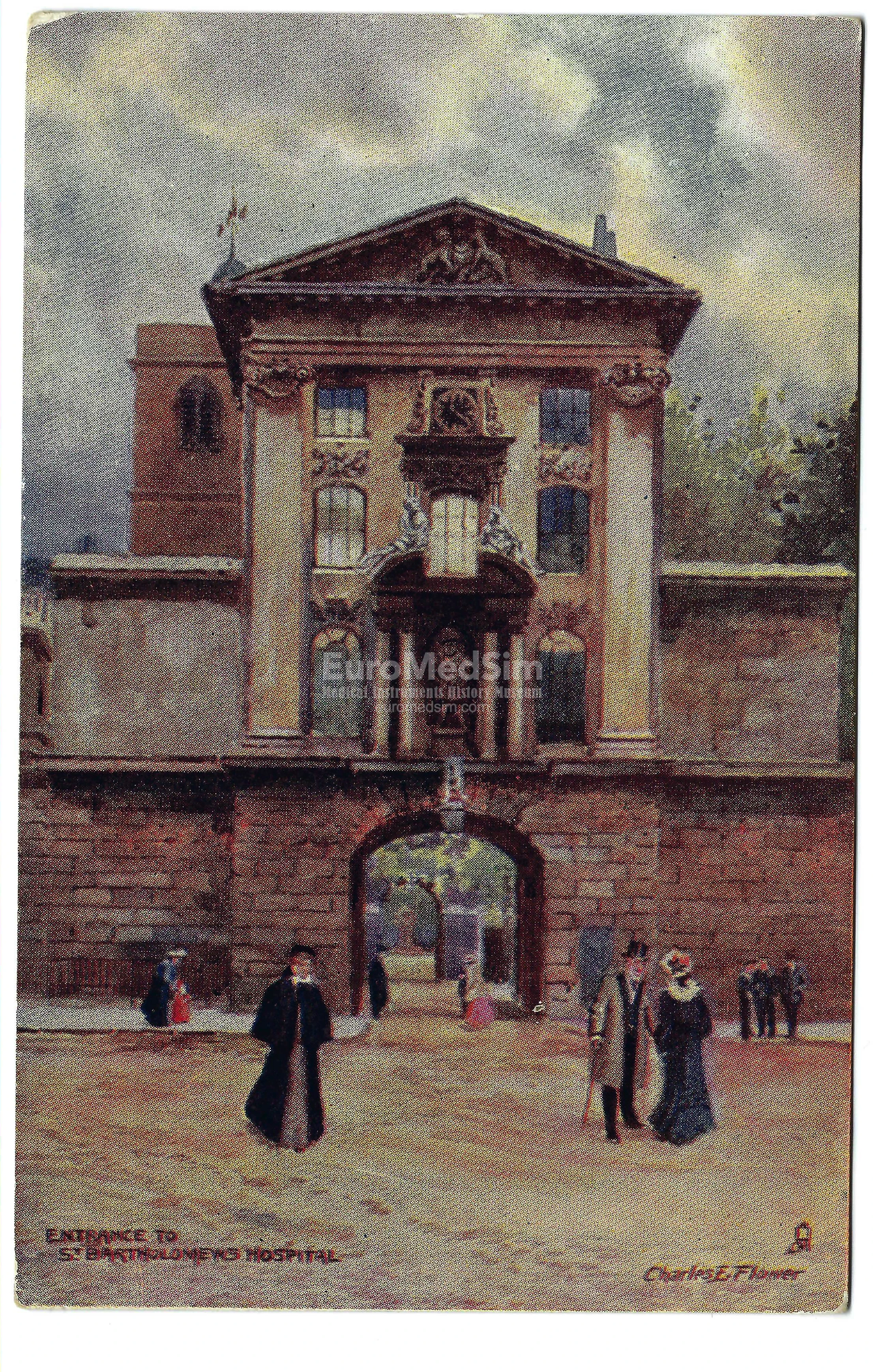
This postcard, depicting the Henry VIII Gatehouse of St Bartholomew's Hospital, was published by Raphael Tuck & Sons as part of their "Aquarette" series (No. 0257) and features artwork by Charles E. Flower. Posted on 9 December 1905, the postmark firmly establishes its use and a terminus ante quem. The publisher's imprint, "Art Publishers to Their Majesties the King & Queen," places the publication after Queen Victoria's death in January 1901, with a likely date of circa 1903–1905. The gateway itself, rebuilt in 1702 by mason John Strong, stands as a historic entrance to Britain's oldest hospital site, founded in 1123. The card captures both an Edwardian street scene and an everyday moment of correspondence from that era.
Germany, 20 C. 1 half
Fliedner, Theodor , Nightingale, Florence
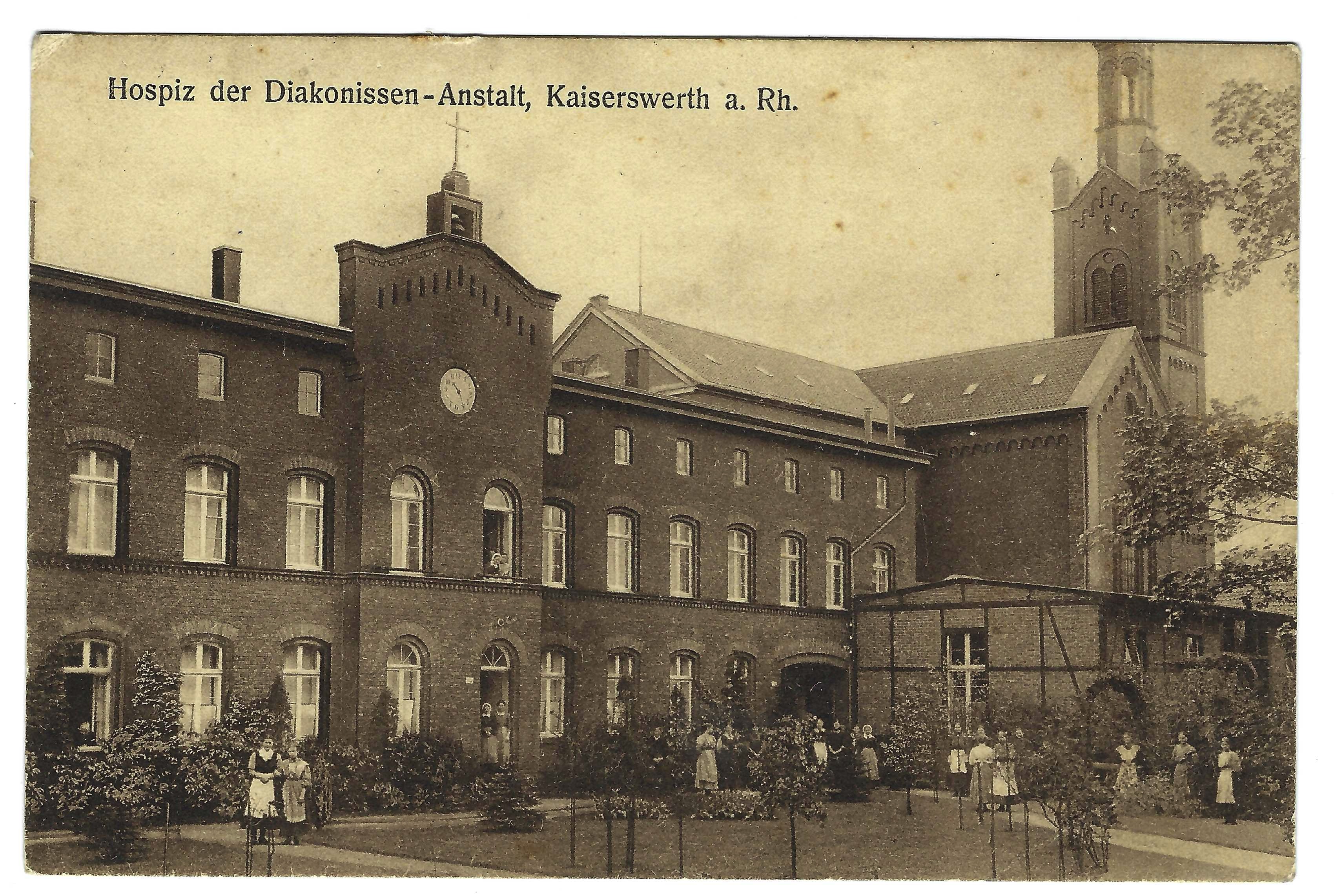
Postcard titled “Hospiz der Diakonissen-Anstalt, Kaiserswerth a. Rh.” with a handwritten private message on the back, bearing a green “German Empire” 5 Pf., postally used stamp, cancelled on August 9, 1913. Cardboard, letterpress printing, handwritten text in ink.
Germany, 20 C. 1 half
Fliedner, Theodor , Nightingale, Florence
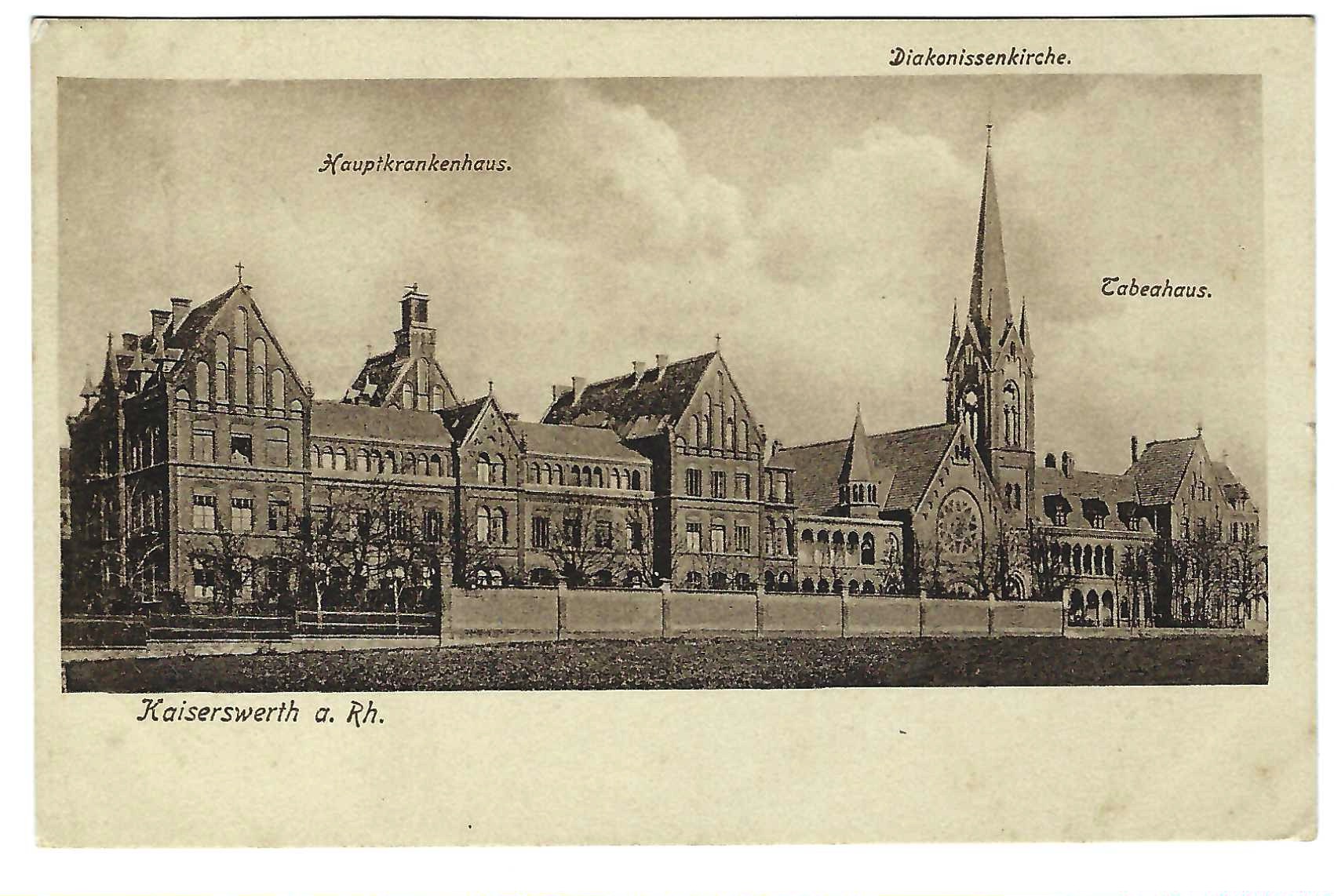
Postcard titled “Kaiserswerth a. Rh. Hauptkrankenhaus, Diakonissenkirche, Tabeahaus." The postcard cancelled 26.12.1916
Germany, 20 C. 1 half
Fliedner, Theodor , Nightingale, Florence
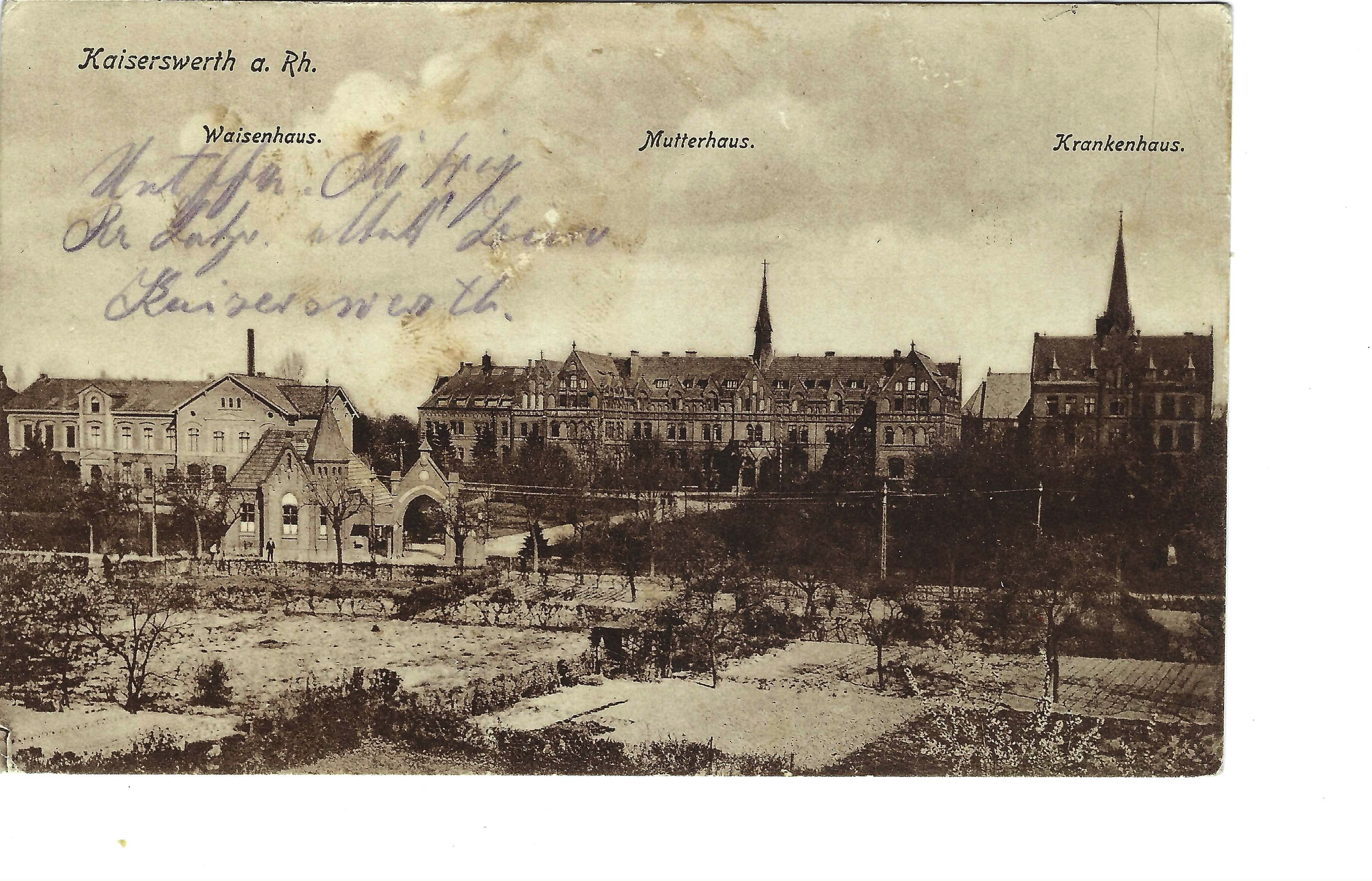
Postcard titled “Kaiserswerth a. Rh. Weisenhaus, Mutterhaus, Krankenhaus". The postcard cancelled 23 August 1917.
GALLERY

Italy, 15 C. & before
da Vinci, Leonardo
Governo e cura degli infermi – The Care of the Sick or The Care and Governance of the Infirm is undoubtedly one of the most famous and oldest depictions of the hospital activities in the world. The fresco is one of six painted by the artist from Siena, Domenico di Bartolo (ca. 1400- ca. 1447). Studying this work will not only reproduce some of the hospital's rooms, but also give an insight into its daily life, which from the early fourteenth century was governed by strict statutes. In the middle there are the Rector and the oblats of the hospital. A surgeon is ready to perform wound care manipulation. To the left, representing physical medicine a carer places a patient on a stretcher, while two physicians discuss the results of an uroscopy. Below, in the centre, a servant washes a young man wounded in the thigh, preparing him for surgery. At right, on the other side, a monk confesses a sick man while two orderlies carry into the room a stretcher.
MUSEUM
England, London
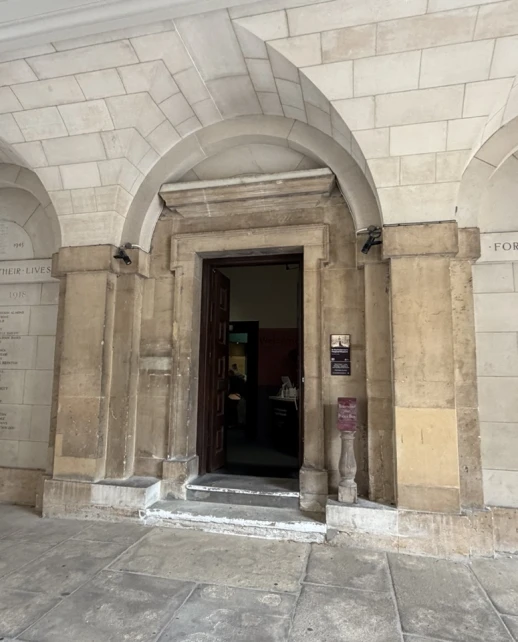
Barts Museum in the City of London is Britain's oldest working hospital on its original site, founded in 1123 by Rahere. Housed in the Grade I listed North Wing, it reopened in October 2025 after a £5.3m restoration. Entry is free. Highlights include the Great Hall, Hogarth's murals, and the Henry VIII Gatehouse with London's only public statue of the king. Famous names: Florence Nightingale, Elizabeth Blackwell, James Paget. Literary link: Sherlock Holmes met Dr Watson here. Nearby: St Bartholomew-the-Great church and Smithfield Market.
England, London
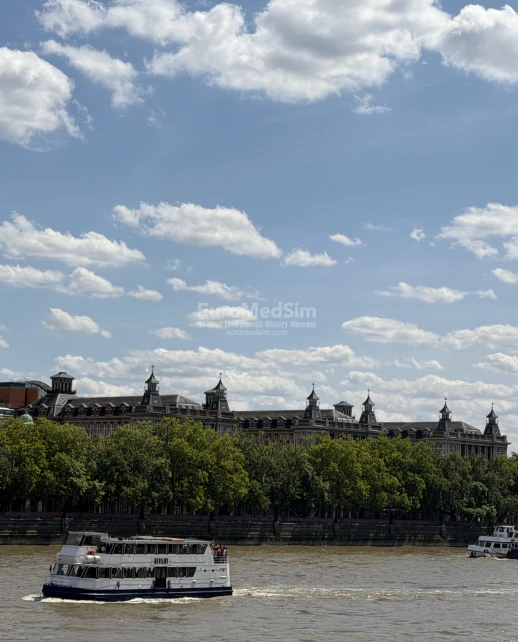
St Thomas’ Hospital, founded c. 1100 in Southwark, was relocated in 1862 due to railway expansion. Its current building (1872) at the Thames-side site opposite of the Westminster Palace, designed by Henry Currey was laid by Queen Victoria. In 1860, Nightingale founded Britain’s first nursing school at St. Thomas’s, which today is part of King’s College London. The hospital’s Central Hall houses a free mini-museum dedicated to the hospital’s history, and the new wing is home to the Florence Nightingale Museum.
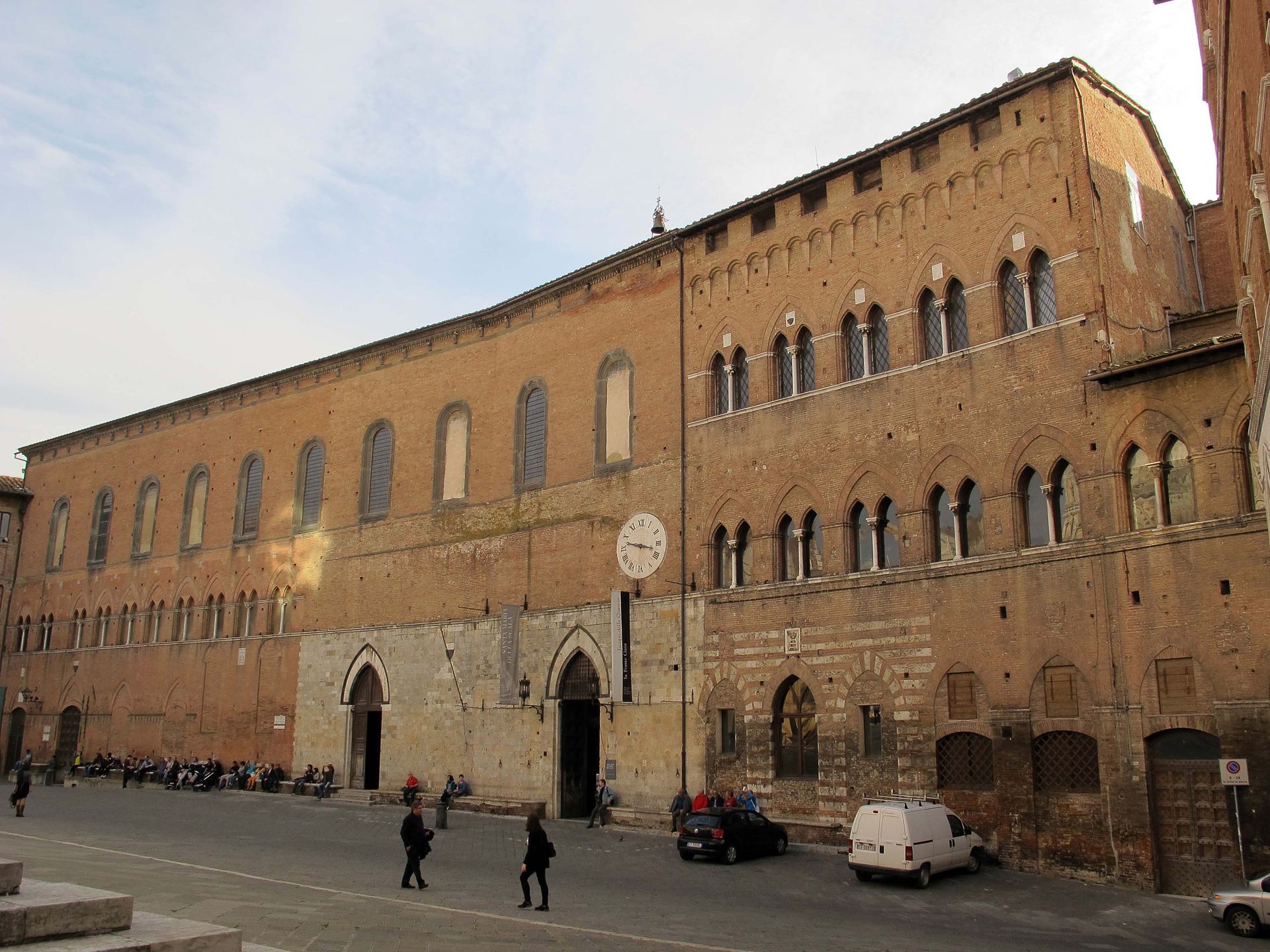
Italy, Siena
In the depths of Tuscany, Siena during the Renaissance laid on a busy Via Francigena, trade and regligiouse route connecting Western and Northern Italy and Europe with Rome. Opposite the majestic Siena Cathedral, Santa Maria della Scala is a remarkable testimony to the history of medicine of the Middle Ages and the Renaissance. Founded as early as the ninth century, this institution was more than just an ordinary hospital - it was a beacon of hope and compassion for weary pilgrims making the arduous journey along the Via Francigena to Rome and further to the Holy Land. What began as a simple orphanage grew into one of Europe's most famous hospitals, caring not only for pilgrims but also for sick, destitute and abandoned children. By the 12th century it had established itself as a leading centre of medical care, pioneering techniques that shaped the future of medicine in the region. One of the most striking sights of Santa Maria della Scala is the Pellegrinaio Hall (Pilgrims' Hall), whose colourful frescoes depict medical and charitable activities.