
Library3 results

France , 1575
Paré, Ambroise
Paré, Ambroise, 1510?-1590. Les Œuvres de M. Ambroise Paré, conseiller et premier chirurgien du Roy. Avec les figures & portraicts tant de l'anatomie que des instruments de chirurgie, & de plusieurs monstres. Le tout divise en vingt six livres (transl. from French: The works of Mr. Ambroise Paré, advisor and first surgeon to the King. With figures & portraits of both anatomy and surgical instruments, & several monsters. The whole is divided into twenty-six books). Paris, Gabriel Buon, 1575, the first edition. This unique book is the cornerstone that laid the foundation for modern surgery in France and the rest of Europe, the most important surgical book of the 16th century.

Germany , 1603
Paracelsus, Philippus Aureolus Theophrastus Bombastus von Hohenheim
Paracelsus, Philippus Theophrastus. Opera, Bücher und Schrifften, so viel deren zur Handt gebracht ...Strasbourg, Lazarus Zetzner, 1603. With: Opera ... Ander Theyl. Strasbourg, Lazarus Zetzner, 1603. 2 works in 2 volumes.
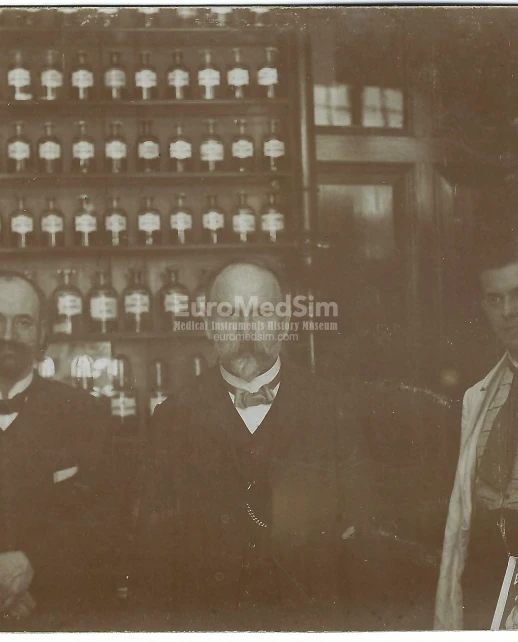
Germany , 1910
The photographic postcard depicts three men inside a German Apotheke (pharmacy) circa 1905–1910. Rows of labeled bottles, an ornate cash register, and a glass display case illustrate the convergence of pharmaceutical tradition and modern retail. In the lower right corner, a package of “Aspirin” bearing the Bayer trademark is visible (the drug was introduced to the market in 1899). The massive brass cash register, featuring decor characteristic of the 1890s–1900s, is inscribed with “Mark” and “Pfenn.” The German currency had been in use since 1873, but in 1914, the war began to devalue it. The dark wooden cabinets, rows of pharmacy glass jars with handwritten labels, and a display case with vials look like a classic German pharmacy from around 1900.