
Search results3 results
MUSEUM

England, London
The Science Museum in London hosts one of the world’s largest medical collections, born from Sir Henry Wellcome’s vision to preserve the history of healing through objects. The modern Wellcome Galleries display over 3,000 items—from Fleming’s penicillin mould and the first MRI scanner to early prosthetics and surgical robots. Blending science, history, and ethics, the galleries engage millions of visitors yearly, while the digital catalogue and ongoing acquisitions ensure global educational and research impact.

England, London
The Wellcome Library is one of the world's leading resources for the study of medical history and the human condition, offering an extensive collection spanning several centuries. It is located in a distinctive building (183 Euston Road, London – just next to the University College Hospital areal), known for its unique architecture and historical significance, serves as a hub for both the Wellcome Collection's library and its wider range of activities, including exhibitions and public events focused on health and medicine. It forms a part of the Wellcome Collection, a free museum and library that aims to challenge how we all think and feel about health. Significantly, the Wellcome Library has made strides in digitizing its collections, making many of its treasures accessible online. This initiative greatly facilitates research for scholars, students, and the general public, who can now explore vast amounts of material from the comfort of their homes. The Wellcome collection is rich and varied, featuring an array of materials including books, manuscripts, archives, films, and paintings, all related to the development of medicine and health care. These resources not only encompass Western medicine but also cover a wide range of cultural and historical perspectives on health and disease from across the globe.
Articles
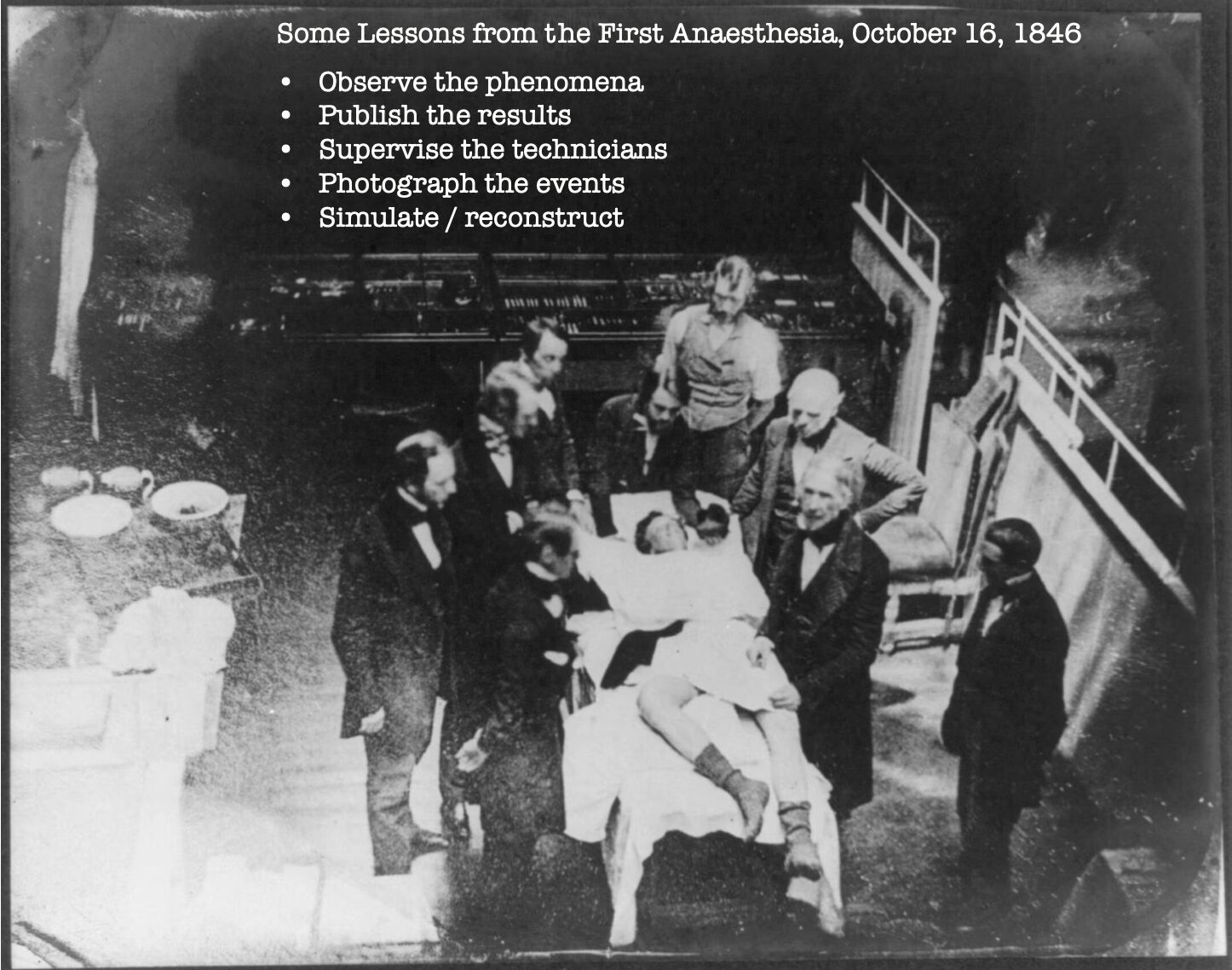
Priority disputes, failures, and simulation—Happy Broadcast Day!
October 16, 2026, marks the 180th anniversary of the famous public demonstration of aether anaesthesia in Boston. This date is celebrated today as "Ether Day" or "Anaesthesiology Day". There are many interesting facts associated with this invention. In the 19th century, people attended so-called “aether parties”—gatherings where participants inhaled ether for entertainment and watched each other’s antics. Dr. Crawford Long noticed that people sometimes injured themselves without feeling pain, and (according to him) became the first person in the world to use ether during the removal of a neck tumor on March 30, 1842—four years before Morton’s demonstration. However, he did not publish his findings until 1849. Hmm… what a shame! On the day of the first demonstration, William Morton was late—his glassblower had not finished making the vaporizer in time. The operation itself was not a success—by the time he was discharged, the growth had not disappeared. Moreover, the anesthesia was incomplete: during the later stages of the operation, the patient moved and screamed, although he later reported that he felt no pain. Morton tried to profit from his invention and even gave ether the trade name “Letheon”; however, despite disputes over intellectual property, it brought him neither wealth nor recognition. Those involved in the events later realized their significance and even reenacted the events of that day to capture them in photographs. So remember—a historical photograph is merely a reenactment of a historical medical event.