
People2 results
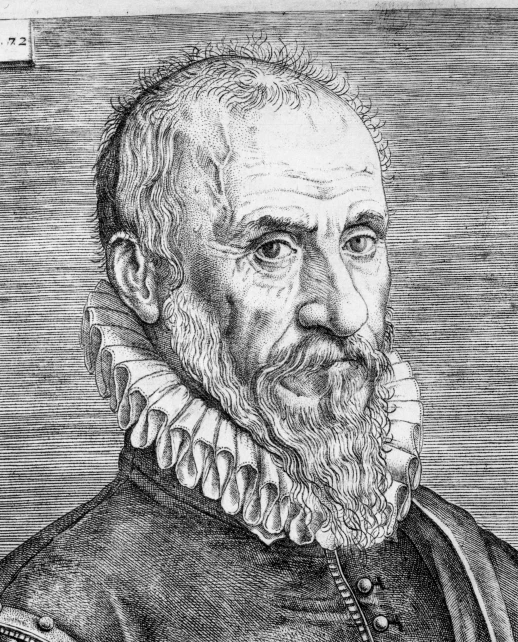
Barber-Surgeon
France , 1510 - 1590
Ambroise Paré (1510-1590), considered to be 'père de la chirurgie française' (father of French surgery), royal surgeon to four kings. Born in the French province, he revolutionised surgical practice despite having developed only a few entirely original methods. Paré's status as the ‘father of French surgery’ is not due to individual inventions, but primarily to the fact that, thanks to royal support, his voice could not be ignored. His revolutionary methodology for the time included empirical observation (instead of reading the classics), challenging dogma (rather than commenting on ancient authors), democratising knowledge (books in vernacular French rather than scholarly Latin) — thanks to his numerous widely circulated publications richly illustrated, his ideas and concepts found their target audience and drowned out the opinions of conservative opponents, while the status of surgeons was raised from that of modest craftsmen to the noble authority of university medicine.
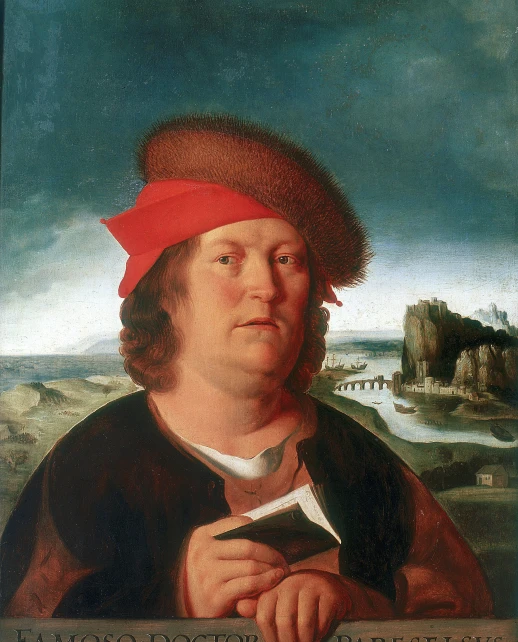
Scientist
Switzerland , 1493 - 1541
Paracelsus, also known by his full name Philippus Aureolus Theophrastus Bombastus von Hohenheim (1493–1541), was a Swiss-German physician, alchemist, natural philosopher, and one of the most controversial medical reformers of the Renaissance. He became famous because he challenged the authority of Avicenna, Galen, and Celsius, and the contemporary university medicine, argued that physicians should learn from direct experience, and promoted the use of chemical and mineral remedies. His importance lies especially in the connection he made between medicine and chemistry, which helped prepare the way for iatrochemistry, pharmacology, toxicology, and modern ideas about dosage. Britannica describes him as a physician and alchemist who “established the role of chemistry in medicine” and notes his famous surgical work Der grossen Wundartzney of 1536.