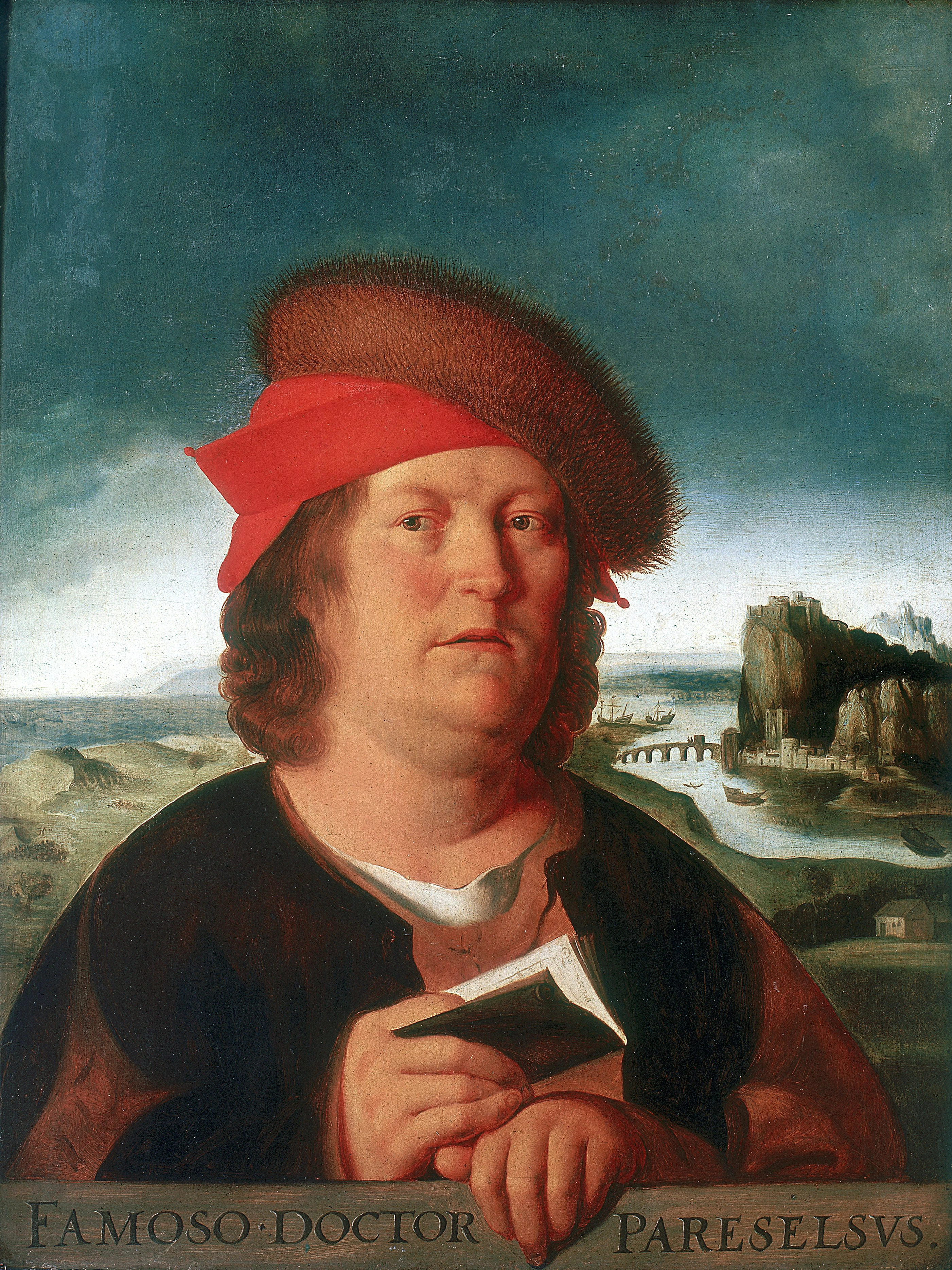
Paracelsus, Philippus Aureolus Theophrastus Bombastus von Hohenheim
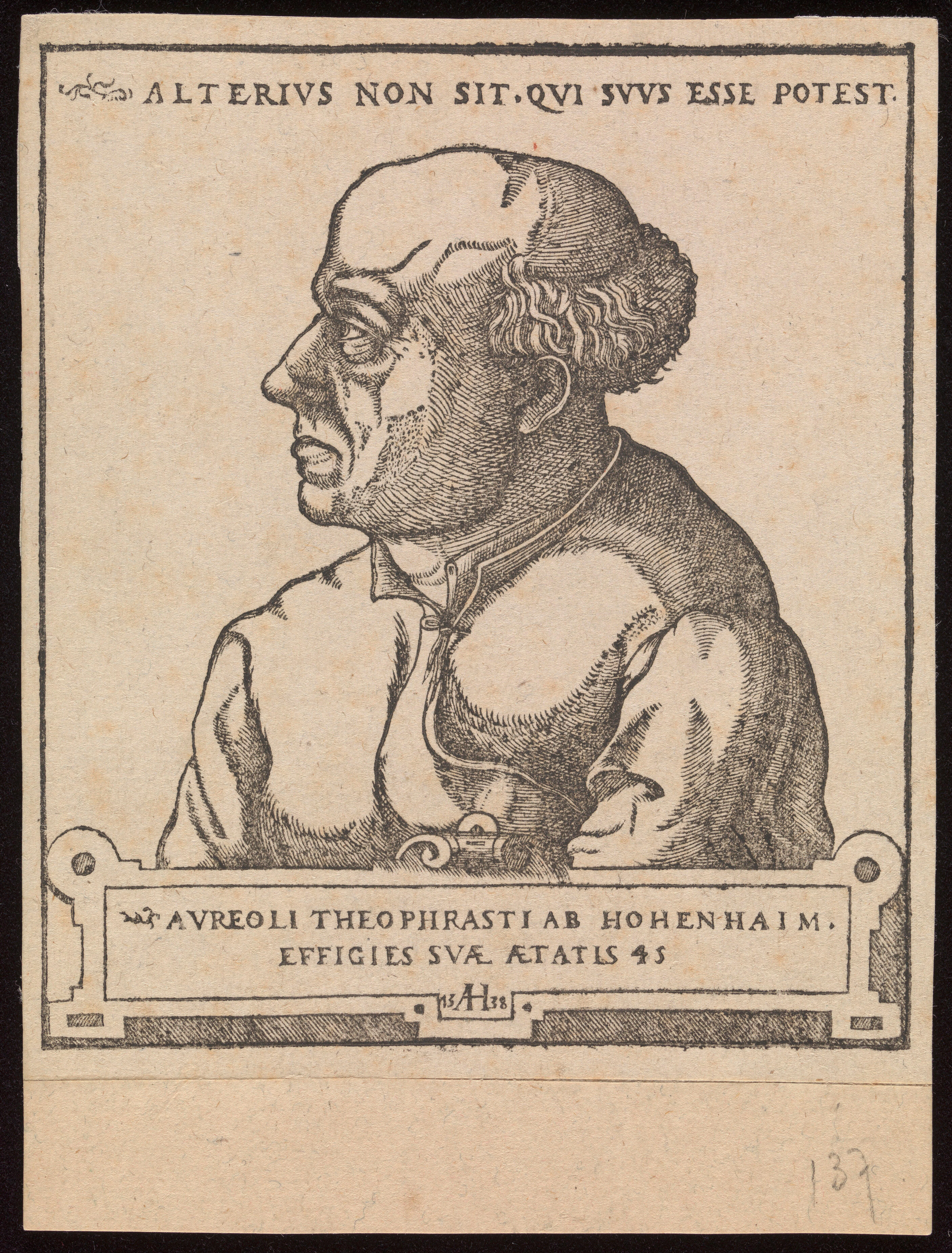
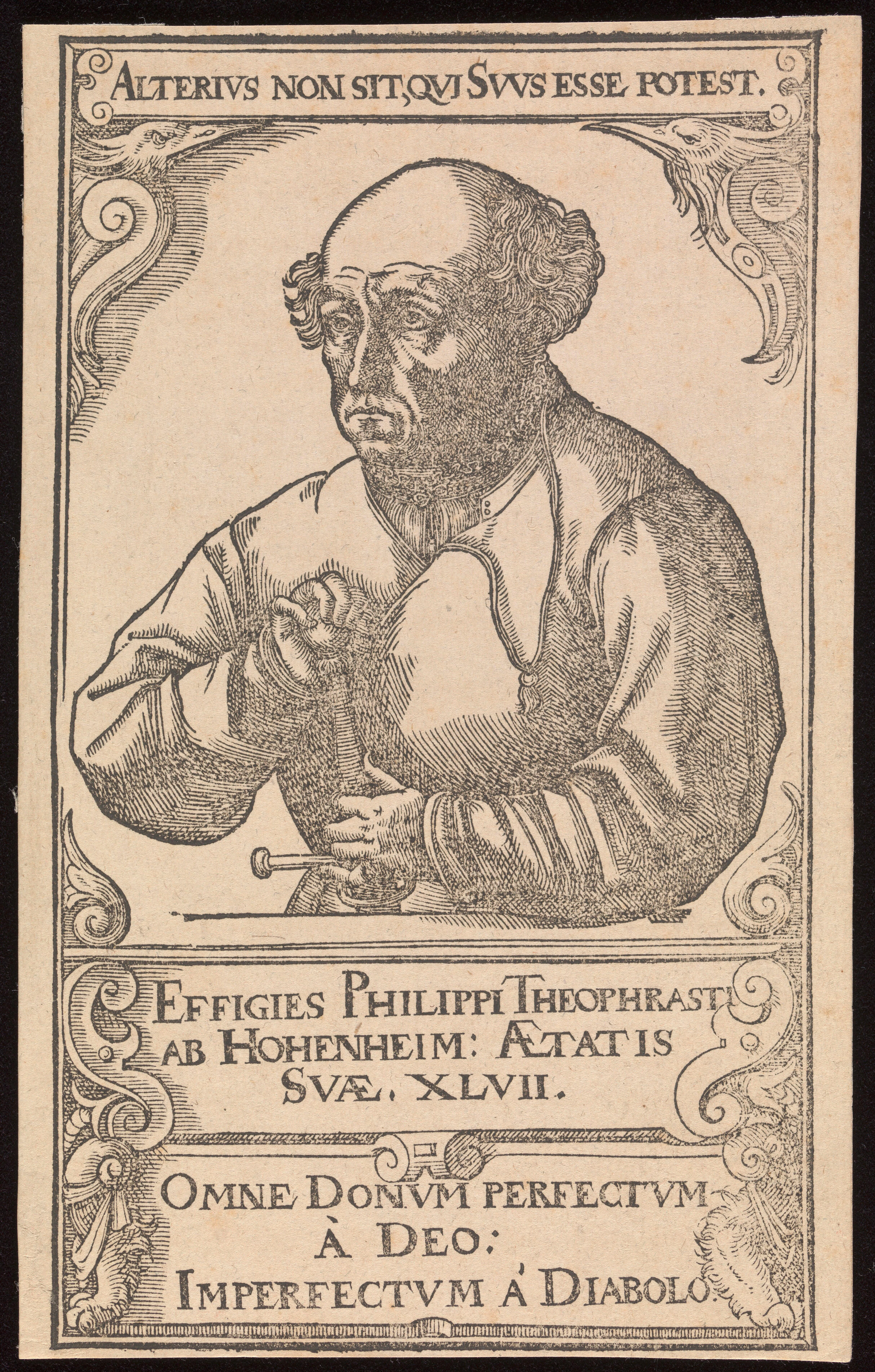
Paracelsus, born Theophrastus von Hohenheim and often known by the fuller name Philippus Aureolus Theophrastus Bombastus von Hohenheim, lived from 1493 to 1541. He was a Swiss-German physician, alchemist, natural philosopher, and one of the most controversial medical reformers of the Renaissance. He became famous because he challenged the authority of Galen, Avicenna, and university medicine, argued that physicians should learn from direct experience, and promoted the use of chemical and mineral remedies. His importance lies especially in the connection he made between medicine and chemistry, which helped prepare the way for iatrochemistry, pharmacology, toxicology, and modern ideas about dosage. Britannica describes him as a physician and alchemist who “established the role of chemistry in medicine” and notes his famous surgical work Der grossen Wundartzney of 1536.
Biography of Paracelsus
Paracelsus was born near Einsiedeln, Switzerland, probably in late 1493. His father was a German physician and chemist, and after his mother’s death soon after his birth the family moved to Villach in southern Austria, where the young Paracelsus became familiar with mining, metallurgy, minerals, and chemical practice. He studied at several universities and is traditionally associated with Vienna and Ferrara, although the details of his education are partly uncertain. He then travelled widely through Europe and worked as an army surgeon, gaining practical experience with wounds, diseases, and popular healing traditions. His most famous academic position was in Basel, where in 1527 he became city physician and lecturer in medicine; however, his attacks on traditional medicine and local medical authorities forced him to leave in 1528. He later lived and worked in places such as Strasbourg, Colmar, Nuremberg, St. Gall, and Salzburg. Paracelsus died on 24 September 1541 in Salzburg, at the White Horse Inn (in fact the name of the place is a historical legend), while he was connected with the court of the prince-archbishop.
Main works and achievements of Paracelsus
Enfant terrible of medicine
Paracelsus’s main achievements were not limited to a single discovery; they formed a new and deliberately provocative medical program. He opposed the dominant university medicine of his time, which was still largely based on Galen, Avicenna, scholastic commentary, and the doctrine of the four humours. Instead of explaining disease mainly as an imbalance of blood, phlegm, yellow bile, and black bile, Paracelsus argued that diseases were specific entities with specific causes and therefore required specific remedies. This was one of his most important departures from medieval medicine: he did not think that all illnesses could be treated by the same general methods, such as bleeding, purging, or restoring humoral balance. He insisted that the physician must study nature, chemical substances, minerals, poisons, local environments, and the concrete history of the patient. Not only were his ideas provocative, but his behavior itself provoked the justified anger of respected professors and those in power. Paracelsus demonstratively burned the books of Galen and Avicenna right in front of the university, lectured in German rather than Latin—a principled challenge to the academic establishment—and publicly insulted his distinguished fellow physicians, calling them charlatans. As a result, he was expelled from Basel following a scandal with the city authorities and, in fact, spent his entire life wandering, never settling for long at any single university.
Five entias — fundamental sources of disease
In Volumen medicinae Paramirum, Paracelsus developed his doctrine of the five entia, or five fundamental sources of disease. These were the ens astrale, referring to cosmic or environmental influences; the ens veneni, referring to poisonous or toxic causes; the ens naturale, referring to the constitution and internal nature of the body; the ens spirituale, referring to psychological, spiritual, or invisible causes; and the ens Dei, referring to divine or providential causes. Although this framework still belonged to a Renaissance world of astrology, theology, and alchemy, it was important because it moved medicine away from a single universal explanation of illness. Paracelsus’s classification suggested that different diseases arise from different mechanisms and therefore require different forms of investigation and treatment. The University of Zurich’s Paracelsus project notes that his writings described many particular diseases, including syphilis, plague, jaundice, smallpox, epilepsy, metabolic “tartaric” diseases such as gout and urinary stones, and miners’ diseases caused by toxic vapours.
Four foundations of medicine
In Das Buch Paragranum (The Book Beyond the Grain or The Book of Foundations), Paracelsus explained that true medicine rests on four foundations: philosophy, astronomy, alchemy, and virtue. By “philosophy” he meant knowledge of nature, especially the visible world of bodies, elements, plants, minerals, and living processes. By “astronomy” or astrology he meant the relation between the human being, the heavens, and the wider cosmos, a concept still typical of Renaissance medicine. By “alchemy” he did not mean only the search for gold; he meant the practical art of separating, purifying, transforming, and preparing substances for therapeutic use. The fourth foundation, “virtue,” was the moral and spiritual integrity of the physician. Paracelsus therefore attacked the idea that a physician could be merely a learned commentator on books. The true physician, in his view, needed practical experience, experimental knowledge of nature, technical skill in preparing medicines, and ethical responsibility toward the patient. A Stanford selection from Paragranum summarizes this doctrine by describing philosophy, astronomy, alchemy, and virtue as the four pillars that complete and preserve medical practice.
Less cauterization and no boiling oil
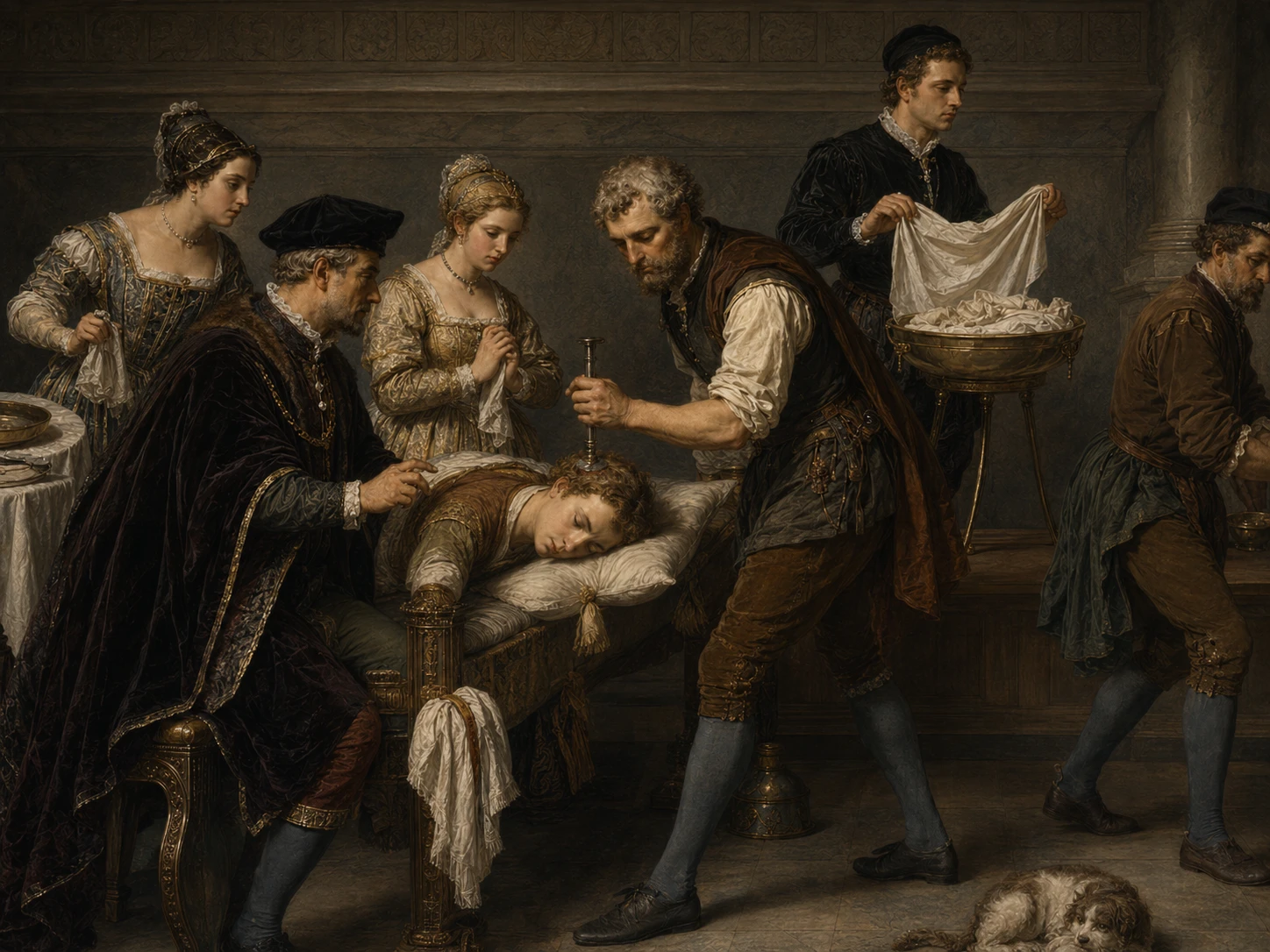
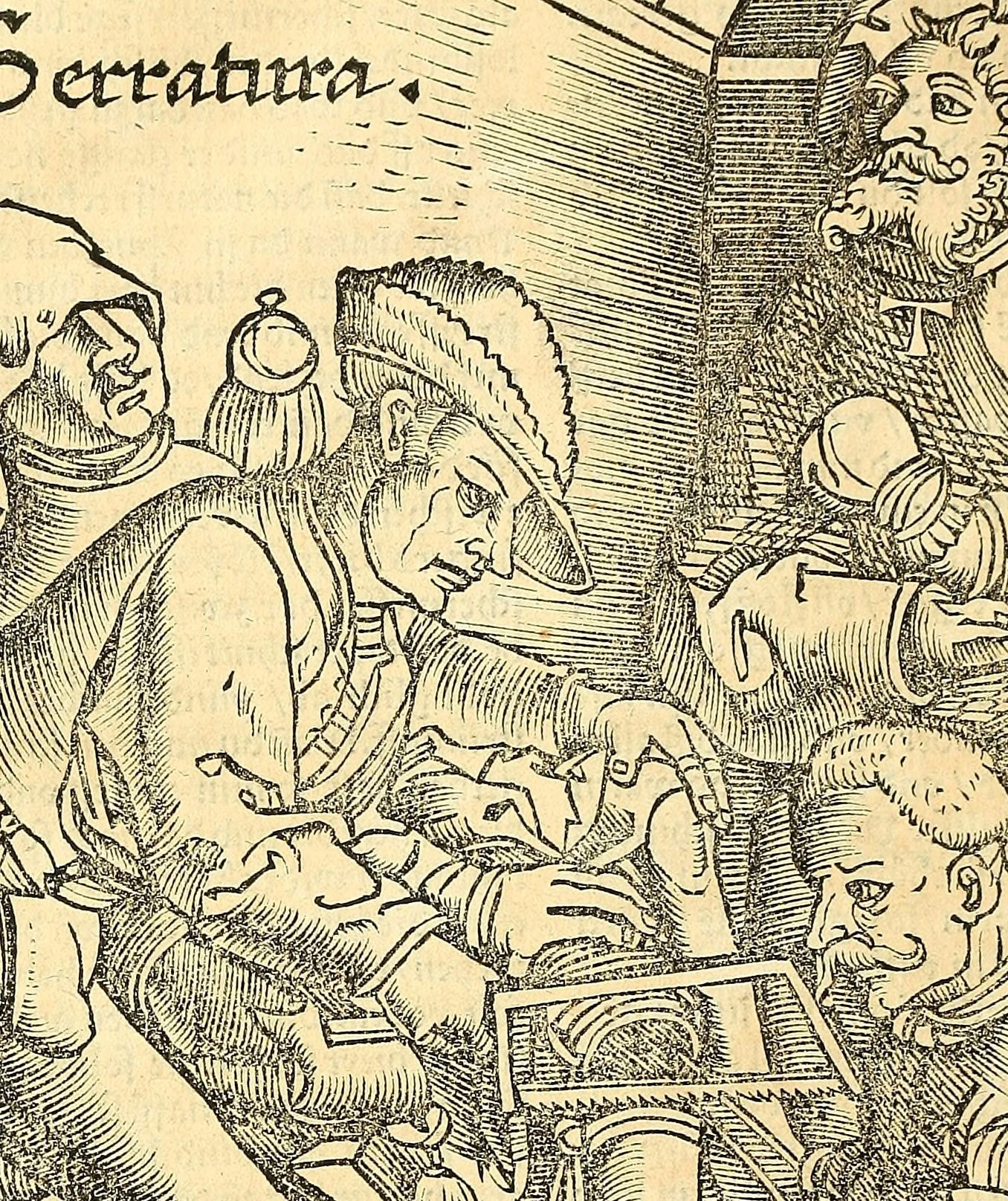
Another of his major works was devoted to specific and practical issues in surgery. The book Der grossen Wundartzney (1536) addressed wounds, burns, fractures, animal bites, gunshot wounds, ulcers, and the treatment of the “French disease” (syphilis). In particular, the great surgeon rejected a number of aggressive wound-treatment methods that were still common in early modern surgery, especially the excessive use of cauterization and boiling oil. Instead, he preferred to clean wounds, ensure drainage, use appropriate dressings, and support the body’s natural ability to heal. In his ideas, he followed the teachings of Borgognoni and Mondeville, acknowledging these medieval predecessors. In fact, Theodoric Borgognoni (1205–1296) is today recognized as a medieval Italian surgeon who preceded Henri de Mondeville, Paracelsus, and even Lister, asserting that cleanliness is of paramount importance for wound healing and explicitly rejecting the doctrine of “beneficial pus” and aggressive suppuration. His method was subsequently championed by his student Henri de Mondeville, despite fierce opposition from the prevailing authorities—but after Mondeville’s death, this technique fell by the wayside, and the popularity of the aggressive approach promoted by da Vigo led to a return to cauterization and the use of oil. It is worth noting that this “discovery” is traditionally attributed to Ambroise Paré, who made it by accident during the siege of Turin in 1536 (the year Paracelsus published his Great Surgery!), when he ran out of boiling oil and replaced it with dressings containing a soft ointment. Paré did not publish his report until 1545.
The dose alone makes the poison
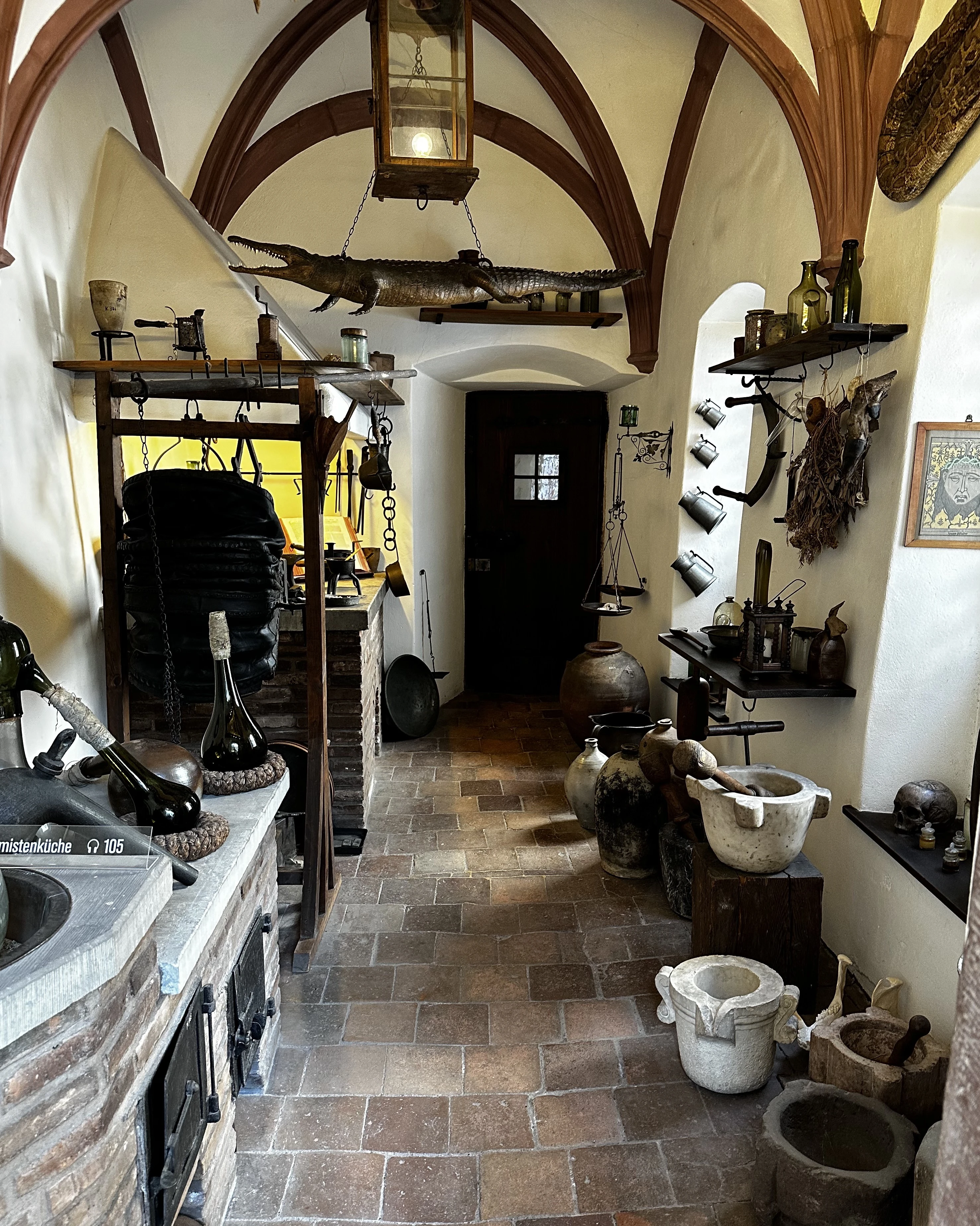
In pharmacology, Paracelsus was especially controversial because he defended the medical use of minerals and chemically prepared substances. Traditional physicians often preferred plant-based remedies and humoral treatments, while Paracelsus introduced or promoted preparations involving mercury, sulfur, antimony, copper sulfate, lead compounds, salts, and other mineral substances. This was dangerous if used carelessly, but Paracelsus’s important point was that a poison could become a medicine if properly prepared and given in the correct dose. This principle is often summarized by the Latin formula Dosis sola facit venenum (“the dose alone makes the poison.”) In modern terms, this means that toxicity depends not only on the substance itself but also on the quantity, route, preparation, and condition of the patient. This idea made Paracelsus a key figure in the early history of toxicology and pharmacology.
Mercury and guaiac treatment of syphilis
His writings on syphilis show the same approach. Syphilis was one of the most feared diseases of sixteenth-century Europe, and two major treatments were debated: mercury and guaiac wood. Paracelsus strongly attacked guaiac as ineffective and even as a commercial fraud, especially because the wealthy Fugger family had an interest in the guaiac trade. This brought him into conflict with powerful economic and medical authorities (The Fuggers, who hailed from the Bavarian city of Augsburg, were often compared to the Italian Medicis dynasty. Rising from humble roots as weavers, they grew into the most powerful mercantile and banking dynasty in 15th- and 16th-century Europe, famously financing popes and Holy Roman Emperors). He did not simply reject mercury, but he objected to crude and excessive mercury treatments that poisoned patients. He argued instead for more carefully prepared and measured mercury compounds. The significance of this position was not that mercury was a safe cure in the modern sense, but that Paracelsus tried to connect therapy with chemical preparation and dosage rather than with routine humoral intervention, recognized the danger of mercury poisoning when mercury was administered improperly.
Occupational medicine
Paracelsus was also important in the history of occupational medicine. Because of his early exposure to mining regions in Austria and the Tyrol, he paid attention to the diseases of miners and smelters. In his writings on miners’ diseases, he argued that these illnesses were not punishments from God, curses, or the work of mountain spirits, but resulted from material causes in the workplace, especially inhaled mineral and metallic vapours. This was a major shift: it connected disease with environment, labour, and toxic exposure. The University of Zurich’s Paracelsus project states that he described miners’ illness as a specific disease caused when miners inhaled toxic vapours from mines and smelting furnaces. For this reason, Paracelsus is often treated as a predecessor of occupational medicine and environmental toxicology.
Overall, Paracelsus’s achievement was that he challenged the authority of inherited medical systems and proposed a medicine based on particular diseases, particular causes, and particular remedies. Many of his ideas remained mixed with astrology, theology, and alchemy, and many were controversial even in his own lifetime. Nevertheless, his insistence on experience, chemical preparation, dosage, toxic exposure, and the individuality of diseases helped redirect European medicine toward pharmacology, toxicology, occupational medicine, and a more empirical understanding of therapy.
First editions of Paracelsus' works
Only a small part of Paracelsus’s work was printed during his lifetime; much of his influence came through posthumous editions prepared by followers and editors. Among the earliest printed works under his name were Vom Holtz Guaiaco gründlicher heylung, printed in Nuremberg by Friedrich Peypus in 1529, and Practica/ gemacht auff Europen, also printed by Friedrich Peypus in 1529. His major surgical work Grosse Wundartzney appeared in Ulm, printed by Hans Varnier, in 1536, with Augsburg editions by Heinrich Steiner in the same year. Important posthumous first editions included Das Buch Paramirum, edited by Adam von Bodenstein and printed in Mülhausen by Peter Schmidt in 1562; Das Buch Paragranum, edited by Adam von Bodenstein and printed in Frankfurt am Main by Christian Egenolff’s heirs in 1565; Archidoxae. Libri X, edited by Adam Schröter and printed in Kraków by Maciej Wirzbięta in 1569; and Astronomia Magna, edited by Michael Toxites and printed in Frankfurt am Main by Martin Lechler for Sigismund Feyerabend in 1571. These editions were important because they transmitted Paracelsus’s anti-Galenic, chemical, and empirical medical ideas across Europe. The first collected edition of his medical and natural-philosophical writings, edited by Johannes Huser and printed in Basel by Conrad Waldkirch in 1589–1590, was especially important because it preserved many texts from manuscripts and helped turn Paracelsus from a controversial wandering physician into the central figure of a European Paracelsian movement.
Selected bibliography
Paracelsus. Program of Basel lectures. 1527. The first printed work by Hohenheim, so-called program of his Basel lectures, a Latin appeal to medical students in which he takes a stand against the philological and expurgatory endeavors of the physicians of his time and sets forth his entirely divergent viewpoint, based on his own research into nature—“experimenta ac ratio autorum loco mihi suffragantur.” — acc. to Karl Sudhoff, 1894. This leaflet has not survived to the present day.
Paracelsus. Vom Holtz Guaiaco gründlicher heylung. Nürnberg: Friedrich Peypus, 1529.
Paracelsus. Grosse wund artzney von allen wunden, stich, schüss, bränd, biss, beynbrüch. Ulm: Hans Varnier, 1536.
Paracelsus. Das Buch Paramirum. Edited by Adam von Bodenstein. Mülhausen: Peter Schmidt, 1562.
Paracelsus. Das Buch Paragranum. Edited by Adam von Bodenstein. Frankfurt am Main: Christian Egenolff’s heirs, 1565.
Paracelsus. Archidoxae. Libri X. Edited by Adam Schröter. Kraków: Maciej Wirzbięta, 1569.
Paracelsus. Astronomia Magna: oder Die gantze Philosophia sagax der grossen und kleinen Welt. Edited by Michael Toxites. Frankfurt am Main: Martin Lechler for Hieronymus [Siegmund] Feyerabend, 1571.
Paracelsus. Bücher und Schrifften. Edited by Johannes Huser. Basel: Conrad Waldkirch, 1589–1591.
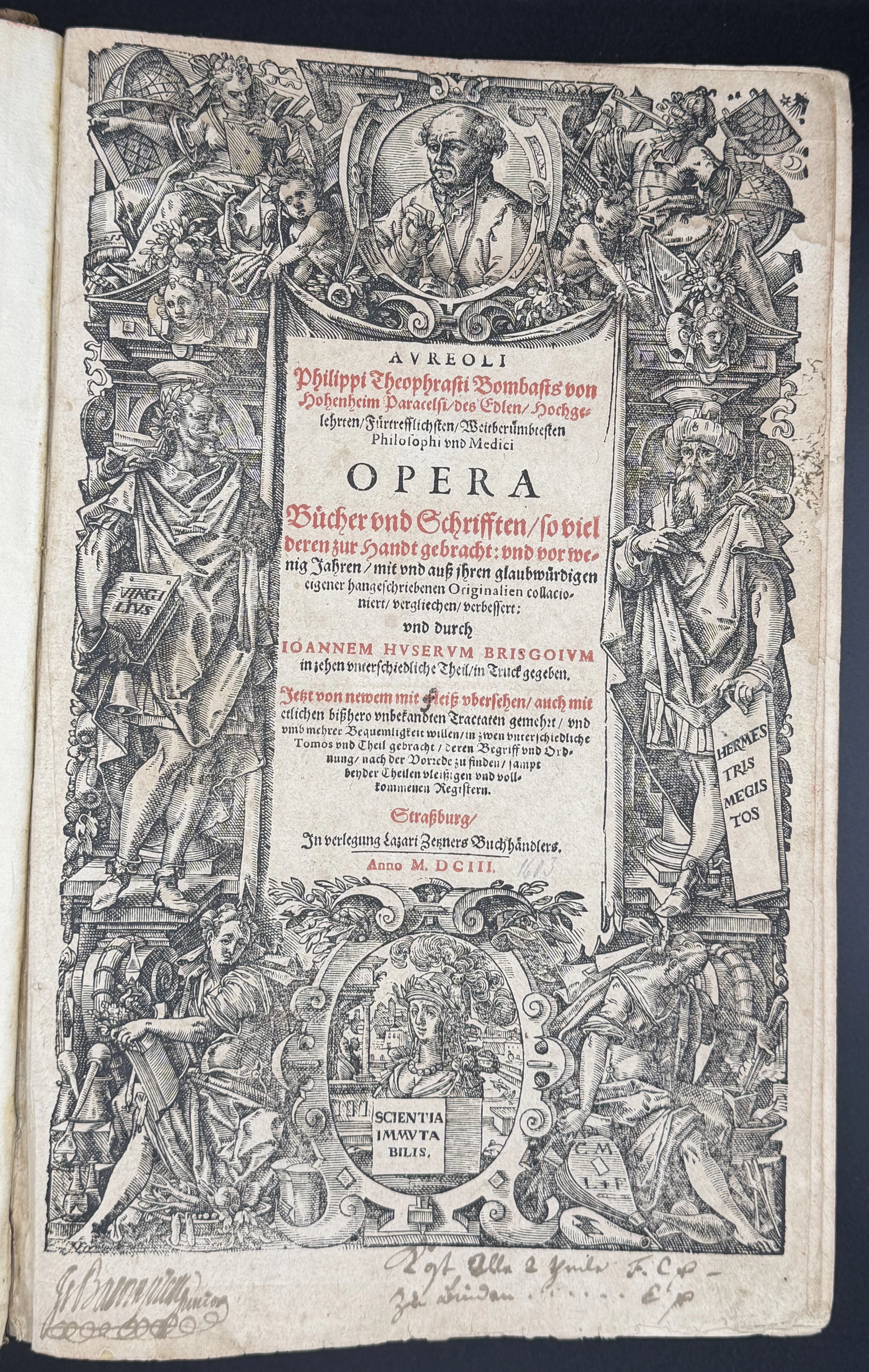
Paracelsus. Opera, Bücher und Schrifften, so viel deren zur Handt gebracht. Edited by Ioannem Huserum Brisgoium. Strassburg: Lazarus Zetzner, 1603.
Modern literature on Paracelsus
Debus, Allen G. The Chemical Philosophy: Paracelsian Science and Medicine in the Sixteenth and Seventeenth Centuries. New York: Science History Publications, 1977.
Pagel, Walter. Paracelsus: An Introduction to Philosophical Medicine in the Era of the Renaissance. Rev. ed. Basel: Karger, 1982. First published 1958.
Sudhoff, Karl. Bibliographia Paracelsica: Besprechung der unter Hohenheims Namen 1527–1893 erschienenen Druckschriften. Berlin: Georg Reimer, 1894.
Theatrum Paracelsicum. “Bibliographia Paracelsica Nova: Books by Paracelsus.” Accessed May 31, 2026. Web: theatrum-paracelsicum.com/Bibliographia_Paracelsica_Nova_-_Books_by_Paracelsus.
Webster, Charles. Paracelsus: Medicine, Magic and Mission at the End of Time. New Haven: Yale University Press, 2008.
Weeks, Andrew. Paracelsus: Speculative Theory and the Crisis of the Early Reformation. Albany: State University of New York Press, 1997.