Croce, Giovanni Andrea Della
Giovanni Andrea Della Croce (1515–1575), Italian Renaissance surgeon
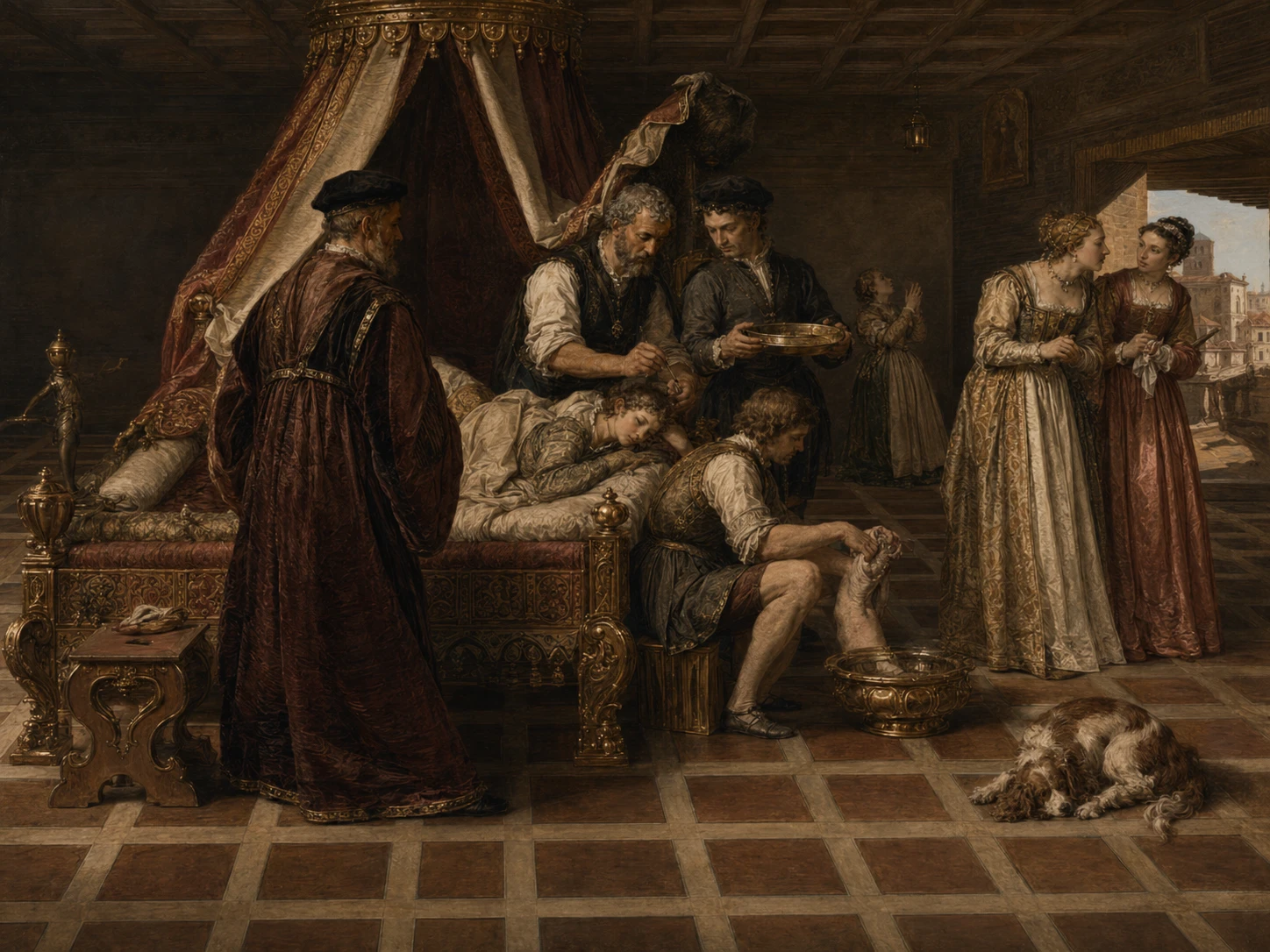
Giovanni Andrea Della Croce (1515–1575), also known as Giovanni Andrea Dalla Croce, De Cruce, or Crucejus, was a Venetian physician, surgeon, anatomist, and medical writer of the Italian Renaissance, usually dated to c. 1515–1575, although some sources give 1509 or 1514 as his year of birth. He became famous as one of the most important surgeons of sixteenth-century Venice and as the author of a major surgical compendium, Chirurgiae universalis opus absolutum, later expanded and translated into Italian as Cirugia universale e perfetta di tutte le parti pertinenti all’ottimo chirurgo. His reputation rests especially on his systematic treatment of wounds, fractures, cranial injuries, military surgery, and surgical instruments. Dalla Croce is significant because he helped transform surgery from a mainly craft-based practice into a learned discipline supported by anatomy, classical scholarship, practical observation, and printed illustration.
Ambroise Paré of the Lagoons — Surgery in the venacular language
Giovanni Andrea Della Croce was sometimes called the "Ambroise Paré of the Lagoons" — and the comparison is apt. He published his seminal work on surgical care Chirurgiae Ioannis Andreae a Cruce ... libri septem, — first in Latin (1573), and a year later in Italian. The seven-volume work covered issues of theory and practice, described real-world experience, and contained numerous illustrations useful for the surgical art. The significance of these publications cannot be overstated—as in other countries, surgeons in Italy were more craftsmen than highly educated scholars, and books written in Latin, though closely related to the Italian language, were incomprehensible to them. The publication in “vernacular” Italian made cutting-edge knowledge in the field of surgery accessible to a broad interested audience, expanding the readership beyond university-educated physicians to include barber-surgeons and practicing physicians in need of practical instructions. Meanwhile, the availability of an “international” Latin edition ensured its international renown.
Both surgeons — Ambroise Paré and Della Croce — worked in the mid-sixteenth century, both drew their authority from battlefield experience rather than academic rank, and both understood that surgery needed not only to be practised but also to be taught, illustrated, and disseminated in print. Like Paré in France, Della Croce transformed Venetian surgery from a craft transmitted by apprenticeship into a disciplined, visual, and teachable science. Where Paré wrote in French to reach practitioners who had no Latin, Della Croce published his great compendium first in Latin and then in Italian — making advanced surgical knowledge available to university-trained physicians and barber-surgeons alike. The parallel is therefore not simply one of stature, but of method: both men believed that the surgeon's knowledge belonged on the page, open to scrutiny, enriched by anatomical observation, and inseparable from the instruments in his hands.
Biography of Giovanni Andrea Della Croce
Giovanni Andrea della Croce was born in Venice, probably in the parish of Santa Croce district — that's where his name comes from. Whether you arrive today in Venice by car (and are immediately directed into a huge but always overbooked parking lot) or by train—in front of you, across the canal the green dome of the Church of San Simeon Piccolo comes into view, and once you cross the Ponte degli Scalzi, — you’ll find yourself in the Santa Croce district—the neighborhood where Andrea was born.
His father, Matteo Giuseppe or Giuseppe Della Croce, was a barber-surgeon originally connected with Parma, and Della Croce received his early practical training within this surgical milieu. As a young man he studied classical medical authors, especially Greek and Arabic writers (sic!), while also acquiring practical surgical experience. In 1532 he was admitted to the Collegio chirurgico of Venice, one of the most respected surgical corporations in Renaissance Italy.
An interesting question is whether he attended university and held an academic degree. As is well known, his father taught him the practical skills of surgery. But that is merely the level of a craftsman—slightly above a barber, but noticeably below a physician! However, as early as 1532, he was admitted to the Collegio chirurgico in Venice, which required passing several exams administered by the college itself. The Venetians, who knew their own worth, would not have accepted a mere talented young man as one of their own.
And yet, he apparently had no formal university education—or at least none is documented. In this respect, they are very similar to Ambroise Paré. His path was more of a guild-based one: apprenticeship under his barber-surgeon father, independent study of classical medical authors (Greek and Arabic), and then certification through a professional guild.
He later held important positions within the college and served as prior in several years (1548, 1550, and 1558). Around 1538 he moved to Feltre, where he worked as a salaried physician and surgeon until 1546. After returning to Venice, he became associated with the medical service of the Venetian fleet and was also involved in public-health measures against plague. In later life, illness reduced his official duties, but it gave him time to write and revise his surgical works. He died in Venice in 1575, probably during the plague, and was buried in the church of Santa Maria dell’Umiltà.
Della Croce’s Heritage
His first known work was De morbo gallico, published in Venice in 1532 and devoted to the “French disease” — syphilis. In 1560 he published Due trattati nuovi, two new treatises concerned with wounds and the extraction of weapons or arrows from the flesh; these materials were later incorporated into his larger surgical synthesis.
His most important work first published in Latin was Chirurgiae Ioannis Andreae a Cruce ... libri septem, also known as Chirurgiae universalis opus absolutum, was printed in Venice by Giordano Ziletti in 1573. The title page emphasized that the seven books contained theory, practice, true experience, and numerous illustrations of instruments useful to the art of surgery. Immediately after the Latin followed Italian edition, Della cirugia ... libri sette or Cirugia universale e perfetta, was also printed in Venice by the same Giordano Ziletti in 1574; later editions followed, including the 1583 edition printed in Venice by Francesco Ziletti for Giordano Ziletti.
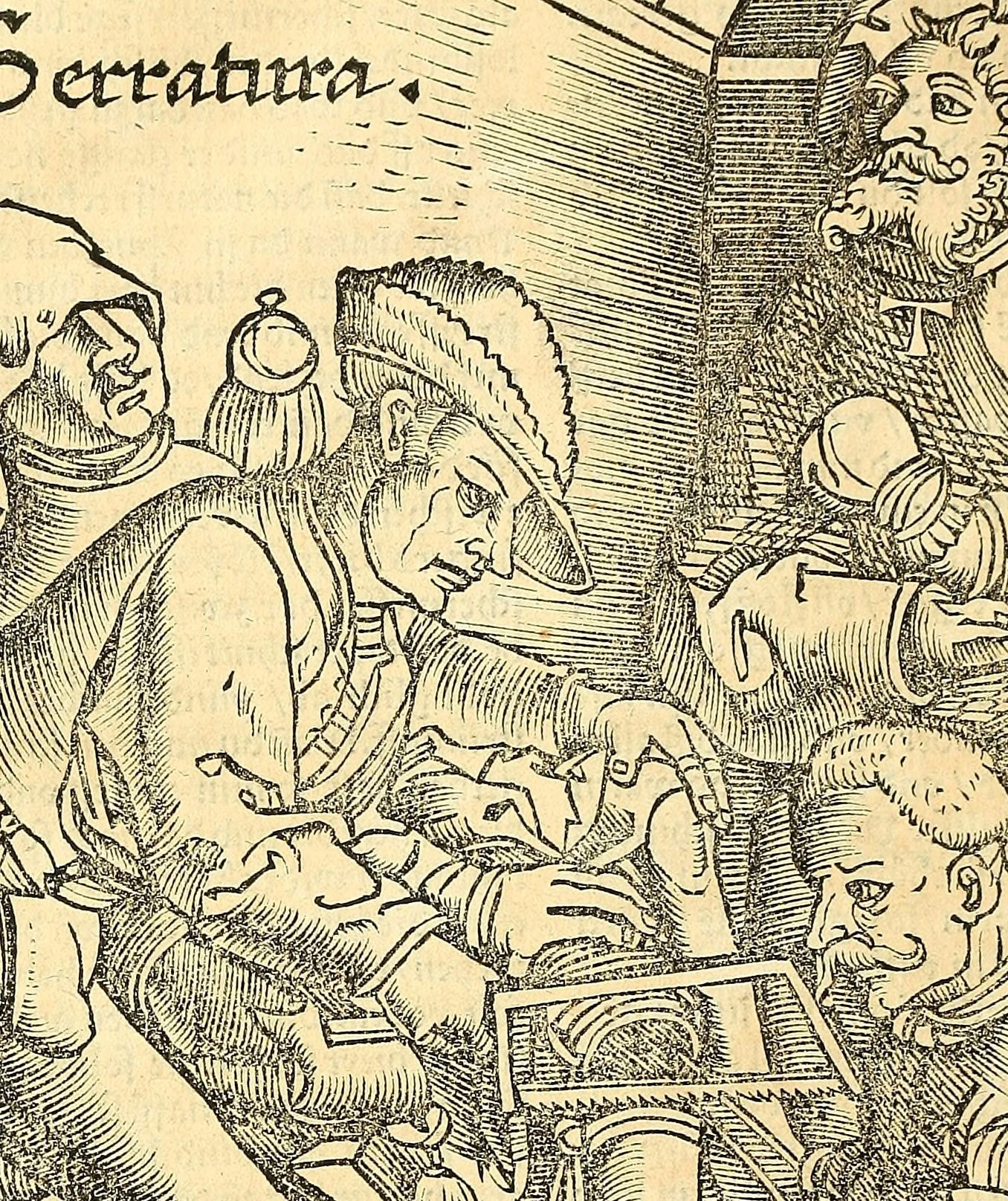
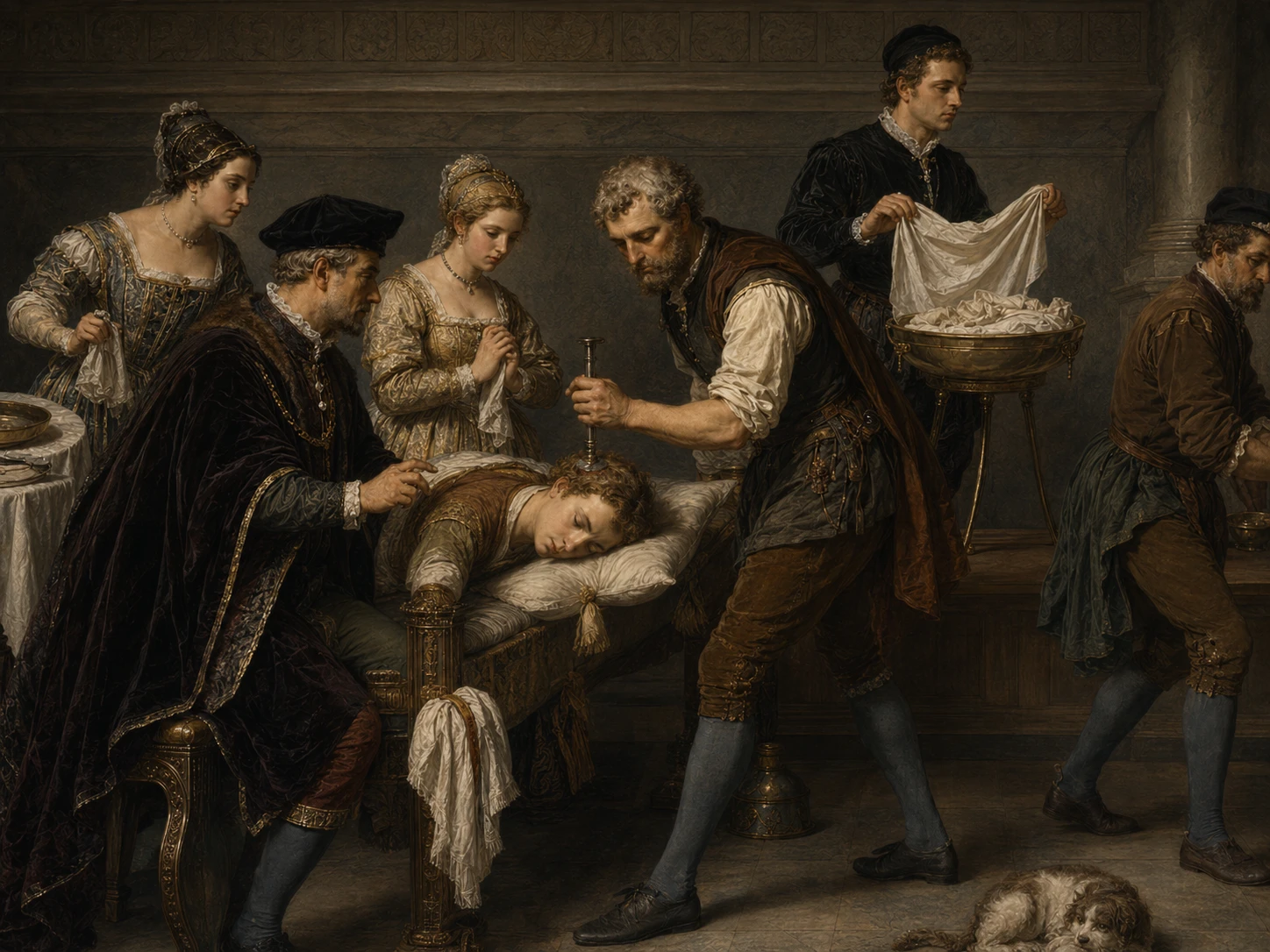
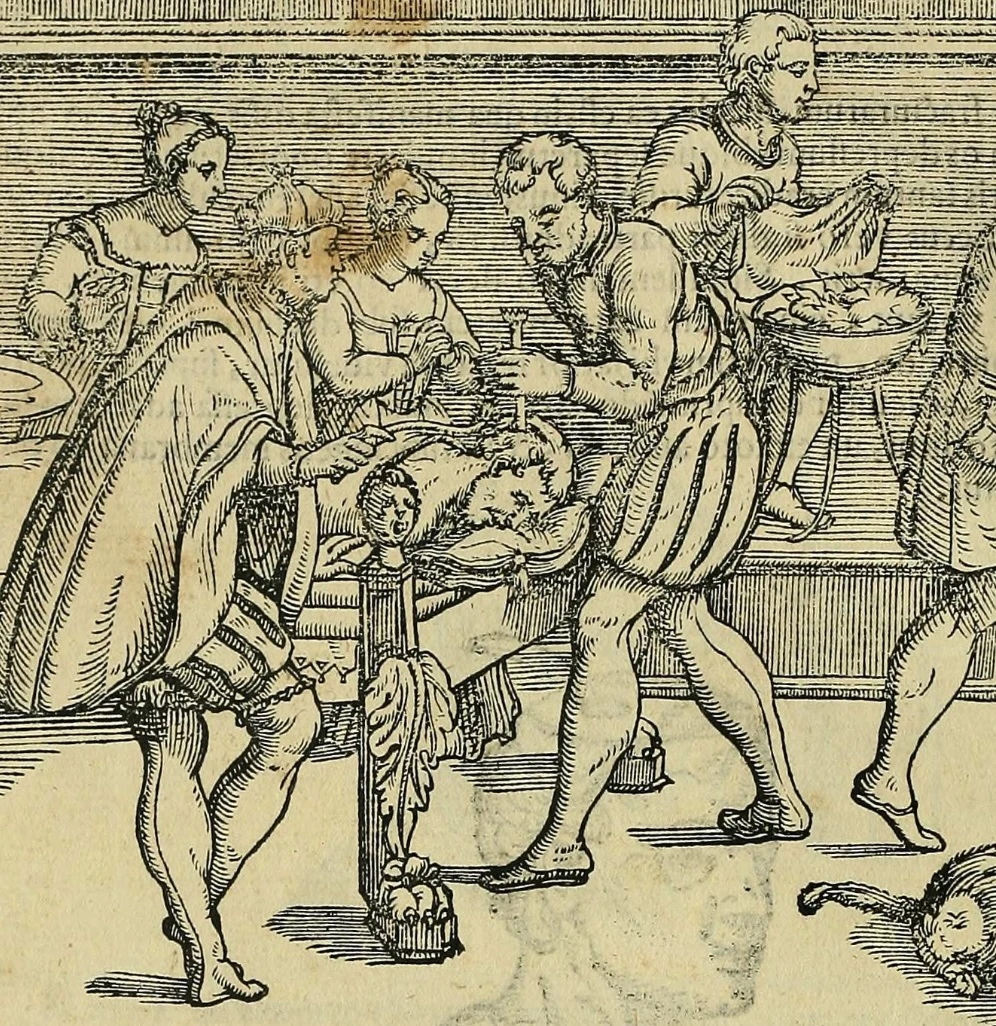
This work became opus magnum of the venetian surgeon. With this book Della Croce’s created large, practical, and richly illustrated synthesis of Renaissance surgery. His writings covered abscesses and tumours, wounds, ulcers, fractures and dislocations, cautery, phlebotomy, lithotomy, obstetrical and urological procedures, antidotes, and the instruments required for surgical practice. He was particularly important in the fields of traumatology, military surgery, and cranial surgery. His discussion of wounds caused by firearms, arrows, and other weapons reflected the changing nature of warfare in the sixteenth century. He also paid close attention to haemorrhage, penetrating trauma, injuries of the head and thorax, and extraction of foreign bodies. In cranial surgery, he showed an ability to move beyond ancient authorities: for example, he did not simply repeat Hippocratic rules on trepanation, but adapted surgical decisions to anatomical and practical circumstances. One of the most influential parts of his work was the seventh book, devoted to surgical instruments. It contained extensive woodcut illustrations of ancient and modern instruments, including drills, trephines, forceps, cauteries, syringes, and devices for extracting projectiles. This made his treatise not only a theoretical text but also a visual and technical manual for surgeons.
The near-simultaneous appearance of Della Croce's compendium and Paré's Les Oeuvres in the mid-1570s was no coincidence — it reflected a shared conviction that surgical knowledge belonged in print, open to all. By publishing in both Latin and the vernacular Italian, Della Croce achieved what few of his contemporaries managed: he spoke at once to the learned physician and the barber-surgeon who had never read a line of Latin, securing both a European reputation and a practical readership at home.
Perhaps the greatest difference between the two men was not talent or ambition, but luck and place. Paré lived and worked in France at a moment when France was the most powerful country in Europe, and he served four of its kings. His ideas traveled with French power and French prestige. Della Croce, may be equally gifted and prolific, served the Venetian Republic—a city that had once dominated the Mediterranean but was, by the sixteenth century, slowly losing its grip. Great surgeons need great stages, and Venice, for all its beauty and sophistication, was no longer the place it once had been.
Works
Della Croce, Giovanni Andrea. De morbo gallico. Venice, 1532.
Della Croce, Giovanni Andrea. Due trattati nuovi. Venice, 1560.
Della Croce, Giovanni Andrea. Chirurgiae Ioannis Andreae a Cruce ... libri septem. Venice: Giordano Ziletti / Jordanus Zilettus, 1573. Digital copy: archive.org/details/chirurgiaeioanni00dell/page/n3/mode/1up
Della Croce, Giovanni Andrea. Della cirugia ... libri sette. Venice: Giordano Ziletti / Jordanus Zilettus, 1574.
Della Croce, Giovanni Andrea. Cirugia universale e perfetta di tutte le parti pertinenti all’ottimo chirurgo. Venice: Giordano Ziletti / Jordanus Zilettus/ Francesco Ziletti, 1583.
Selected bibliography
De Ferrari, Augusto. “Della Croce, Giovanni Andrea.” In Dizionario Biografico degli Italiani, vol. 36. Rome: Istituto dell’Enciclopedia Italiana, 1988.
Giordano, Davide. Giovanni Andrea della Croce. Venice, 1939.
Di Matteo, B., Tarabella, V., Filardo, G., Tomba, P., and Marcacci, M. The Renaissance and the Universal Surgeon: Giovanni Andrea Della Croce, Master of Traumatology. International Orthopaedics 37, 2013: 2523–2528.
Di Ieva, Antonio, and Rosenfeld, Jeffrey V. The Legacy of Renaissance Surgeon Giovanni Andrea Dalla Croce on the History of Military Surgery and Neurosurgery. Neurosurgical Focus 53, no. 3, 2022: E3.