
Search results3 results
LIBRARY
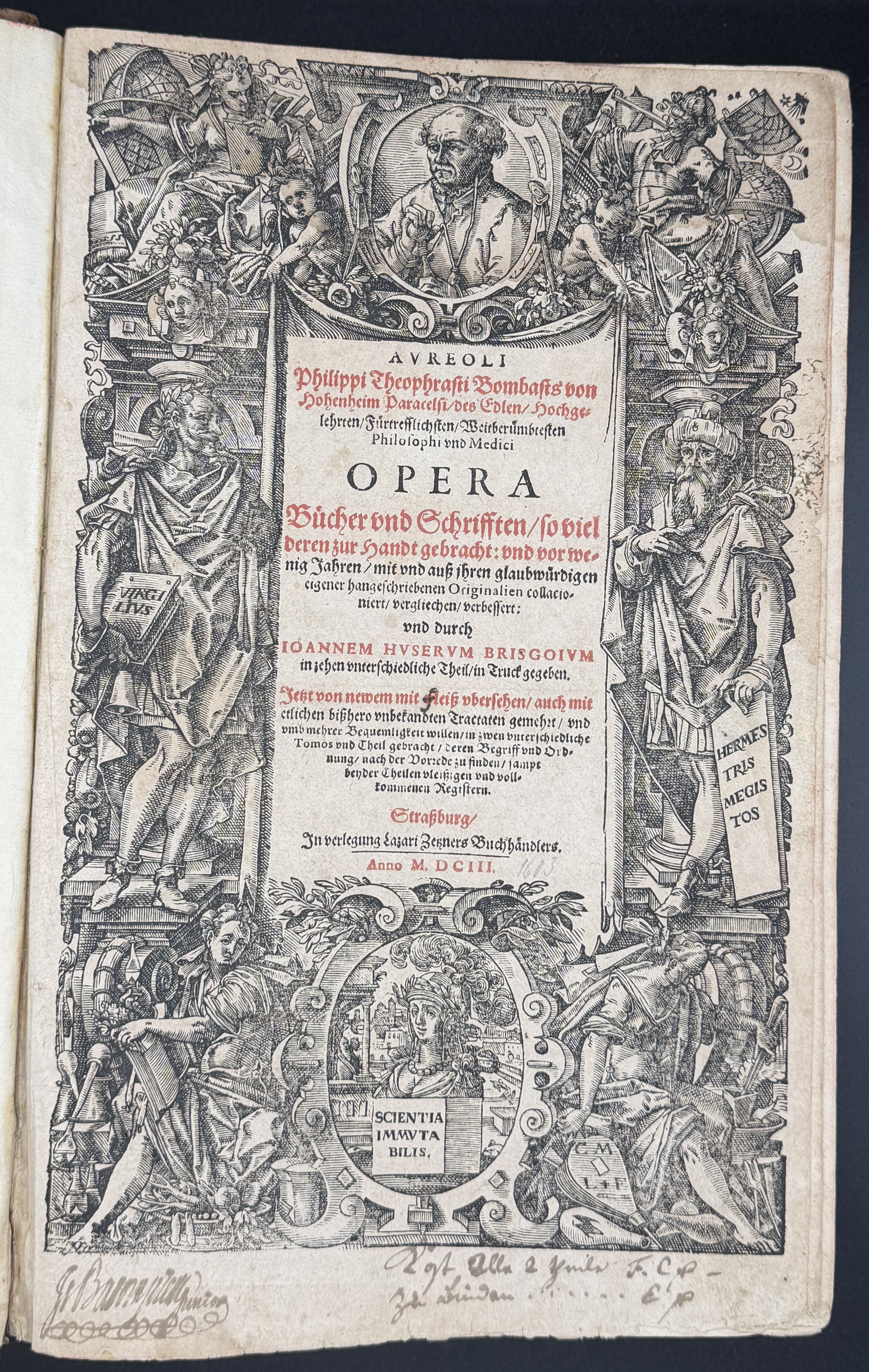
Germany, 18 C.
Paracelsus, Philippus Aureolus Theophrastus Bombastus von Hohenheim
Paracelsus, Philippus Theophrastus. Opera, Bücher und Schrifften, so viel deren zur Handt gebracht ...Strasbourg, Lazarus Zetzner, 1603. With: Opera ... Ander Theyl. Strasbourg, Lazarus Zetzner, 1603. 2 works in 2 volumes.
PEOPLE
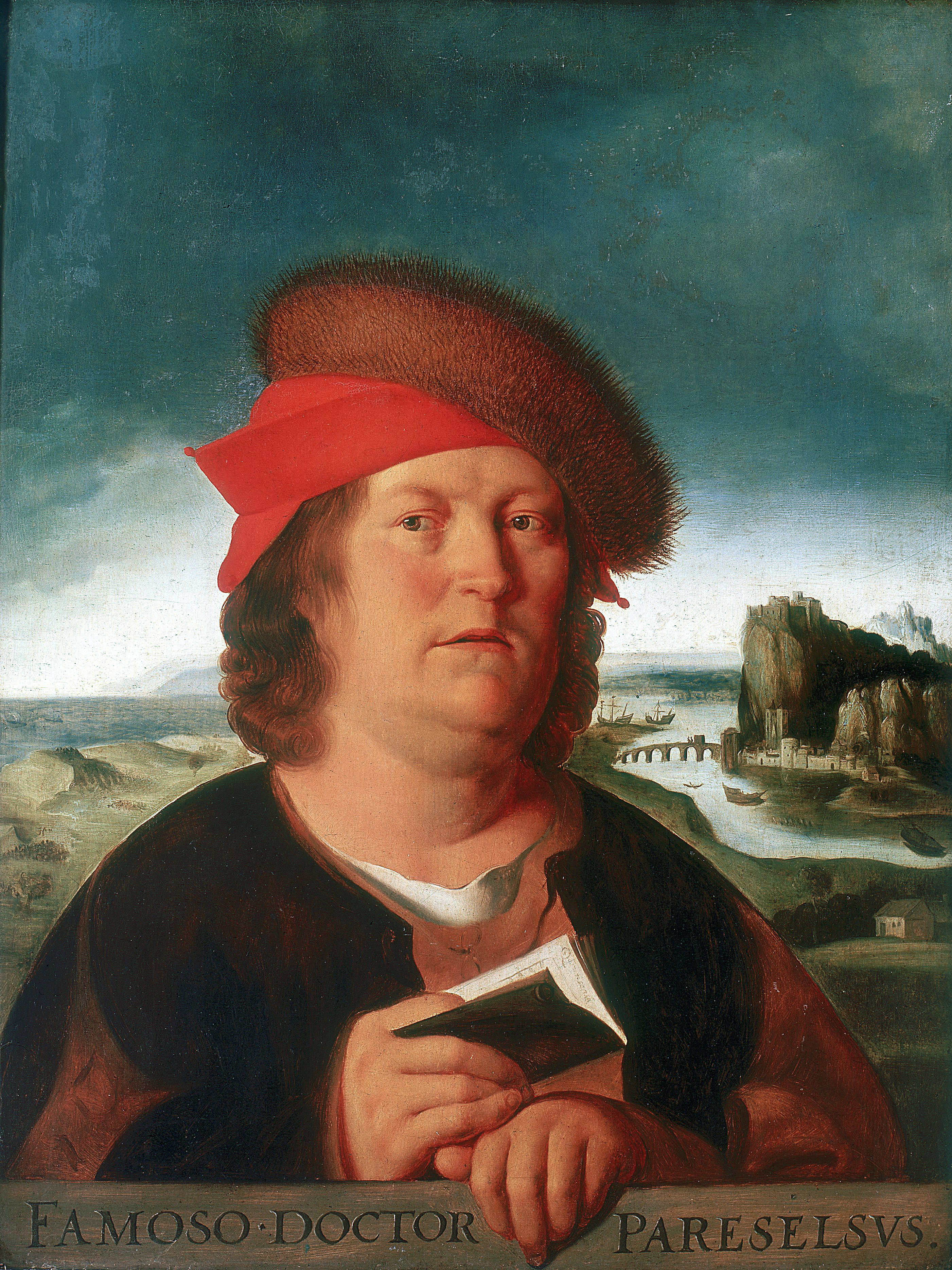
Paracelsus, also known by his full name Philippus Aureolus Theophrastus Bombastus von Hohenheim (1493–1541), was a Swiss-German physician, alchemist, natural philosopher, and one of the most controversial medical reformers of the Renaissance. He became famous because he challenged the authority of Avicenna, Galen, and Celsius, and the contemporary university medicine, argued that physicians should learn from direct experience, and promoted the use of chemical and mineral remedies. His importance lies especially in the connection he made between medicine and chemistry, which helped prepare the way for iatrochemistry, pharmacology, toxicology, and modern ideas about dosage. Britannica describes him as a physician and alchemist who “established the role of chemistry in medicine” and notes his famous surgical work Der grossen Wundartzney of 1536.
MUSEUM
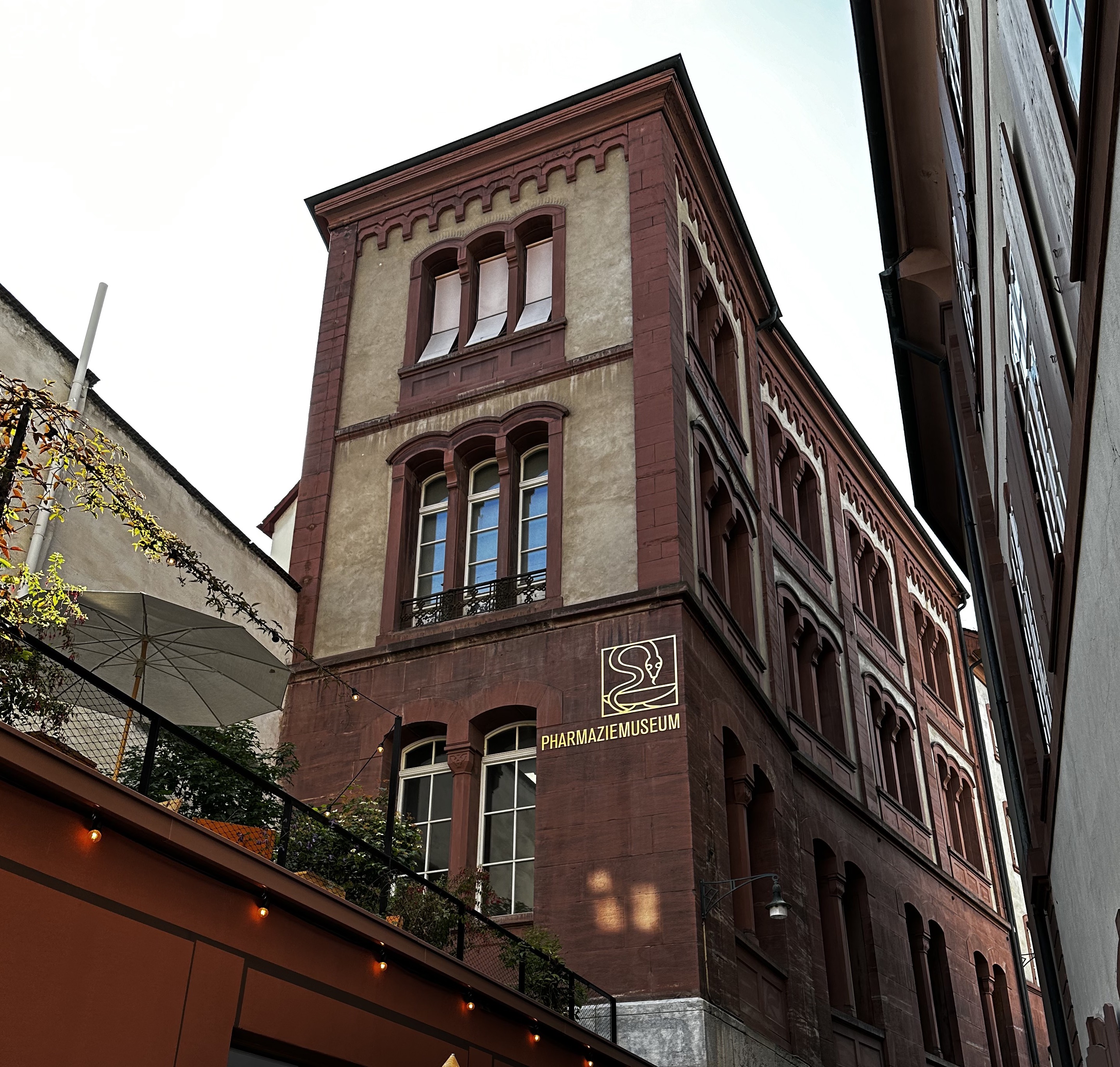
Switzerland, Basel
The Pharmacy Museum of the University of Basel (Pharmaziemuseum Universität Basel) is one of the largest and most important collections of historical pharmaceutical artifacts in the world, the only one of its kind in Switzerland. Its collection includes apothecary ceramics, fully preserved apothecary furniture, an alchemical laboratory, mortars, traveling apothecaries and surgical instruments, medical books, historical medicines and devices related to drug production. Museum is located in the heart of Basel's old town in the Zum Vorderen Sessel building, first mentioned in 1316. Over time, it has hosted notable figures such as Johann Amerbach, Johann Frobenius, Erasmus of Rotterdam, and Hans Holbein the Younger. In 1526-1527, the renowned Theophrastus von Hohenheim (Paracelsius) worked here, and his famulus Johannes Oporinus who later published Andreas Vesalius' groundbreaking anatomy book De fabrica corporis humani as well as works of Paracelsius.