
Search results4 results
COLLECTION
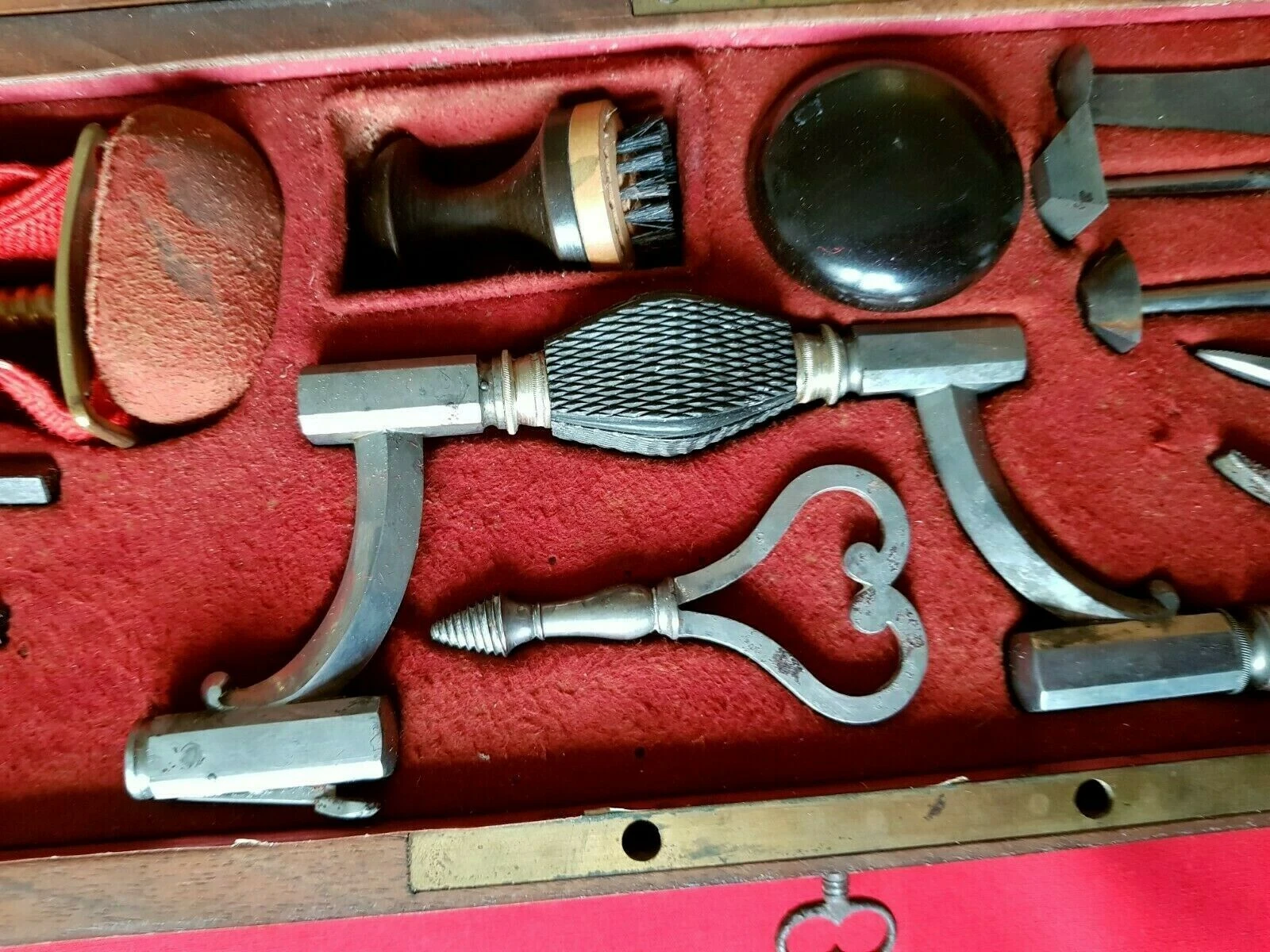
France, 19 C. 1 half
The rare French amputation kit, early 19 century, contains the typical instruments of a trauma and military surgeon, such as brace and bit cranial trephine, elevators and rugines, amputation saw, brush to clean the operative field. The case has two compartments, has original key.
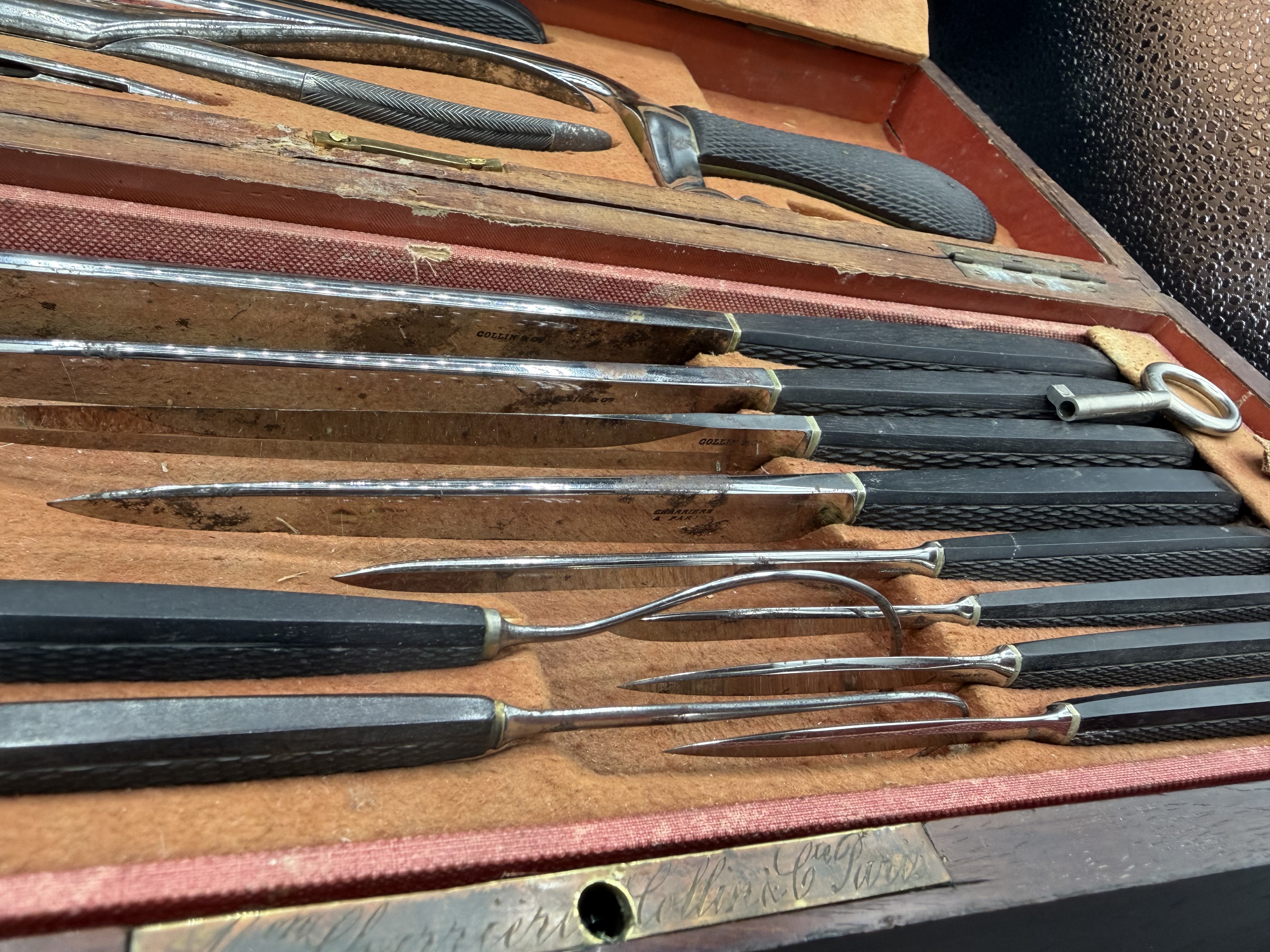
France, 19 C. 2 half
Amputation instrument case by Charrière/COLLIN & Cie, dating from around 1880. The case is complete with its set of eight knives, two curved needles on handles, one large curved needle without a handle, large bow amputation saw with a spare blade, smaller metacarpal saw, powerful detachable bone forceps, small clamping forceps and red haemostatic band, a pair of forceps and a curved needle. All the instruments including saws have ebony handles. All instruments have markings of the house of Charrière: Charrière á Paris or COLLIN & Cie.
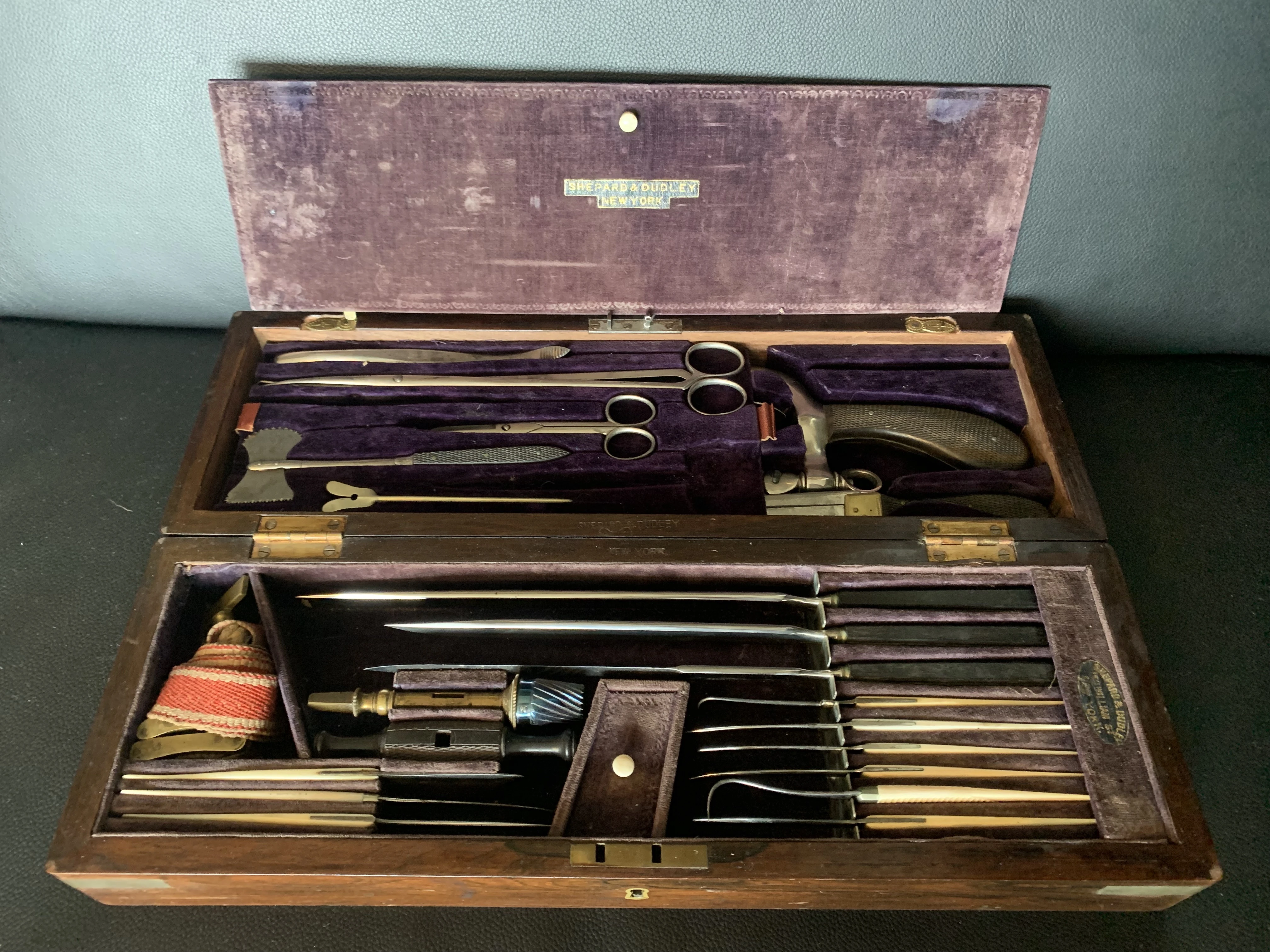
USA, 19 C. 2 half
American Amputation and trepanation cased set, by Shepard & Dudley NY, late XIX century. The wooden case contains the typical instruments of a trauma surgeon, such as amputation saw, trephine head with handle, screw tourniquet. The amputation saw and three amputation knives have ebony handles, the rest hand instruments like scalpels and hook have ivory handles. The case has two compartments lined with violet velvet. On the cover of the upper compartment, the inscription "SHEPARD & DUDLEY * NEW YORK".
Articles
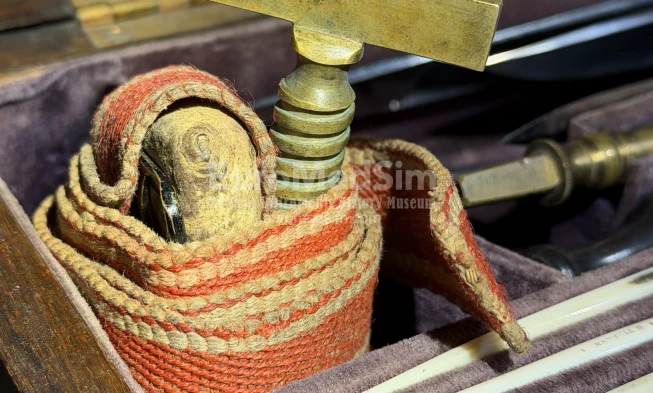
The tourniquet is considered by many to be one of the most significant inventions in the history of surgery, having saved millions of soldiers and trauma victims. The earliest documented methods of blood control emerged in ancient India, as evidenced by Sushruta's ligatures, and referenced by Roman medici for vessel tying and cauterisation, in addition to external limb binding. Medieval and Renaissance barber-surgeons utilised tight bands, and in the 18th century, Jean-Louis Petit developed the screw tourniquet. The evolution of emergency care has been characterised by significant developments, with innovations ranging from Esmarch's elastic bandage to modern C-A-T devices.