
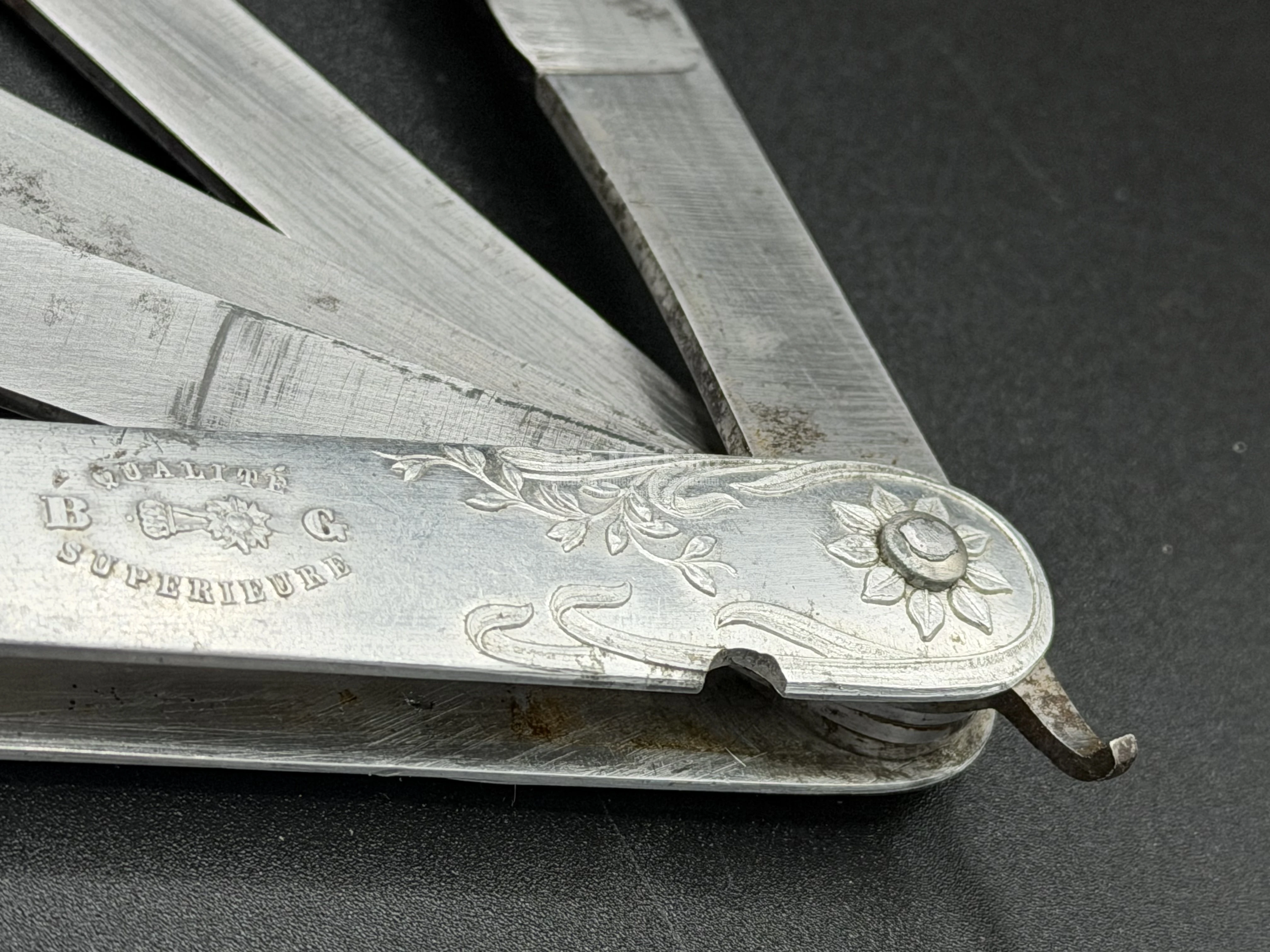
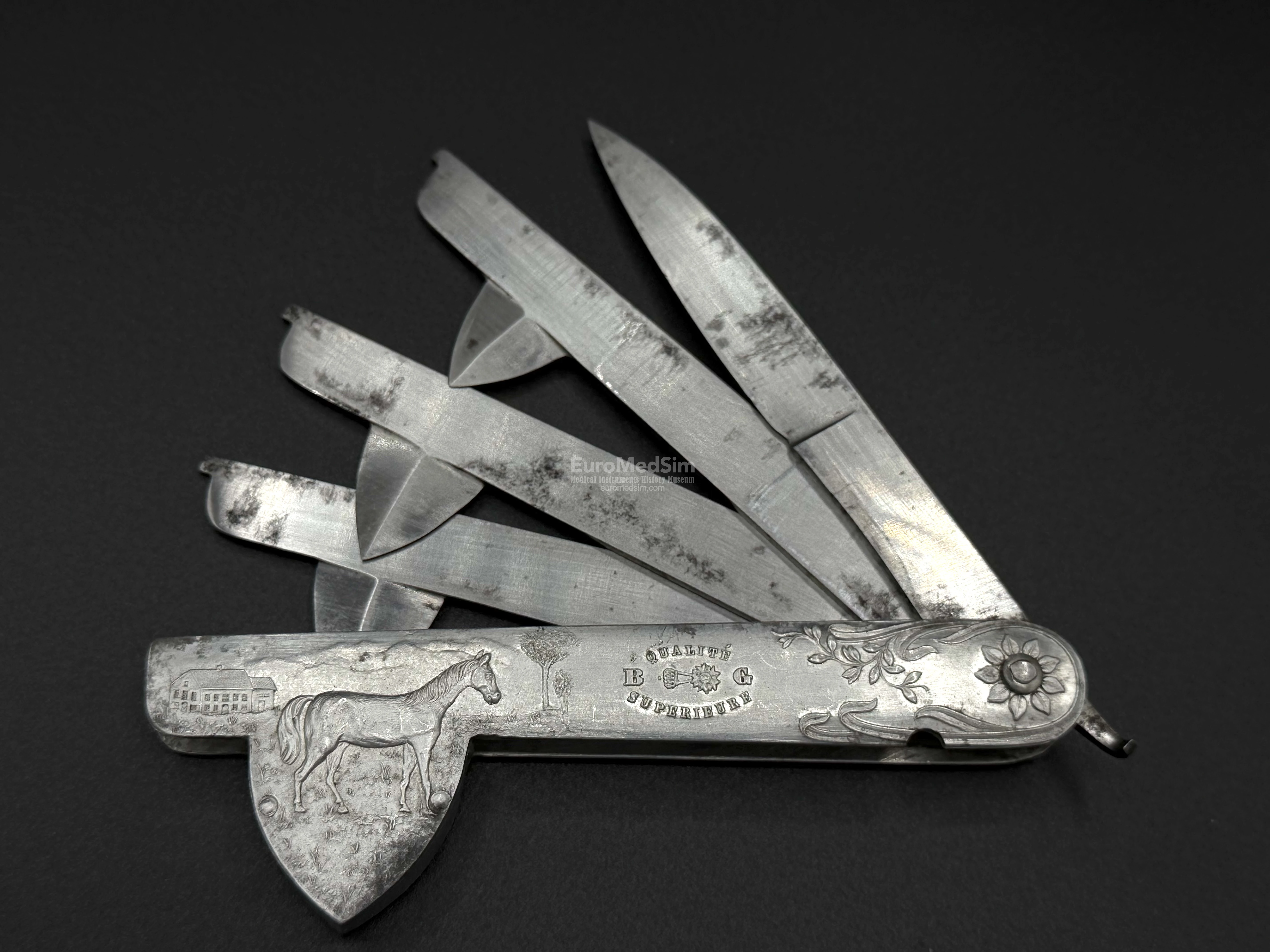

Fleam with three blades and a knife in aluminium scales
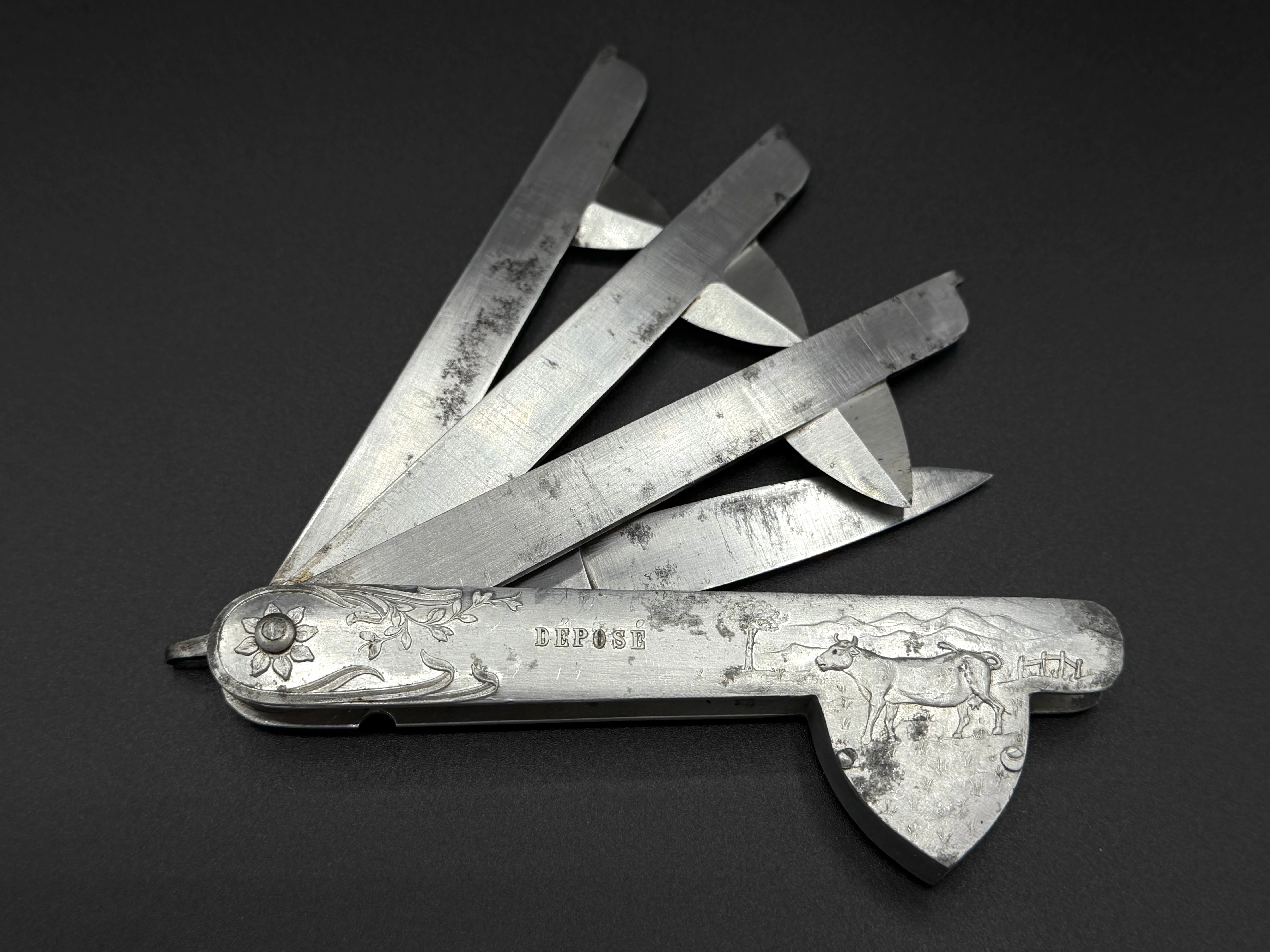
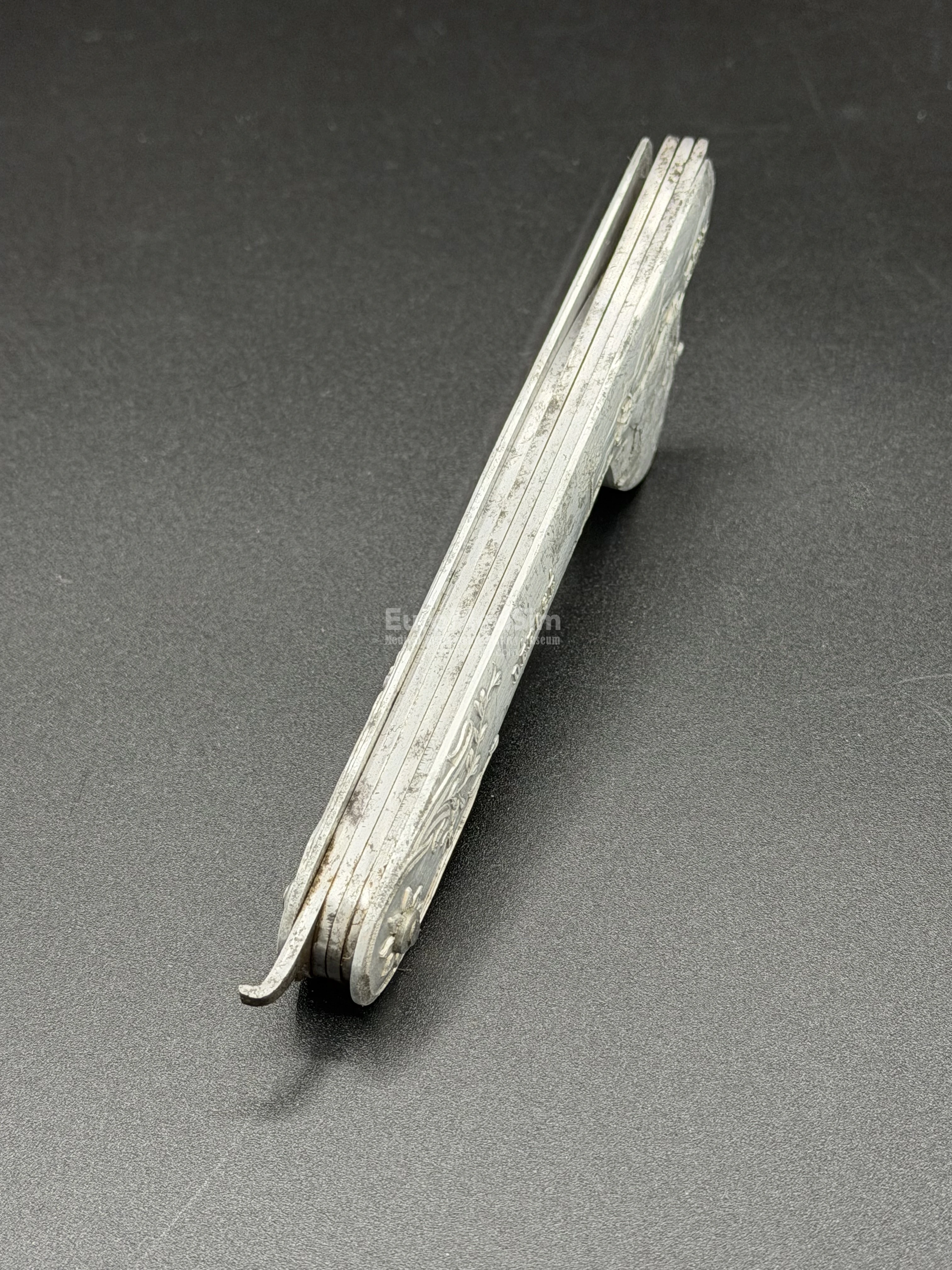
French veterinary fleam — antique veterinary instrument for bloodletting (French: flamme vétérinaire, lancette de saignée), used on large domestic animals, primarily horses and cattle. Dating from the Belle Époque, it is a folding multi-blade fleam featuring decorative aluminum overlays on the handle. It contains four folding steel blades: one knife and three fleams (lancets). Each fleam is slightly different in size; the knife blade measures approximately 11 cm, while the fleams reach up to 11.5 cm. The largest fleam working part has depth of 18 mm.
The fleams can be used separately, allowing the practitioner to choose the appropriate blade depending on the type of animal and the target blood vessel—such as the jugular, tail, or ear veins in cattle. To perform the venesection, the sharp tip of the fleam is placed on the skin opposite the vein, and a blow is struck to its back using a special hammer or wooden stick. This technique ensures a quick and virtually painless incision.
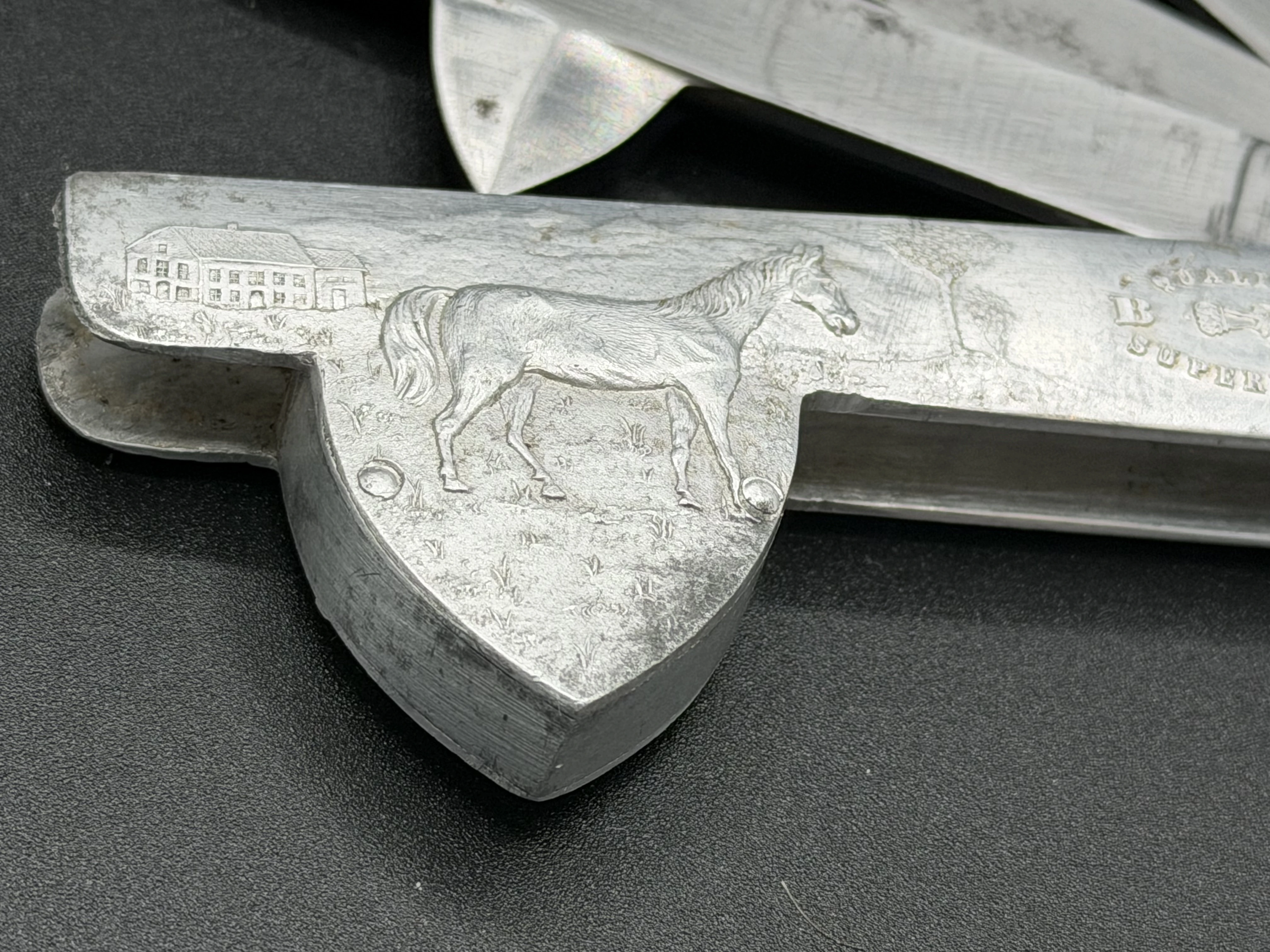
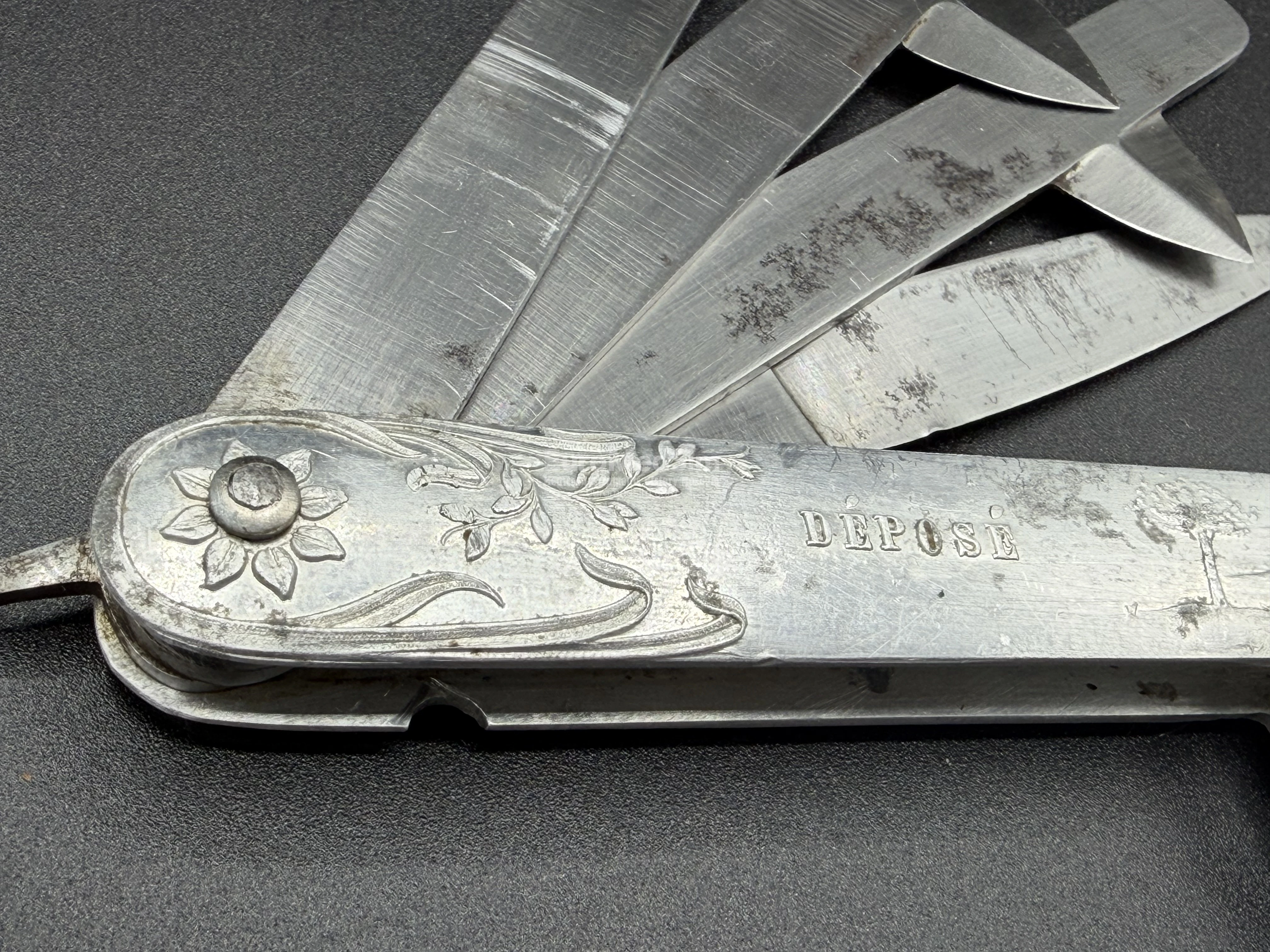
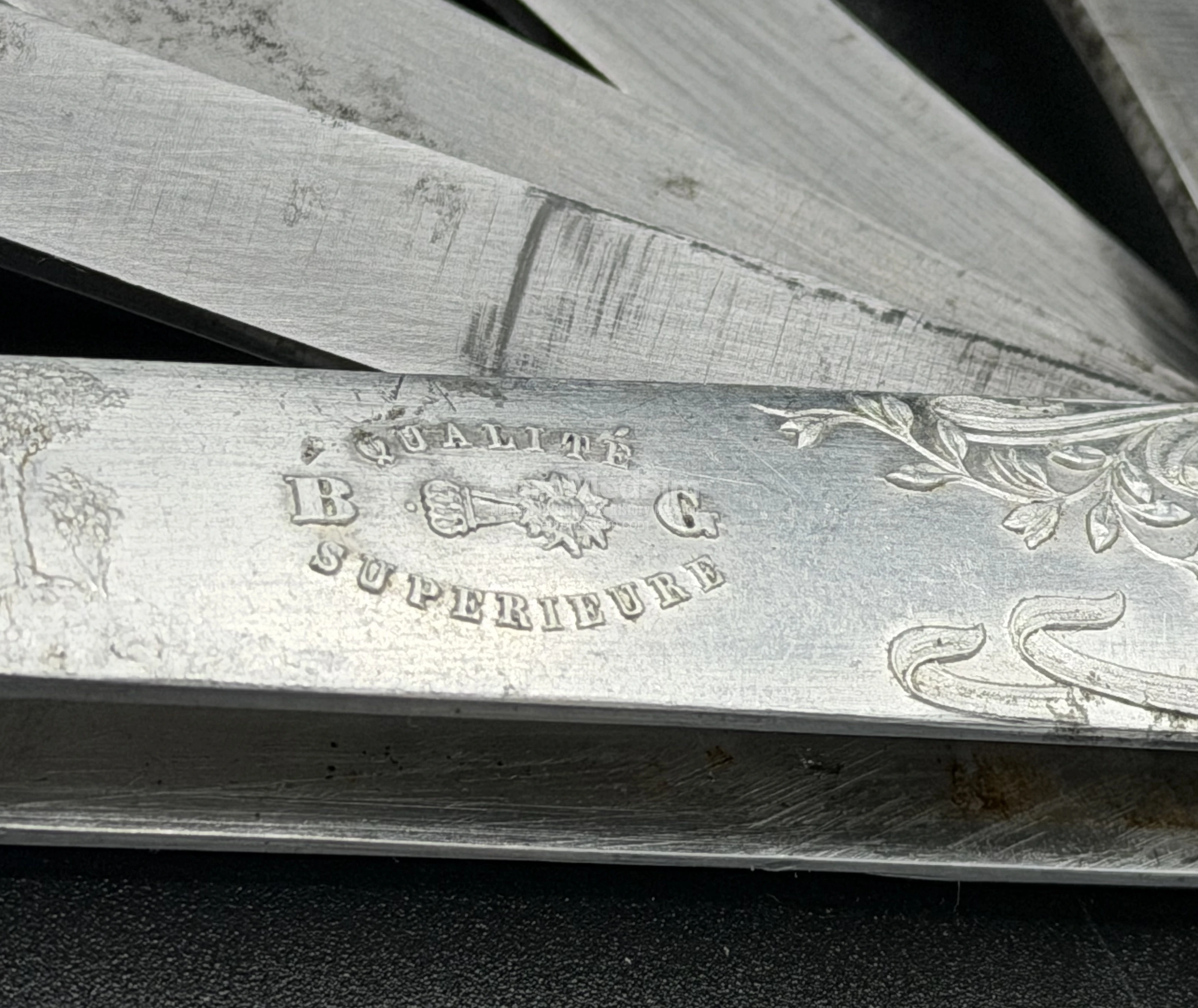
The aluminum overlays on the handle feature rich decorative relief. One side of the handle depicts a horse, the other a cow in the pastoral landscapes. These scenes are complemented by floral motifs with edelweiss flowers. The handles are inscribed with Qualité Supérieure and Déposé (French for "Supreme Quality" and "Deposited/Registered"). The trademark includes the Order of the Legion of Honor, featuring the profile of an emperor's head with a crown above the order. On either side of the order are the letters B and G, with Qualité inscribed above and Supérieure below them.
Manufactured by Brene Guillaumot et fils (Damremont and Ney-l'Évêque near Nogent in Haute-Marne, France) at about 1890-1910.
Origin
Initially, we believed that the knife was probably manufactured in the town Thiers (département Puy-de-Dôme, région Auvergne-Rhône-Alpes), one of the historic centers of French cutlery production, including folding knives, farriers’ implements, and veterinary instruments, highlighted today in the Cutlery Museum (Musée de la coutellerie). Instruments were frequently stamped with trade quality marks rather than individual maker names. However, when we contacted experts for clarification, we received a letter from the director of the museum, which stated, in particular, that after inspection it was found that the style and quality of the handles did not correspond to the characteristics usually observed in Thier's products, especially with regard to veterinary items. Experts believe that this may be a product from Nogent, another famous French cutlery manufacturing center. This hypothesis was based, in particular, on Lauriana Grosse's book entitled “Professional Knives and Tools,” illustrated with photographs from the Nogent Museum.
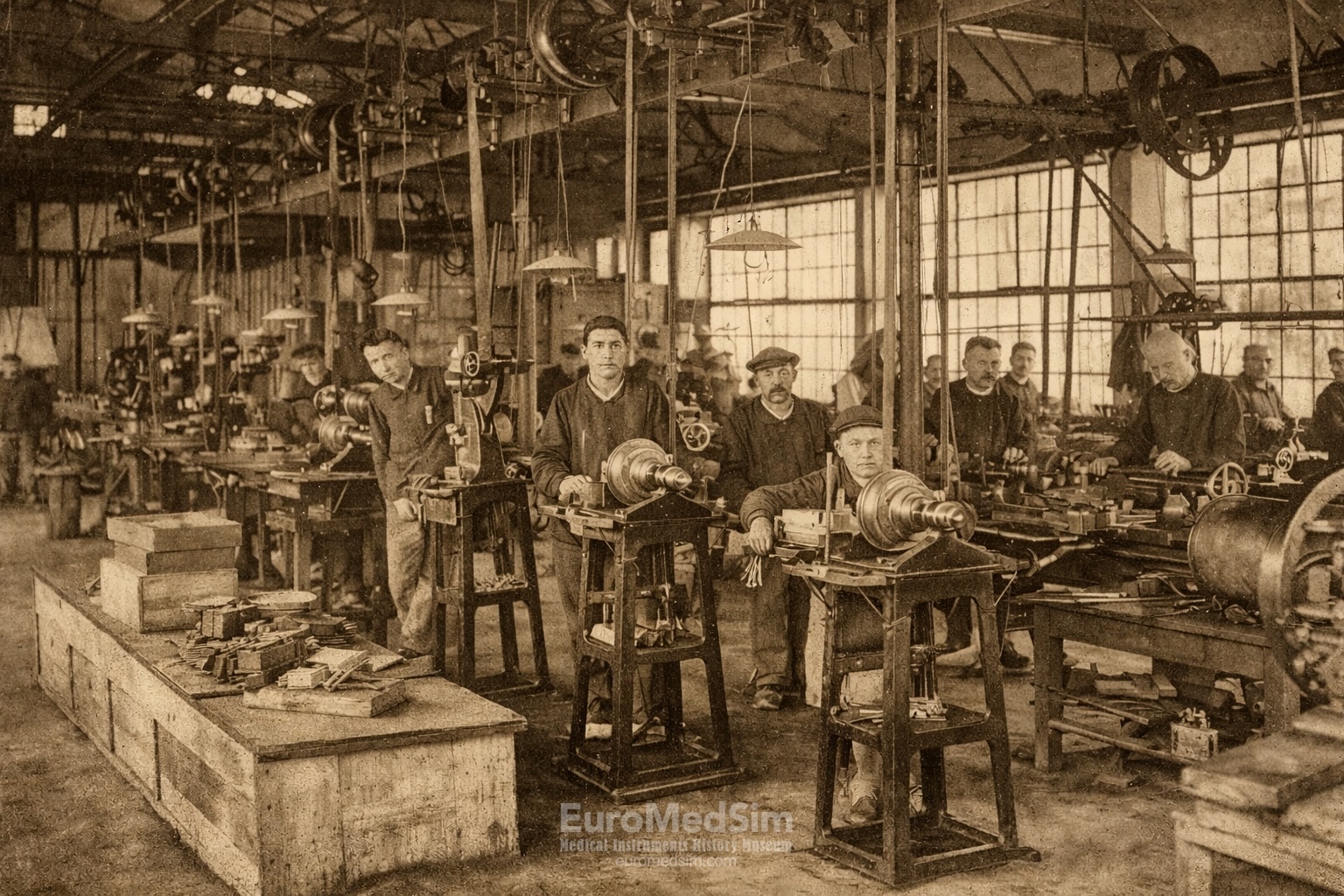
Interior of a cutlery fabric at Nogent (Haute-Marne Département), 19. century. Digitally restored. Source: EuroMedSim
Following this, we sought advice from experts at the Nogent Cutlery Museum (Musée de la coutellerie), who provided us with the following explanations. The manufacturer of this folding fleam is Brene Guillaumot et fils, which was located in the villages of Damremont and Ney-l'Évêque near Nogent (Haute-Marne, France). This conclusion was supported by photographs and exhibits from the museum's collection. This company specialized in the production of veterinary instruments. Emperor Napoleon III allowed the firm to use the Order of the Legion of Honor (French: Ordre national de la Légion d'honneur) for commercial purposes. This is how the company's trademark was born, consisting of the imperial crown above the Order of the Legion of Honor with the profile of the emperor. The initials B and G (Brene Guillaumot) were located on the sides, and the emblem was framed by the inscription Qualité Supérieure.

National Order of the Legion of Honour (French: Ordre national de la Légion d'honneur) engraved on the trade mark. B and G stand for Brene Guillaumot
The aluminium scales of the fleam handle are embossed in relief with floral motifs in the shape of edelweiss flowers were common in Alpine regions. The inscriptions Déposé indicates that the decorative design was registered under French industrial design protection. Such markings are characteristic of commercially distributed instruments produced by regional workshops rather than major Parisian surgical manufacturers. Abbreviation instead of a clear markings suggest production by major Paris surgical houses (e.g., Collin, Mathieu) or by other regional centers such as Nogent, which specialized more heavily in fine surgical instruments.
Dating
The presumed period of production is limited to approximately 1870–1910, morel likely 1890–1900, which is confirmed by several independent indicators:
The use of embossed aluminium is a key chronological indicator. Before the development of the Hall–Héroult electrolytic process in 1886, aluminium was an exceptionally rare and costly material. Produced through laborious chemical reduction methods, it was manufactured only in small quantities and at great expense; in the mid-nineteenth century, its price rivaled or even exceeded that of silver. Aluminium was therefore regarded as a novel and prestigious metal, displayed at international exhibitions and occasionally used for luxury or experimental objects rather than for everyday manufacture. The introduction of large-scale electrolytic production after 1886 dramatically reduced costs and increased availability. By the 1890s, aluminium had become commercially viable and rapidly gained popularity in decorative and applied arts. Its light weight, resistance to corrosion, and suitability for casting, pressing, and embossing made it particularly attractive for ornamental details on domestic goods, cutlery, tools, and Art Nouveau design objects at the turn of the twentieth century. So, presence of aluminium decorative scales indicates the earliest date — unlikely before 1890.
Markings and decorations: “Déposé” design registration marking is consistent with late 19th- and early 20th-century commercial practice. Trade-grade quality inscription is a characteristic of turn-of-the-century cutlery commerce. The decorative treatment of this instrument—featuring flowing vegetal ornament, asymmetrical composition, and naturalistic representations of livestock—is consistent with the Art Nouveau aesthetic that flourished during the Belle Époque period (1871–1914). This style favored organic, sinuous forms and pastoral imagery, and it was frequently applied even to utilitarian objects, reflecting a broader cultural integration of artistic design and industrial production at the turn of the twentieth century. The folding form, riveted aluminum covers, and embossed decorative pattern correspond to that period.
The design of the Legion of Honor, featuring a crown and the profile of the emperor, corresponds to the Second Empire period, which ended with the overthrow of Napoleon III in 1870. However, the company could have continued to use this original design thereafter. This was not a political statement but a marketing one—emphasizing the company’s history of excellence and its previous "By Appointment" status. Using an old medal on a new material (aluminum) is a classic "Belle Époque" move: blending modern technology with traditional prestige.
The horse and cow are rendered in a naturalistic manner, with soft modeling and without geometric stylization, set within a modest pastoral setting that includes architectural and landscape elements in the background. Such romanticized rural imagery is characteristic of late nineteenth- and early twentieth-century agricultural and industrial graphic design of the Belle Époque, whereas by the 1920s animal figures tended to become more simplified, linear, and less pictorial.
Following the outbreak of the First World War in 1914, industrial manufacture increasingly emphasized functional restraint, material economy, and simplified forms. While decorative elements did not disappear entirely in the post-war period, the elaborate and fluid ornamental vocabulary characteristic of the high Belle Époque gradually gave way to more restrained and, in the 1920s, more geometrically stylized tendencies associated with emerging Art Deco design.

Comparison of two styles — above Art-Nouveau (1890-1910), below ArtDeco (1920-1940). Digital reconstruction. Source: EuroMedSim
The distinctly organic and naturalistic character of the ornament on this fleam aligns more closely with pre-war decorative practice than with the stylistic developments of the 1920s. On stylistic grounds, therefore, the instrument is most plausibly dated to the late Belle Époque, that is, the early twentieth century prior to or around the First World War. A production date in the first decade of the twentieth century is most consistent with the decorative evidence, while manufacture in the immediate pre-war years cannot be excluded.
Bloodletting veterinary practice. The venesection procedure (Bloodletting) had largely fallen out of favor in human medicine by the late 19th century, but it persisted longer in veterinary practice, particularly in rural and agricultural settings. Horses—essential for transport, agriculture, and military use—and cattle were frequently subjected to venesection as part of humoral and empirical therapeutic traditions. Persistence of veterinary bloodletting was decreasing to the beginning of the 20th century, however could still practiced in rural Europe into the 1910s–1920s. After the 1920s–1930s, advances in veterinary physiology and pathology led to the rapid decline of bloodletting as a standard therapeutic intervention. Fleams of this type therefore represent the final phase of practical veterinary bloodletting instruments before their obsolescence. Fleams such as this one represent the final generation of actively used veterinary bloodletting instruments, before their transition into obsolescence and eventual collection as historical artifacts.
Thus, based on the presence of aluminium decorative scales (not before 1890), the registered decorative design “Déposé” and the commercial quality marking (common in the late 19th through early 20th century), Art Nouveau floral and pastoral design of scales typical for pre-War period, and the persistence of bloodletting in veterinary practice till early 20th century this fleam can be dated with high probability to circa 1890–1910.
Condition report
Condition Grade 1 (Mild), slight wear traces.
Provenance
Acquired from Swiss antique knife shop in 2026 via eBay.
Acknowledgement
We express our gratitude for the invaluable assistance in the investigation to Florent MOLLE, director of the Musée de la Coutellerie et des sites patrimoniaux in Thiers (Puy-de-Dôme), and Benoît GARNIER, director of the Musée de la Coutellerie in Nogent (Haute-Marne). Their insights allowed us to determine the manufacturer, place of production, and approximate date of the piece.
