
Collection10 results
England , 1880
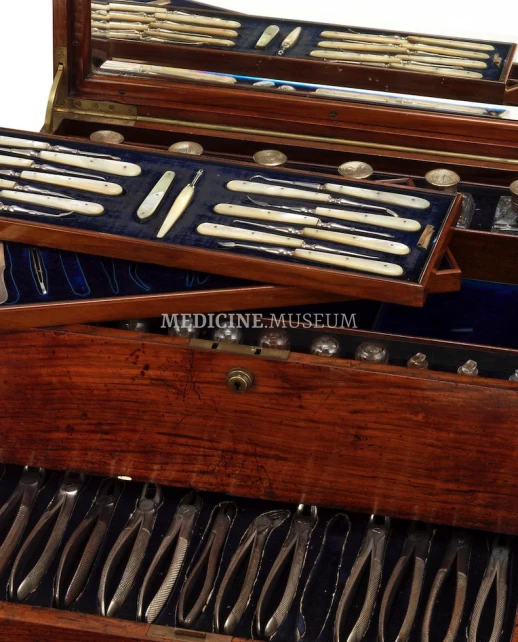
A fine presentation Dentistry and Surgical Chest, English, late 19th century is contained in the walnut brass-bound case, with an engraved brass plaque on the lid with a leopard coat of arms inscribed LABOR OMNIA VINCIT, C.I.H. ("Work conquers all"), with four Bramah locks and associated key for the lid and the front and side compartments. The compartments (three with beveled mirrors), fitted with blue velvet covering lodgements for instruments, contain cut-glass bottles with glass stopper and hinged metal cap bearing the same motto, a Claudius Ash & Sons booklet with dental tin foil leaves, dental and surgical instruments with mother-of-pearl (nacre) or tortoiseshell handles, some with decorative carved mother-of-pearl handles. The instruments are marked: SAVIGNY & CO, LONDON; MAW SON & THOMPSON, SWS, and SMALE. Property from a private collection, acquired in the mid-20th century. By repute commissioned and used by a dental surgeon aboard an early Transatlantic luxury liner.
England , 1890
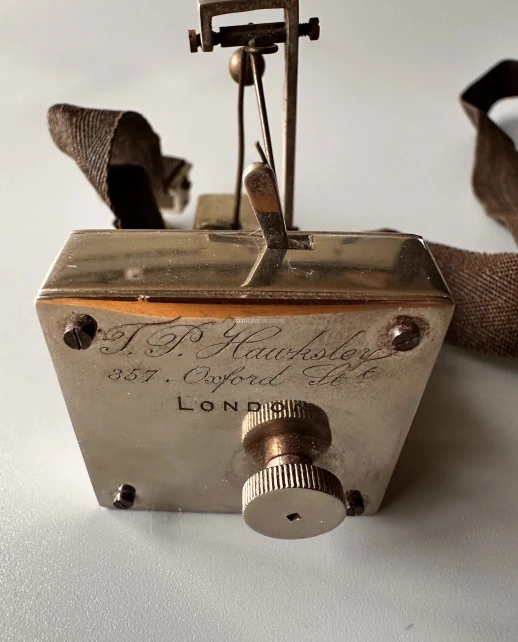
Dudgeon's sphygmograph by Hawksley, English, c.1890, the clockwork housing engraved 'T. P. Hawksley 357 Oxford St London', with clockwork mechanism to one side, dark fabric wrist strap, in original black leather covered case, lined in purple velvet, with the trade logo inside the lid.
England , 1865
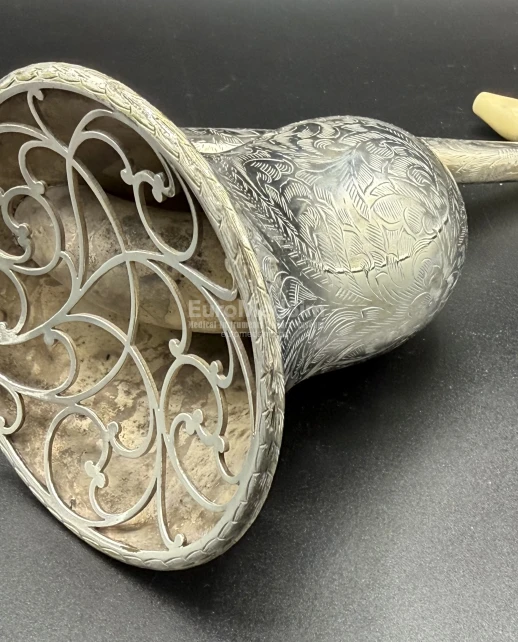
An elaborately-engraved silver-plated F.C.Rein & Son London Dome Hearing Aid. English, ca. 1865, engraved: 'F. C. Rein & Son Patentees, sole inventors, & only makers, 108 Strand, London.', ca. 20 cm, with ivory earpiece.
France , 1890
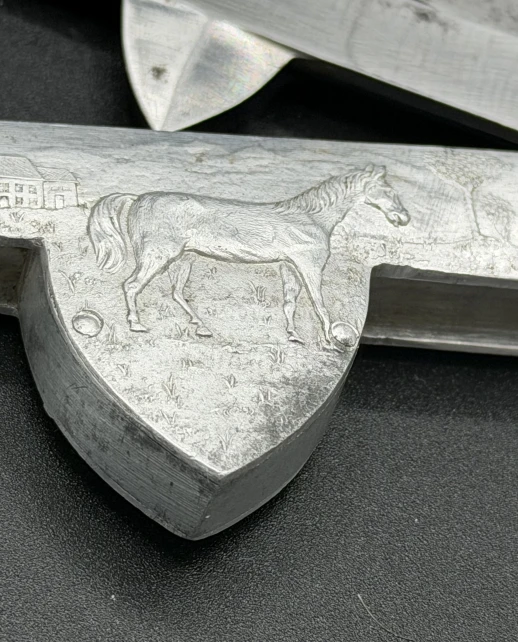
Veterinary folding multi-blade fleam with embossed aluminium scales (c. 1890–1910). Produced by Brene Guillaumot et fils (Nogent region, France), this four-blade folding instrument represents the final generation of veterinary bloodletting tools. It features Art Nouveau embossed aluminum scales depicting pastoral scenes of horses and cattle. While the trademark displays Napoleon III’s Legion of Honor, the use of industrial aluminum and the "Déposé" mark date the piece to the late Belle Époque. Origin: Damremont/Ney-l'Évêque, France.
England , 1880
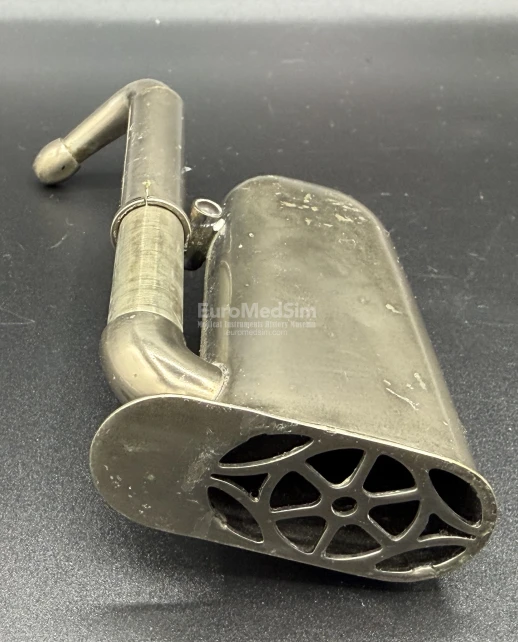
A nickel-plated brass Hawksley-Type сompact ear trumpet hearing aid, with telescopic earpiece-tube and decorative grille. Length 13,5cm. England, c.1880.
France , 1880
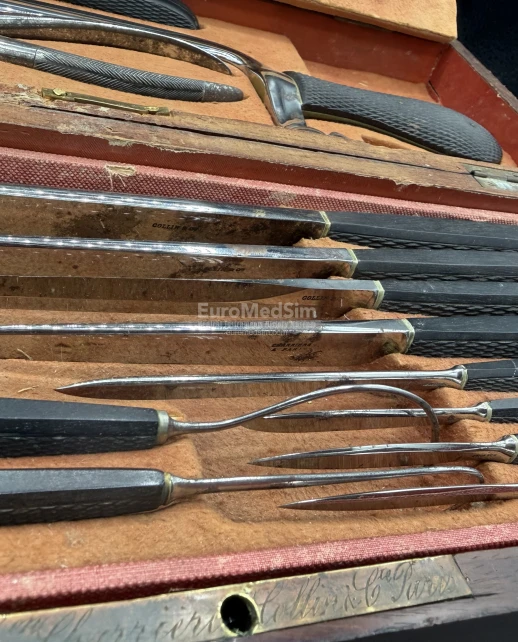
Amputation instrument case by Charrière/COLLIN & Cie, dating from around 1880. The case is complete with its set of eight knives, two curved needles on handles, one large curved needle without a handle, large bow amputation saw with a spare blade, smaller metacarpal saw, powerful detachable bone forceps, small clamping forceps and red haemostatic band, a pair of forceps and a curved needle. All the instruments including saws have ebony handles. All instruments have markings of the house of Charrière: Charrière á Paris or COLLIN & Cie.
USA , 1870
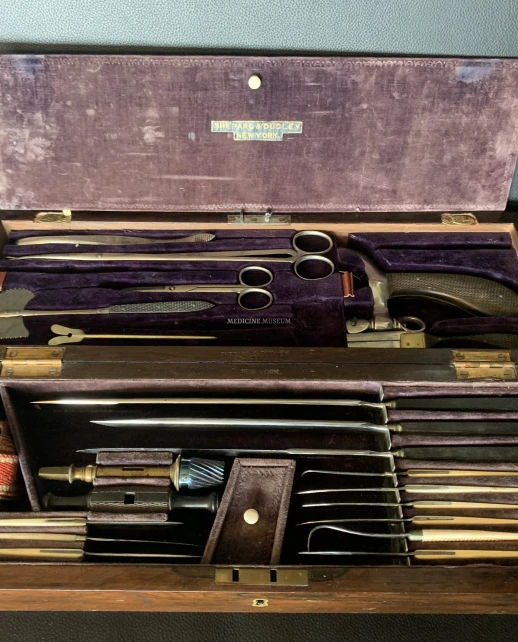
American Amputation and trepanation cased set, by Shepard & Dudley NY, late XIX century. The wooden case contains the typical instruments of a trauma surgeon, such as amputation saw, trephine head with handle, screw tourniquet. The amputation saw and three amputation knives have ebony handles, the rest hand instruments like scalpels and hook have ivory handles. The case has two compartments lined with violet velvet. On the cover of the upper compartment, the inscription "SHEPARD & DUDLEY * NEW YORK".
France , 1880
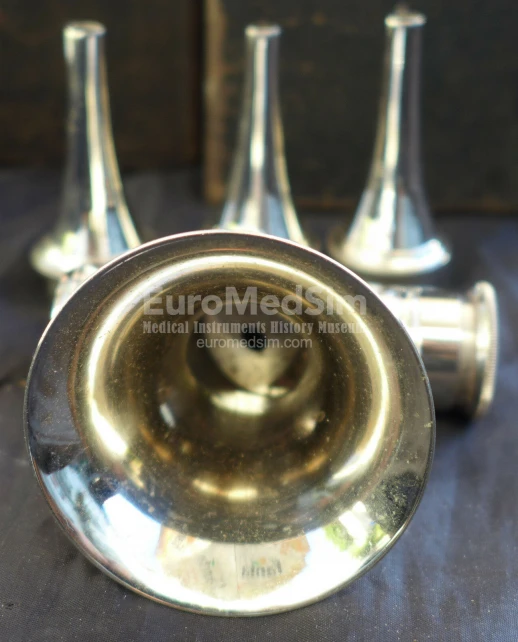
Bruton's otoscope with 3 mirrors (speculi auris) in a box. Manufacturer: PELLETIER Ainé, Paris, France, 19 century. The set is housed in a dark-grey calico box with a spring-loaded clasp, purple velvet interior and a padded lid with an embossed gold logo of the maker.
England , 1880
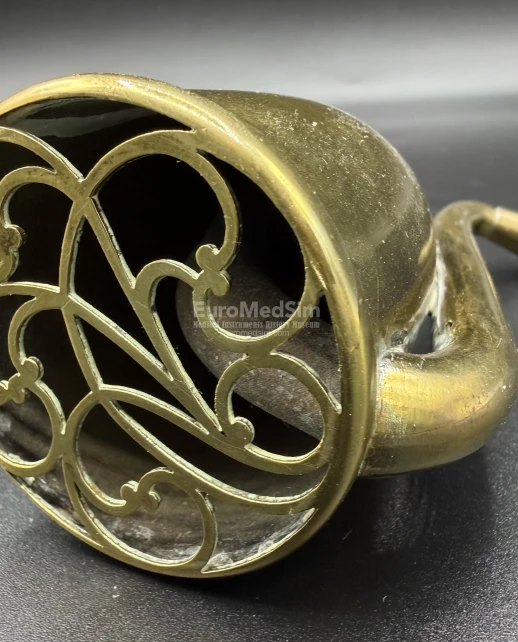
Hearing tube with a parabolic bell, brass. Bell-shaped sound collector (London Dome type) with a U-shaped hearing tube that originates from the bottom of the bell and exits from the side, curving back upward in a U-shape (“swan-shaped”). Decorative floral grill. No manufacturer’s markings. England, ca. 1880.
Germany , 1890
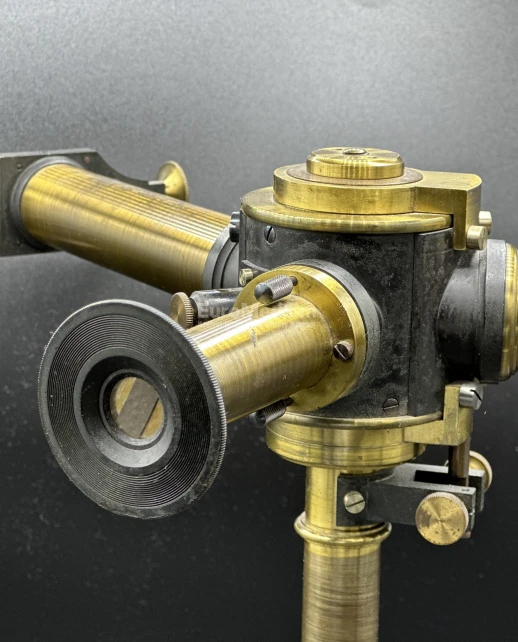
The rare spectrometer by „Franz Schmidt & Haensch", Berlin, end of 19. century. Constructed of lacquered and ebonized brass, it features a brown enamelled tripod base made of cast iron. The main assembly consists of a central pillar mounted on the tripod base, supporting a drum that holds the prism and three tubes