
Search results8 results
LIBRARY
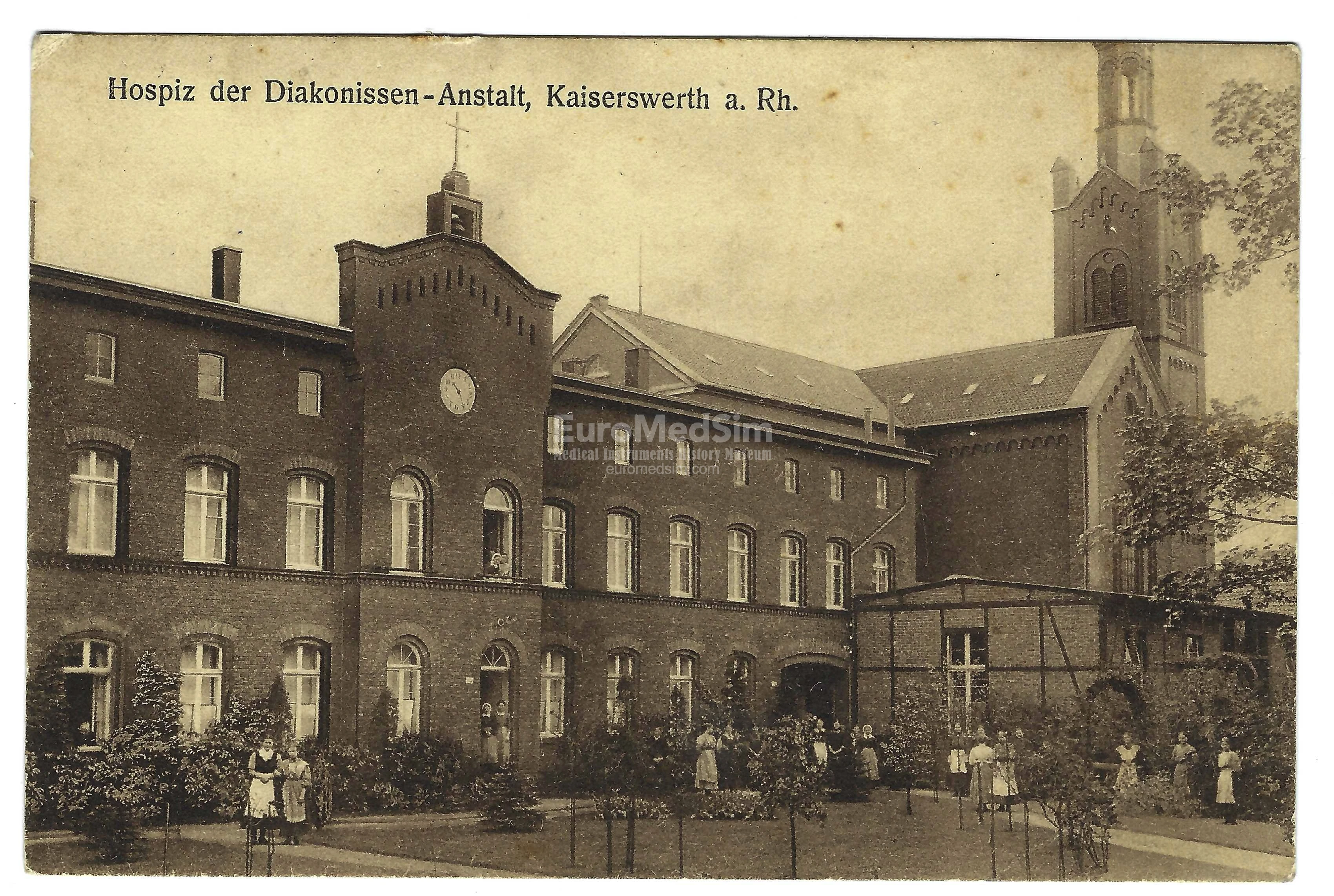
Germany, 1918
Fliedner, Theodor , Nightingale, Florence
Postcard titled “Hospiz der Diakonissen-Anstalt, Kaiserswerth a. Rh.” with a handwritten private message on the back, bearing a green “German Empire” 5 Pf., postally used stamp, cancelled on August 9, 1913. Cardboard, letterpress printing, handwritten text in ink.
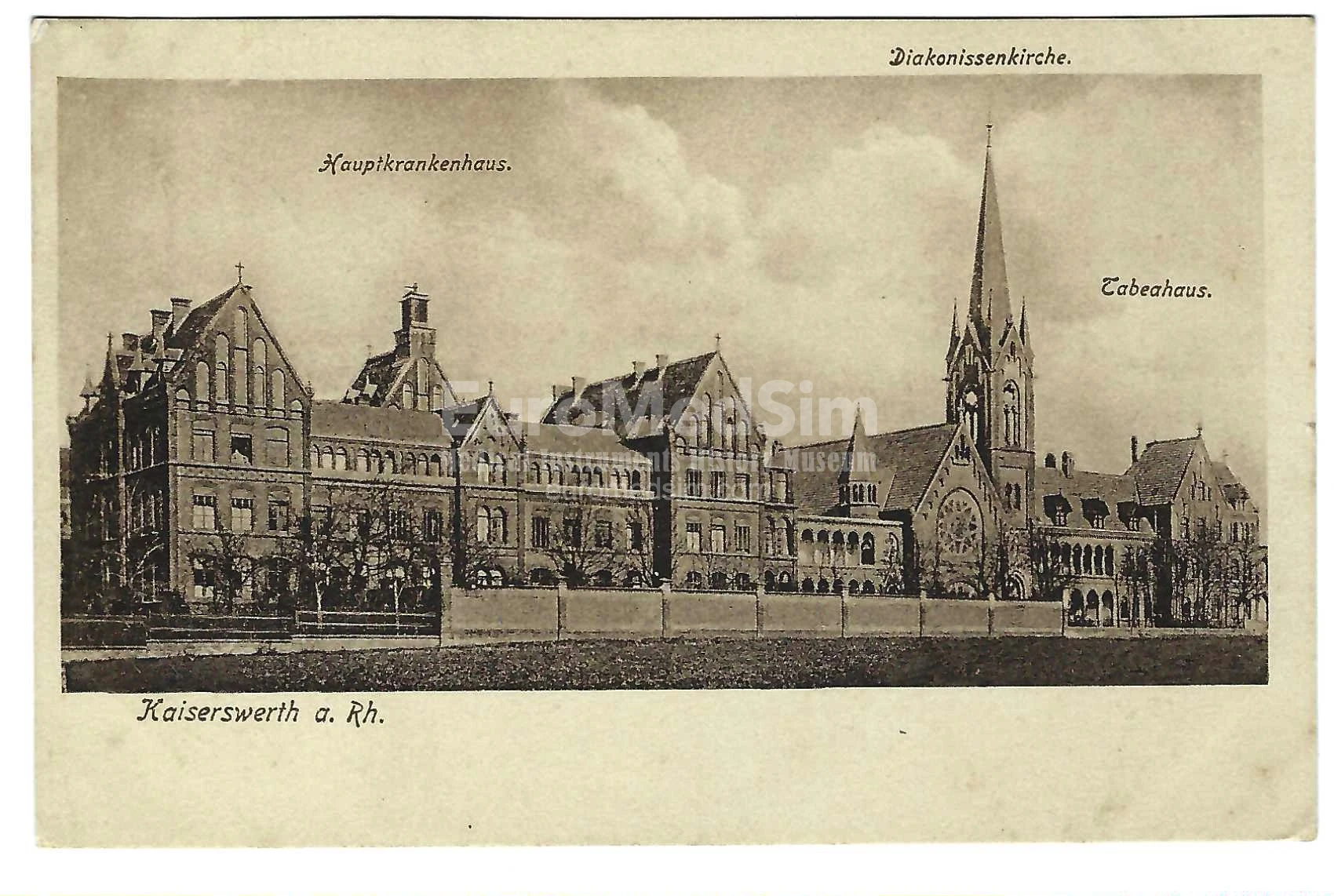
Germany, 1916
Fliedner, Theodor , Nightingale, Florence
Postcard titled “Kaiserswerth a. Rh. Hauptkrankenhaus, Diakonissenkirche, Tabeahaus." The postcard cancelled 26.12.1916
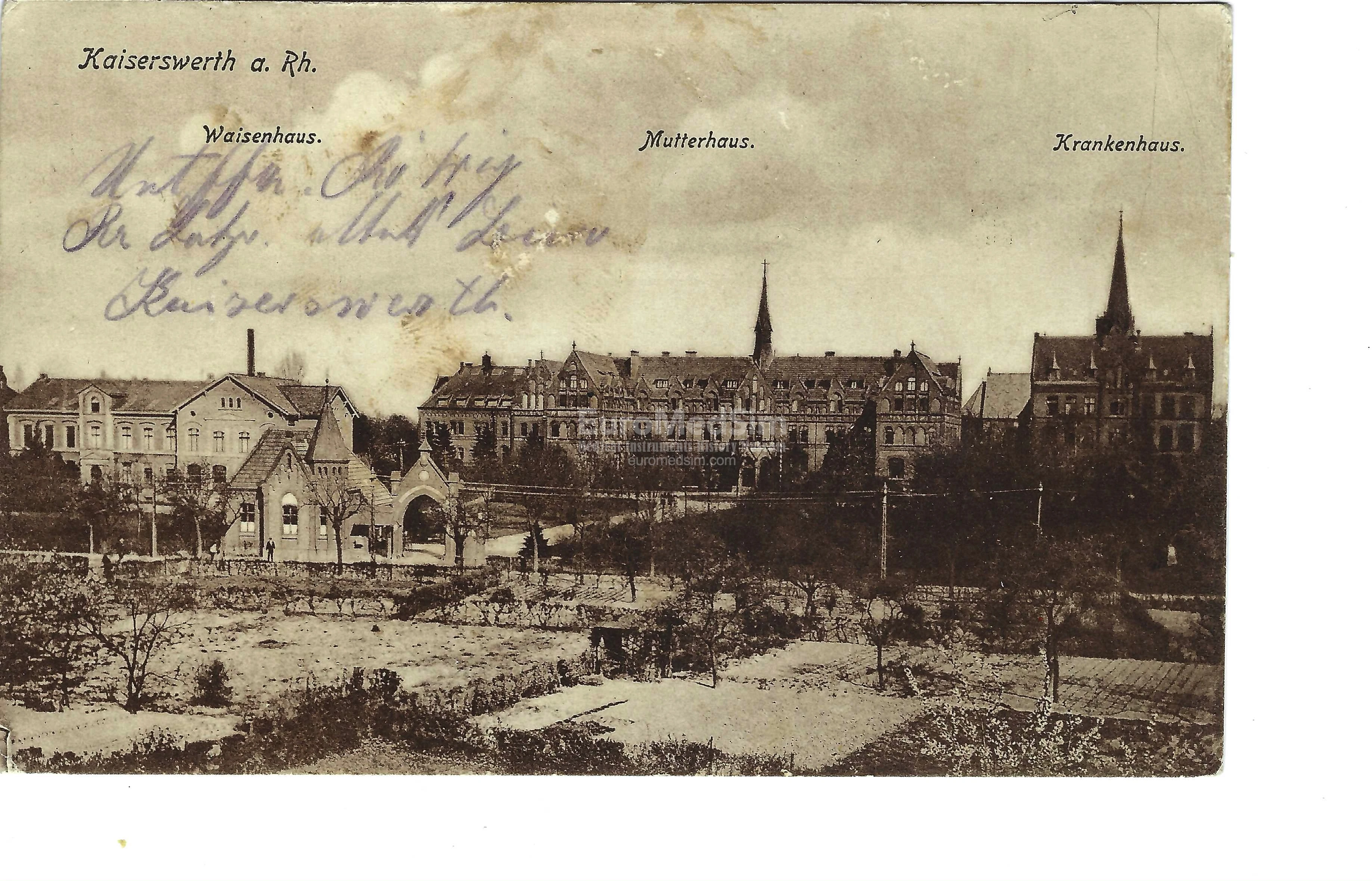
Germany, 1917
Fliedner, Theodor , Nightingale, Florence
Postcard titled “Kaiserswerth a. Rh. Weisenhaus, Mutterhaus, Krankenhaus". The postcard cancelled 23 August 1917.
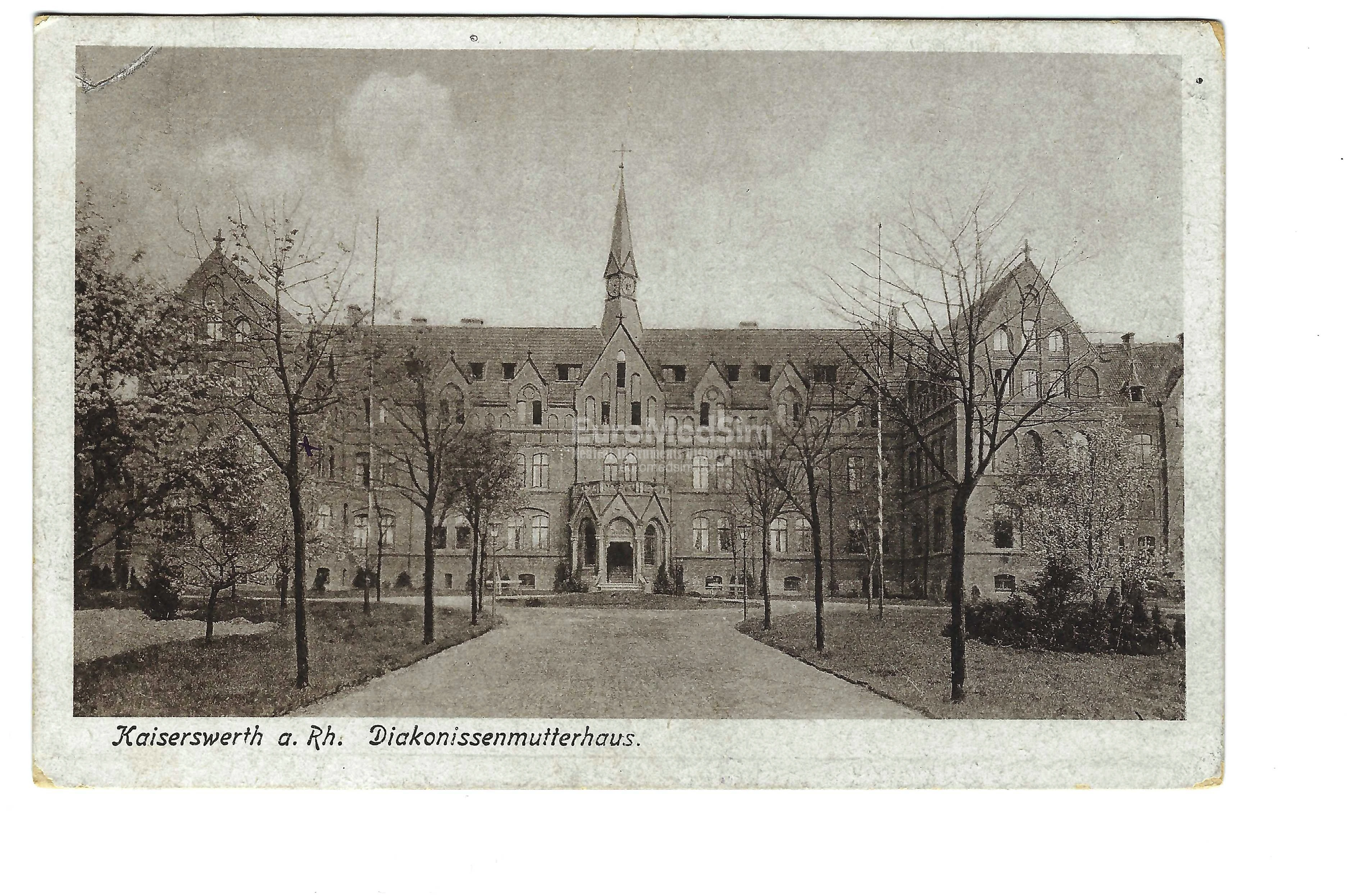
Germany, 1918
Fliedner, Theodor , Nightingale, Florence
Postcard titled “Kaiserswerth a. Rh. Diakonissenmutterhaus,” with a message on the back, bearing a “German Empire” postally used stamp, cancelled on November 25, 1918.
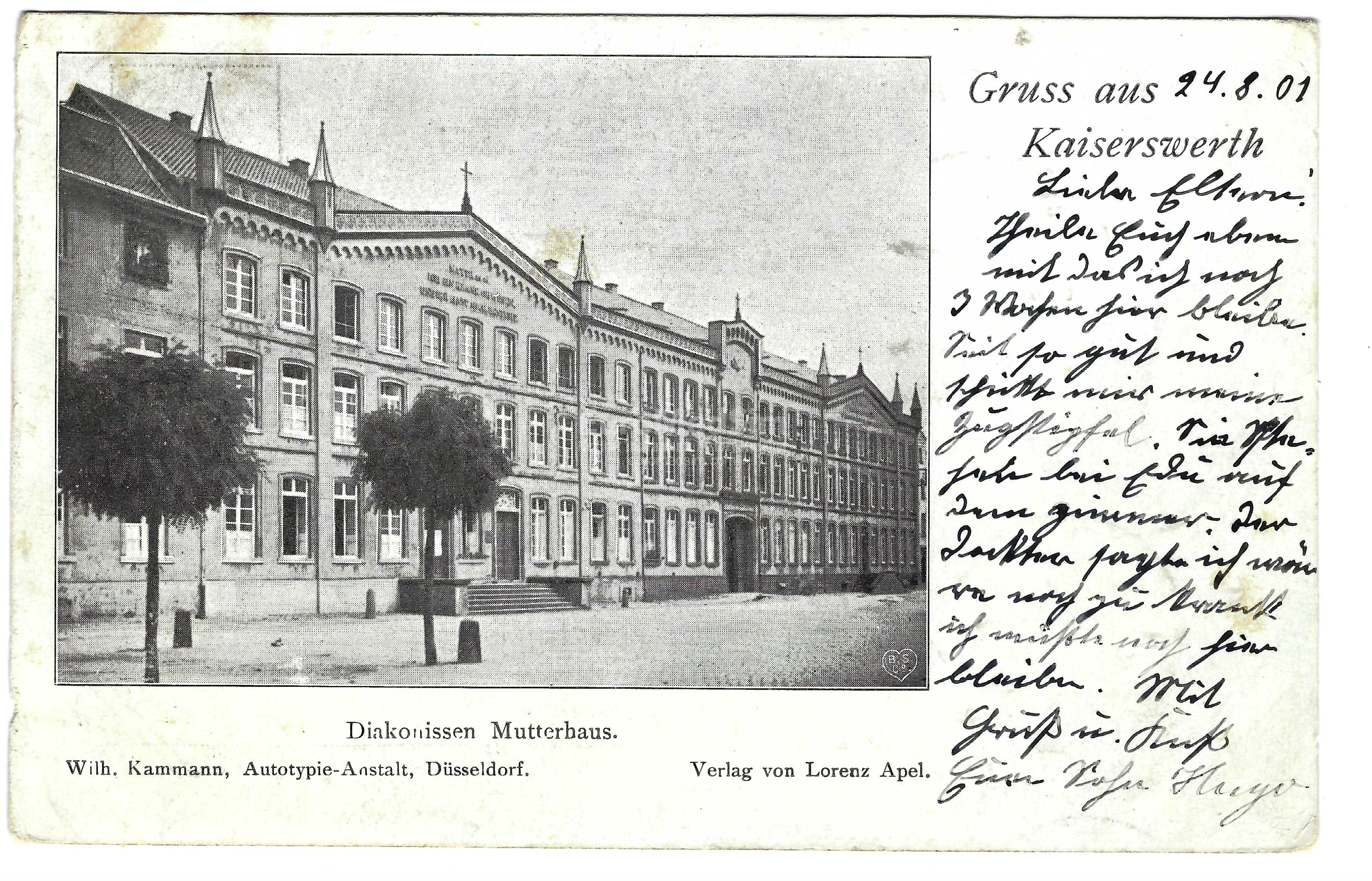
Germany, 1901
Fliedner, Theodor , Nightingale, Florence
Postcard titled “Diakonissen Mutterhaus” with a handwritten private message on the front side, right from the photo, bearing on the back a green “German Empire” 5 Pf., postally used stamp, cancelled on August 23, 1901. Cardboard, letterpress printing, handwritten text in black ink. Printed by Wilh. Kammann, Autotypie-Anstalt, Düsseldorf. Publisher: Verlag von Lorenz Apel.
PEOPLE
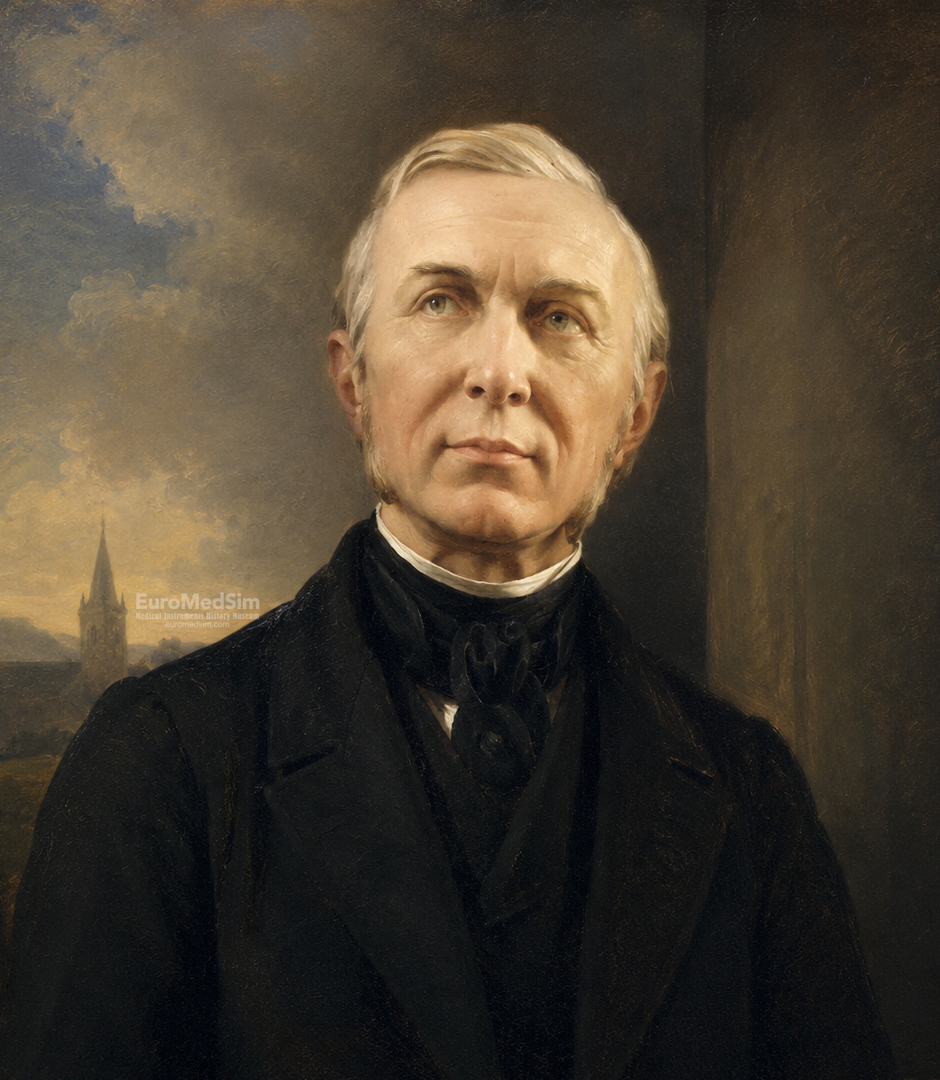
Theodor Fliedner (1800–1864) was a German Protestant pastor and social reformer. In 1836, together with his wife Friederike, he founded the Kaiserswerth Deaconess Institute, combining nursing education, hospital practice, and religious service. Its model helped professionalise nursing, spread internationally, and influenced Florence Nightingale.
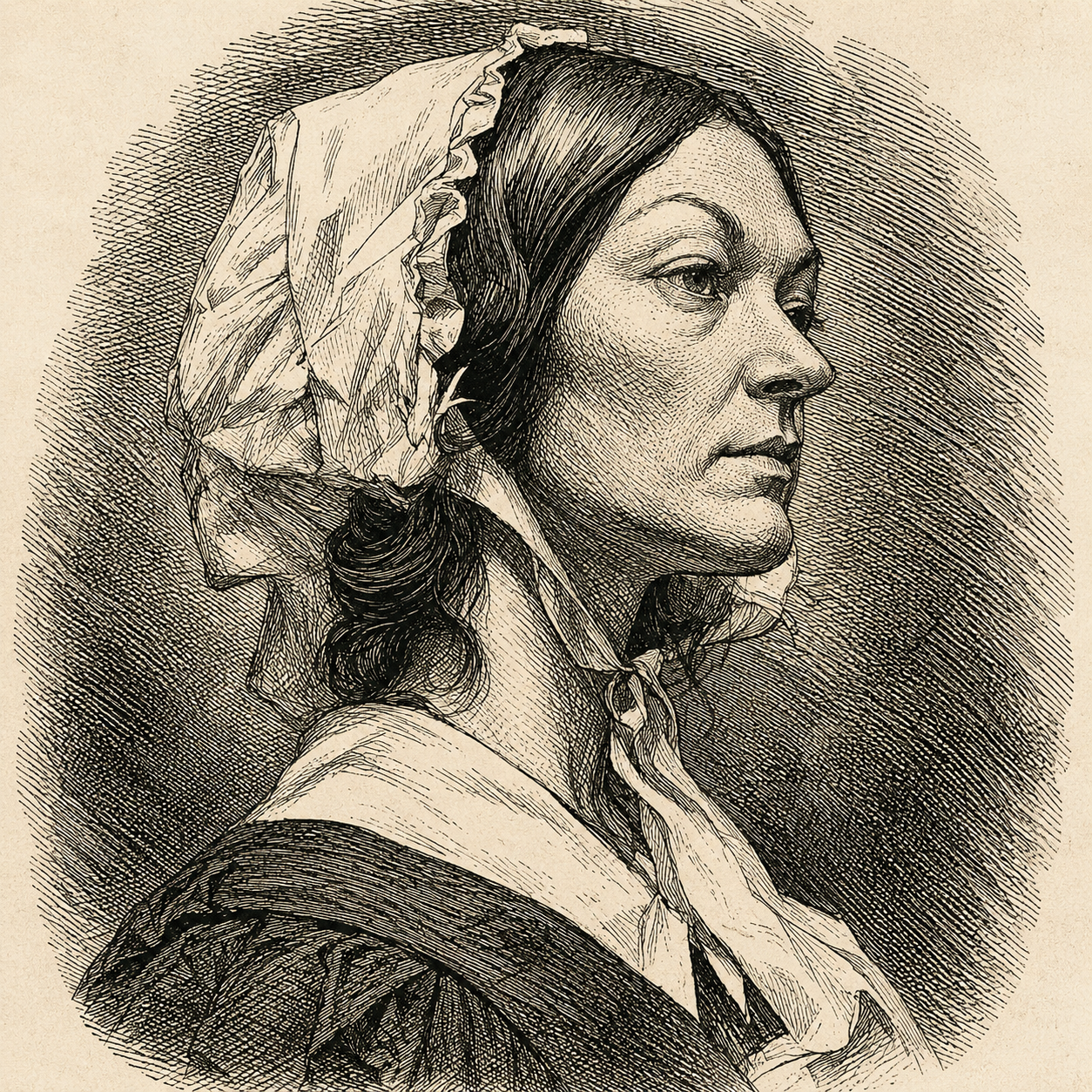
Florence Nightingale (1820–1910) founded modern nursing in Great Britain, transforming it from a disreputable occupation into a respected profession. Despite fierce family opposition, Nightingale persisted, eventually training at the Nursing School of Protestant Deaconesses in Kaiserswerth, Germany, in 1851. During the Crimean War, she led 38 nurses to Scutari, where she implemented sanitation measures that drastically reduced the mortality rate from 42% to 2%. Known as "The Lady with the Lamp," she also pioneered medical statistics, creating polar area diagrams to visualise preventable deaths. In 1860, she established the first secular nursing school at St Thomas' Hospital, London. Her legacy endures through International Nurses Day, celebrated on her birthday, and her foundational text Notes on Nursing.
MUSEUM
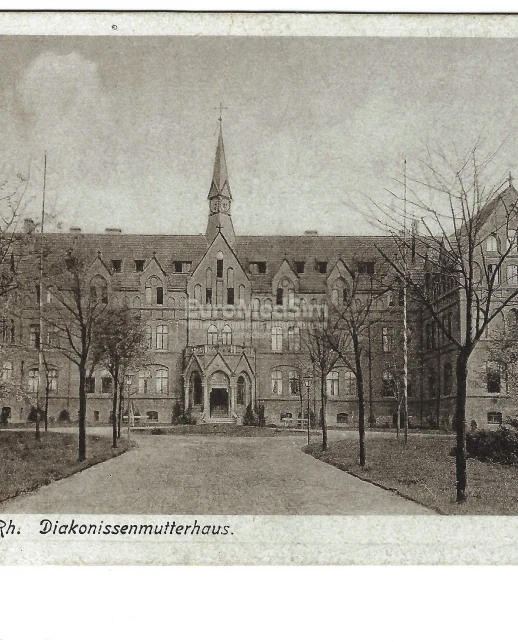
Germany, Kaiserswerth
Kaiserswerther Diakonie is an Evangelical community of deaconesses founded in 1836 by Pastor Theodor Fliedner. Here women received training in caregiving and child-rearing and lived a life of discipline and prayer. The institution included a hospital, a school, and a shelter. In 1851, Florence Nightingale, who later established the modern system of nursing in Great Britain, completed an internship here. The Kaiserswerth model spread throughout Europe, America and Russia. Today, the Diakonie remains an active institution, and its building houses a Pflegemuseum (Museum of Nursing) and a hotel in the Mutterhaus.