Kaiserswerth am Rhein Diakonissenmutterhaus
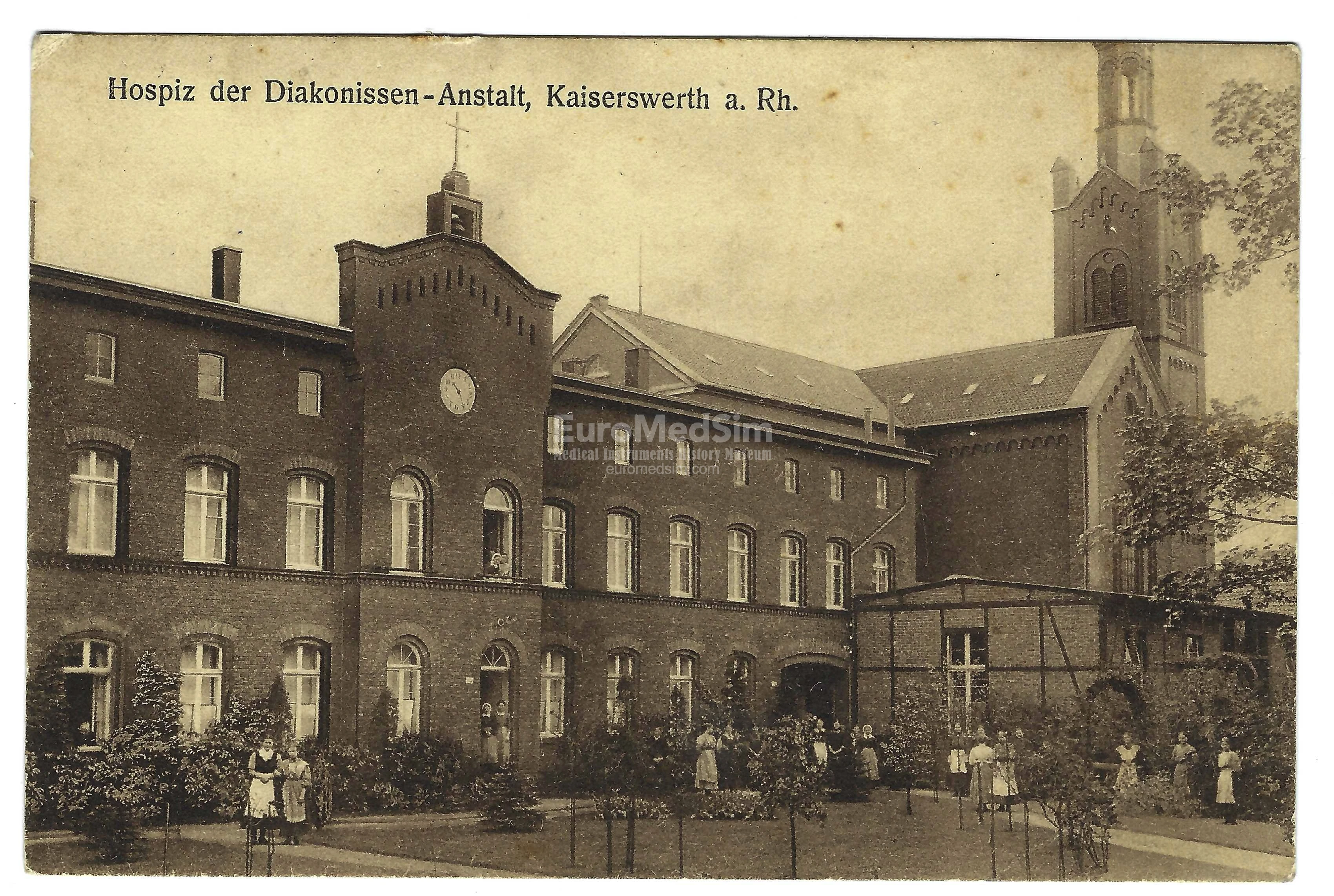
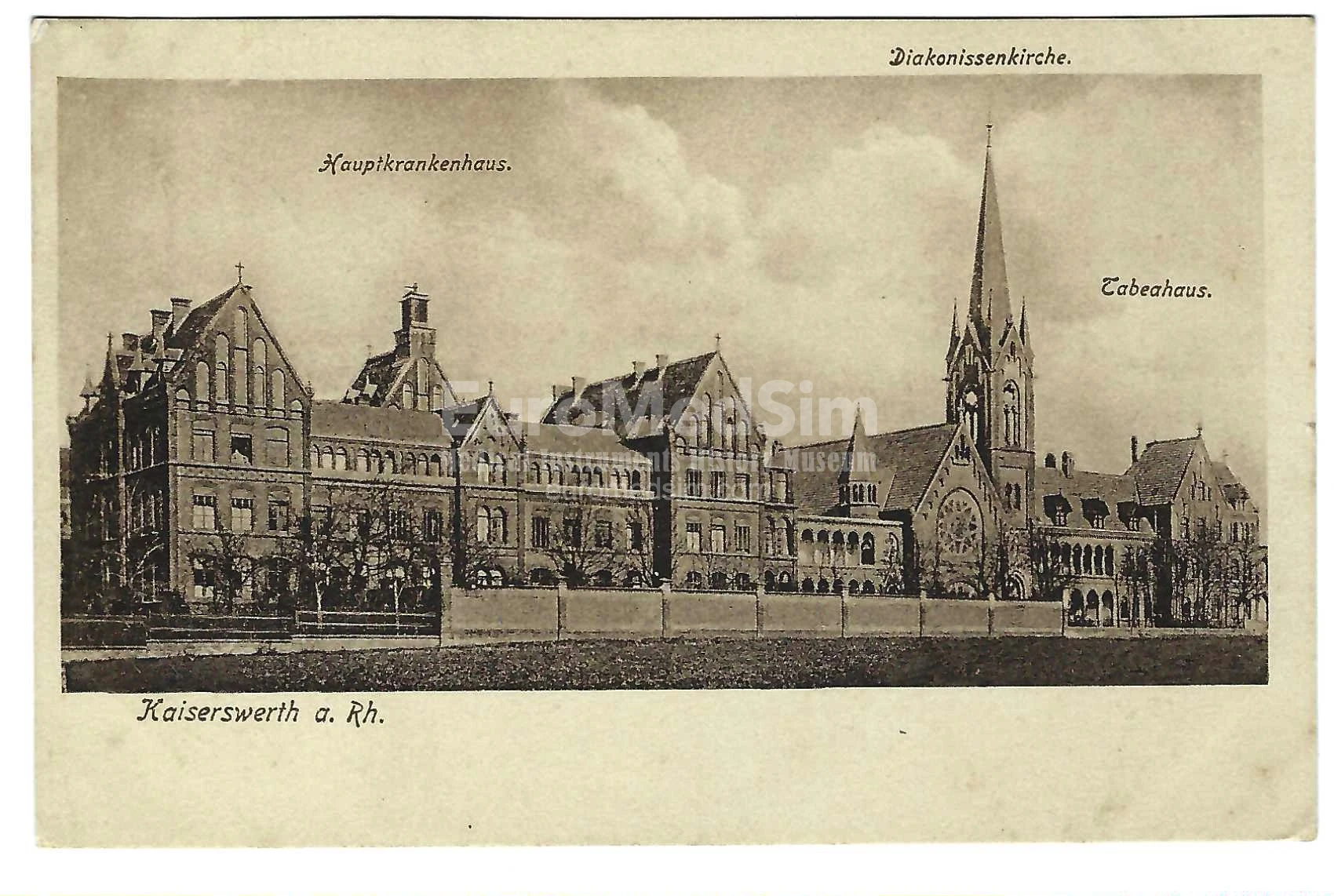
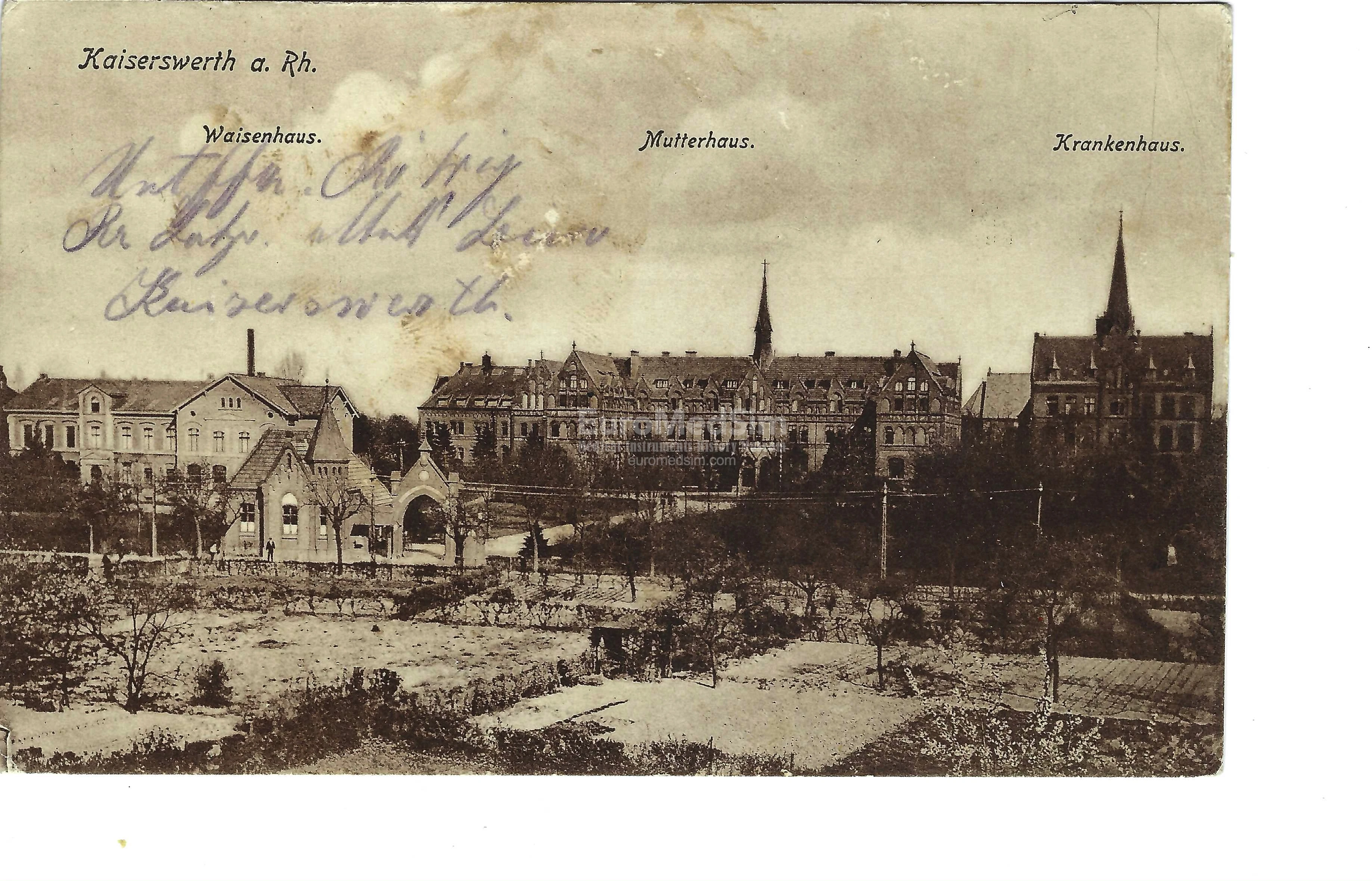
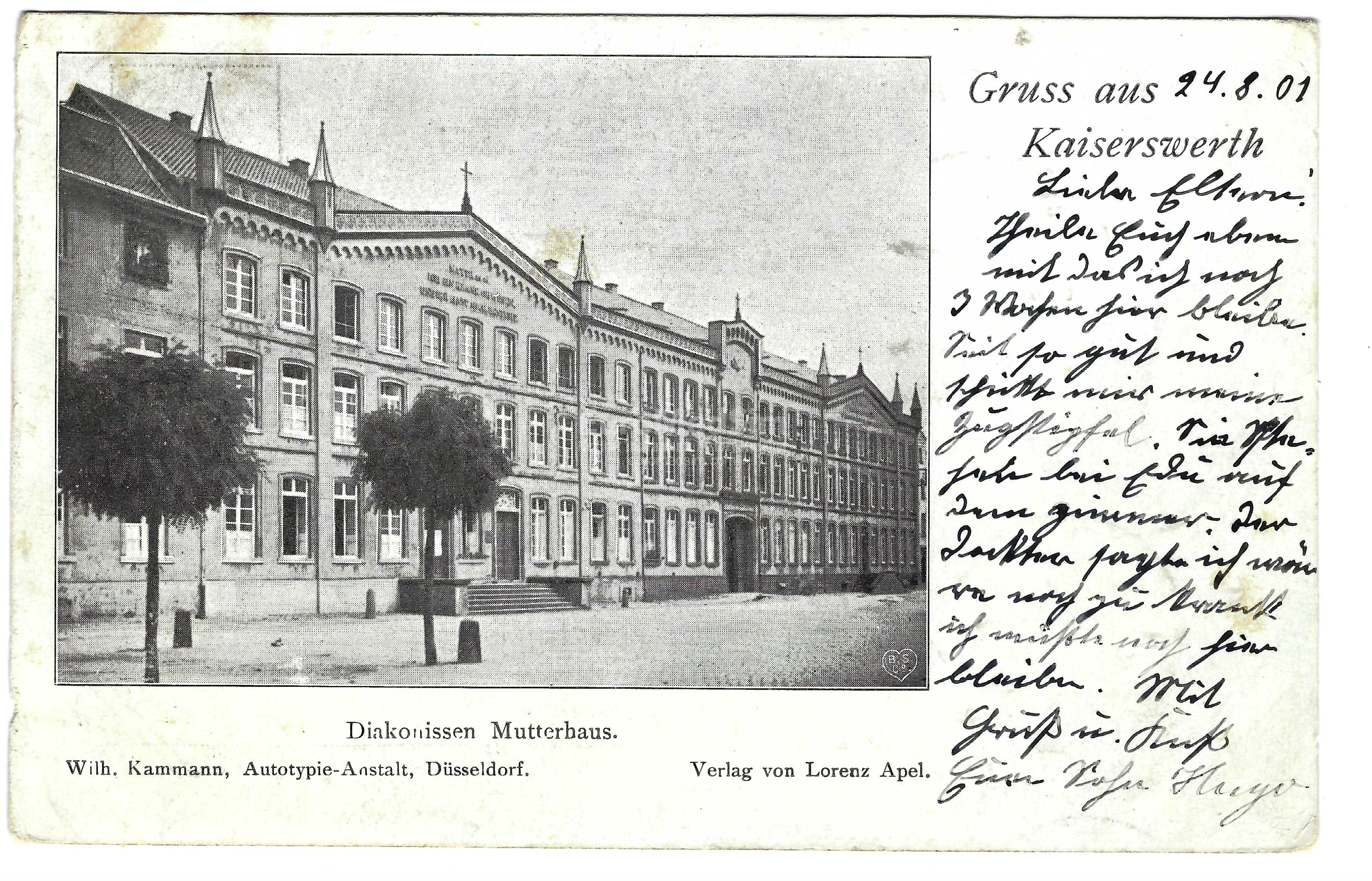
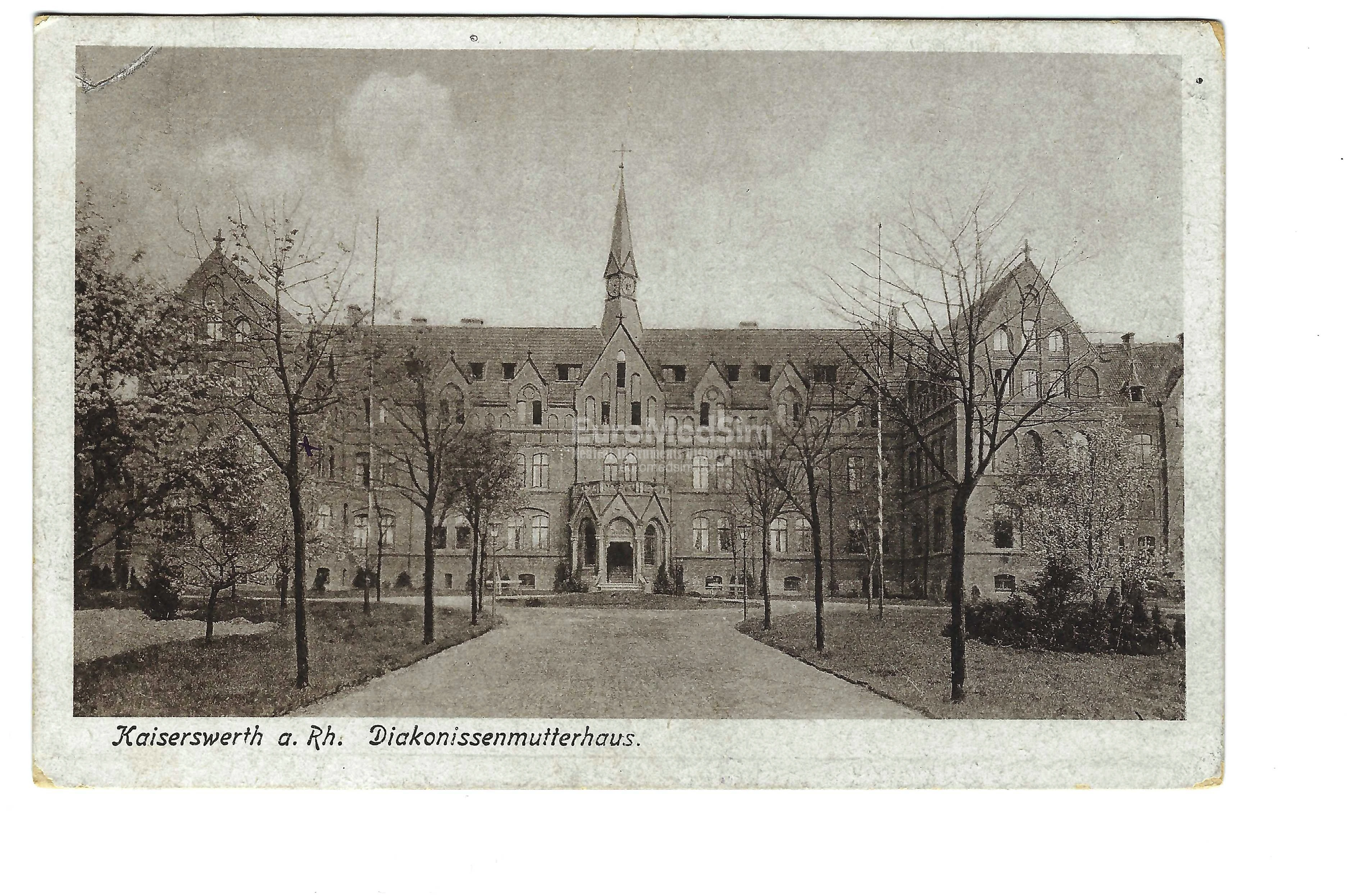
Postcard titled “Kaiserswerth a. Rh. Diakonissenmutterhaus,” with a message on the back, bearing a red colour “German Empire” postally used stamp, cancelled on November 25, 1918 (?).
The Kaiserswerth Diaconate, an Evangelical community of sisters of mercy founded in 1836 by Pastor Theodor Fliedner and his wife, Frederieke Fliedner. Starting with the purchase of a single house, the institution quickly grew into a multifunctional complex that included a hospital, a kindergarten, a school for nursery teachers, an orphanage, a correctional facility for women, and a teachers’ seminary. The main house was named “Mutterhaus” (“Mother House”), where the hospital was located and where the deaconesses lived and were trained. Among his most famous students was Florence Nightingale, the founder of nursing in Great Britain. She visited here twice and, in 1851, spent three months gathering material for her first book and developing ideas that would later be put into practice during the Crimean War.
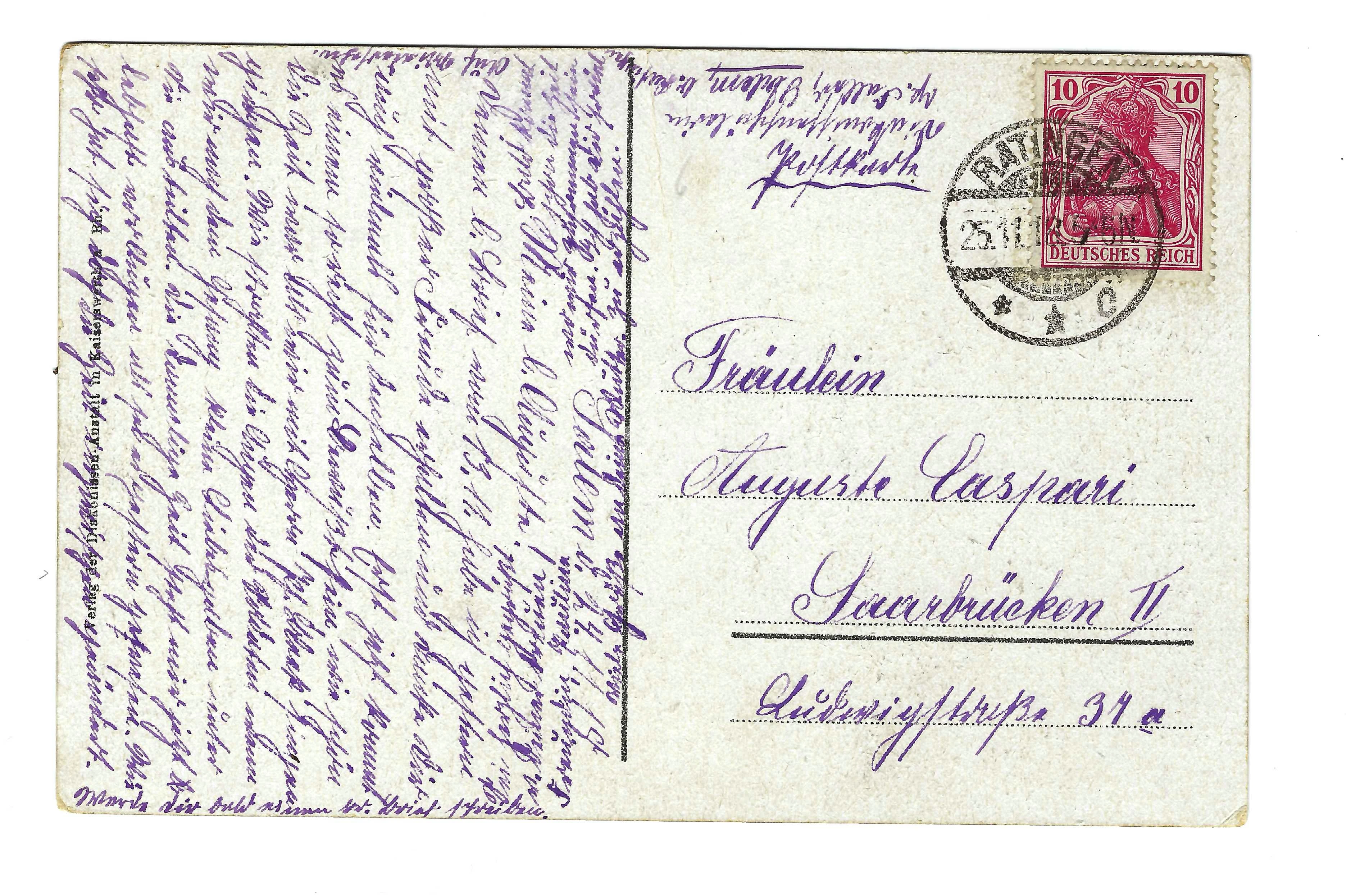
Back Side of the Card
The back side of the postcard bears the handwritten text in German, address and a cancelled stamp. The address side is written in relatively legible German Kurrent script. The postcard is addressed to the Fräulein Auguste Asprion (surname not absolutely certain; could also be Asprin, Asprin, or a similar spelling) at Saarbrücken V, Luisenstraße 31a.
The stamp is a 10 Pfennig Germania issue of the Deutsches Reich, which places the postcard approximately in the 1902–1922 period. The style of the cancellation and postcard strongly suggests the 1910s. The cancellation date is for sure "25.11." and the year most probably "18" making the date "25.11.18." The handwritten text in German is difficult to read. Something that can be recongnised:
Salem d. 24.11.18
Meine l. Olÿschka!
Deinen l. Brief vom 13. d. habe ich gestern
mit größter Freude erhalten und danke Dir
recht vielmals für denselben. Es ist jetzt Sonntag
und nehme [vorerst] zum Schreiben meine freie [Zeit].
Die Zeit wird, bis wir uns wiedersehen, recht langsam
vergehen. Wir [richteten?] die Augen dem Weltfrieden immer
mehr entgegen. Möge auch deine Hoffnung kleine
Lichtstrahlen wieder Dir austheilen. Die damalige Zeit geht mir jetzt so
lebhaft vor Augen, als ich bei Schwester Hermine
[zusammen war] …
Salem, Nov. 24, 1918
My dear Olÿschka!
I received yesterday your dear letter of the 13th
with the greatest joy and thank you
very much for it. It is now Sunday and I take [first of all] my free [time] for writing.
The time until we see each other again will pass very slowly.
We [directed?] our eyes more and more toward world peace.
May your hope also deal out small
rays of light to you again. That time back then now appears so vividly
before my eyes, when I [was together] with Sister Hermine…
The Dating (1918 or 1919)
For the Germans, World War I ended on November 11, 1918 with the signing of the Armistice of Compiègne. Hostilities ceased at 11:00 a.m. that day. Officially, the war ended later...