St. George’s Hospital in London
St. George’s Hospital in London. Postcard sent on April 2, 1908. Item type: scenic postcard. Place of creation: London, United Kingdom. Publisher and photographer: F. Kehrhahn & Co., Bexley, Kent, and London. Date of publication: no later than 1908. Date of mailing: April 2, 1908. Material and technique: cardboard; monochrome photomechanical print; letterpress printing in red ink; inscriptions in graphite pencil. Language: English. Recipient: Mr. A. Rose, Heather House, Fletton Avenue, Peterborough. The card is in satisfactory condition for an item over a century old. There is general yellowing of the cardboard, minor spots and surface scuffs, and slight wear on the corners and edges. On the reverse side, a vertical yellowish mark is visible in the upper central part—likely a remnant of an old attachment to an album or adhesive tape. The pencil inscriptions have faded in places, but the main part of the message and the address remain legible. The postage stamp and postmark are in their original positions.
Description of the front side — recto
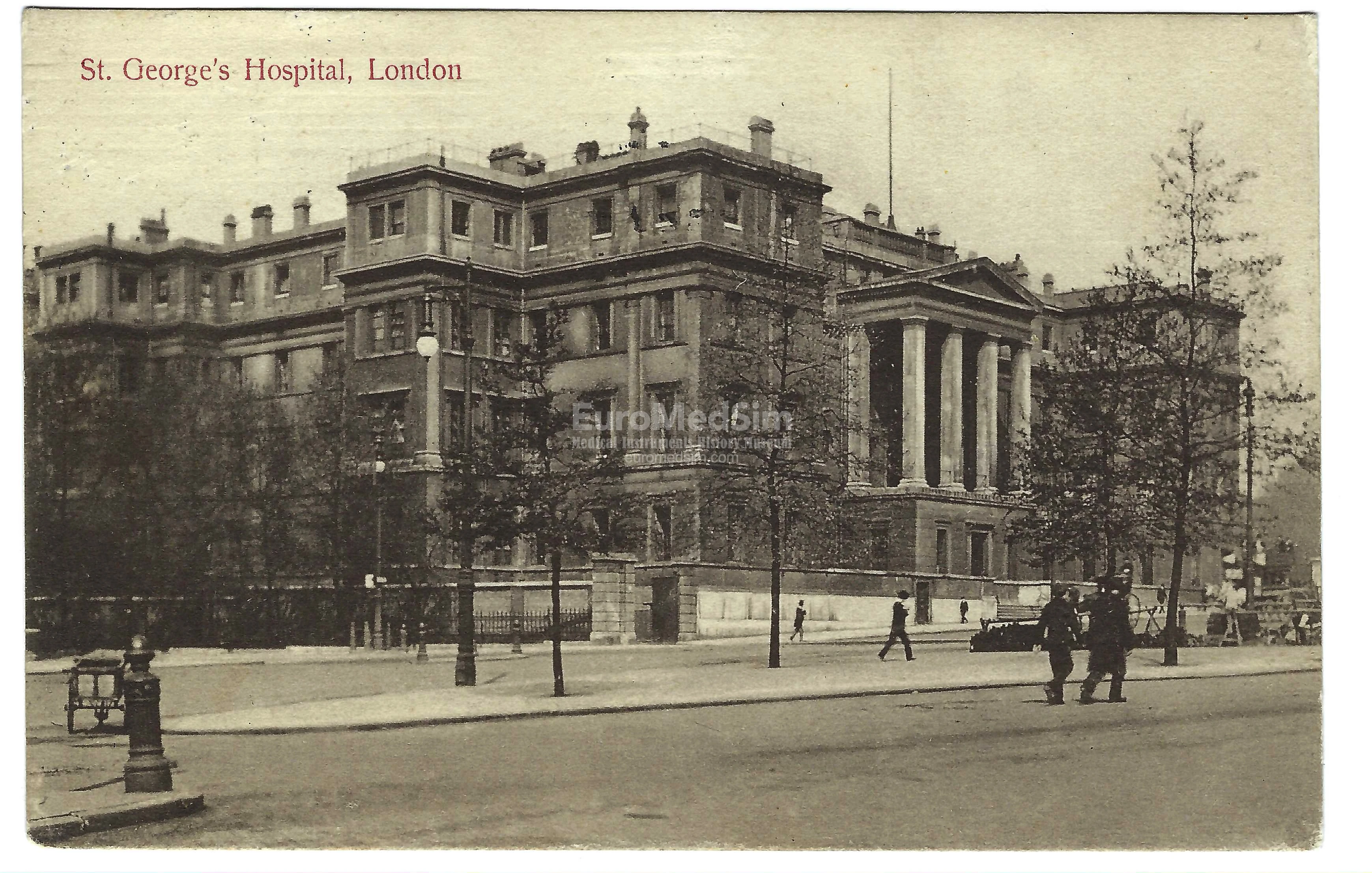
The front side features a general view of the old St. George’s Hospital building at Hyde Park Corner in London. The hospital is photographed from the opposite side of a wide street, allowing not only its facades but also part of the early 20th-century urban landscape to be captured in the frame. The main architectural feature is a monumental portico with tall columns and a triangular pediment. The lower story of the building features rustication, while the upper sections of the facade are divided by pilasters, cornices, and rows of rectangular windows. A top floor, added at a later date, rises above the main structure. In front of the hospital, a metal fence, stone posts, trees, and street lamps are visible. Pedestrians in dark clothing are depicted in the foreground. Near the right edge, a cart or carriage with a large wheel can be made out; behind it are several more figures. The small human silhouettes emphasize the scale of the building and, at the same time, transform the architectural view into a snapshot of everyday life in Edwardian London.
In the upper left corner, the title is printed in red:
St. George’s Hospital, London
The image has a soft gray-brown tone characteristic of mass-produced photographic postcards from the early 20th century. It was likely produced through photomechanical reproduction of the original photograph.
Description of the reverse side—verso
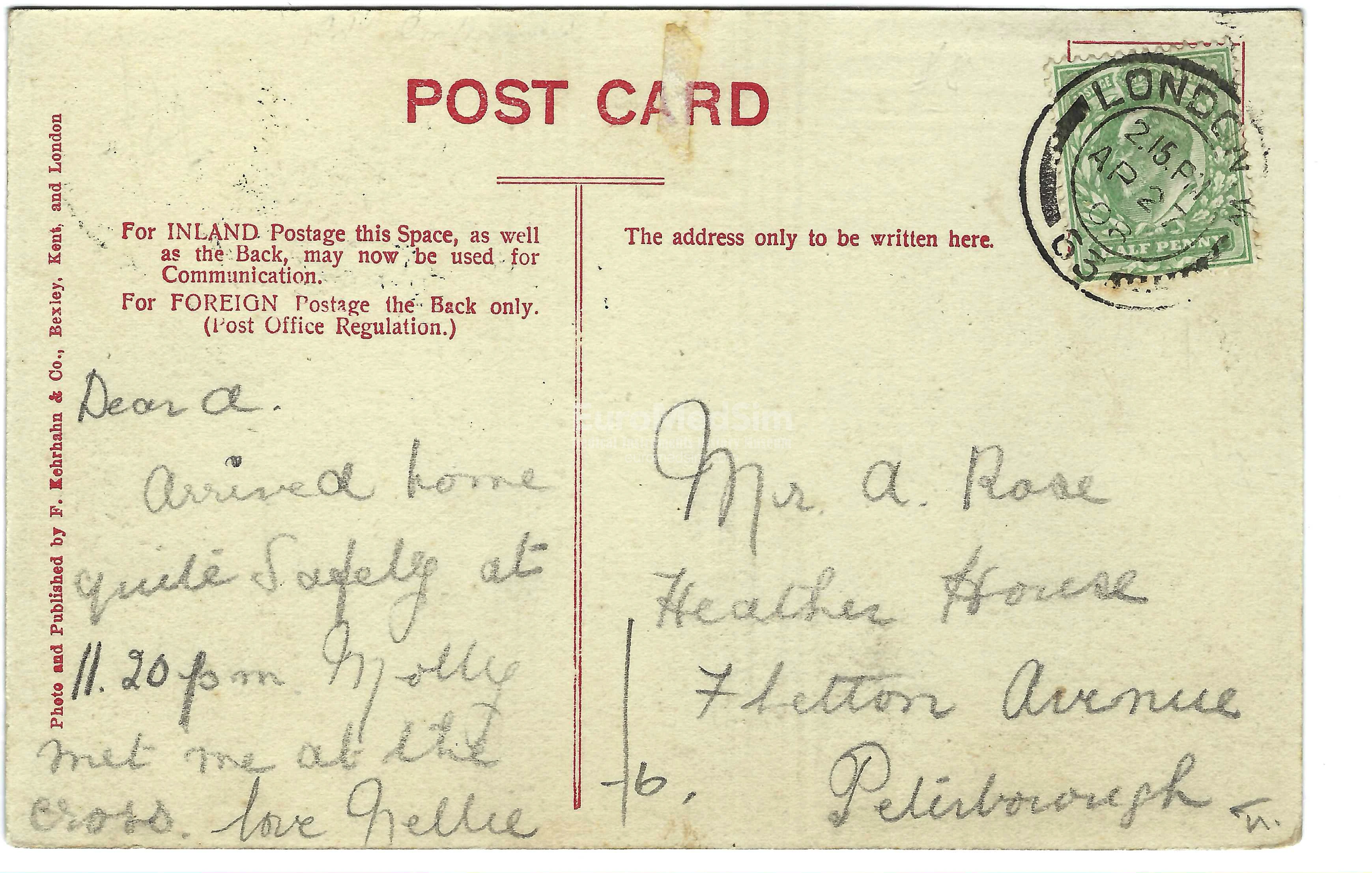
The reverse side is divided by a vertical red line into a message field on the left and an address field on the right. At the top, in large red letters, is printed:
POST CARD
Below are the mailing instructions:
For INLAND Postage, this Space, as well
as the Back, may now be used for
Communication.
For FOREIGN Postage, the Back only.
(Post Office Regulation.)
On the right-hand side:
The address only to be written here.
This layout is characteristic of an early type of British postcard with a divided reverse side. In the United Kingdom, the use of one half of the address side for the message was permitted in early 1902; prior to that, the address side was intended exclusively for the address.
Vertically printed along the left edge is information about the manufacturer:
Photo and Published by F. Kehrhahn & Co., Bexley, Kent, and London
The company was owned by photographer and publisher Ferdinand Louis Kehrhahn. He began working in photography as a young man and, together with his brother, produced scenic and event-themed postcards. The firm later gained fame, in particular, for its photographs of the British suffrage movement.
In the upper right corner is a green British ½ penny stamp featuring a portrait of King Edward VII. The stamp is canceled with a round London postmark. The central part of the imprint reads:
5:15 P.M.
AP 2
08
Thus, the postcard was accepted by the post office in London at 5:15 p.m. April 2, 1908. The green half-penny stamp corresponded to the domestic postage rate for postcards in effect at that time. Issues featuring the portrait of Edward VII were used from 1902 to 1910.
Handwritten Message
The text is written in pencil and has faded significantly in places. The most likely transcription:
Dear A.
Arrived home
quite safely at
11:20 p.m. Molly
met me at the
Cross. Love, Nellie
The word Molly is not entirely legible; a less likely alternative is Milly.
The phrase “the Cross” could refer to a meeting place well known to both correspondents. A likely, though unproven, possibility is the King’s Cross station: the postcard was sent from London to a person living in Peterborough, and Peterborough was located on the main line of the Great Northern Railway, which led to London’s King’s Cross station.
Address
The address is quite legible:
Mr. A. Rose
Heather House
Fletton Avenue
Peterborough
In other words, the postcard was addressed to Mr. A. Rose, who lived at Heather House on Fletton Avenue in Peterborough.
Historical and Medical Context
St. George’s Hospital was founded in 1733 at Lanesborough House near Hyde Park Corner. From its very first decades of operation, the hospital was involved in training doctors: its surgeons and physicians took on apprentices, although an independent medical school was not officially established until 1834. In 1868, it was housed directly within the hospital complex.
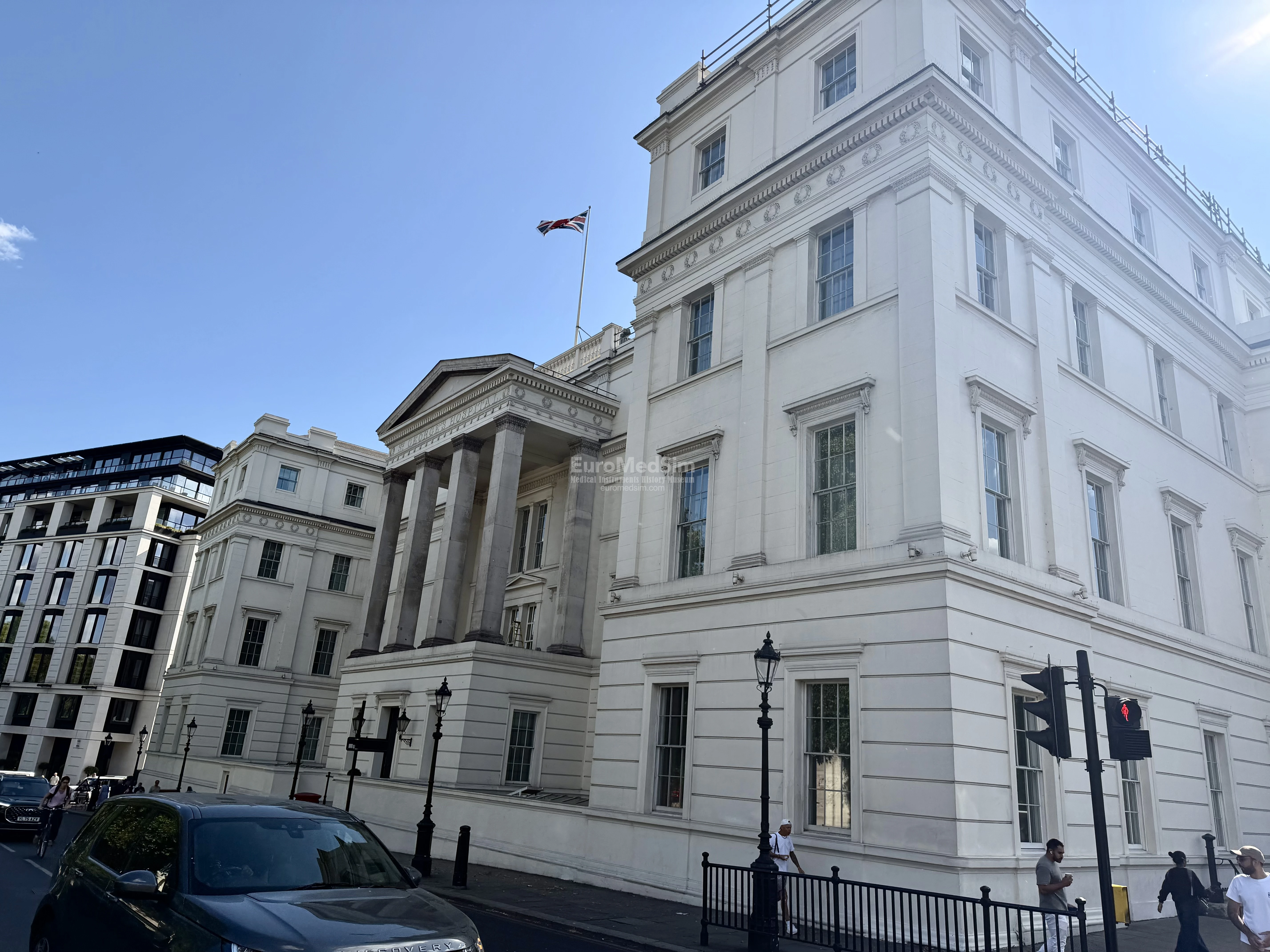
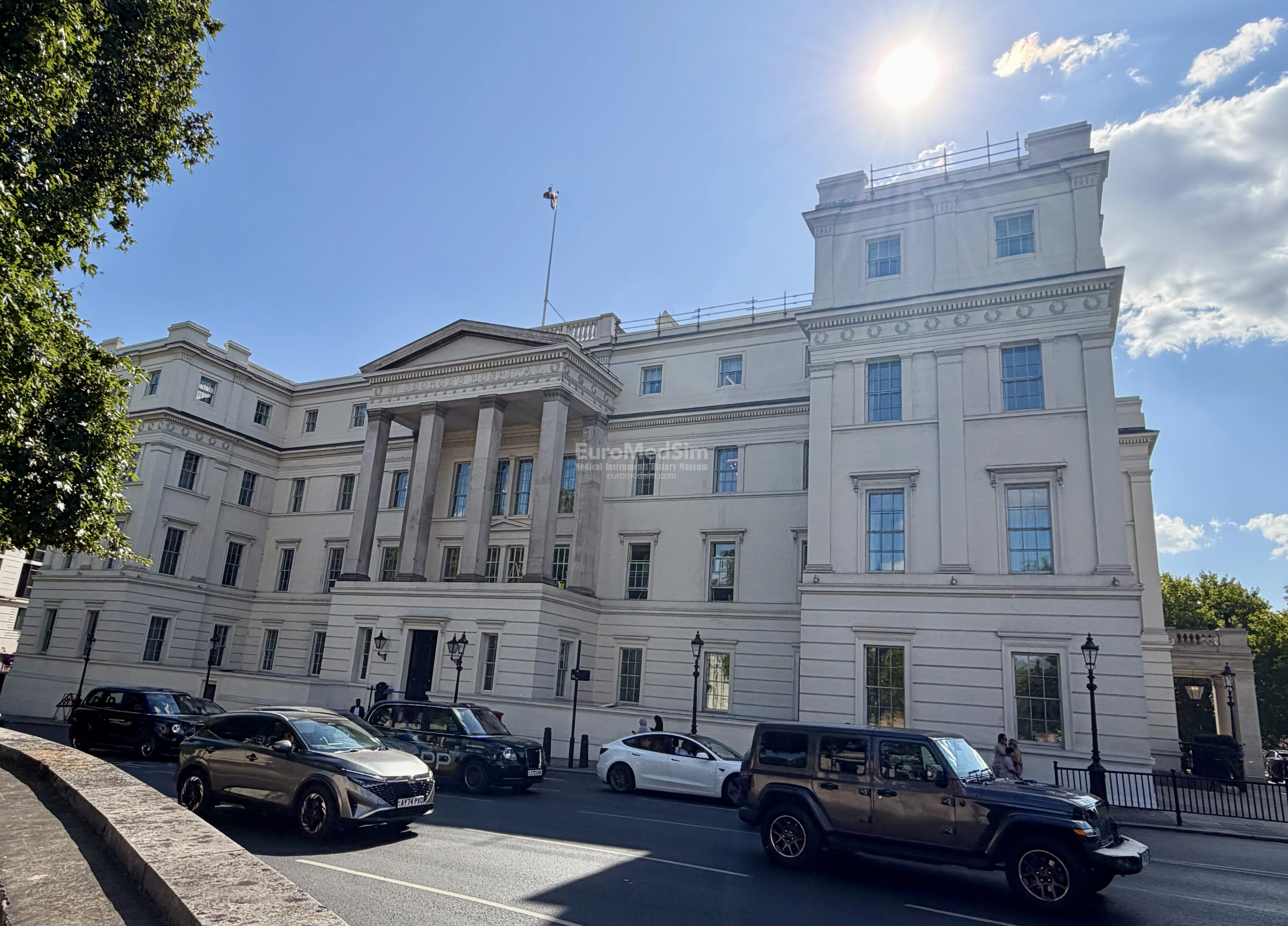
The building depicted on the postcard was designed by architect William Wilkins, also known as the architect of London’s National Gallery. Construction began in 1827; the first section of the new hospital opened in 1829, and the entire complex was completed by 1844. In 1859, an upper floor was added to the building, clearly visible on the postcard. In Historic England’s official register, the structure is described as a purpose-built hospital with a symmetrical façade, a rusticated base, and a monumental portico.
At the time the postcard was mailed, in 1908, St. George’s was one of London’s major medical and educational institutions. The postcard depicts not only the historic architecture but also a time when the hospital remained a prominent part of the city’s public life: medical care, clinical training, and the daily bustle of a London street all coexisted within the same space.
In the 20th century, the hospital was gradually relocated to the Tooting area. The medical school moved there in 1976, and the old St. George’s Hospital at Hyde Park Corner finally closed in June 1980. The historic building was preserved and later converted into The Lanesborough hotel.