Kaiserswerth, Hospiz der Diakonissen-Anstalt
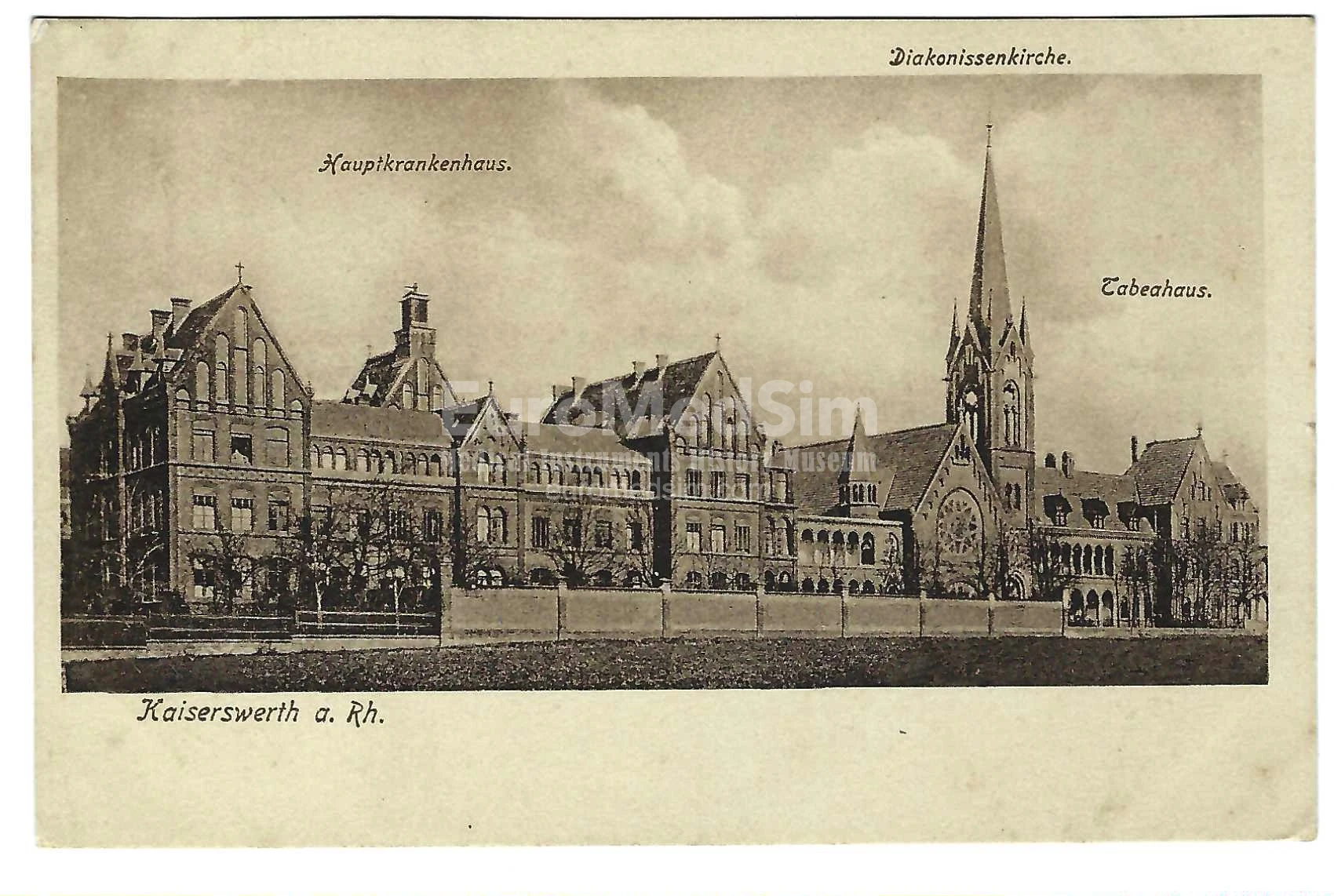
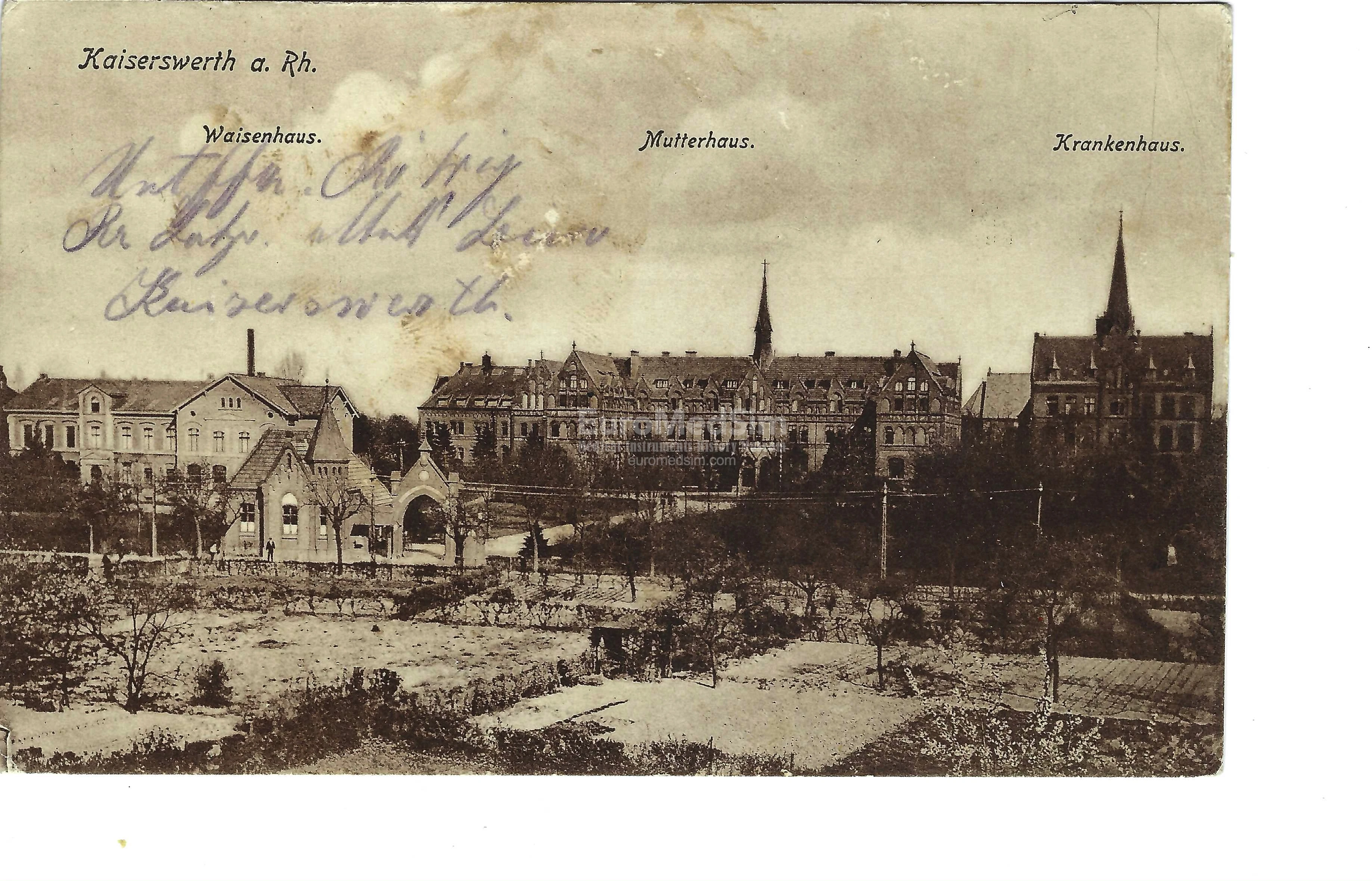
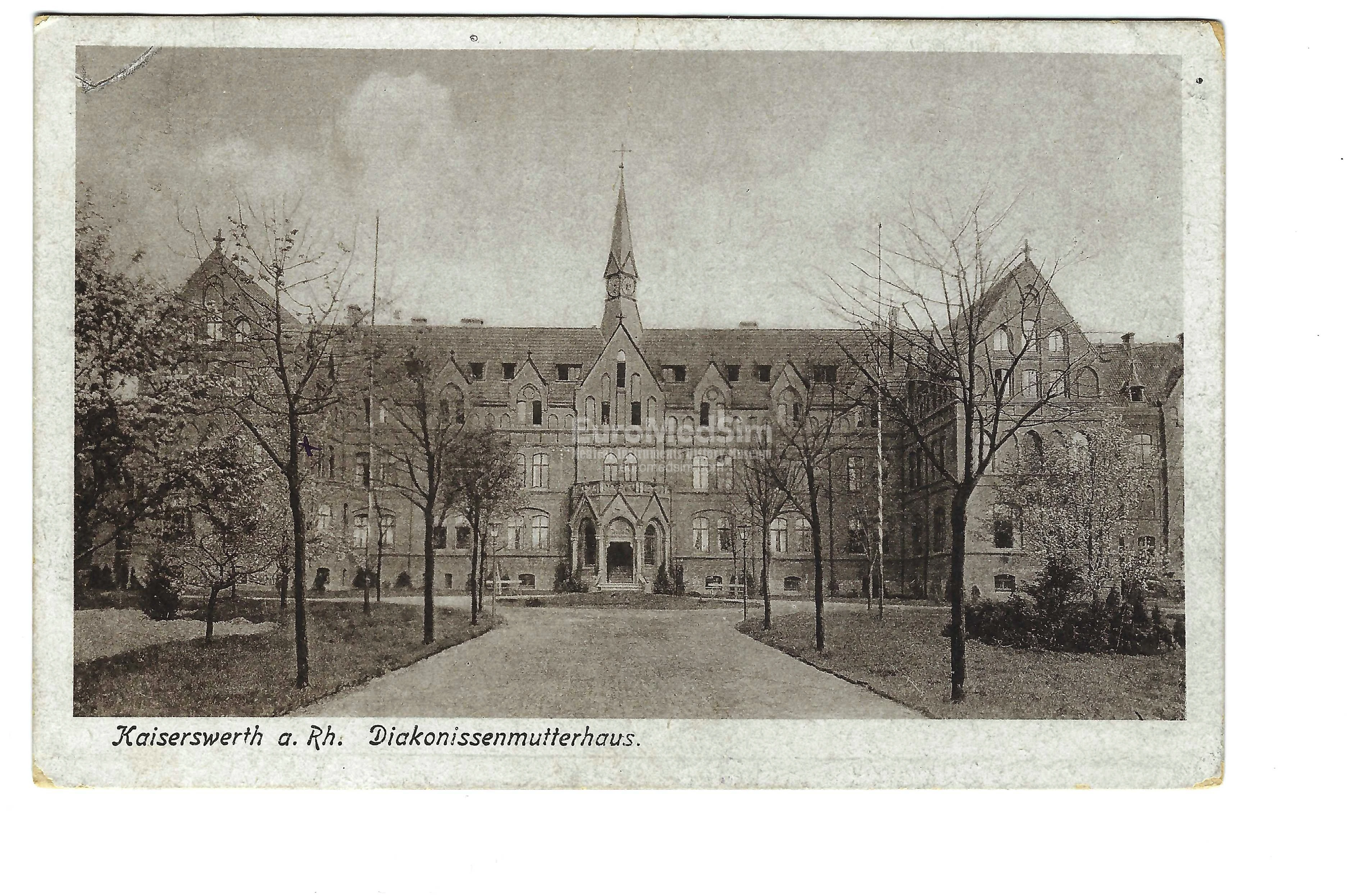
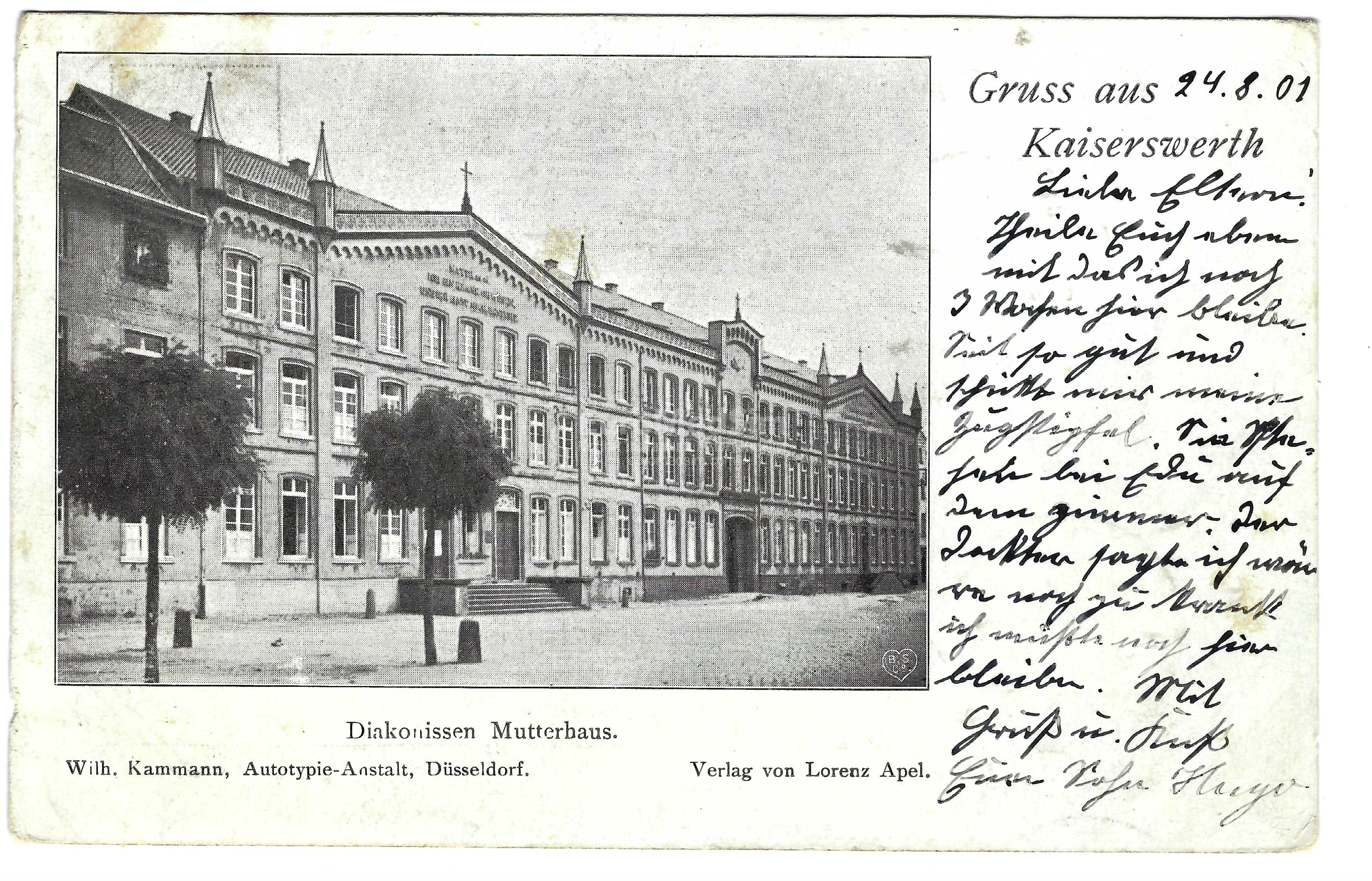
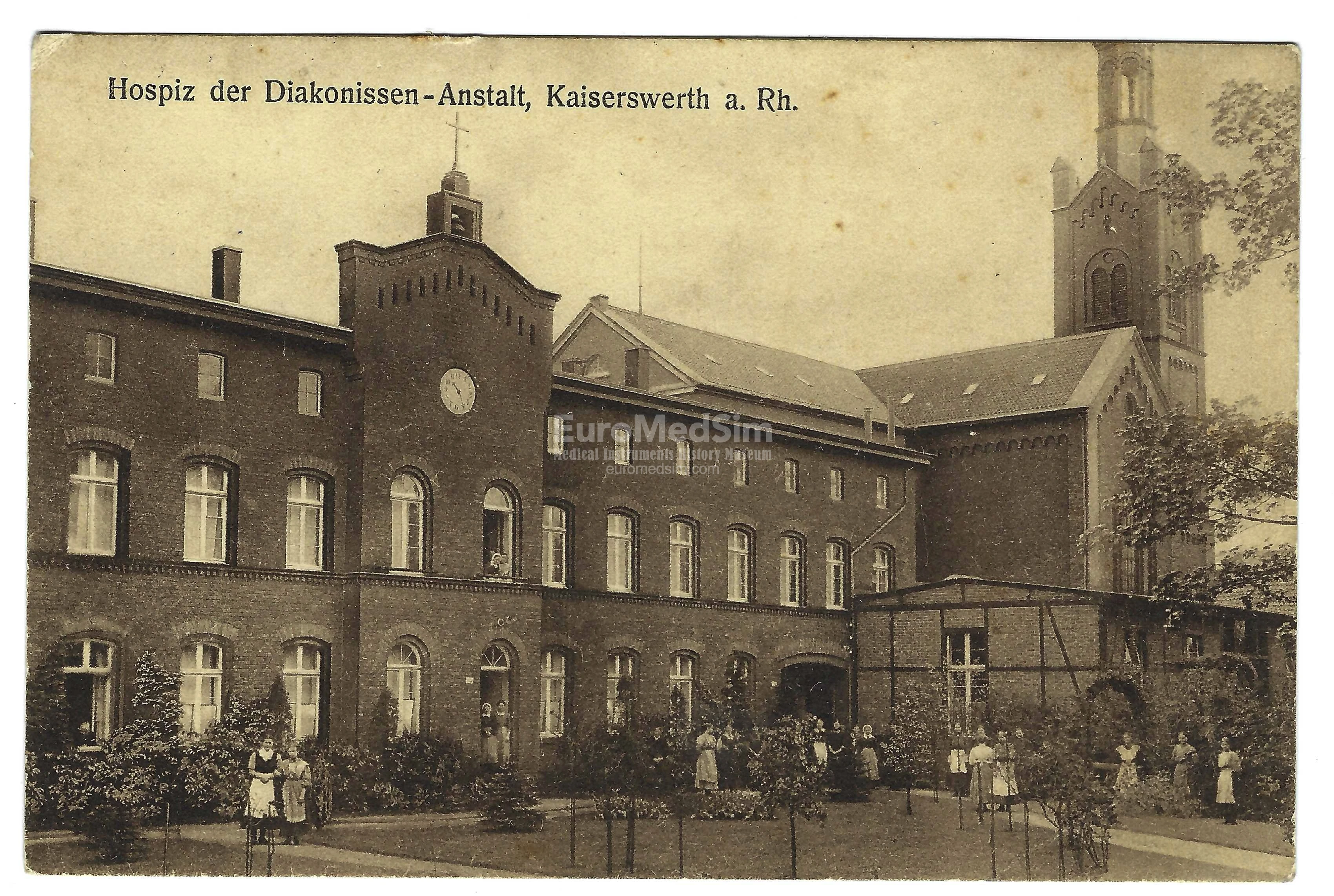
Postcard titled “Hospiz der Diakonissen-Anstalt, Kaiserswerth a. Rh.” with a handwritten private message on the back, bearing a green “German Empire” 5 Pf., postally used stamp, cancelled on August 9, 1913. Cardboard, letterpress printing, handwritten text in ink.
Kaiserswerth Diakonie
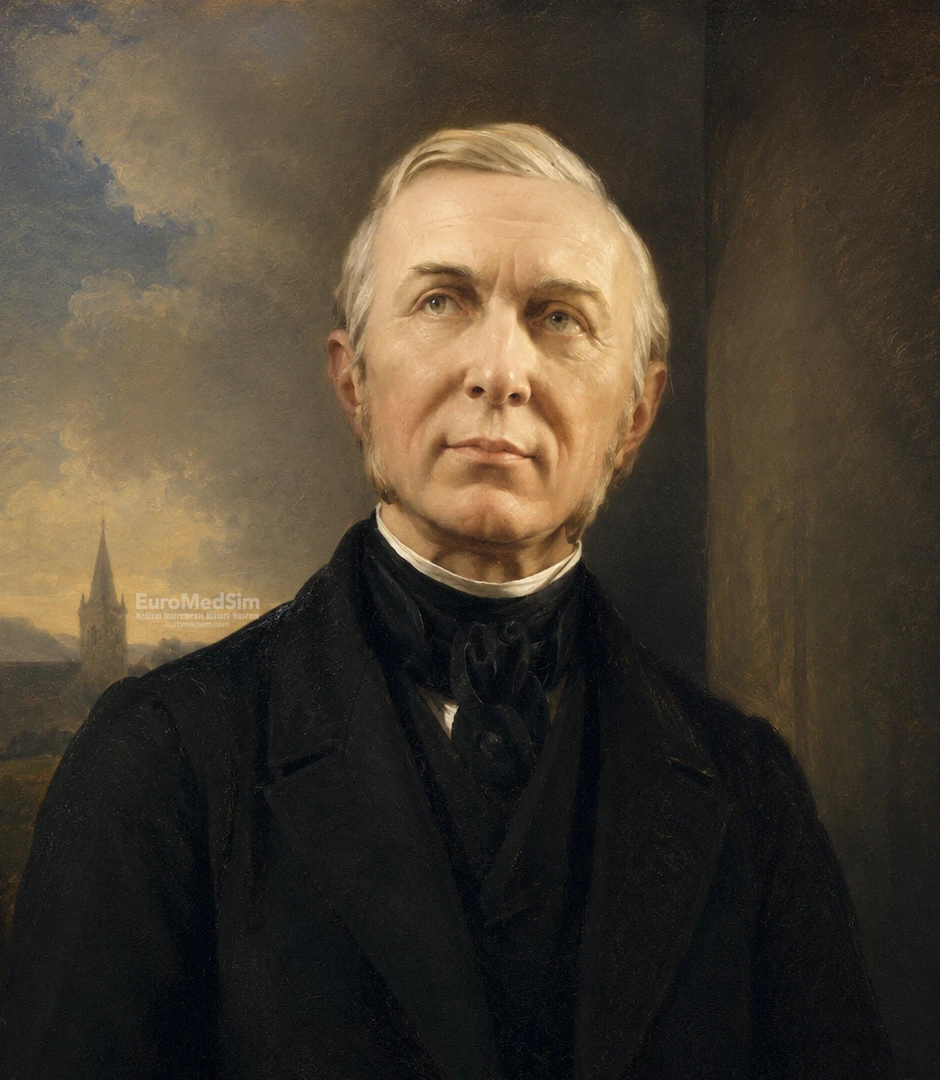
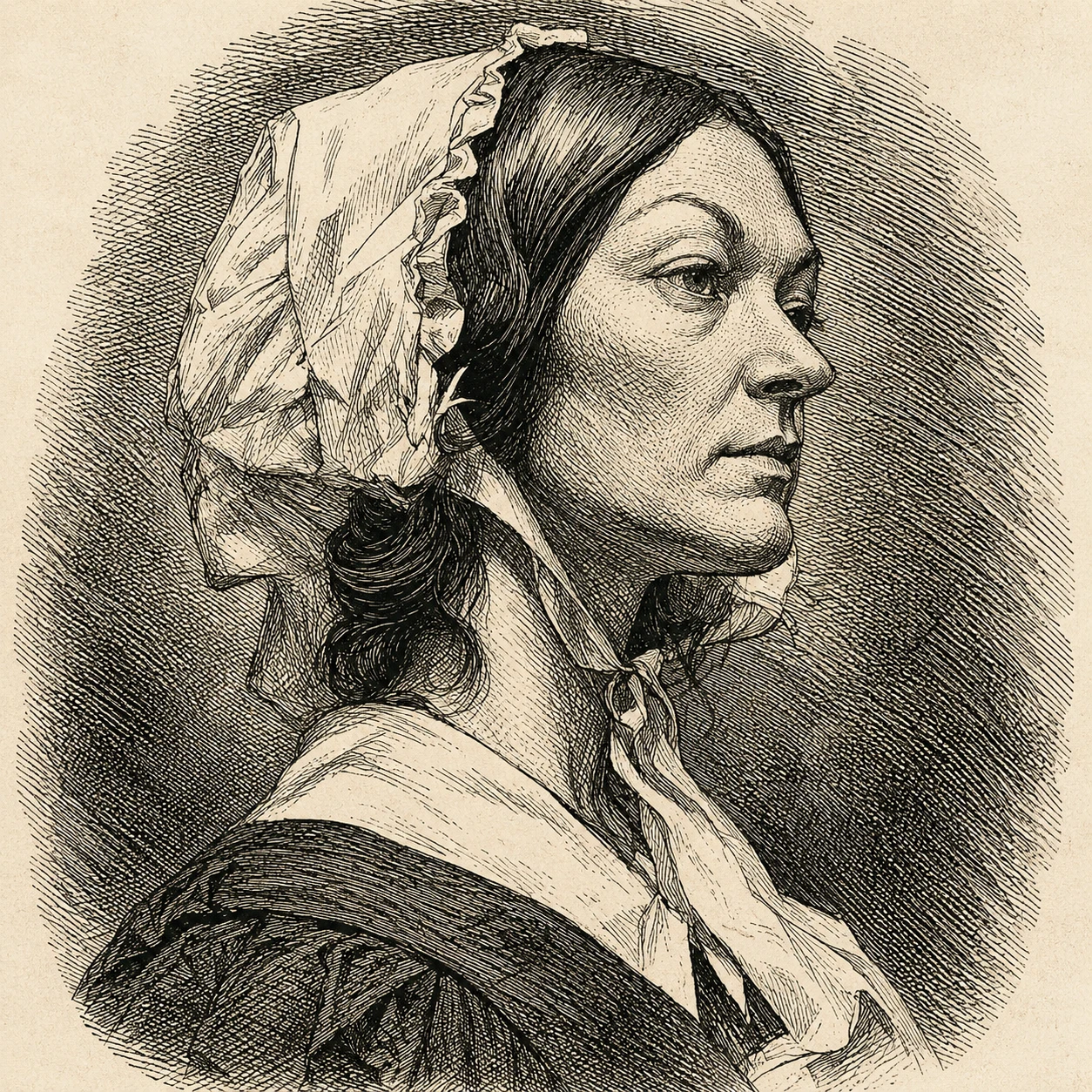
The Kaiserswerth Diaconate, an Evangelical community of sisters of mercy founded in 1836 by Pastor Theodor Fliedner and his wife, Frederieke Fliedner. Starting with the purchase of a single house, the institution quickly grew into a multifunctional complex that included a hospital, a kindergarten, a school for nursery teachers, an orphanage, a correctional facility for women, and a teachers’ seminary. The main house was named “Mutterhaus” (“Mother House”), where the hospital was located and where the deaconesses lived and were trained. Among his most famous students was Florence Nightingale, the founder of nursing in Great Britain. She visited here twice and, in 1851, spent three months gathering material for her first book and developing ideas that would later be put into practice during the Crimean War.
Back Side of the Postcard
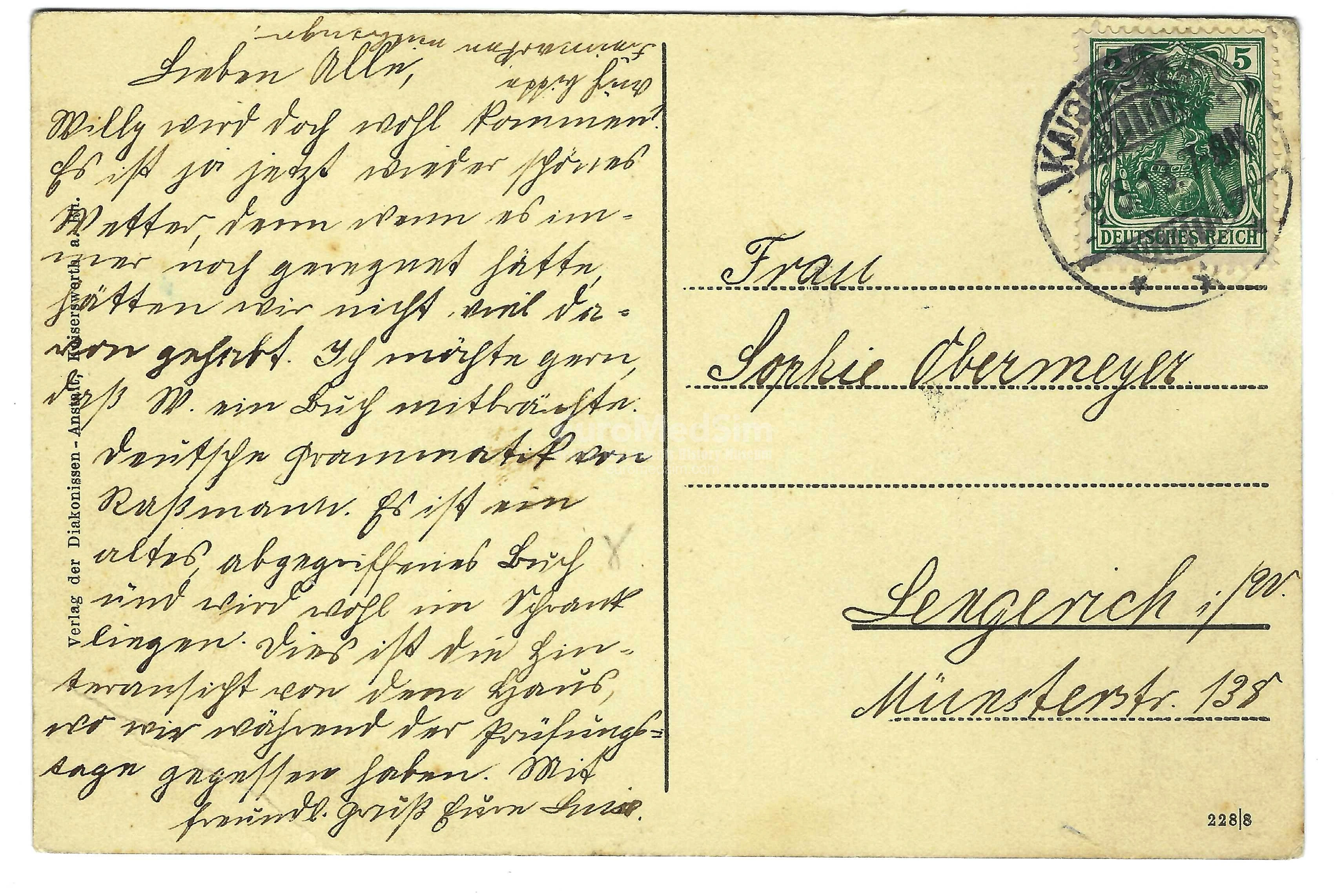
The back side of the picture postcard, featuring the address and text. On the left, printed vertically, is: “Verlag der Diakonissen-Anstalt Kaiserswerth a. Rh.” — “Publishing House of the Kaiserswerth-on-the-Rhine Deaconess Institute.”
The postcard is addressed to Mrs. Sophie Obermeyer (Frau Sophie Obermeyer) in Lengris, Upper Bavaria: Münchnerstraße 135. It is franked with a green German Empire stamp with a face value of 5 pfennigs, featuring an allegorical depiction of Germany and the inscription “Deutsches Reich”. The round postmark cancelling stamp originates from Kaiserswerth.
The left half is filled with a personal family message written in German cursive. The text begins with the salutation “Liebe Alle!”—“Dear Everyone!” — and contains news about daily life, a mention of Willy, his studies, his planned visit, and a request to bring a book. The divided reverse side came into use in Germany in 1905, and the 5-pfennig rate for domestic postcards remained in effect until the postal rates were raised in 1916, which allows us to tentatively date the item to this period.
The original text in German:
Lieben Alle,
Willy wird doch wohl kommen!
Es ist ja jetzt wieder schönes Wetter, dann kann es immer noch genügend halten; hatten wir nicht mit diesem gerechnet.
Ich möchte gern, daß W. mir Buch mitbrächte: deutsche Grammatik von Rosemann. Es ist ein altes, abgegriffenes Buch und wird wohl in Schwerin liegen.
Dies ist die Wirtschaft von Anna Göris, wo wir während der Prüfungstage gegessen haben.
Mit freundl. Gruß
Eure Lina.
English translation:
Dear all,
Willy will surely come, won’t he? The weather is fine again now, so it may continue to hold for long enough; we had not expected that.
I would very much like W. to bring me the book, German Grammar by Rosemann. It is an old, well-thumbed book and is probably in Schwerin.
This is Anna Göris’s inn, where we ate during the examination days.
Kind regards,
Yours, Lina.