
Search results15 results
LIBRARY
England, 20 C. 1 half
Nightingale, Florence
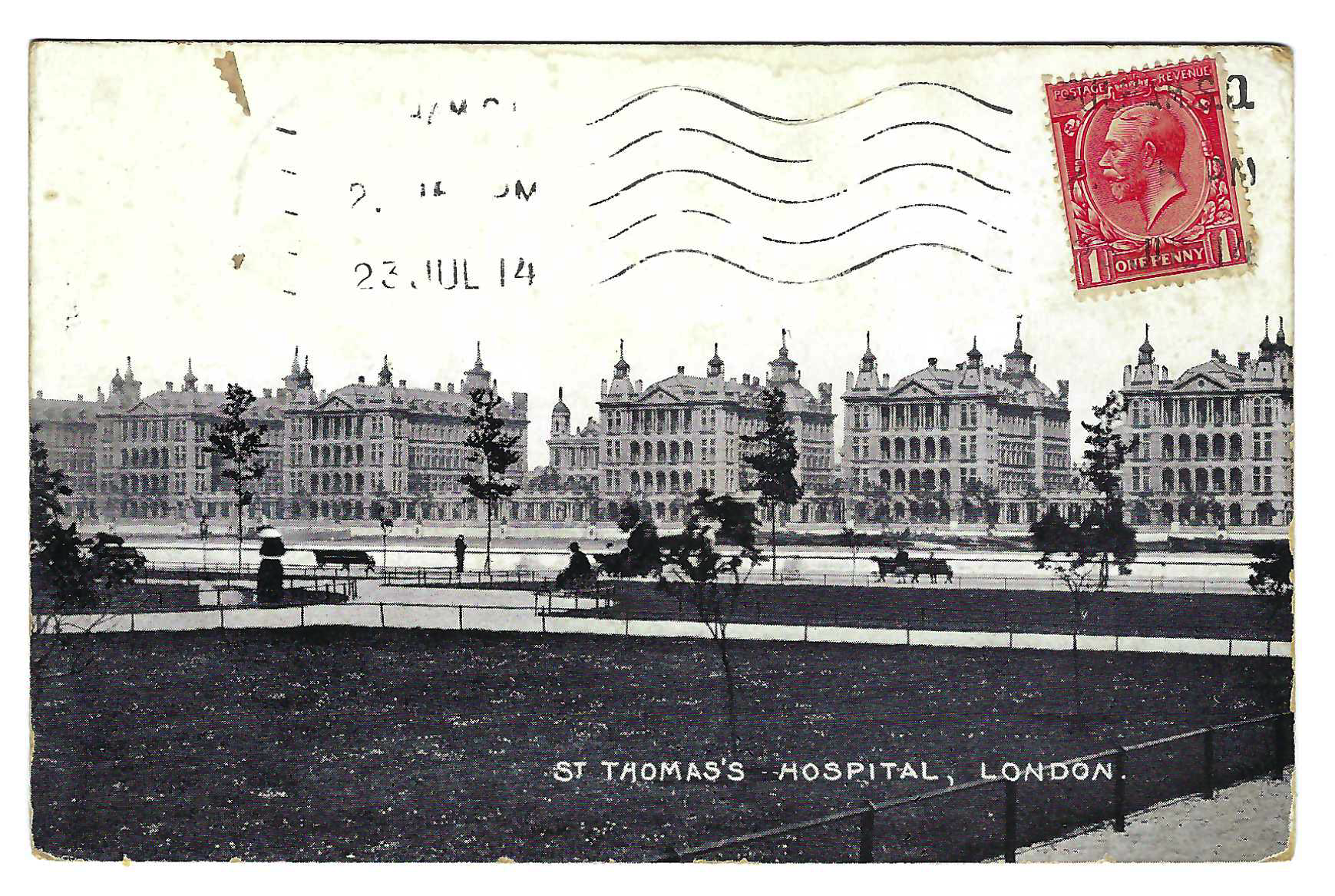
Black-and-white photographic postcard showing the historic riverside buildings of St. Thomas’s Hospital in London, viewed across the River Thames from the Westminster side, c. 1910–1914; postally used 23 July 1914. Publisher: W. Straker Ltd., London. The British postal cancellation on the front is dated 23 JUL 14. The card was addressed to Bessines in the French département of Haute-Vienne and bears a French receiving postmark apparently dated 24 July 1914. The object is particularly interesting because the postal date places an ordinary tourist postcard within an extraordinary historical moment. 23 July 1914 was the day on which Austria-Hungary delivered its ultimatum to Serbia, one of the decisive events of the July Crisis that led to the First World War.
England, 20 C. 1 half
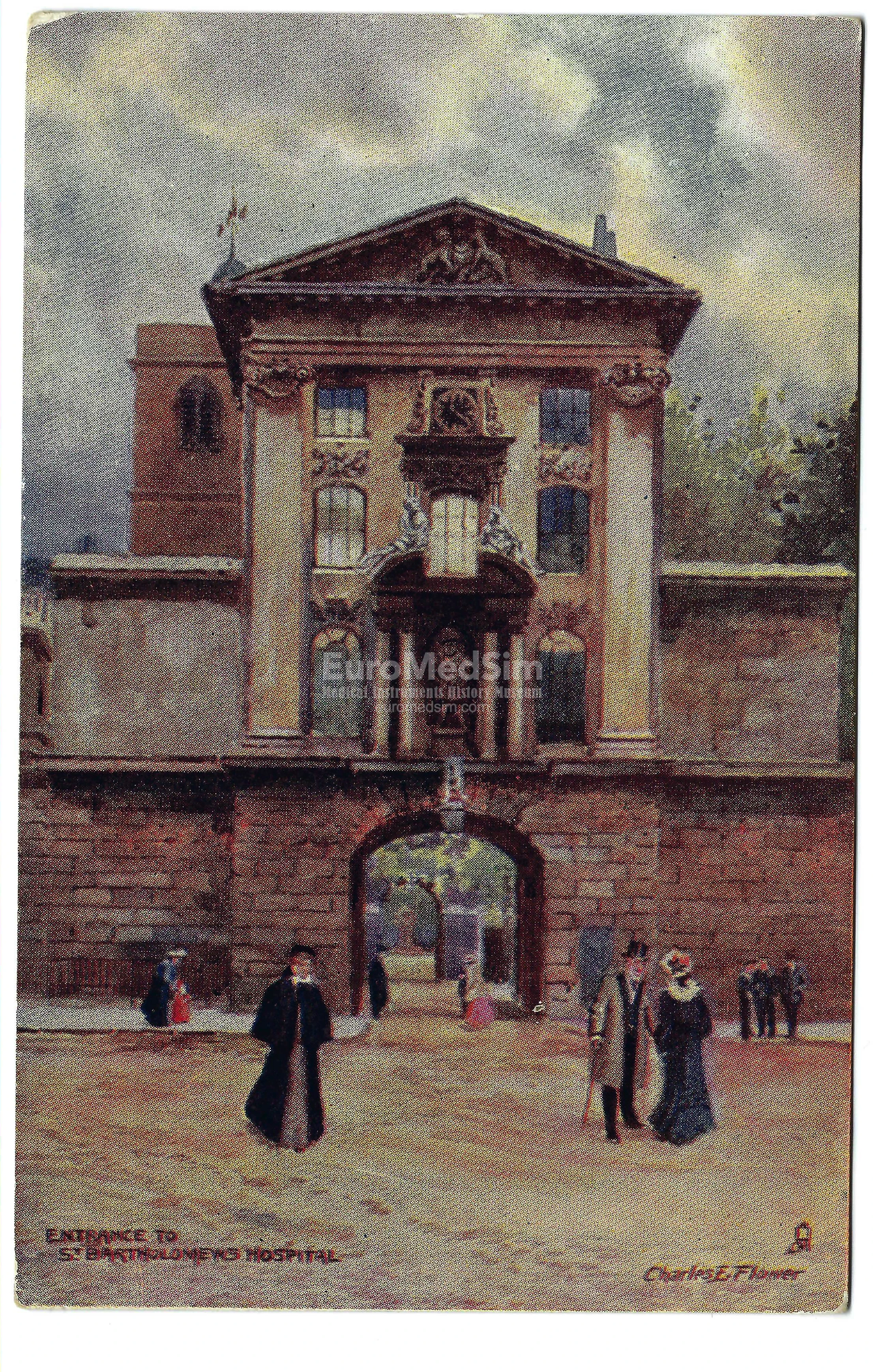
This postcard, depicting the Henry VIII Gatehouse of St Bartholomew's Hospital, was published by Raphael Tuck & Sons as part of their "Aquarette" series (No. 0257) and features artwork by Charles E. Flower. Posted on 9 December 1905, the postmark firmly establishes its use and a terminus ante quem. The publisher's imprint, "Art Publishers to Their Majesties the King & Queen," places the publication after Queen Victoria's death in January 1901, with a likely date of circa 1903–1905. The gateway itself, rebuilt in 1702 by mason John Strong, stands as a historic entrance to Britain's oldest hospital site, founded in 1123. The card captures both an Edwardian street scene and an everyday moment of correspondence from that era.
Germany, 20 C. 1 half
Fliedner, Theodor , Nightingale, Florence
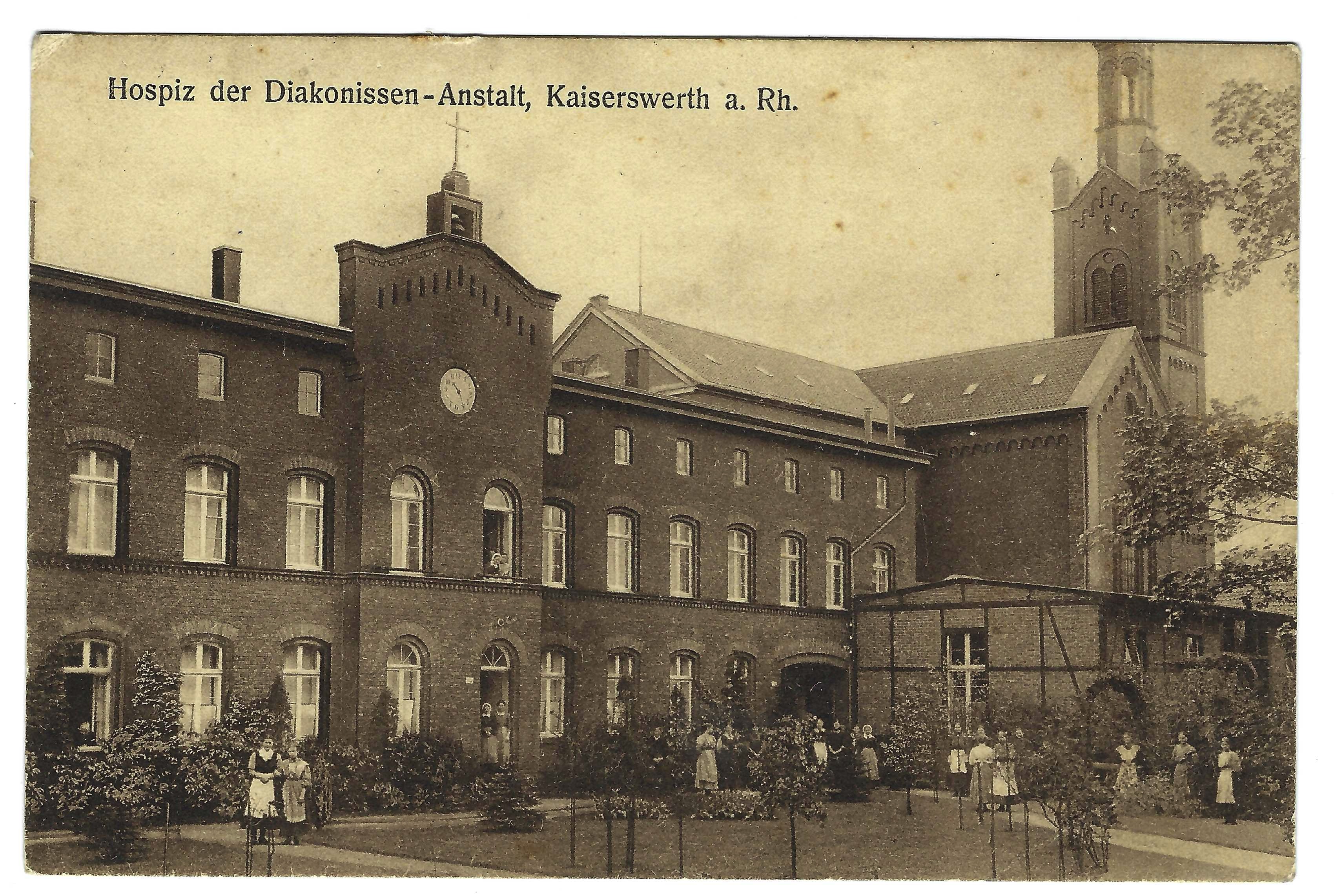
Postcard titled “Hospiz der Diakonissen-Anstalt, Kaiserswerth a. Rh.” with a handwritten private message on the back, bearing a green “German Empire” 5 Pf., postally used stamp, cancelled on August 9, 1913. Cardboard, letterpress printing, handwritten text in ink.
England, 20 C. 1 half
Nightingale, Florence
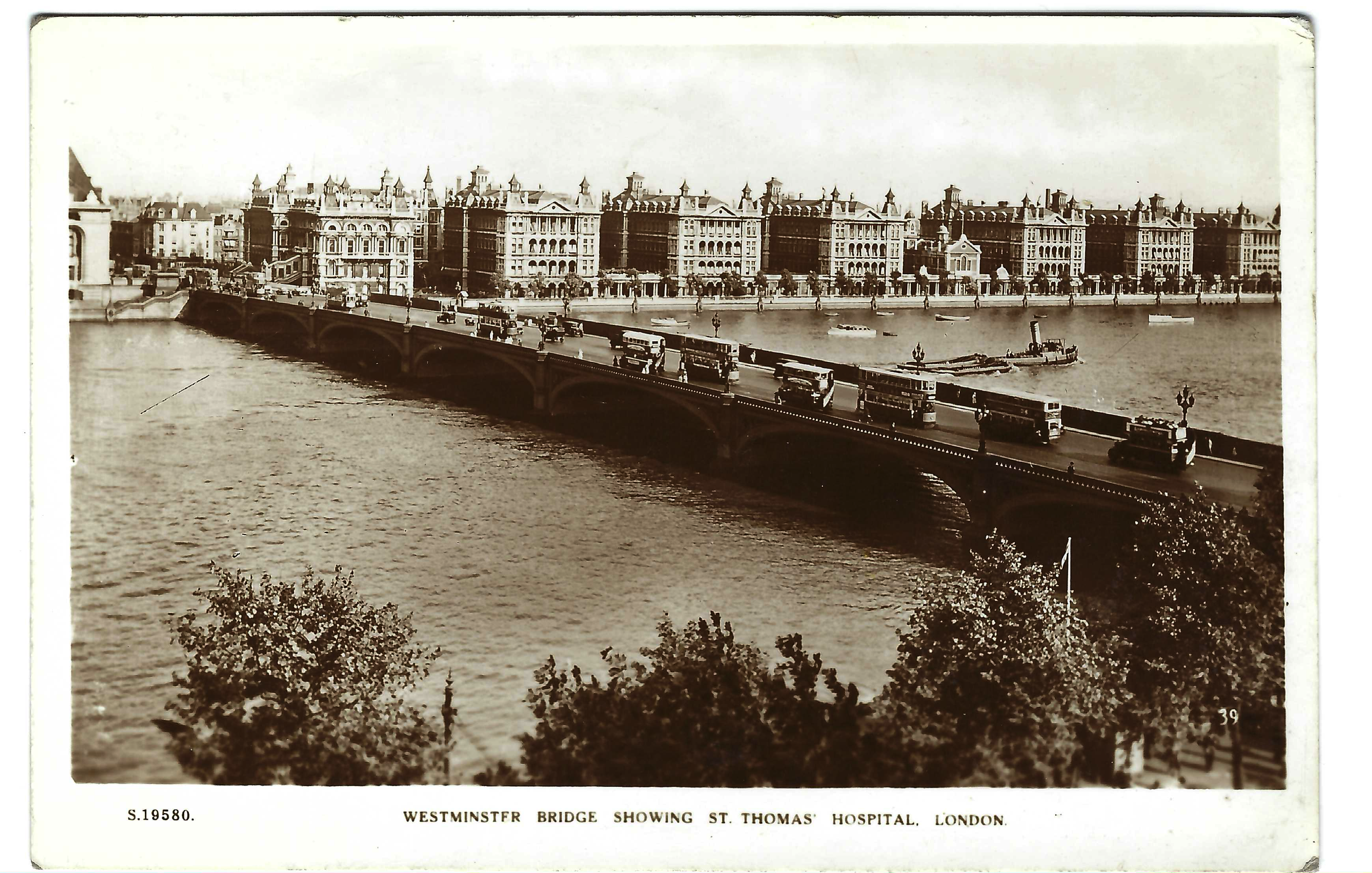
Westminster Bridge and St. Thomas’ Hospital in London, Scenic photographic postcard, presumably from the 1930s, not mailed. Original title: Westminster Bridge showing St. Thomas’ Hospital, London. Series: Bridge House Real Photo Series (1930s–1940) by publisher W. H. Smith & Son, London.
Germany, 20 C. 1 half
Fliedner, Theodor , Nightingale, Florence
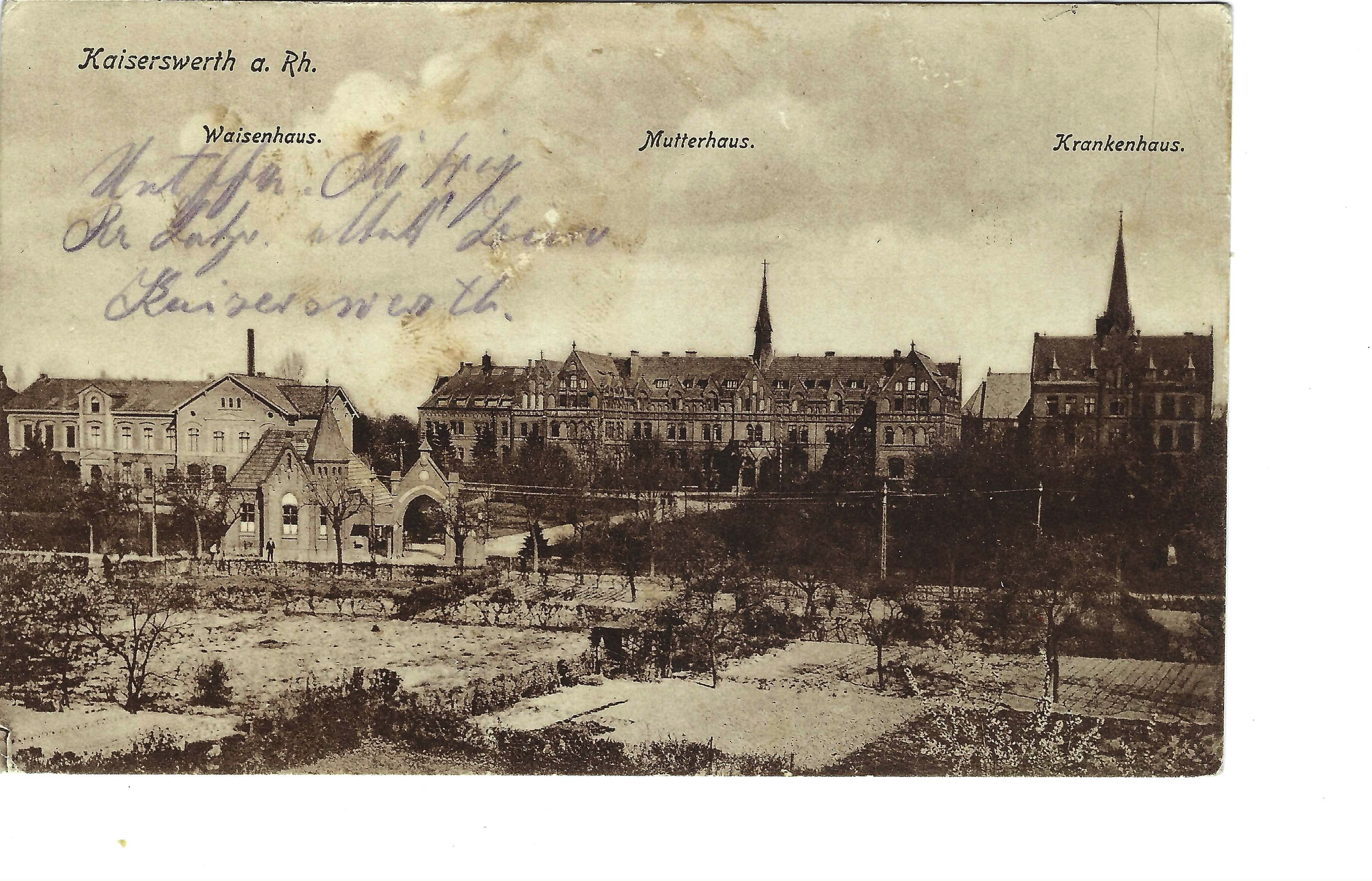
Postcard titled “Kaiserswerth a. Rh. Weisenhaus, Mutterhaus, Krankenhaus". The postcard cancelled 23 August 1917.
Germany, 20 C. 1 half
Fliedner, Theodor , Nightingale, Florence
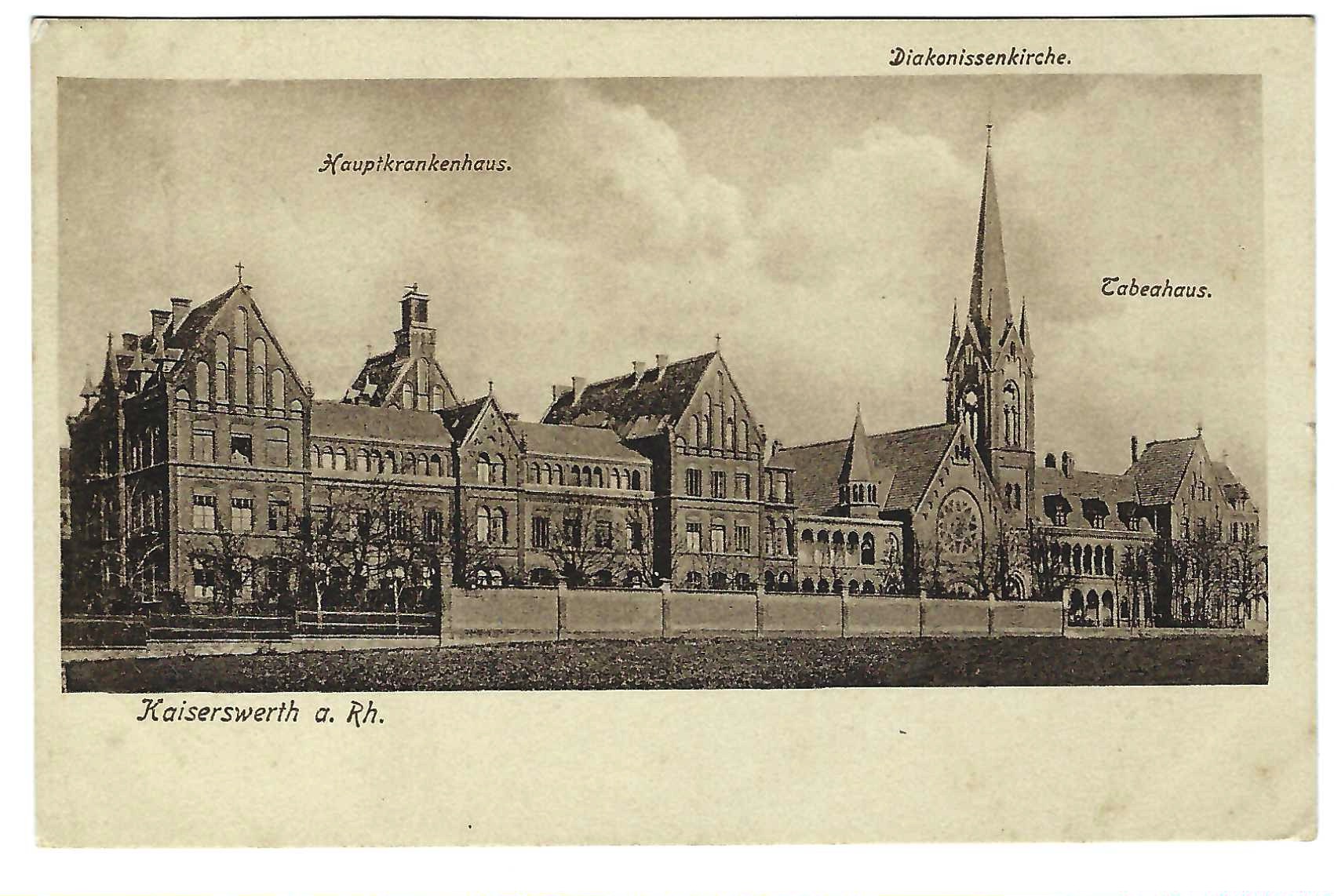
Postcard titled “Kaiserswerth a. Rh. Hauptkrankenhaus, Diakonissenkirche, Tabeahaus." The postcard cancelled 26.12.1916
Germany, 20 C. 1 half
Fliedner, Theodor , Nightingale, Florence
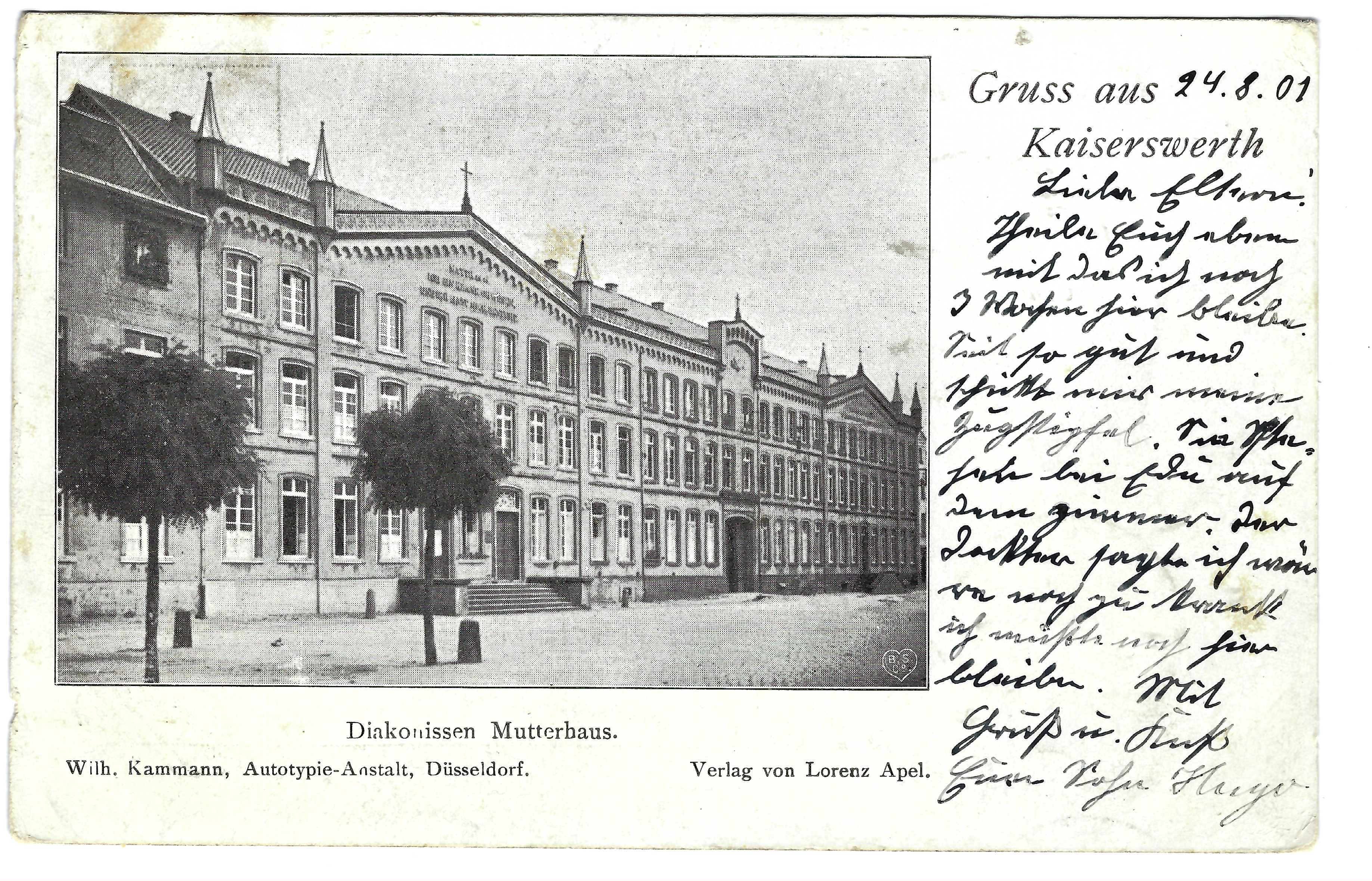
Postcard titled “Diakonissen Mutterhaus” with a handwritten private message on the front side, right from the photo, bearing on the back a green “German Empire” 5 Pf., postally used stamp, cancelled on August 23, 1901. Cardboard, letterpress printing, handwritten text in black ink. Printed by Wilh. Kammann, Autotypie-Anstalt, Düsseldorf. Publisher: Verlag von Lorenz Apel.
Germany, 20 C. 1 half
Fliedner, Theodor , Nightingale, Florence
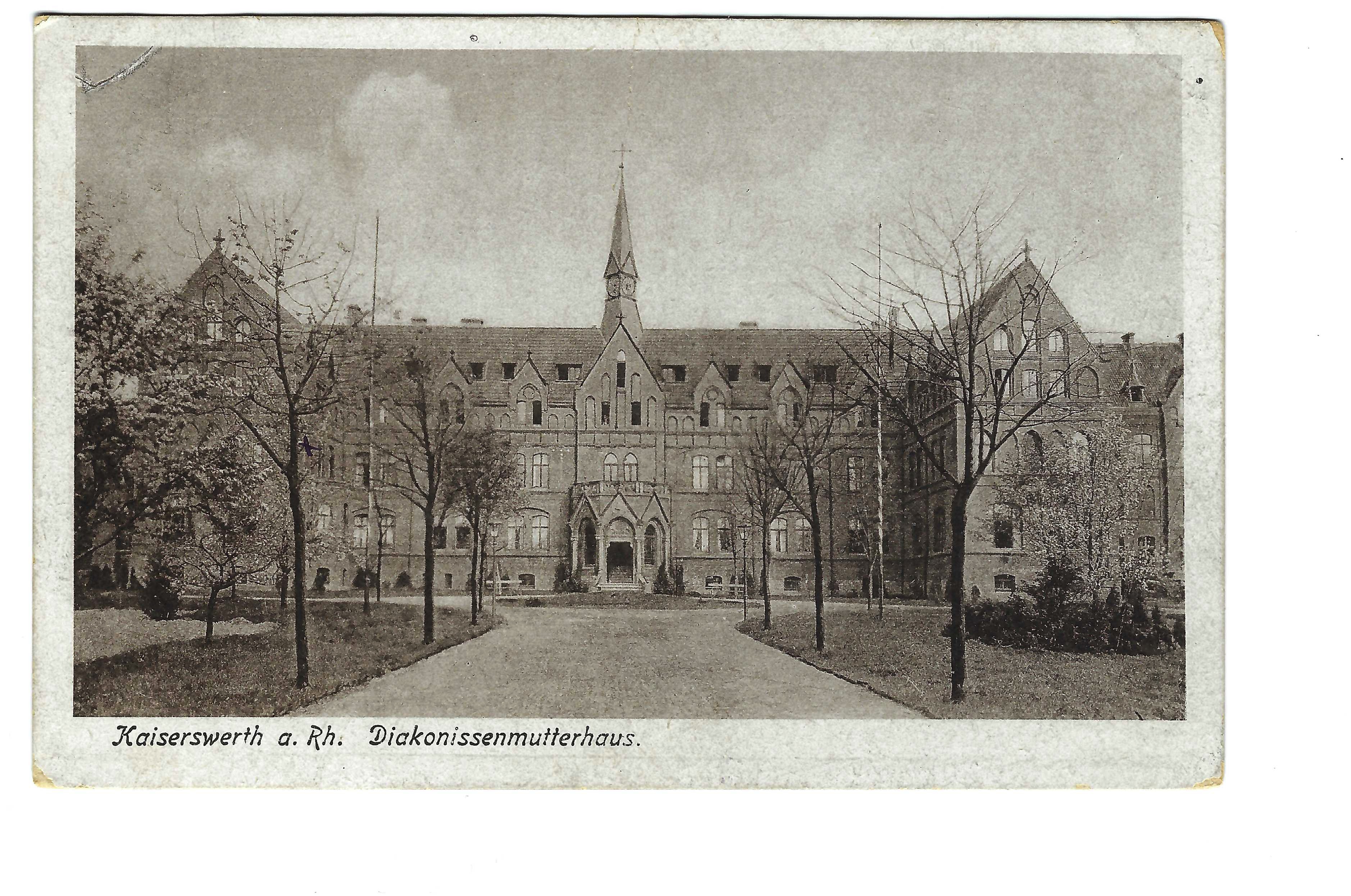
Postcard titled “Kaiserswerth a. Rh. Diakonissenmutterhaus,” with a message on the back, bearing a “German Empire” postally used stamp, cancelled on November 25, 1918.
England, 20 C. 1 half
Nightingale, Florence
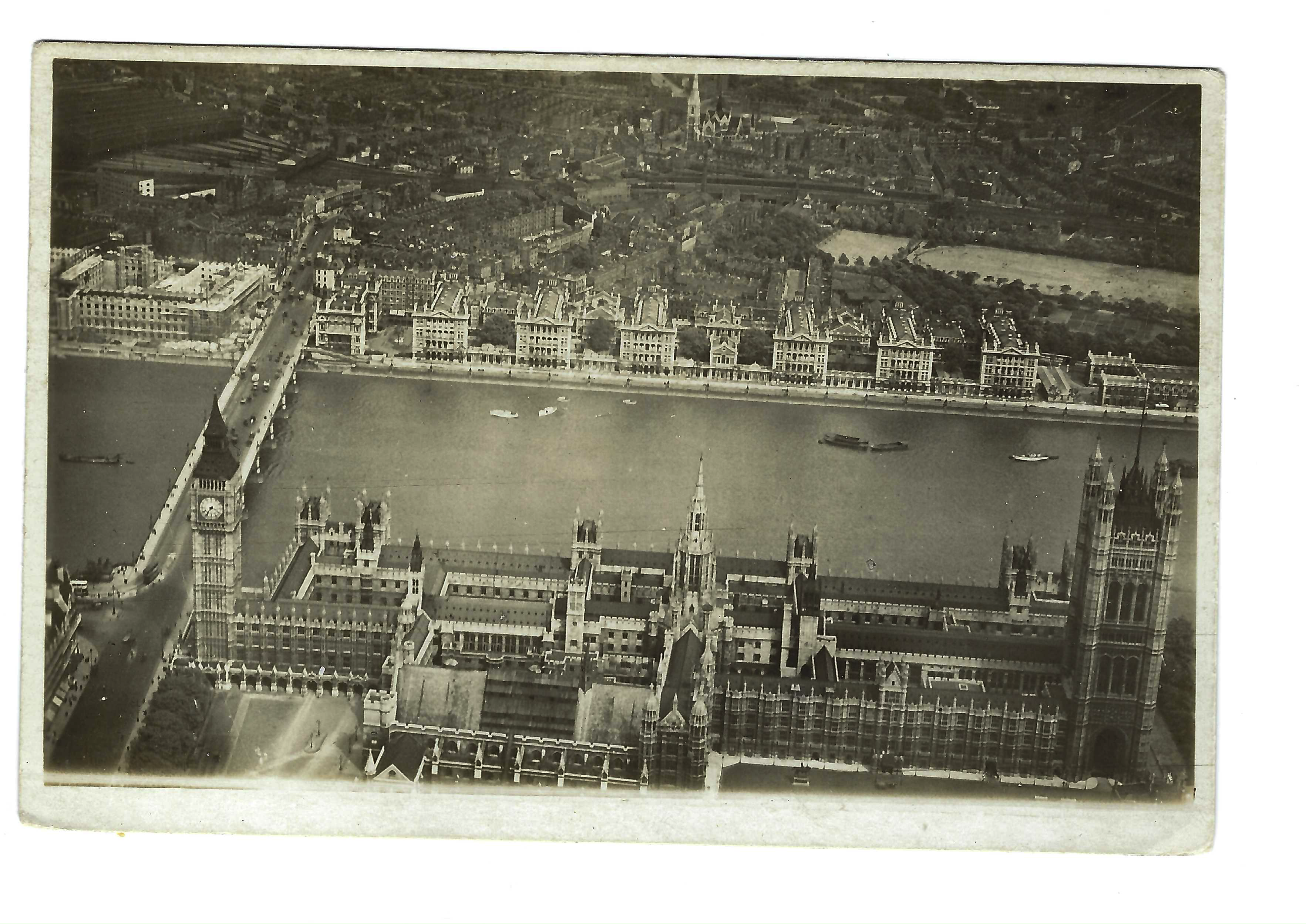
This 1919–1920 aerial photographic postcard shows the Houses of Parliament, Westminster Bridge, and St. Thomas' Hospital from an "Airco 9" aircraft. It uniquely captures the Victorian pavilion-plan hospital opposite Parliament, documenting early commercial aviation and aerial photography post-WWI. The unused card, published by Aircraft Transport and Travel Ltd., offers a clear bird's-eye view of this monumental London landscape, highlighting the hospital's architecture and its prominent riverside position.
PEOPLE
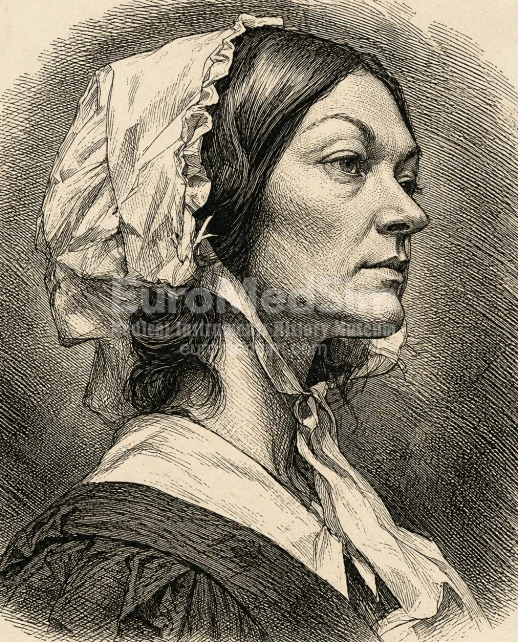
Florence Nightingale (1820–1910) founded modern nursing in Great Britain, transforming it from a disreputable occupation into a respected profession. Despite fierce family opposition, Nightingale persisted, eventually training at the Nursing School of Protestant Deaconesses in Kaiserswerth, Germany, in 1851. During the Crimean War, she led 38 nurses to Scutari, where she implemented sanitation measures that drastically reduced the mortality rate from 42% to 2%. Known as "The Lady with the Lamp," she also pioneered medical statistics, creating polar area diagrams to visualise preventable deaths. In 1860, she established the first secular nursing school at St Thomas' Hospital, London. Her legacy endures through International Nurses Day, celebrated on her birthday, and her foundational text Notes on Nursing.
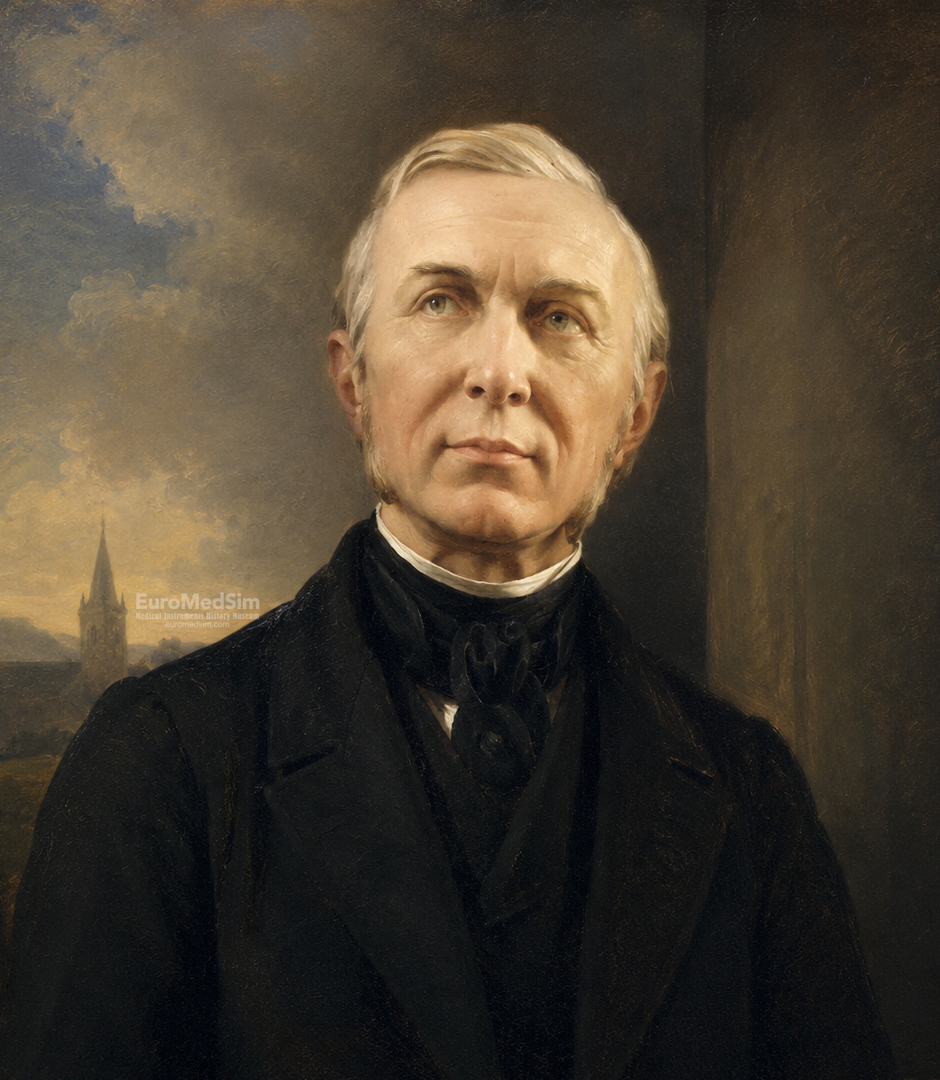
Theodor Fliedner (1800–1864) was a German Protestant pastor and social reformer. In 1836, together with his wife Friederike, he founded the Kaiserswerth Deaconess Institute, combining nursing education, hospital practice, and religious service. Its model helped professionalise nursing, spread internationally, and influenced Florence Nightingale.
MUSEUM
England, London
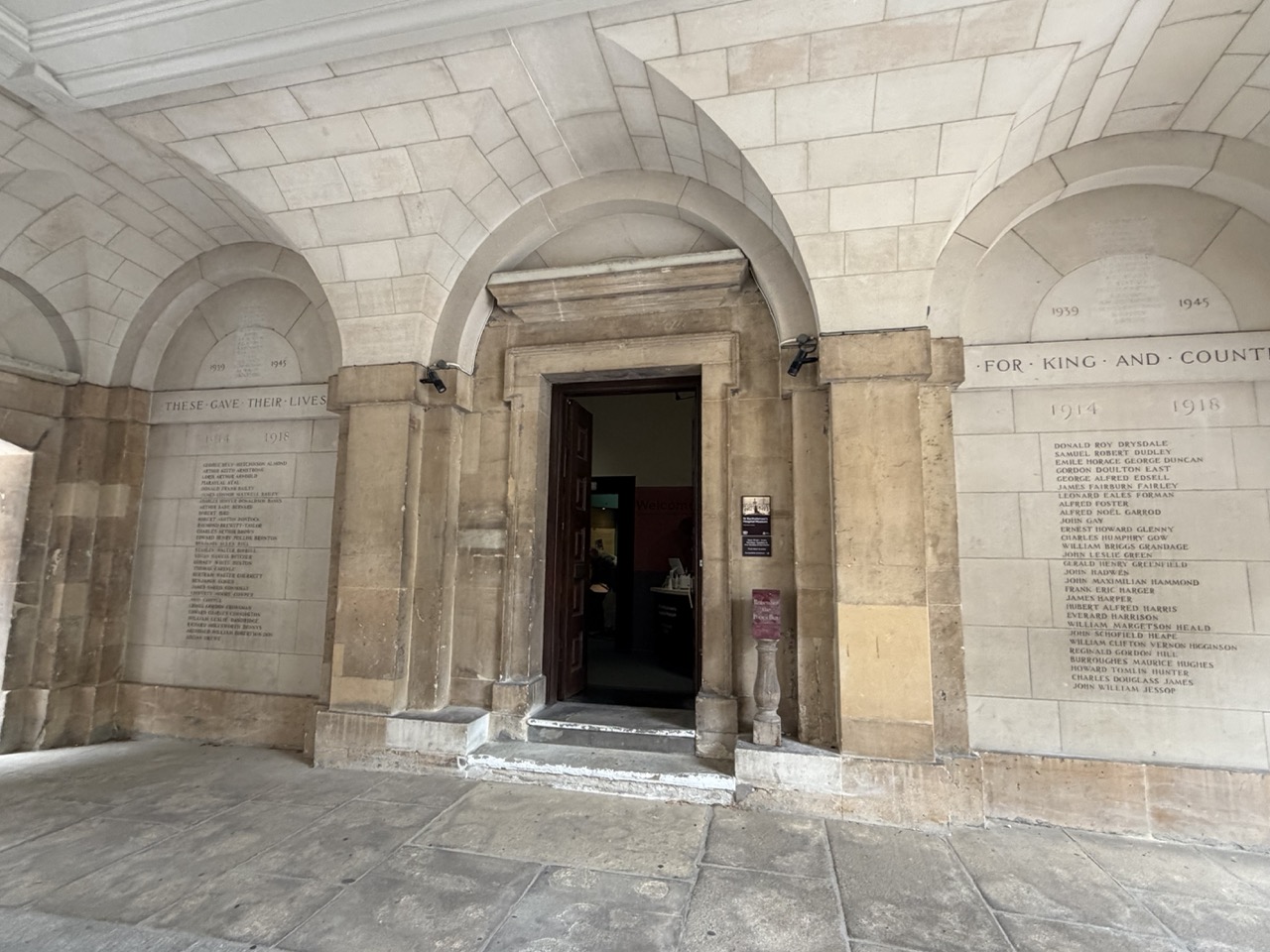
Barts Museum in the City of London is Britain's oldest working hospital on its original site, founded in 1123 by Rahere. Housed in the Grade I listed North Wing, it reopened in October 2025 after a £5.3m restoration. Entry is free. Highlights include the Great Hall, Hogarth's murals, and the Henry VIII Gatehouse with London's only public statue of the king. Famous names: Florence Nightingale, Elizabeth Blackwell, James Paget. Literary link: Sherlock Holmes met Dr Watson here. Nearby: St Bartholomew-the-Great church and Smithfield Market.
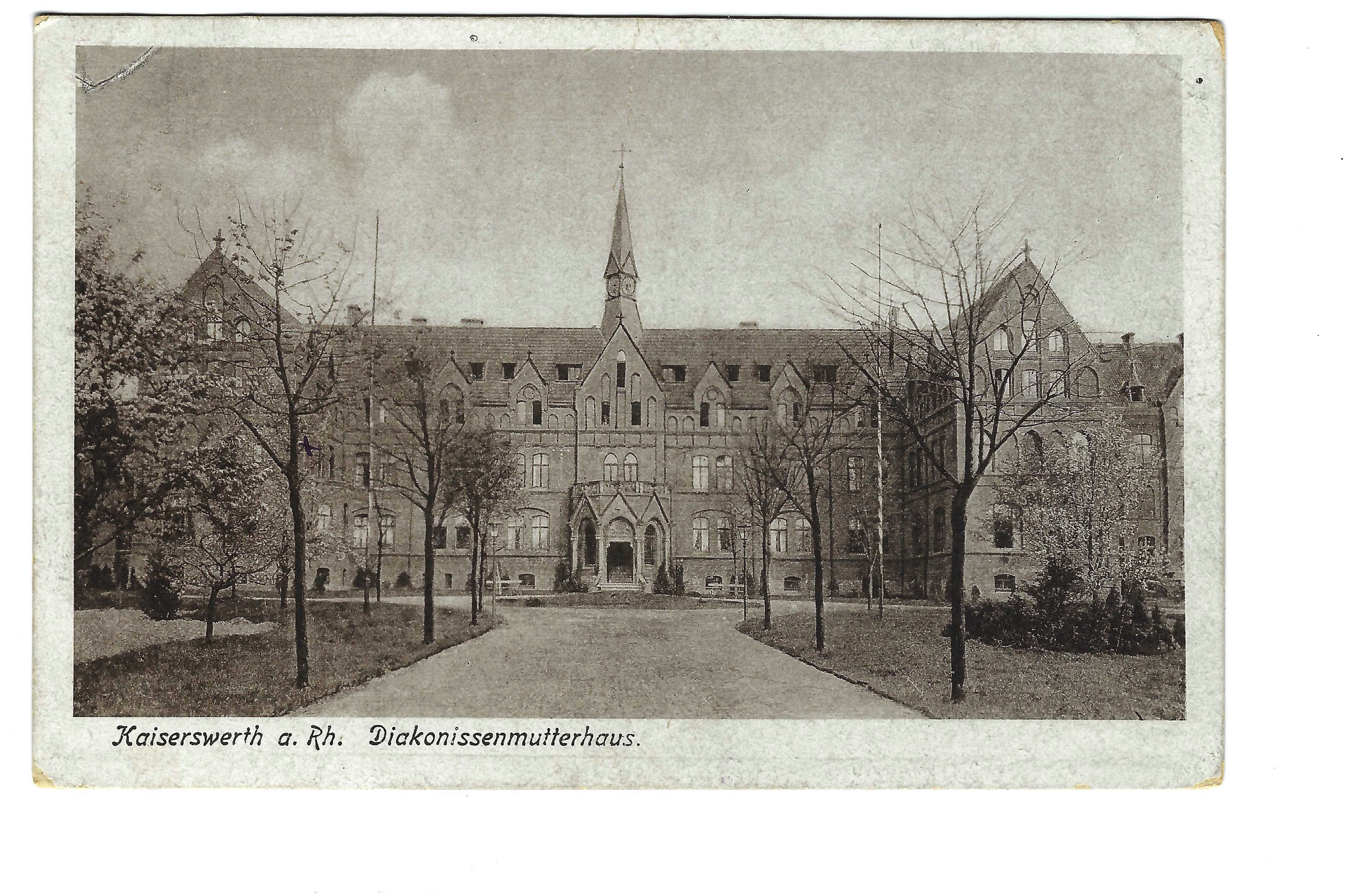
Germany, Kaiserswerth
Kaiserswerther Diakonie is an Evangelical community of deaconesses founded in 1836 by Pastor Theodor Fliedner. Here women received training in caregiving and child-rearing and lived a life of discipline and prayer. The institution included a hospital, a school, and a shelter. In 1851, Florence Nightingale, who later established the modern system of nursing in Great Britain, completed an internship here. The Kaiserswerth model spread throughout Europe, America and Russia. Today, the Diakonie remains an active institution, and its building houses a Pflegemuseum (Museum of Nursing) and a hotel in the Mutterhaus.
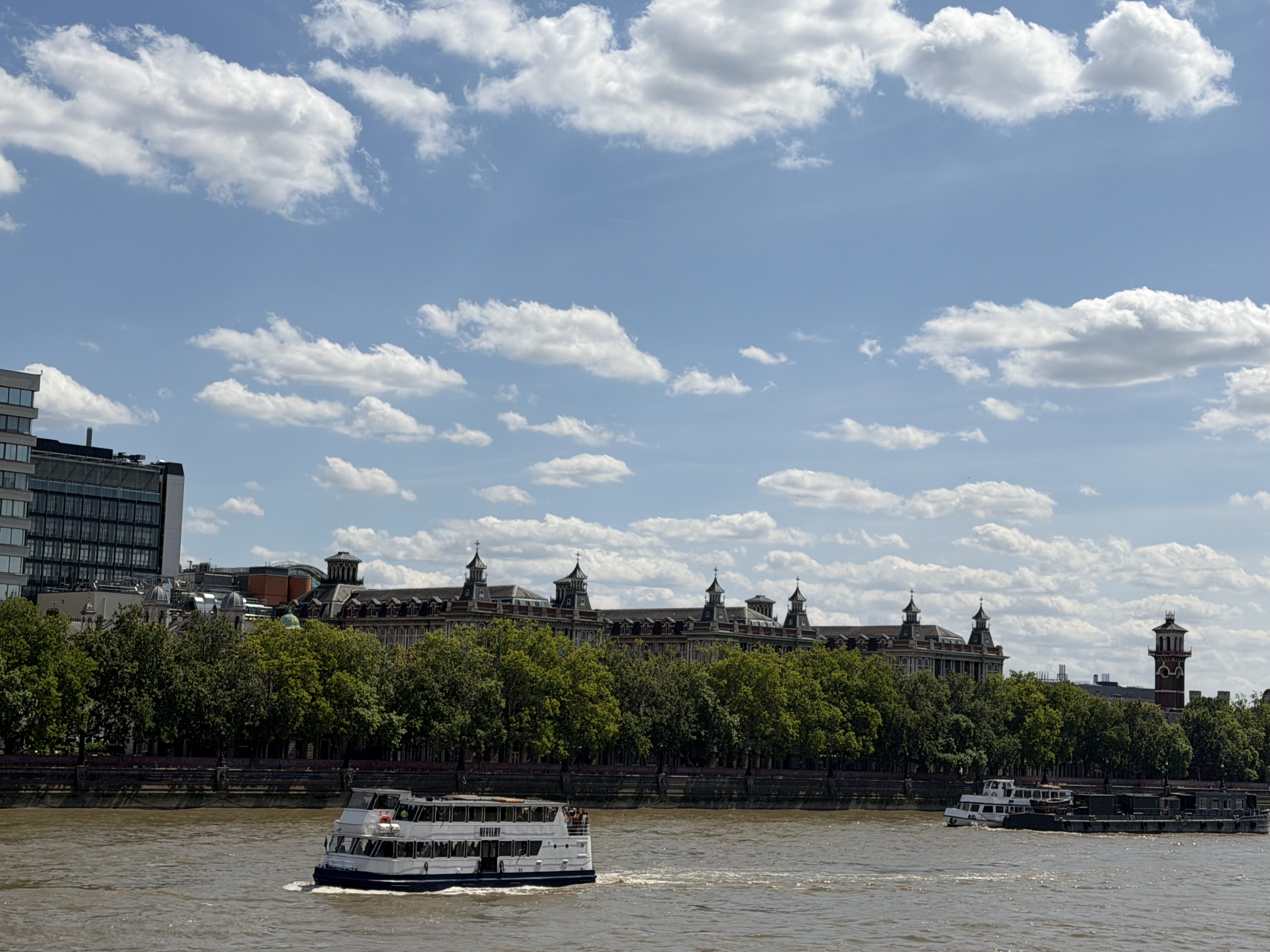
England, London
St Thomas’ Hospital, founded c. 1100 in Southwark, was relocated in 1862 due to railway expansion. Its current building (1872) at the Thames-side site opposite of the Westminster Palace, designed by Henry Currey was laid by Queen Victoria. In 1860, Nightingale founded Britain’s first nursing school at St. Thomas’s, which today is part of King’s College London. The hospital’s Central Hall houses a free mini-museum dedicated to the hospital’s history, and the new wing is home to the Florence Nightingale Museum.
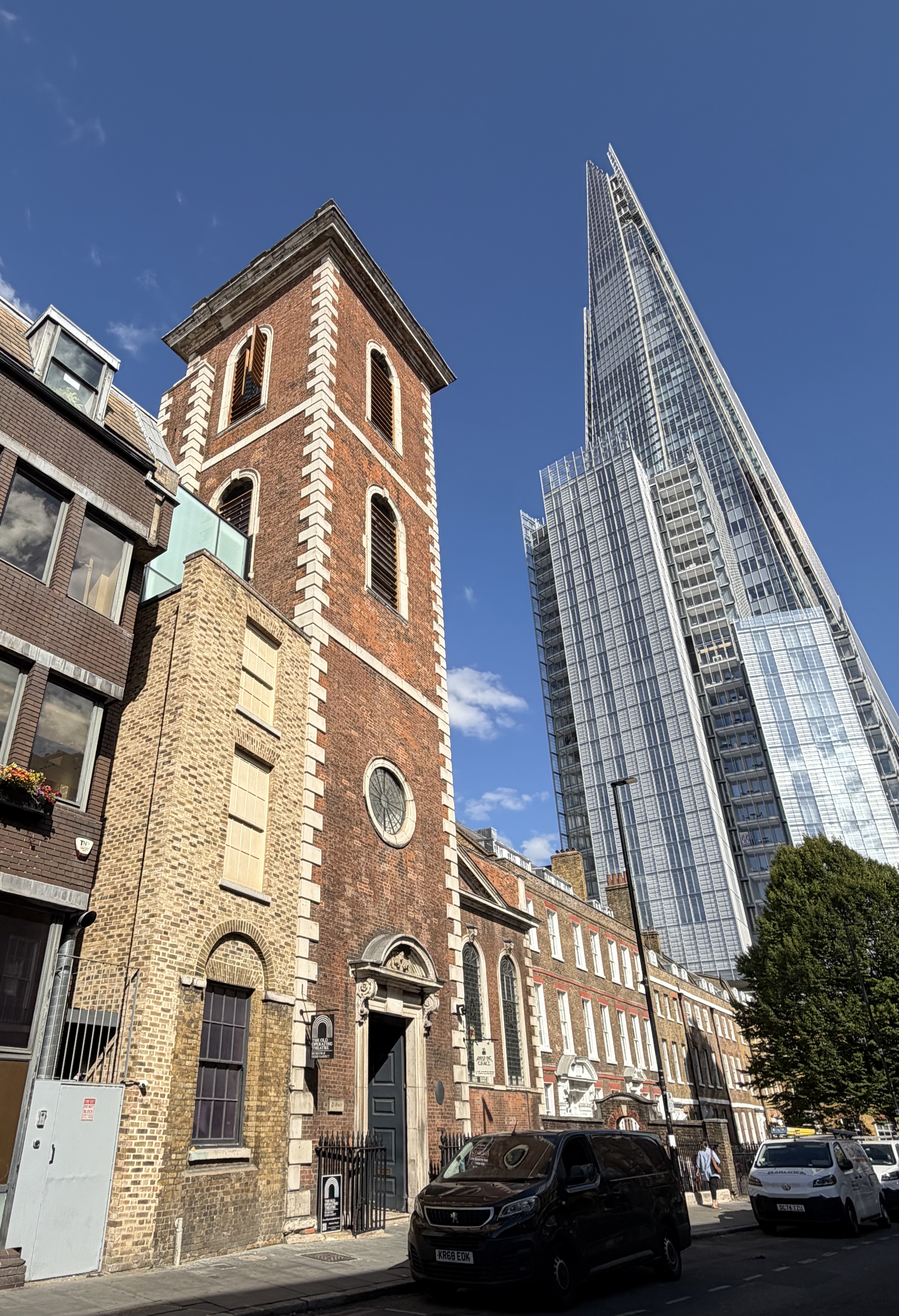
England, London
The Old Operating Theatre Museum and Herb Garret in London is Europe's oldest surviving surgical theatre. Tucked away inside the timber-framed attic of St Thomas' Church, this unique institution dates back to 1822. It predates both anaesthetics and antiseptics, offering a visceral look into 19th-century medical procedures. It was closed in 1862 and was then sealed up and forgotten until being rediscovered in the 20th century — it reopened as a museum in 1962.