
St Barts — St Bartholomew's Hospital Museum
Barts Museum: Nine Centuries of History in the Heart of London
St Bartholomew's Hospital Museum — known to most simply as Barts Museum — occupies the ground floor of the North Wing at West Smithfield in the City of London. It tells the story of one of Britain's oldest hospitals, and remarkably, the only one still operating on the very site where it was founded — all the way back in 1123, by Rahere, a courtier to King Henry I. The building itself, designed by architect James Gibbs in the 18th century, is Grade I listed, and the museum's permanent exhibition draws on original archives and objects to trace nearly nine centuries of medical practice, hospital life, and patient care.
Barts: A Living Piece of Medieval London
Tucked into the City of London at West Smithfield stands one of Britain's most remarkable medical institutions — a hospital that has occupied the very same site since it was founded in 1123 by Rahere, a courtier to King Henry I. That makes St Bartholomew's the oldest hospital in Britain still operating where it began, nearly nine centuries ago. Today it functions as a major teaching hospital within Barts Health NHS Trust, but its museum, housed on the ground floor of the Grade I listed North Wing, keeps that long history visible and accessible to anyone who walks in.
The Hospital's Long Story
Barts' history stretches back to the 12th century, but one of its most pivotal moments came in 1547, when Henry VIII re-founded the hospital following the Dissolution of the Monasteries — an event still commemorated inside the museum today.
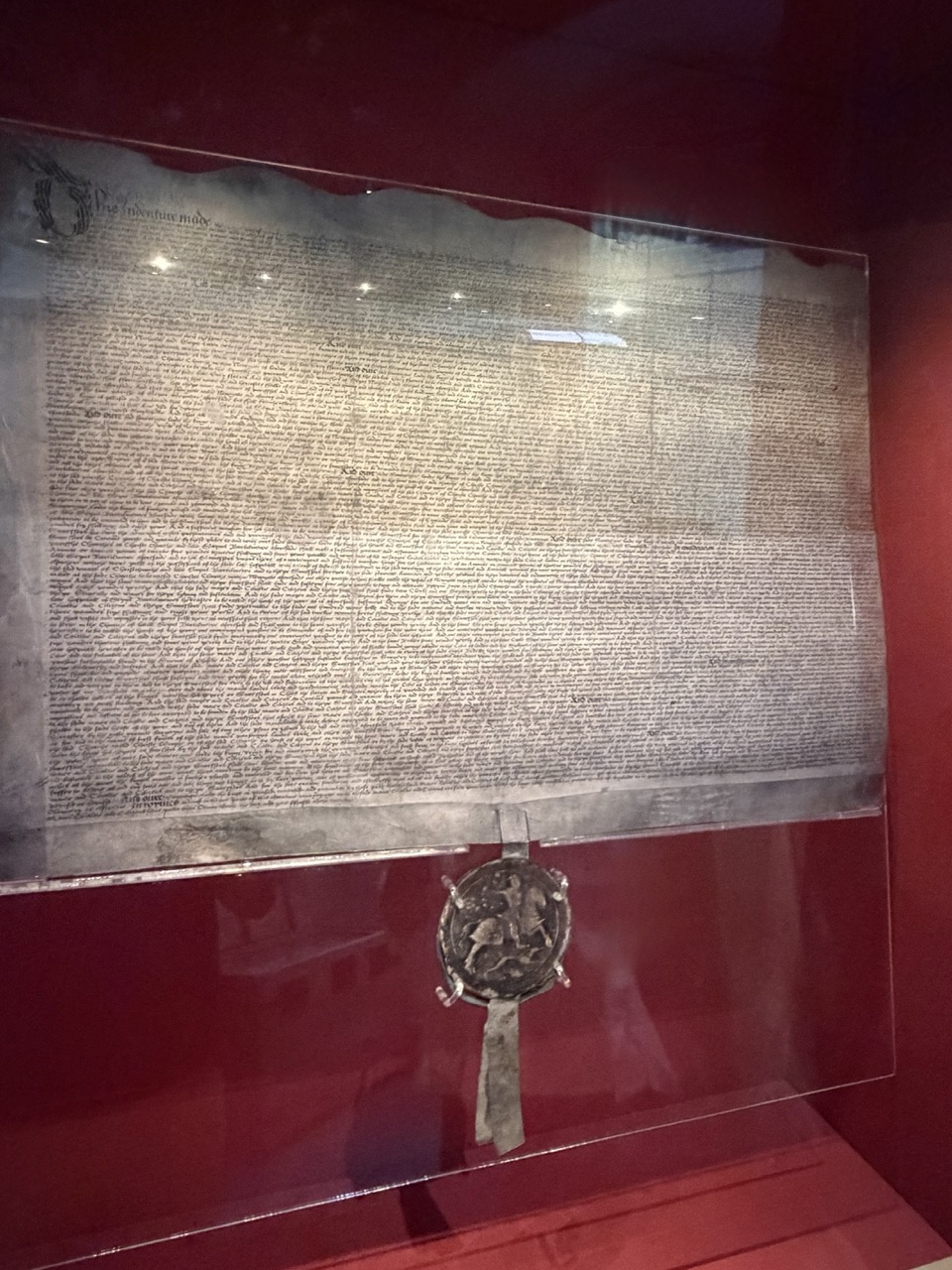
Agreement between King Henry VIII and the City of London, 27 December 1546. Henry's signature can be seen in the top left corner. The King, 'considering the myserable estate of the poore aged sicke sore and ympotent people as well men as women lyinge and goyng about Beggyng' promises to grant to the Mayor and Commonalty of London and their successors for ever the Hospital. Source: St Barts Museum
Over the centuries, the hospital has intersected with some remarkable figures and events: Florence Nightingale's presence is recorded in a museum visitor book, Elizabeth Blackwell — the first woman to earn a medical degree in the United States — trained here, and surgeon-pathologist James Paget both organized the hospital's pathology collection and identified the bone condition that now bears his name while working on site. Memorial plaques on the grounds also honor the 5,406 wounded soldiers treated at Barts during the First World War. The hospital even has a literary claim to fame: it's where Dr. John Watson first meets Sherlock Holmes in Arthur Conan Doyle's A Study in Scarlet (1887).
The Henry VIII Gatehouse
The main entrance to the hospital grounds is the Henry VIII Gatehouse — a striking Tudor brick structure that is itself Grade I listed. It's a notable landmark in its own right: it holds London's only public outdoor statue of Henry VIII, a fitting tribute given his role in the hospital's history. One of the key exhibit of the Museum is the 1546 agreement between Henry VIII and the City of London, signed by the king himself (his distinctive signature appears in the top left corner). This document marked the hospital's re-founding in 1547, securing its survival for centuries to come. Following the dissolution of the monasteries, the hospital was refounded by King Henry VIII in December 1546, under an agreement granting it to the Corporation of London — a debt of gratitude later commemorated by the statue of the king set above the main gate, traditionally said to be the only public statue of Henry VIII surviving in London.
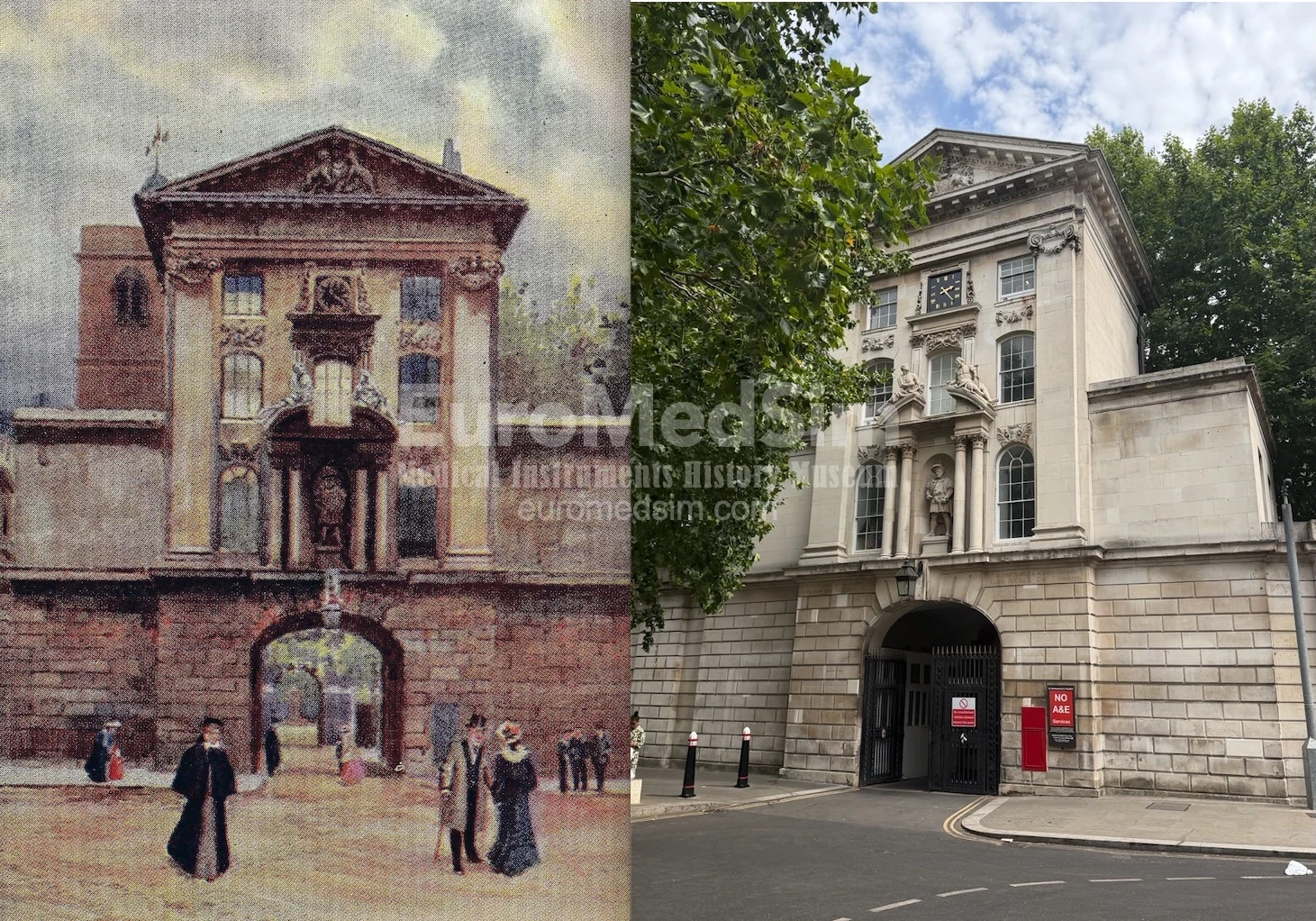
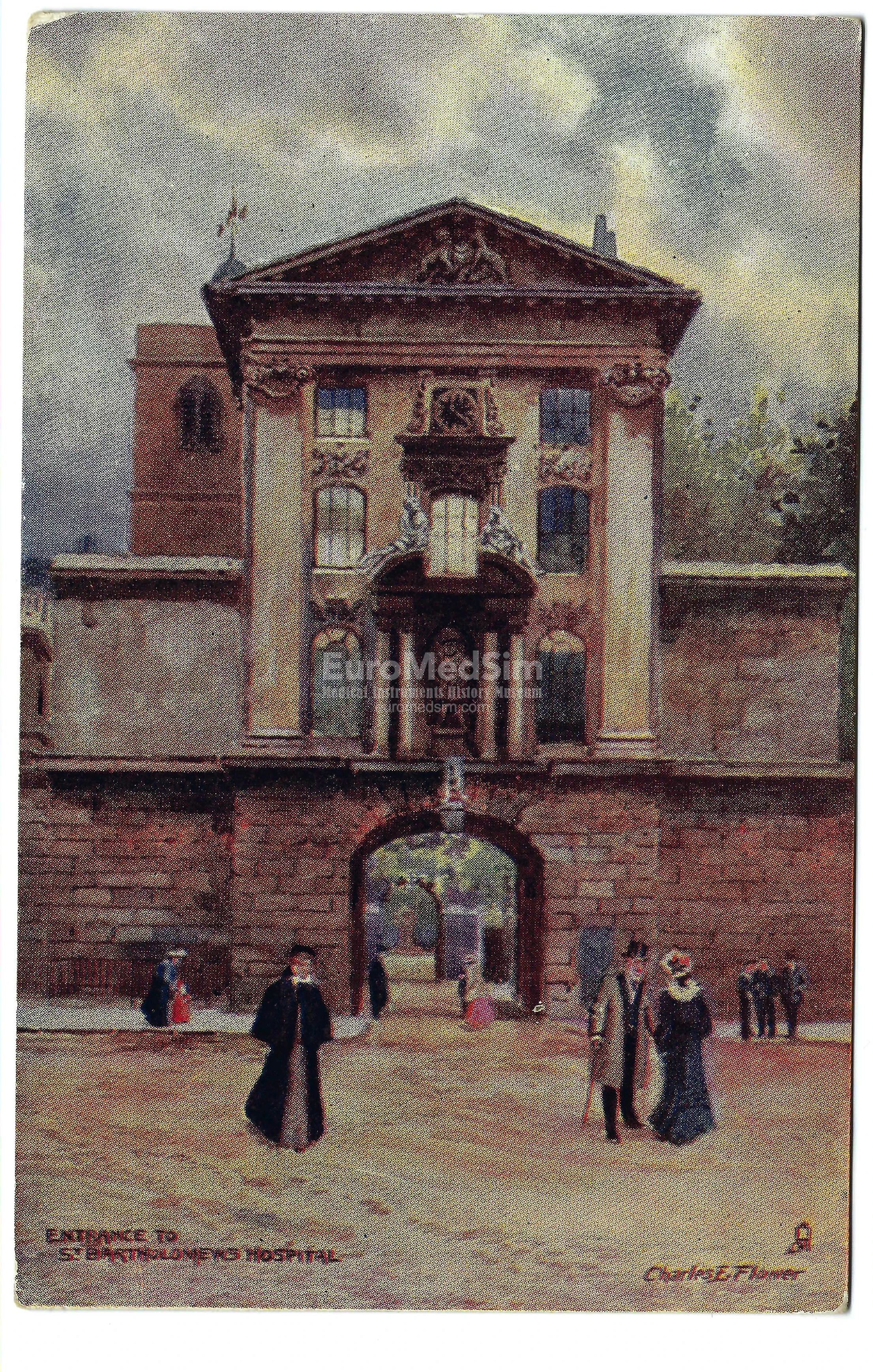
A comparative view of Henry VIII’s Gate leading to St. Bartholomew’s Hospital. On the left is a postcard from the early 20th century (postcard by artist Charles E. Flower, published by Raphael Tuck & Sons in the “Aquarette” series in 1900s; the postcard sent in 1905); on the right is a contemporary photograph (2026). Source: EndoMedSim Museum
The governors of St Bartholomew’s decided in 1701 that the north gate required rebuilding. By 1702, they had struck a deal with John Strong, a junior mason from the celebrated Strong family (who were at that very time labouring alongside Sir Christopher Wren at St Paul’s Cathedral), to erect a splendid new gatehouse for the handsome fee of £550.
The gatehouse itself stands at the western edge of the hospital precinct, adjoining the churchyard of St Bartholomew-the-Less. Its present form — the rusticated arch and pedimented upper storey shown on the postcard — dates largely from a rebuilding of 1702, though it incorporates earlier fabric associated with the medieval priory gate. Beyond the gateway lies the hospital's principal courtyard, laid out by the architect James Gibbs in the 1730s and enclosed by ranges of the same period, of which the Great Hall — famous for its staircase paintings by William Hogarth — forms part.
The gateway is composed of a rusticated stone archway at ground level, surmounted by a pedimented upper storey carried on paired Corinthian pilasters. Within the pediment a heraldic device is set in relief, flanked by decorative strapwork. Below the pediment, in a canopied niche above the arch, stands a carved figure occupying the place traditionally given to the statue of the King Henry VIII. As mentioned earlier, it features the only public outdoor statue of King Henry VIII in London, placed above the main arch to honour him for re-founding the hospital in 1546.
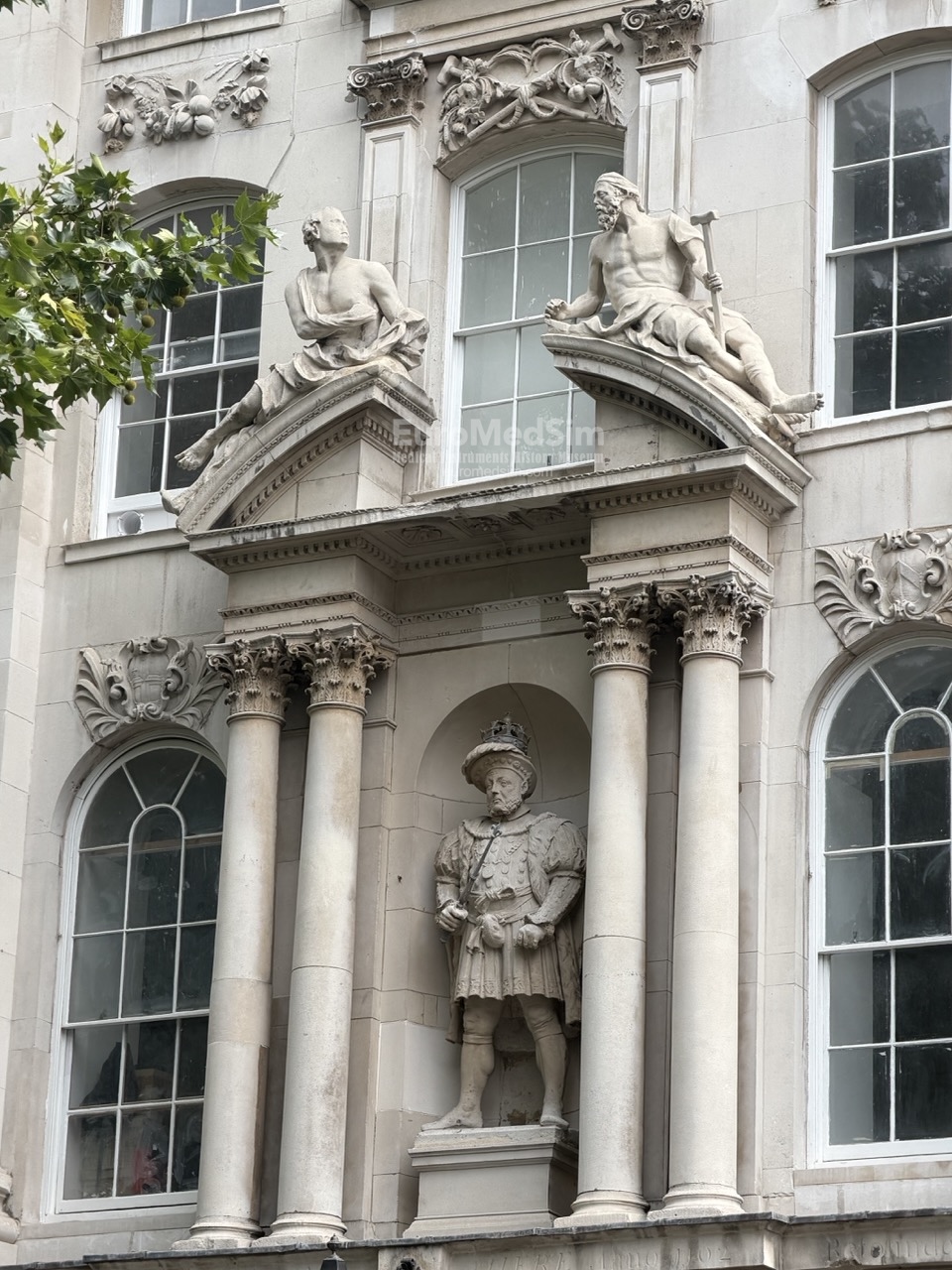
The gateway of the historic public entrance to St Bartholomew's Hospital at West Smithfield was designed in 1702. The statue of the King Henry VIII, who refounded the hospital in December 1546, stands in a niche above the arch.
The Quadrangle — Georgian Courtyard in the Centre of the Hospital
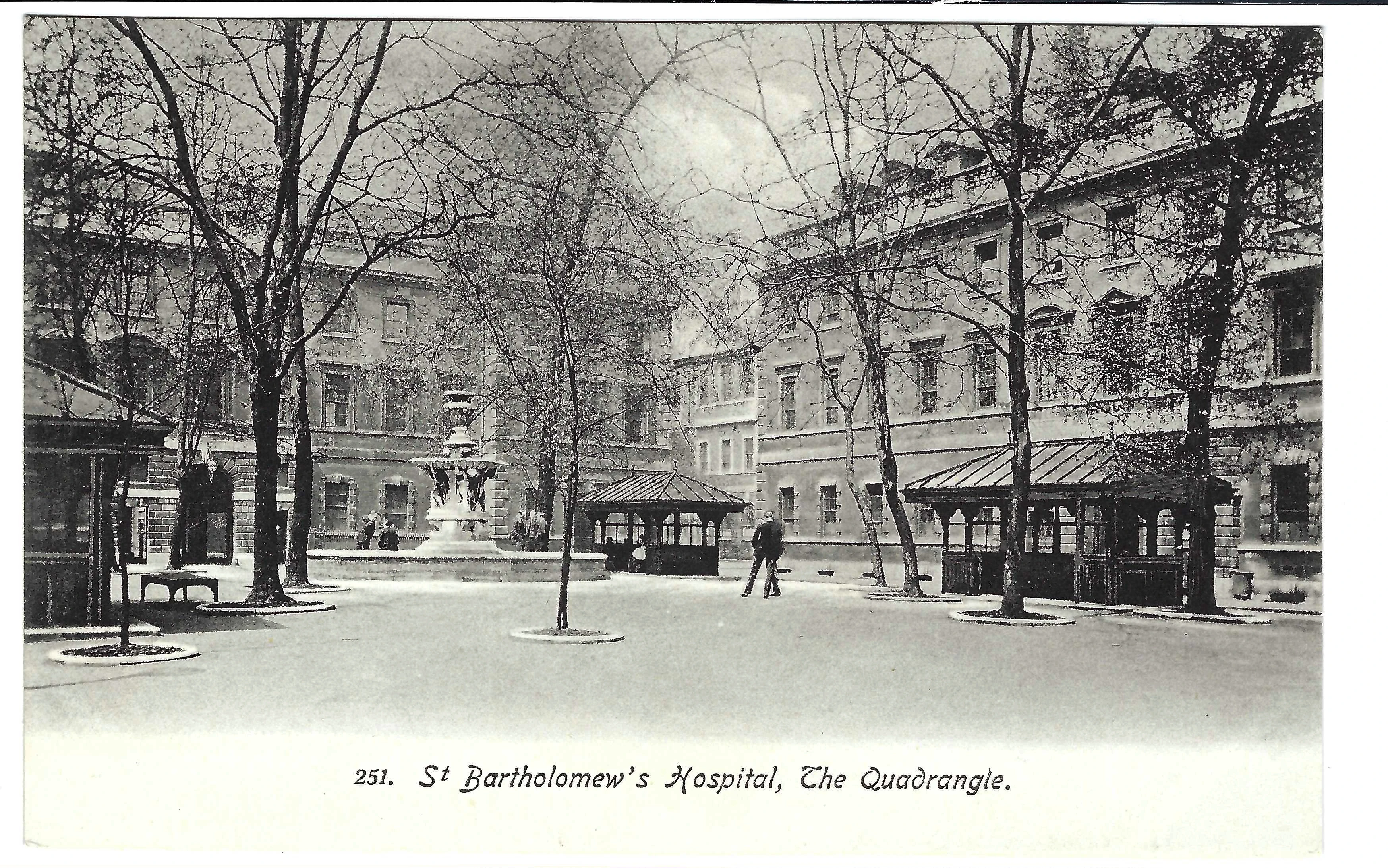
Between 1730 and 1768, architect James Gibbs created a formal neoclassical hospital complex arranged around the central courtyard. The North Wing housed administrative and ceremonial functions, including the Great Hall and the staircase decorated with monumental paintings by William Hogarth, while the other major wings contained hospital wards.
The Barts had developed far beyond its eighteenth-century structure: formal medical teaching had become established, new specialist departments had appeared, and a School of Nursing had been founded in 1877. Yet the Georgian courtyard remained the physical and symbolic centre of the institution. The fountain added in 1859 further transformed the courtyard from a purely architectural space into something resembling a small urban garden within the hospital. Trees, paths and places of shelter softened the monumental stone surroundings and provided an outdoor environment for patients, staff and visitors.
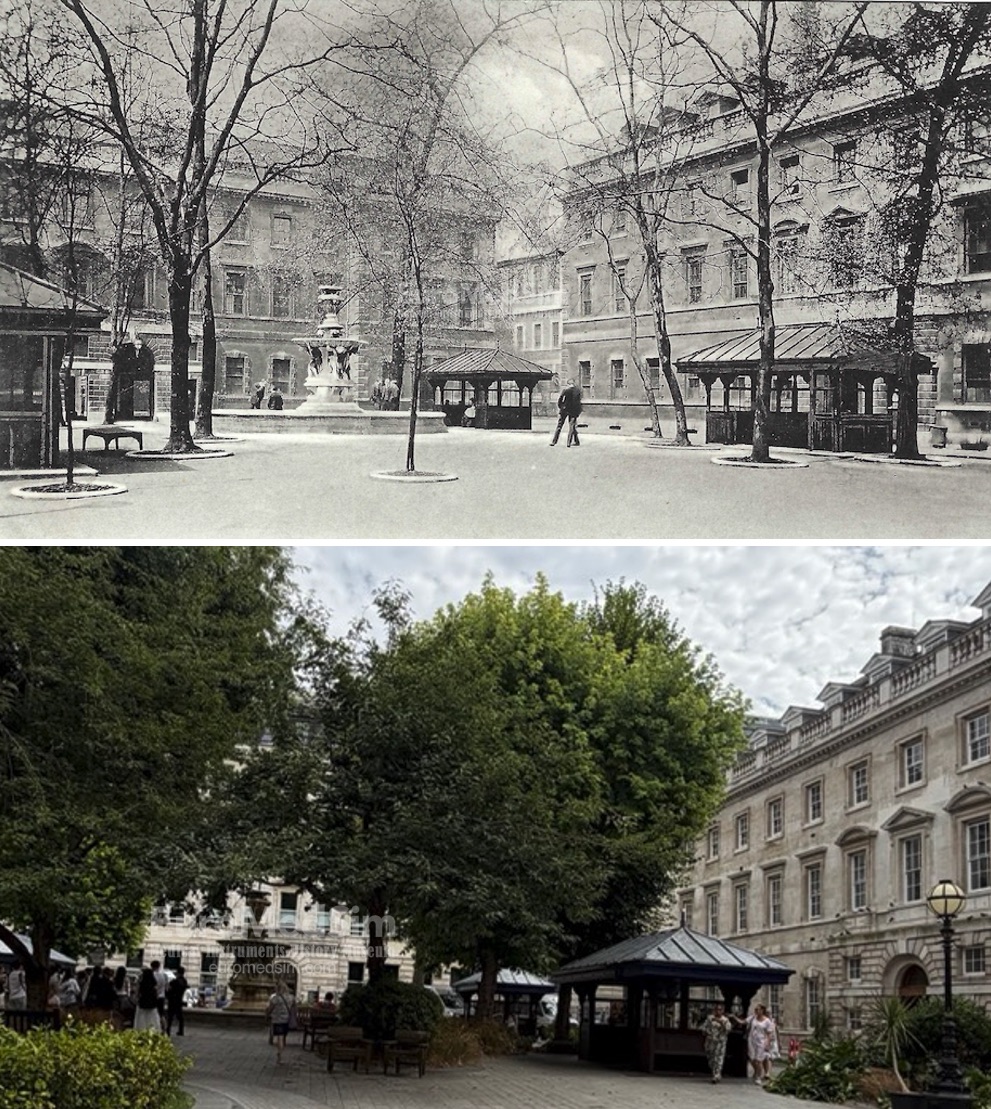
Comparative view of the Quadrangle in St Bartholomew Hospital, 1908–2026. Source: EuroMedSim
St Bartholomew-the-Less
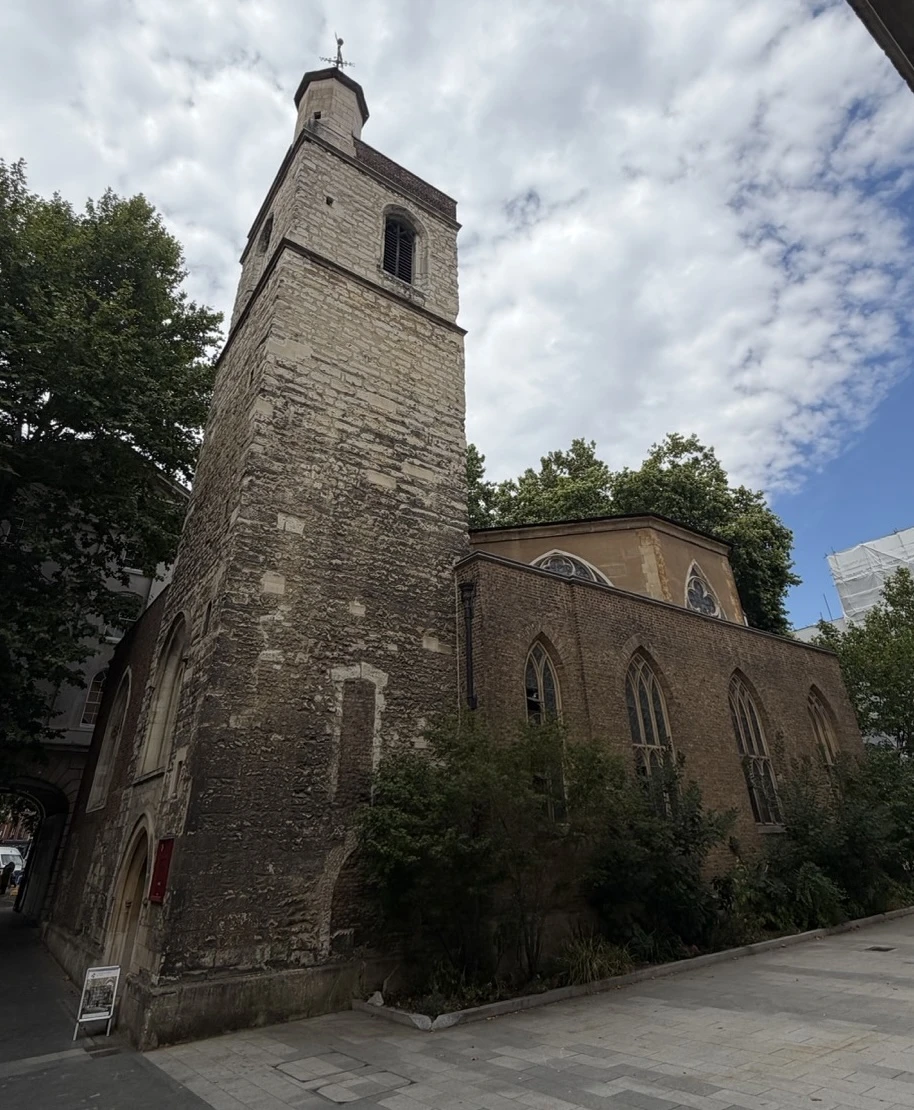
St Bartholomew-the-Less Church is an Anglican church located just beyond the Henry VIII Gateway, on the grounds of St. Bartholomew’s Hospital. Founded in the 12th century, it still retains remnants of its original stonework to this day. Formerly a parish church, it has served as a subsidiary chapel of the Parish of St. Bartholomew the Great since June 1, 2015—a church located nearby but outside the hospital grounds. Just a short walk from the museum stands the church of St Bartholomew-the-Great, founded at the same time as the hospital itself in the 12th century. It's one of a handful of sites in the immediate area — along with Smithfield Market and the Museum of London — that make it easy to extend a visit beyond the hospital grounds.
A Fresh Start After Restoration 2025
The museum reopened in October 2025 following a major conservation project led by Barts Heritage, an independent charity founded in 2017. The Sharing Historic Barts project secured a £5.3 million grant from the National Heritage Lottery Fund, funding the restoration of the Great Hall, the Hogarth Stair, and the Henry VIII Gatehouse.
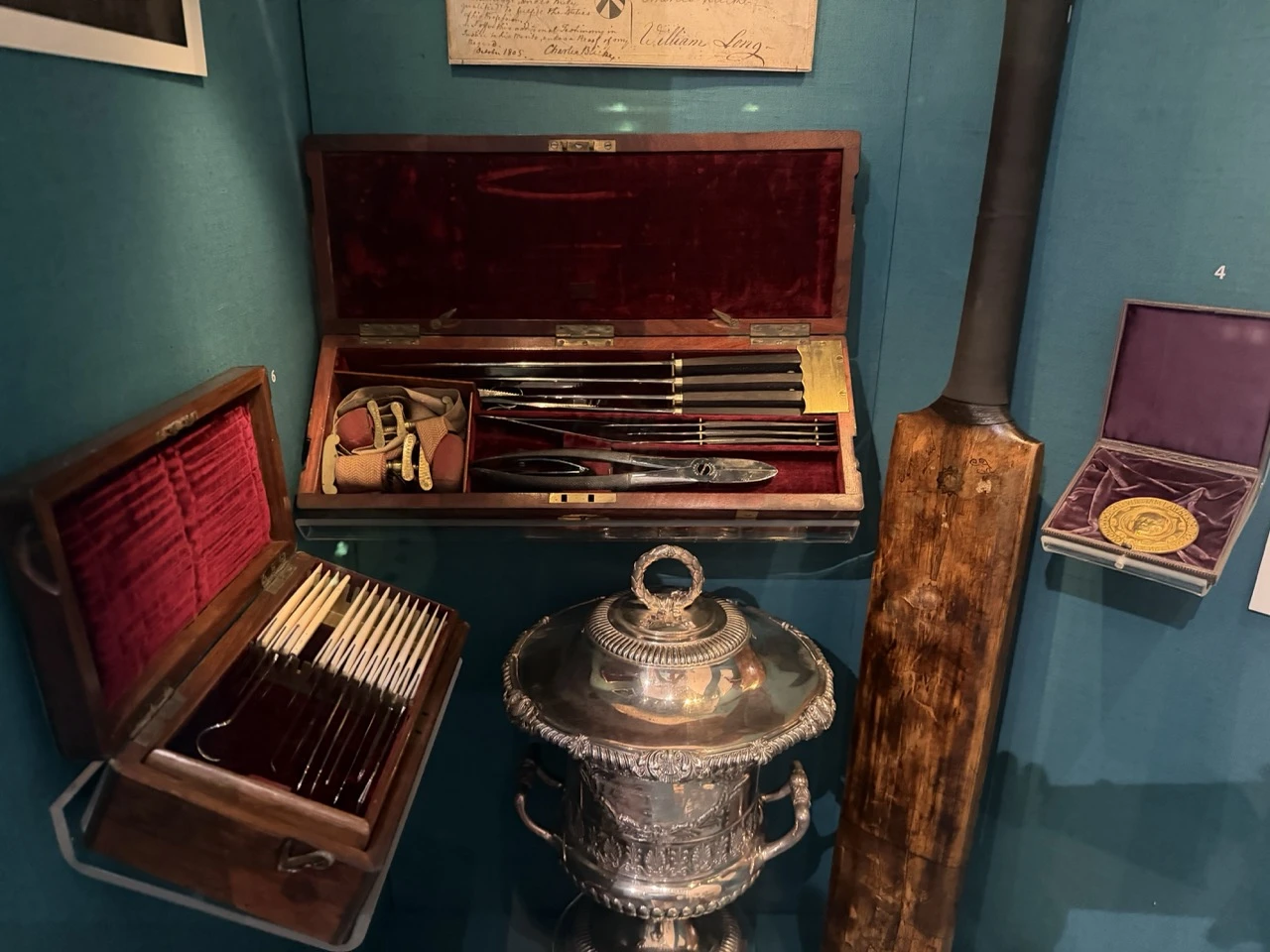
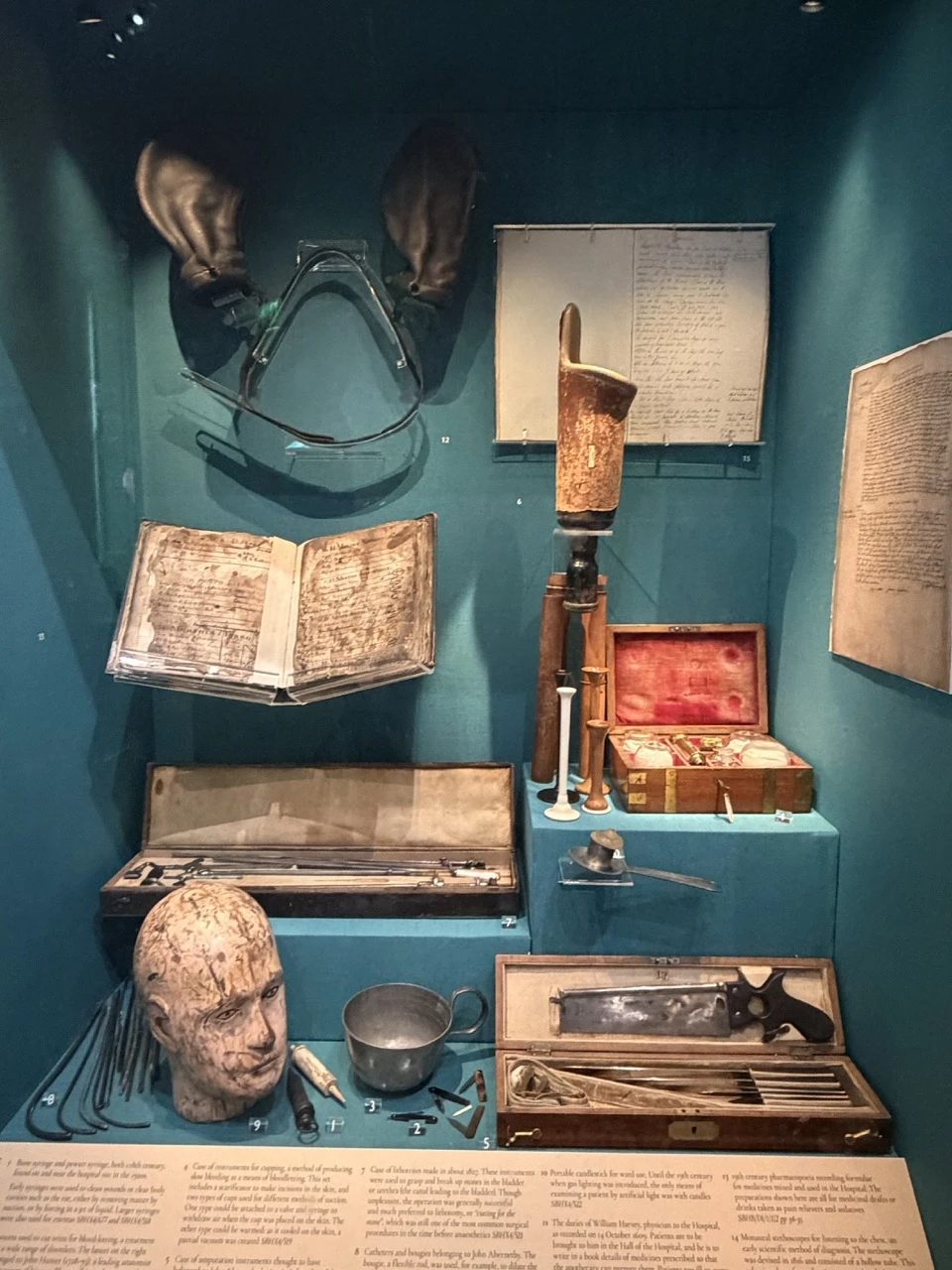
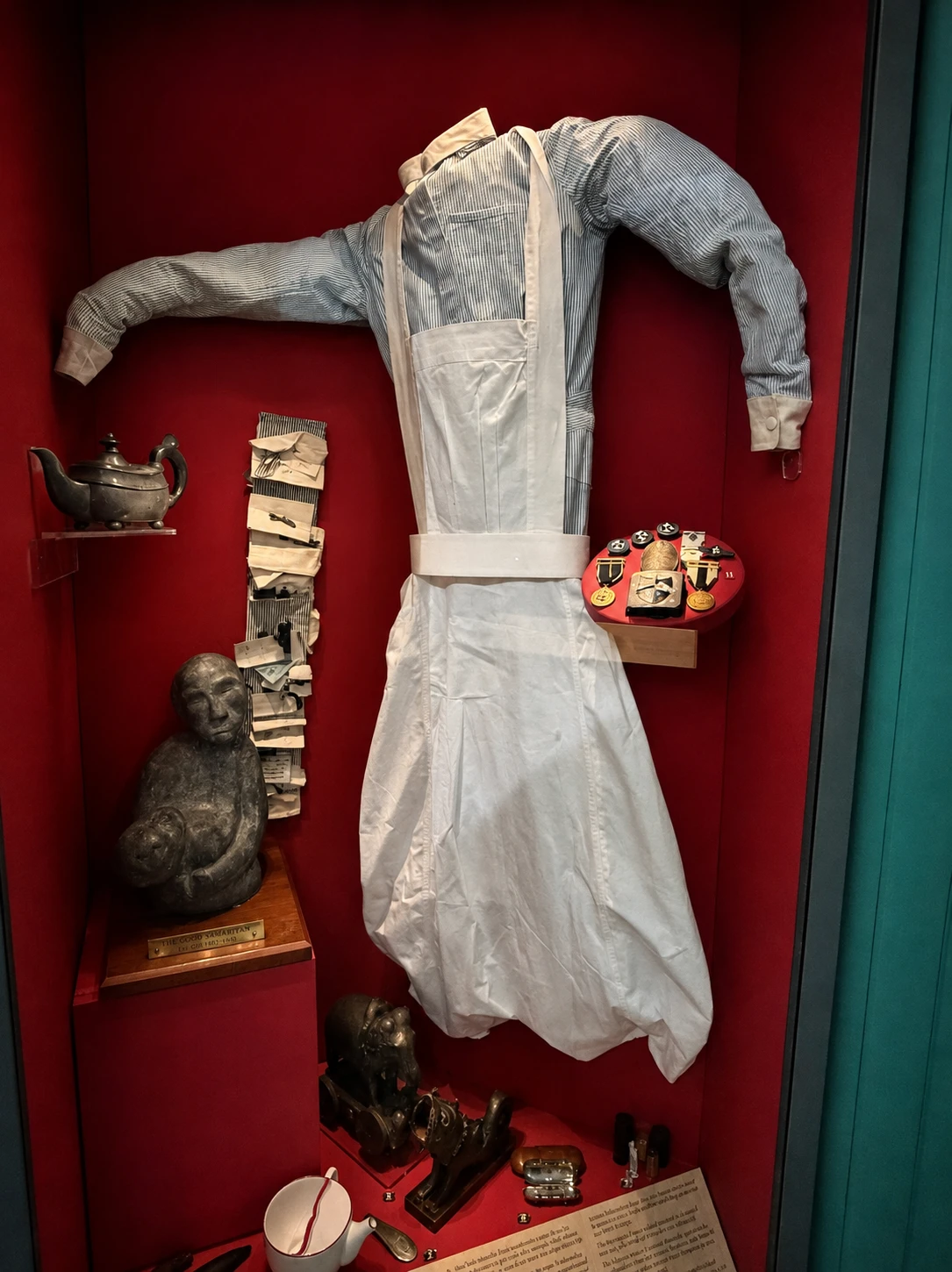
Admission to the permanent exhibition is free. The museum draws on original archives and objects to walk visitors through the evolution of the hospital — its medicine, its administration, and the patients it has cared for across nearly nine hundred years. It is open to the public only on Mondays, Tuesdays, and the first Sunday of each month, with no booking required for general admission. Guided tours of the Great Hall and Hogarth Stair are available for a fee, bookable via email (as for 2026, please check working timetable and fees before visit).
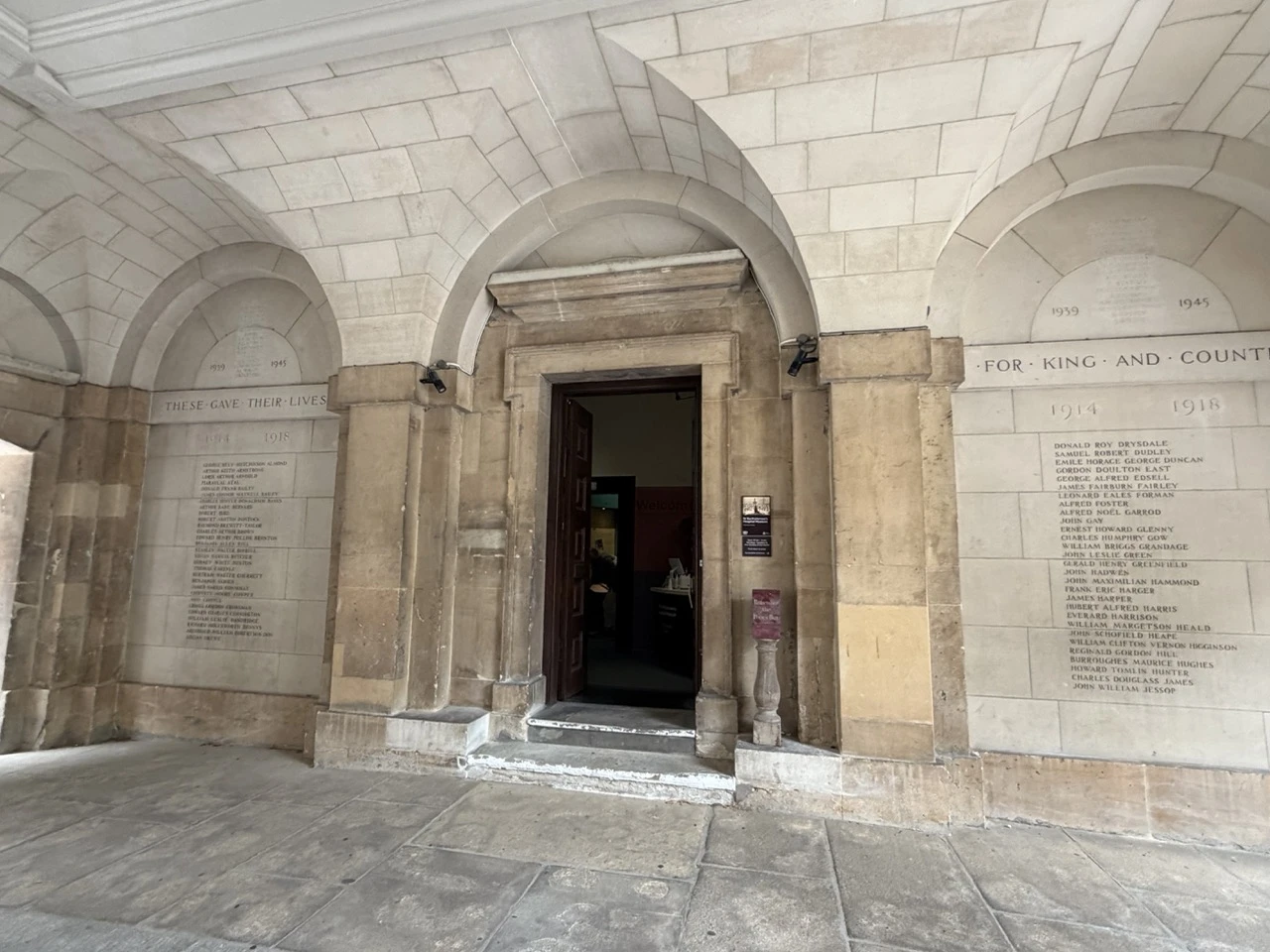
The easiest way in is through the Henry VIII Gatehouse on West Smithfield; from there, an archway under the North Wing leads into The Square, with the museum entrance just to the left.