
Old Operating Theatre Museum and Herb Garret in London
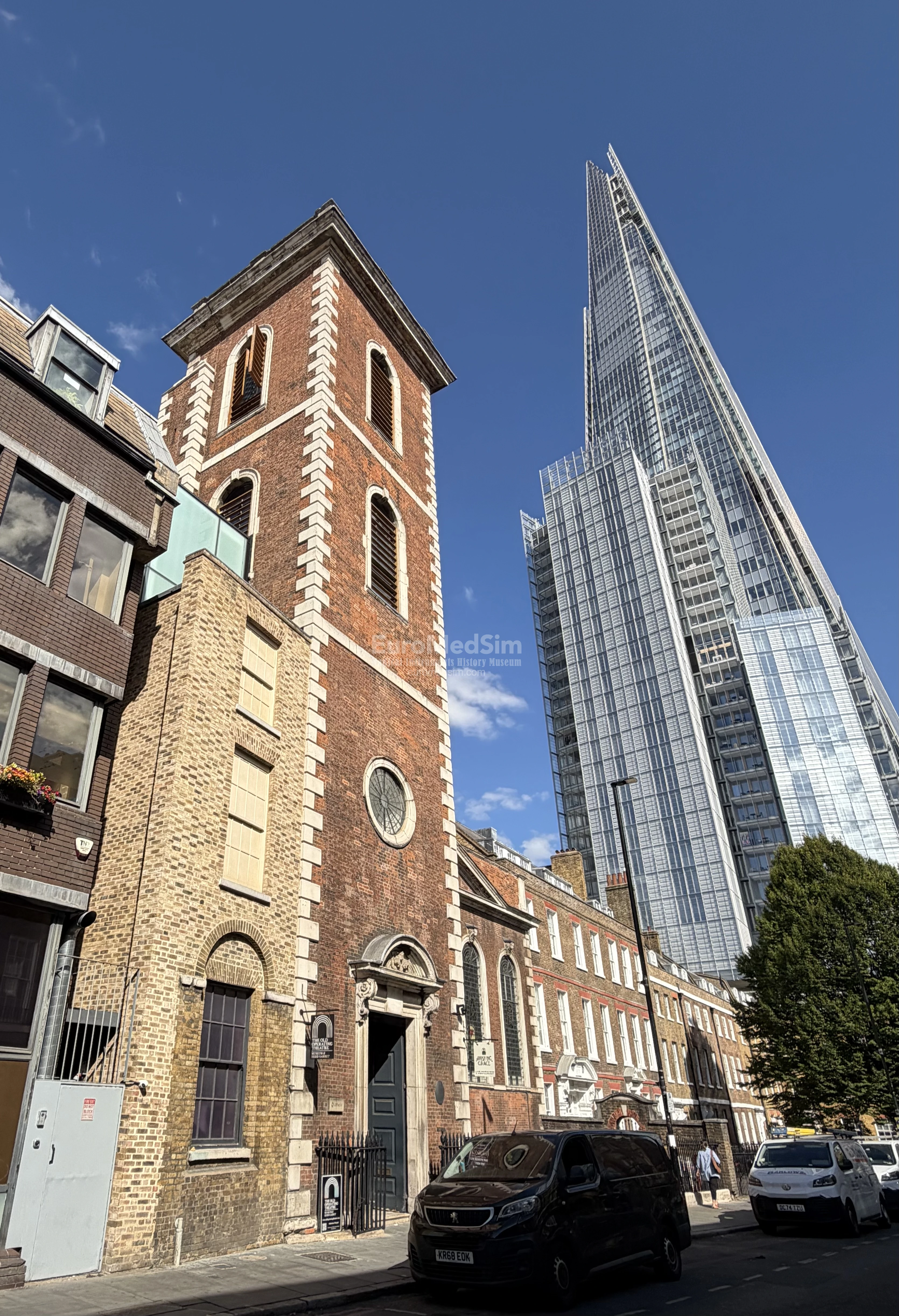
The Old Operating Theatre Museum and Herb Garret in London is Europe's oldest surviving surgical theatre. Tucked away inside the timber-framed attic of St Thomas' Church, this unique institution dates back to 1822. It predates both anaesthetics and antiseptics, offering a visceral look into 19th-century medical procedures. The theatre remained in active use until 1862, when St Thomas' Hospital relocated to Lambeth — after which the space was sealed shut and forgotten for nearly a century, only rediscovered in 1956.
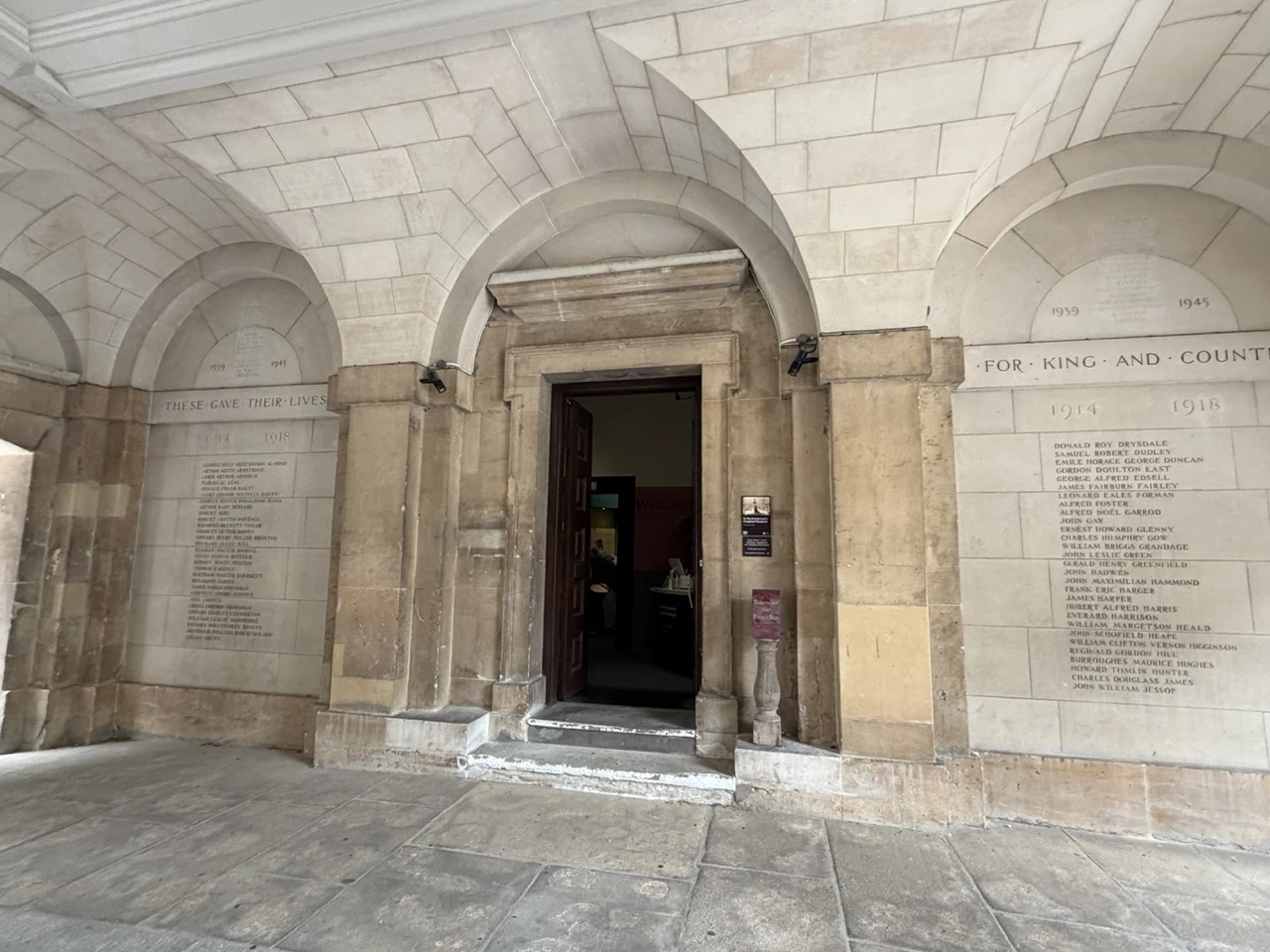
The building is listed Grade II on the National Heritage List for England. A very narrow spiral staircase with 52 steps leads up here—the passageway is so narrow that two people coming toward each other can barely pass one another. However, there is also an elevator available today, but you should check to make sure it’s working before your visit. The museum is located near London Bridge station and Borough Market.
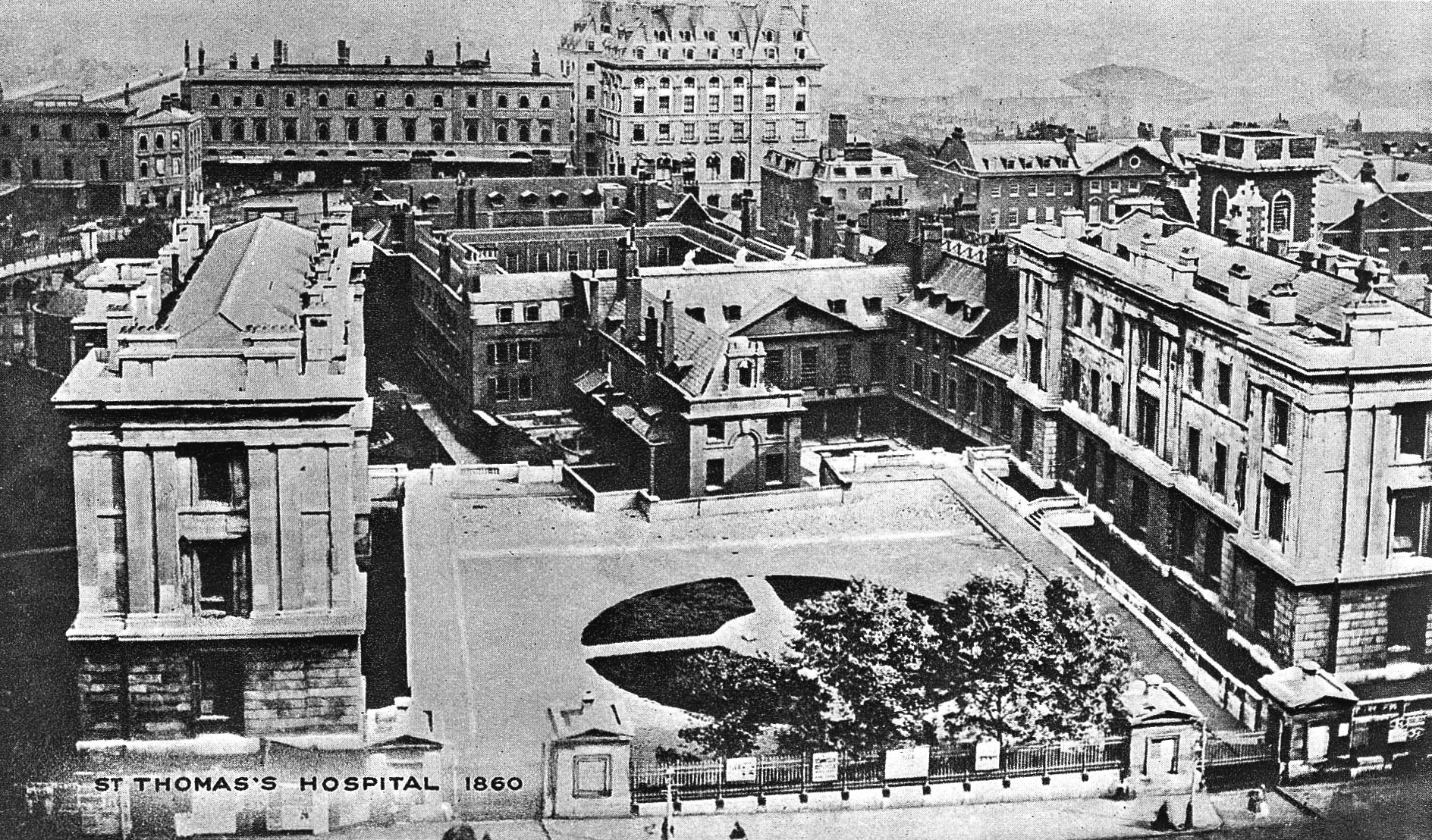
St. Thomas’s Hospital, Southwark, aerial view 1860. Today, the site of the hospital is occupied by the London Bridge Hotel, The News Building and a rail ways viaduct, leaving in place only St. Thomas’s Church with the bell tower (visible in the upper right corner of the photo). Source: wikipedia, Wellcome Collection
The Operating Theatre
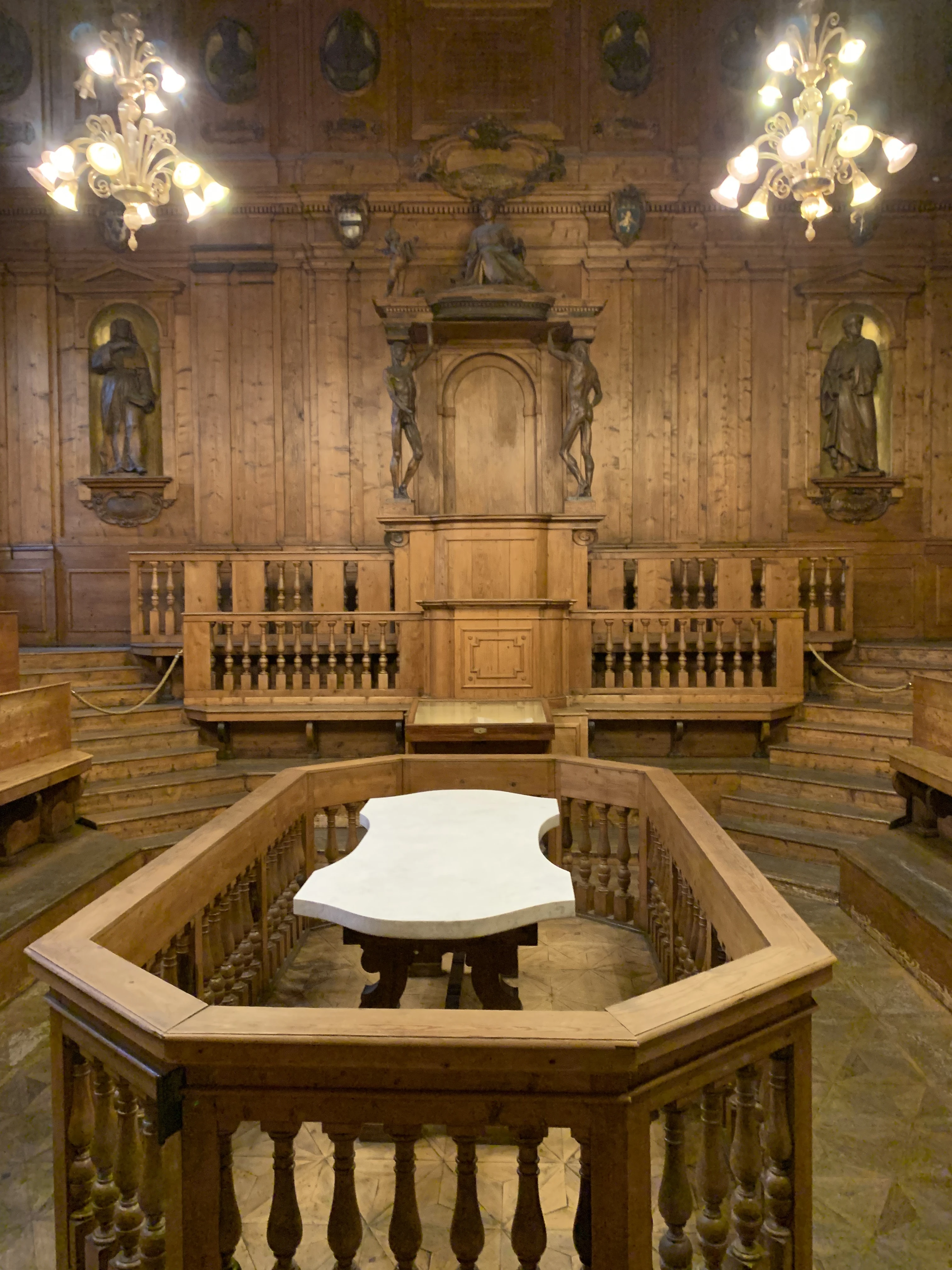
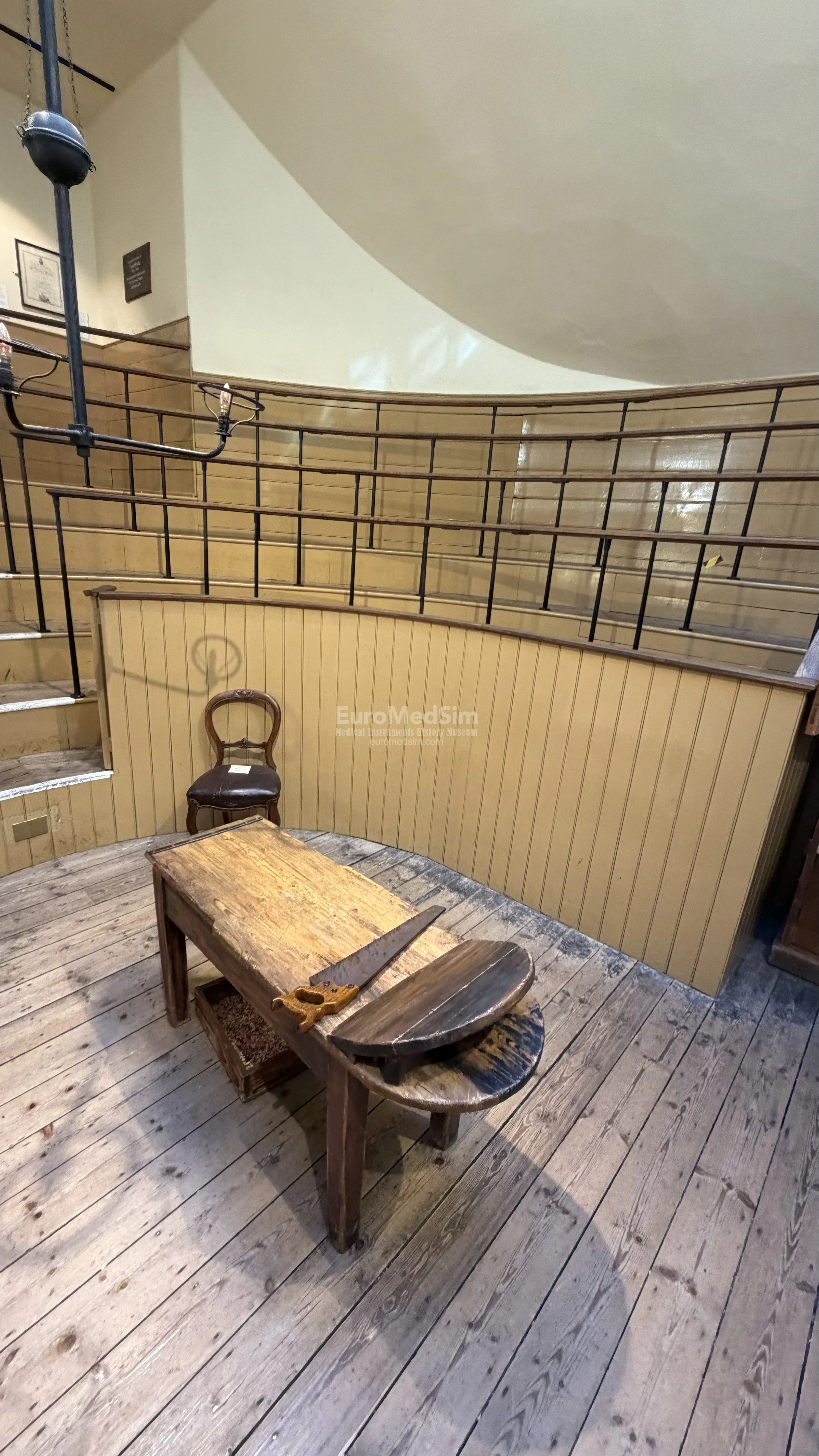
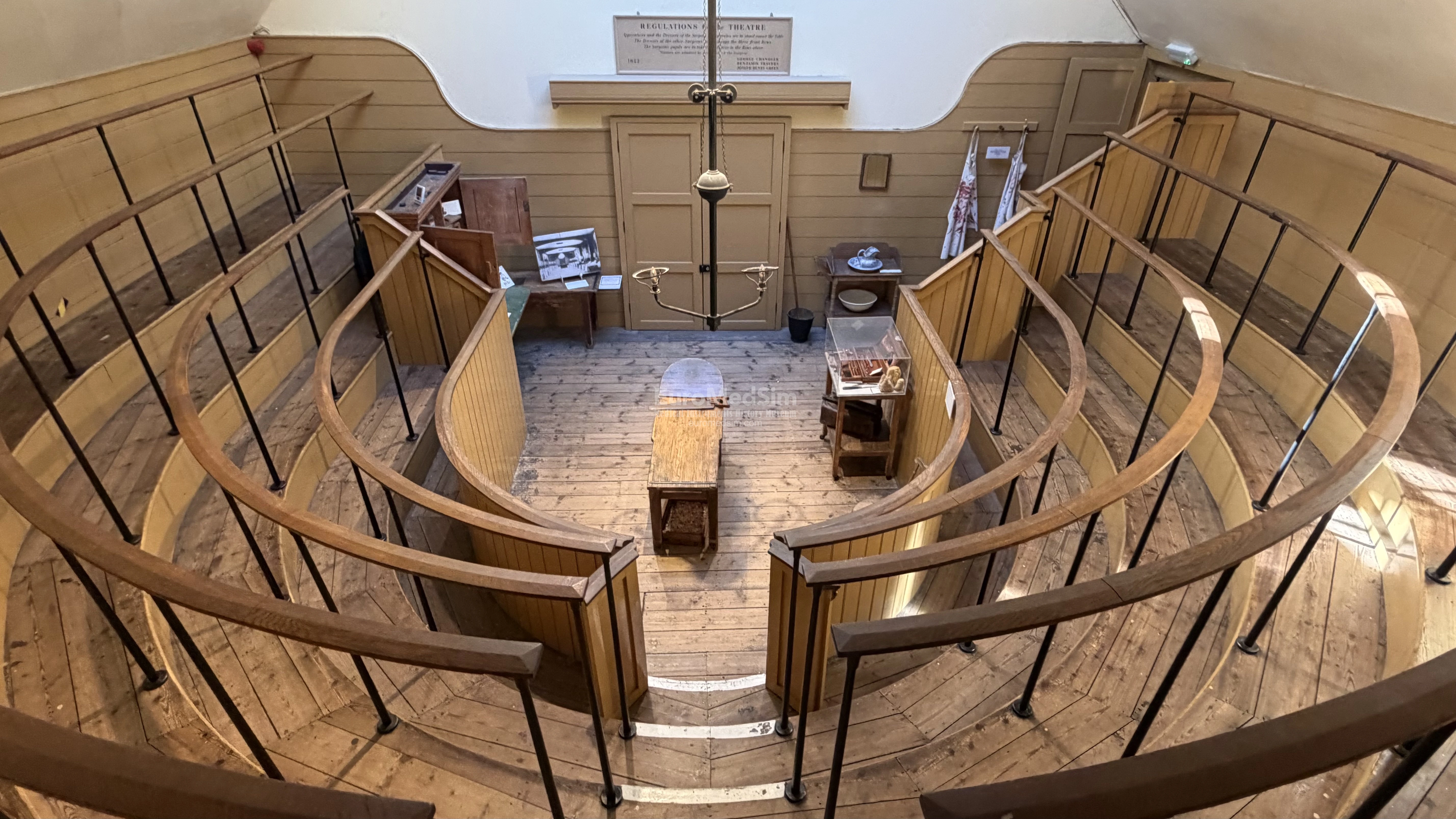
In 1822, a far more dramatic addition was carved into the same attic: a semi-circular, tiered wooden operating theatre, built specifically for surgery on the female patients of St Thomas' Hospital. Unlike a modern operating room, this was designed as a genuine theatre in every sense — a raked gallery of standing-room platforms encircling a central wooden table, built so that up to 100 or more students, apprentices, and surgeons' dressers could crane forward and watch every incision.
Because this was decades before electric lighting, the entire schedule of the hospital bent around the sun. Operations were performed only between midday and 1 pm, the narrow window when daylight pouring through the large overhead skylight was strong enough to illuminate the table below. There was no anaesthesia beyond alcohol, opium, or a leather strap to bite down on, and no understanding yet of germ theory — surgeons operated in blood-stained coats, their bare hands unwashed between patients. Speed was everything: skilled surgeons could complete an amputation in under a minute, since a faster procedure meant less blood loss and less agony for a fully conscious patient strapped to the table.
The St Thomas' Hospital had separate operating theatres for male and female patients (a common practice at the time, partly for modesty reasons). The men's theatre no longer survives — it was demolished along with the rest of the original hospital buildings when St Thomas' relocated to Lambeth in 1862. The women's theatre only survived because it happened to be tucked away in the church attic, disconnected from the main hospital building, and was simply sealed up and forgotten rather than torn down — which is exactly why it's the one that exists today as Europe's oldest surviving surgical theatre.
The Herb Garret
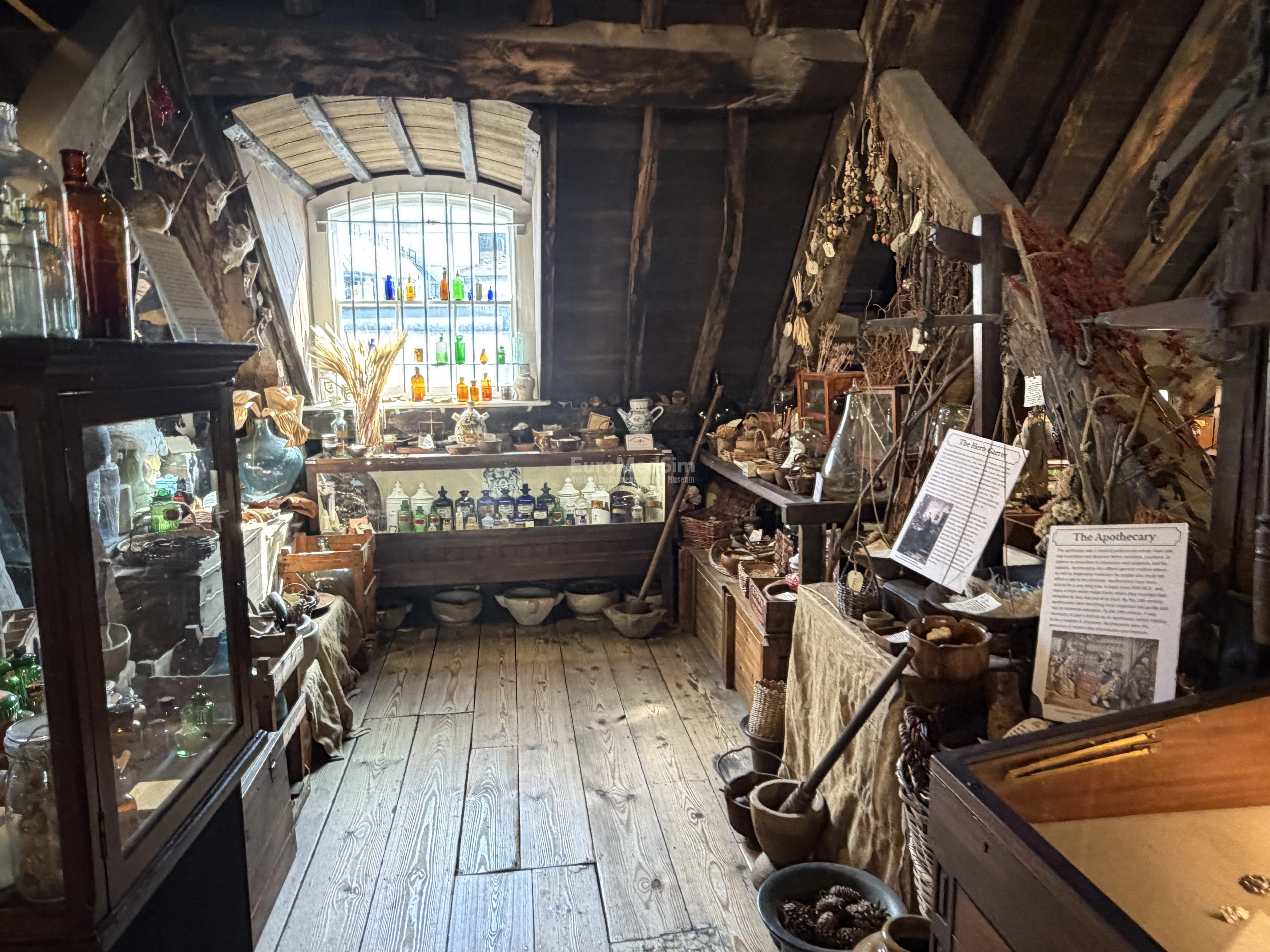
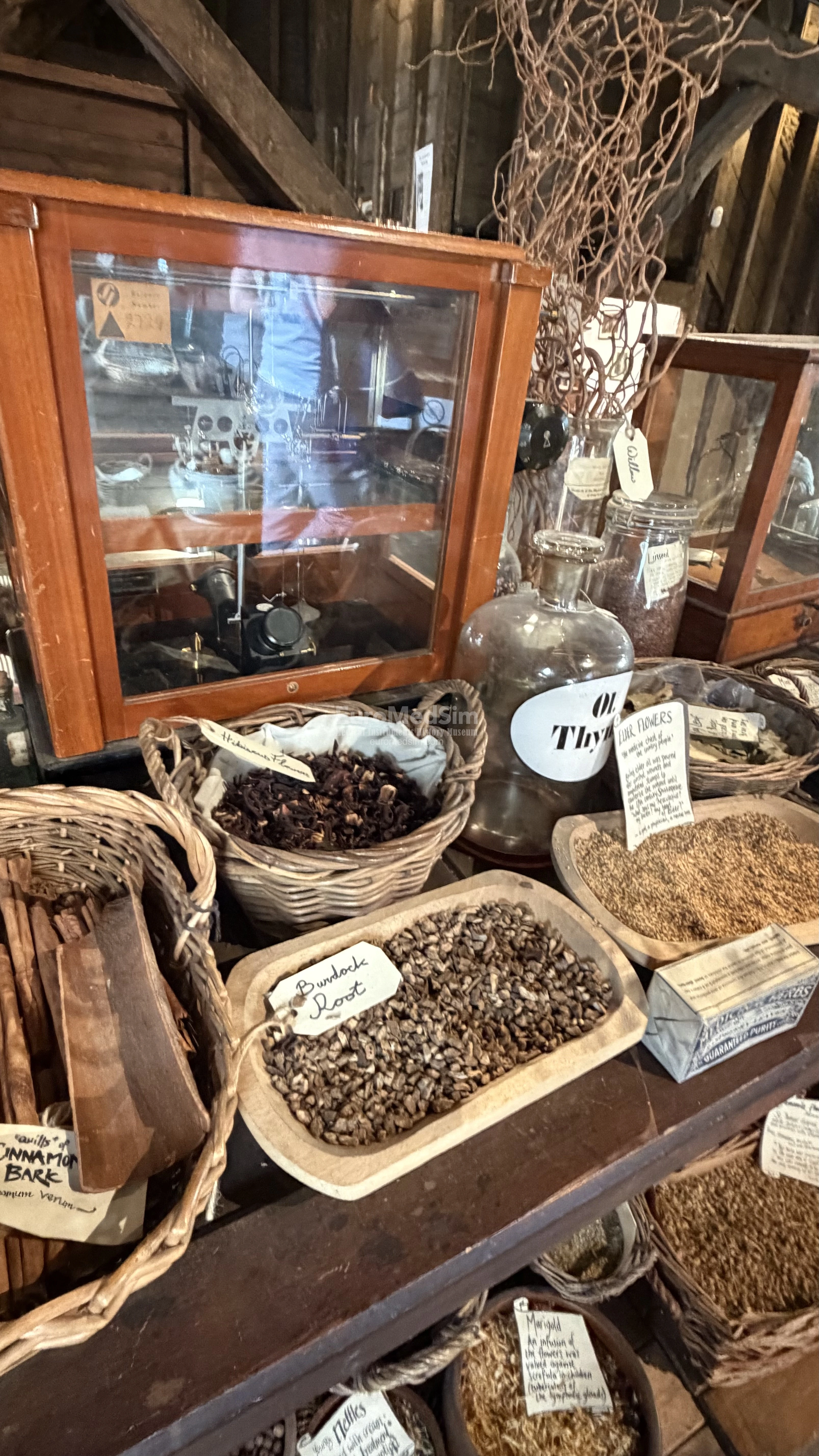
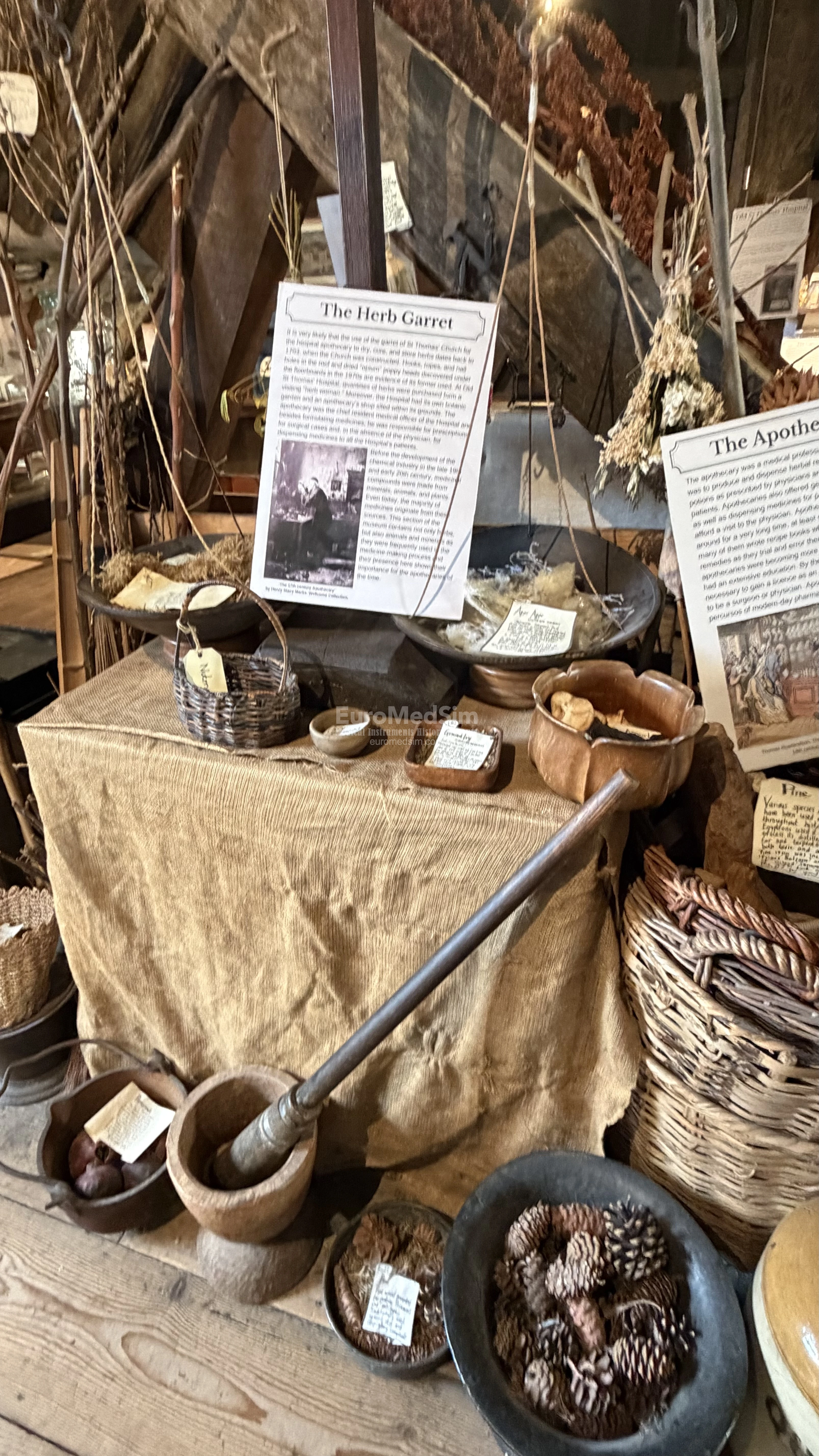
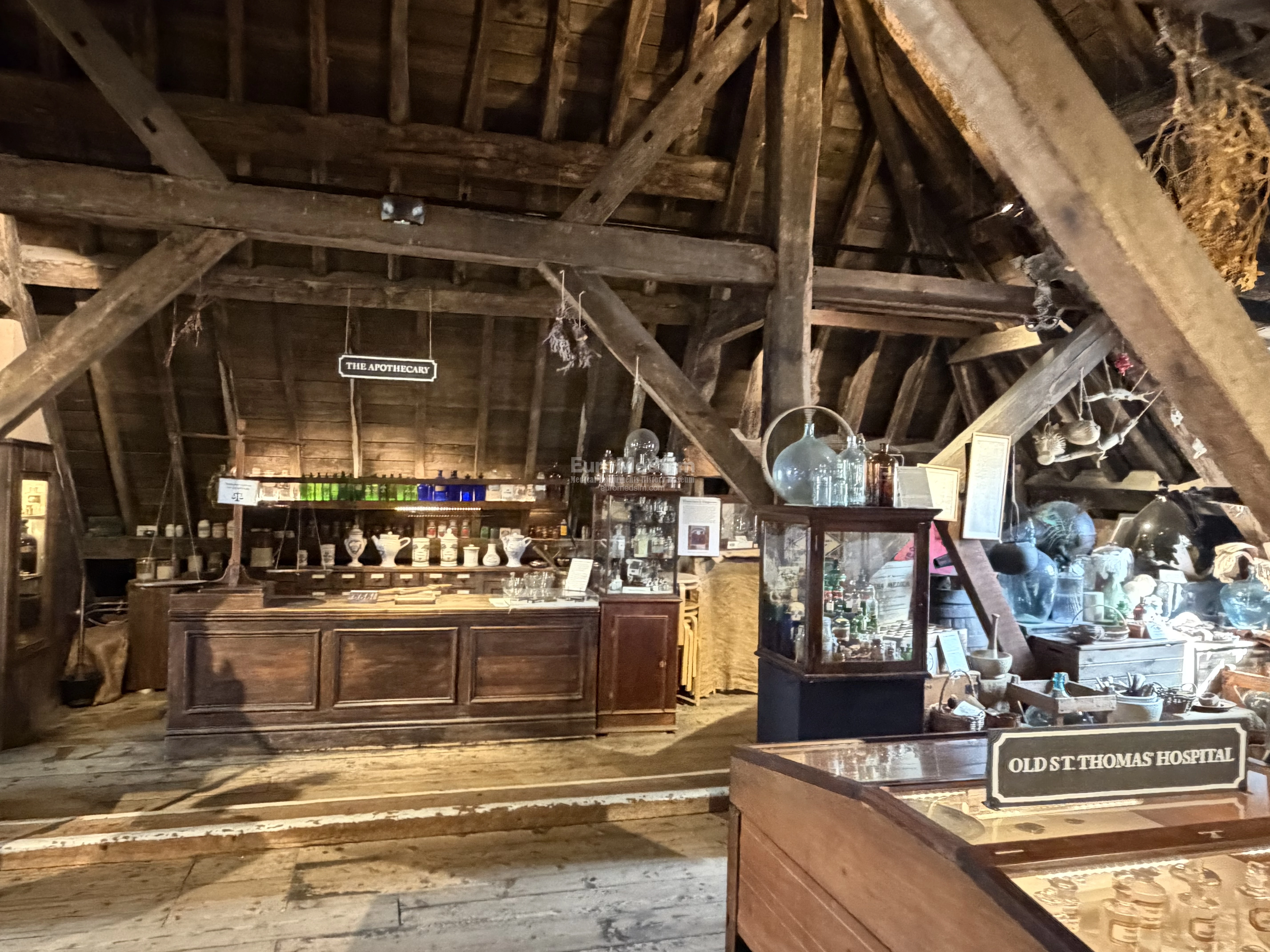
Long before it housed surgical history, this timber-framed attic served a quieter purpose. Built around 1703 as part of the original St Thomas' Church, the space was claimed by the hospital's apothecaries for a very practical reason: the dry, well-ventilated air trapped beneath the church's steep roof made it an ideal place to cure medicinal herbs. Bunches of lavender, chamomile, poppy, and other plants would have hung from the rafters, slowly losing moisture in conditions that also kept mould and vermin at bay — a natural pharmacy stretching back centuries before refrigeration or climate control existed.
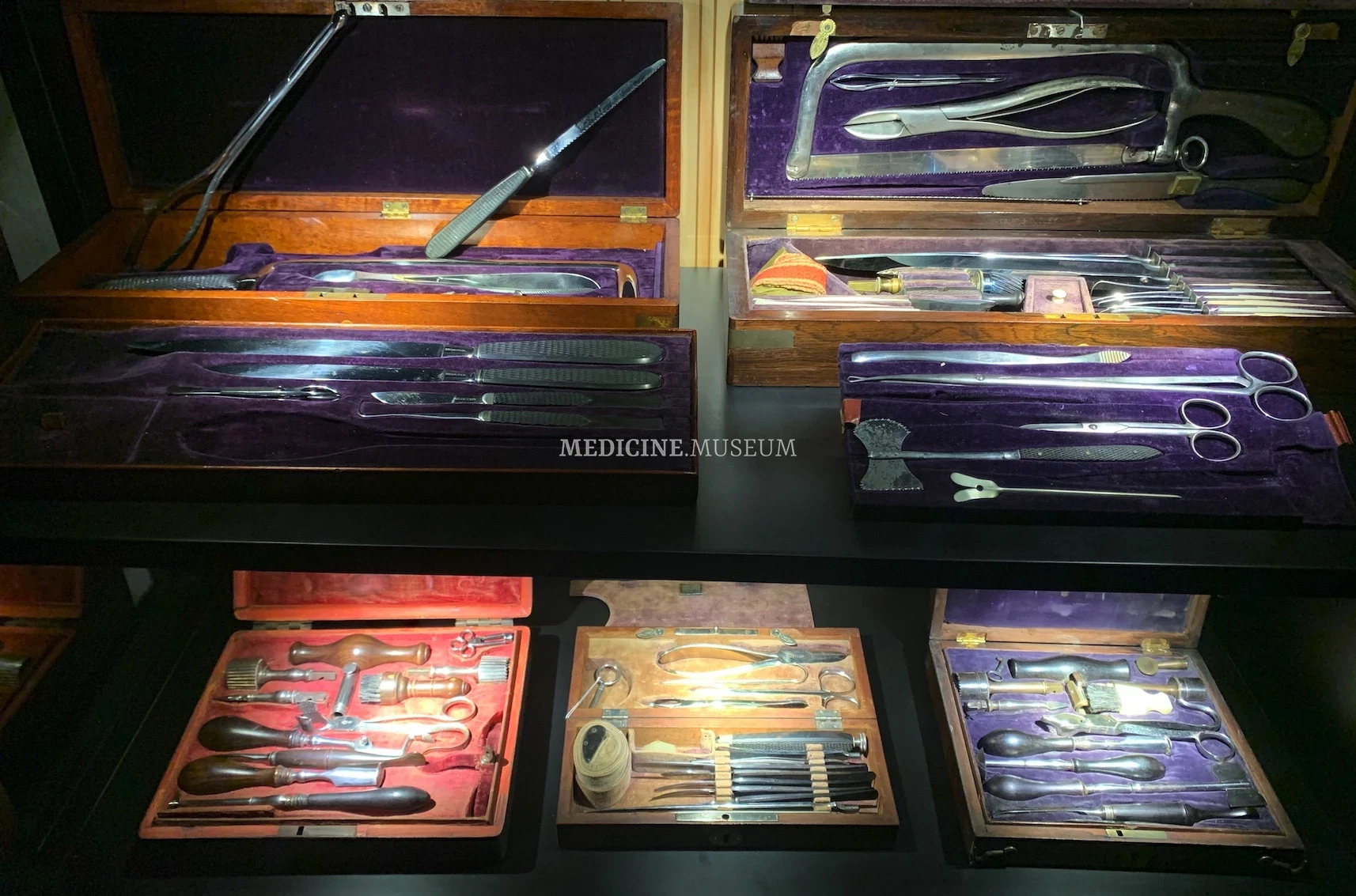
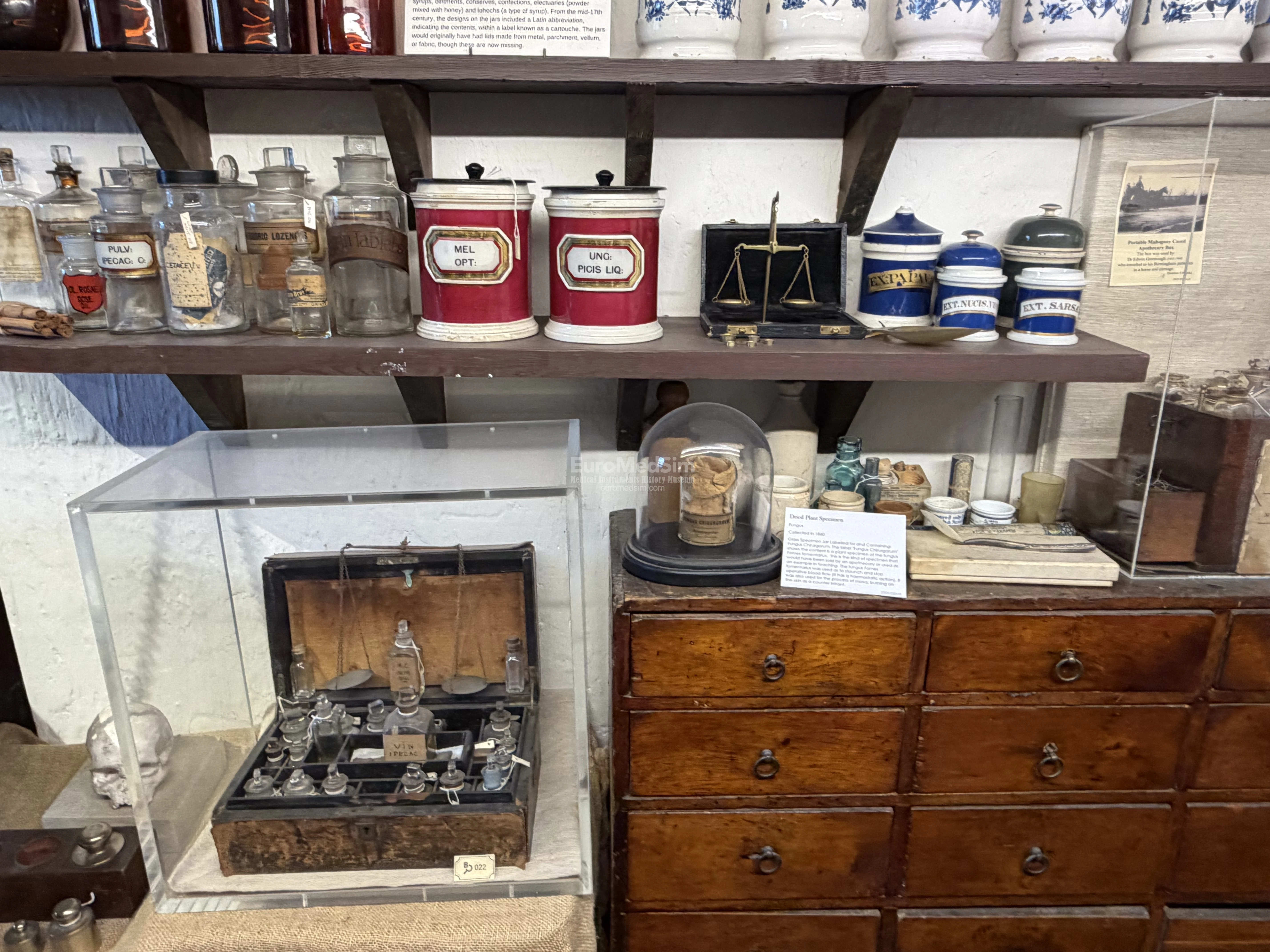
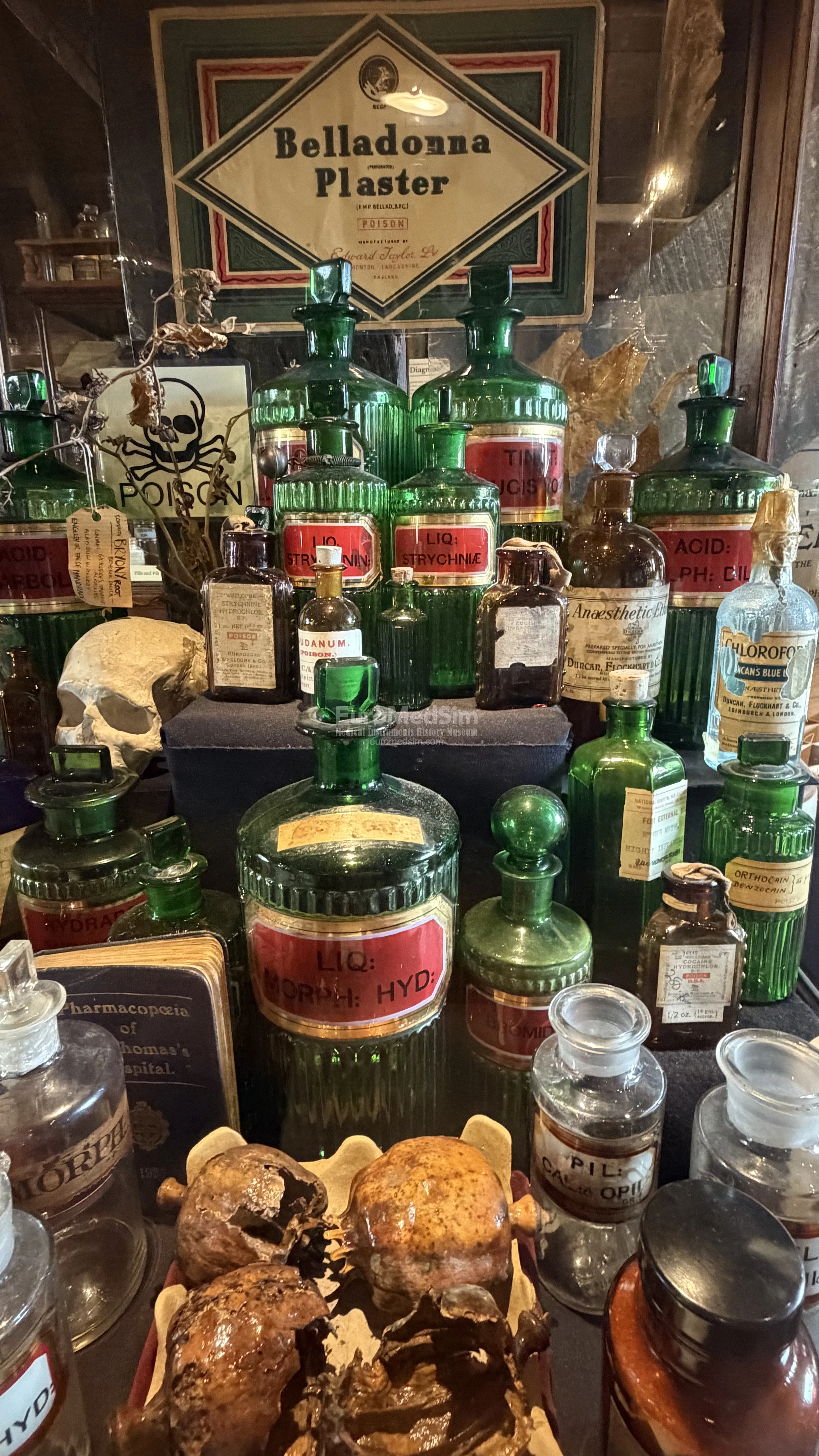
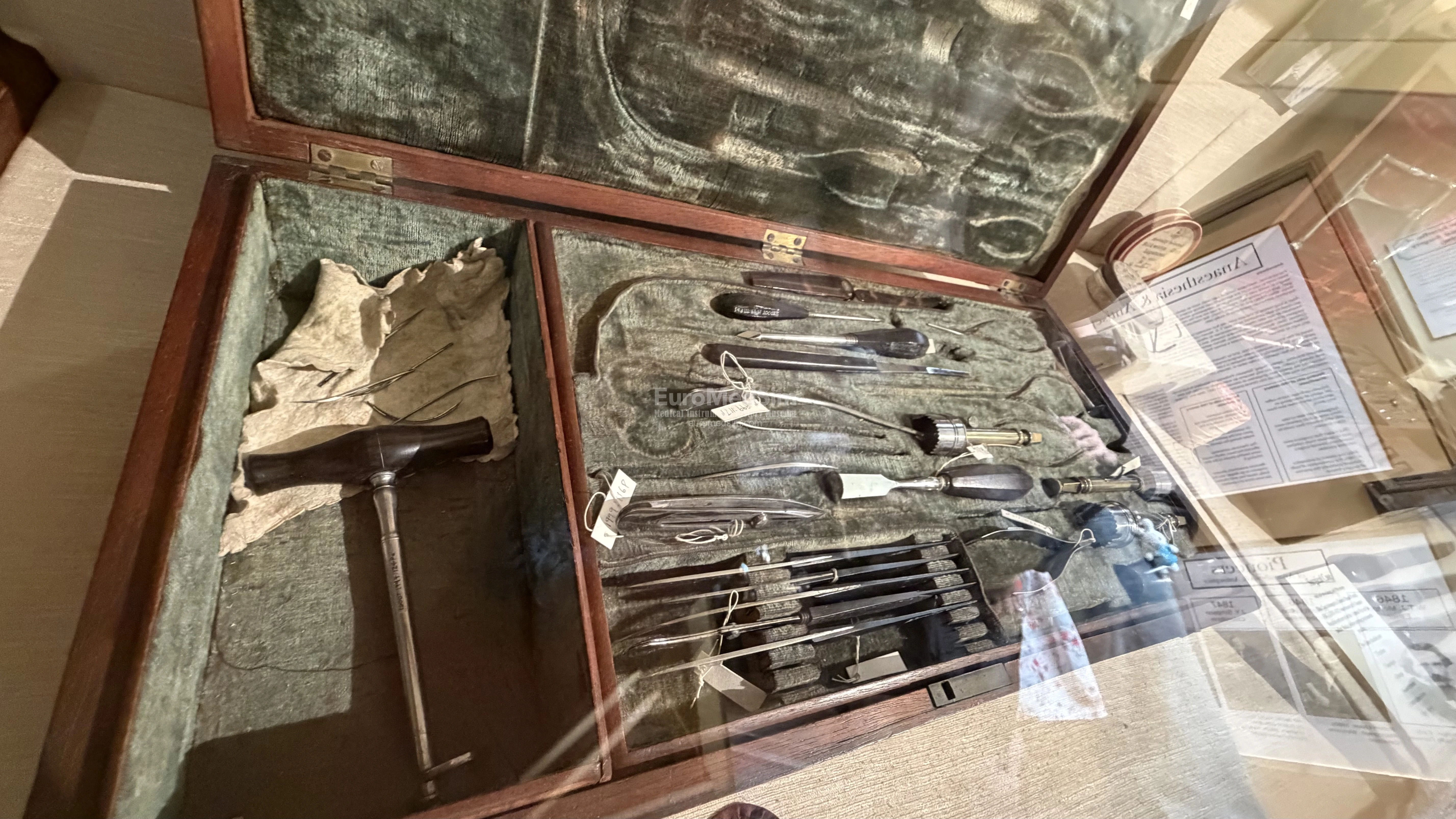
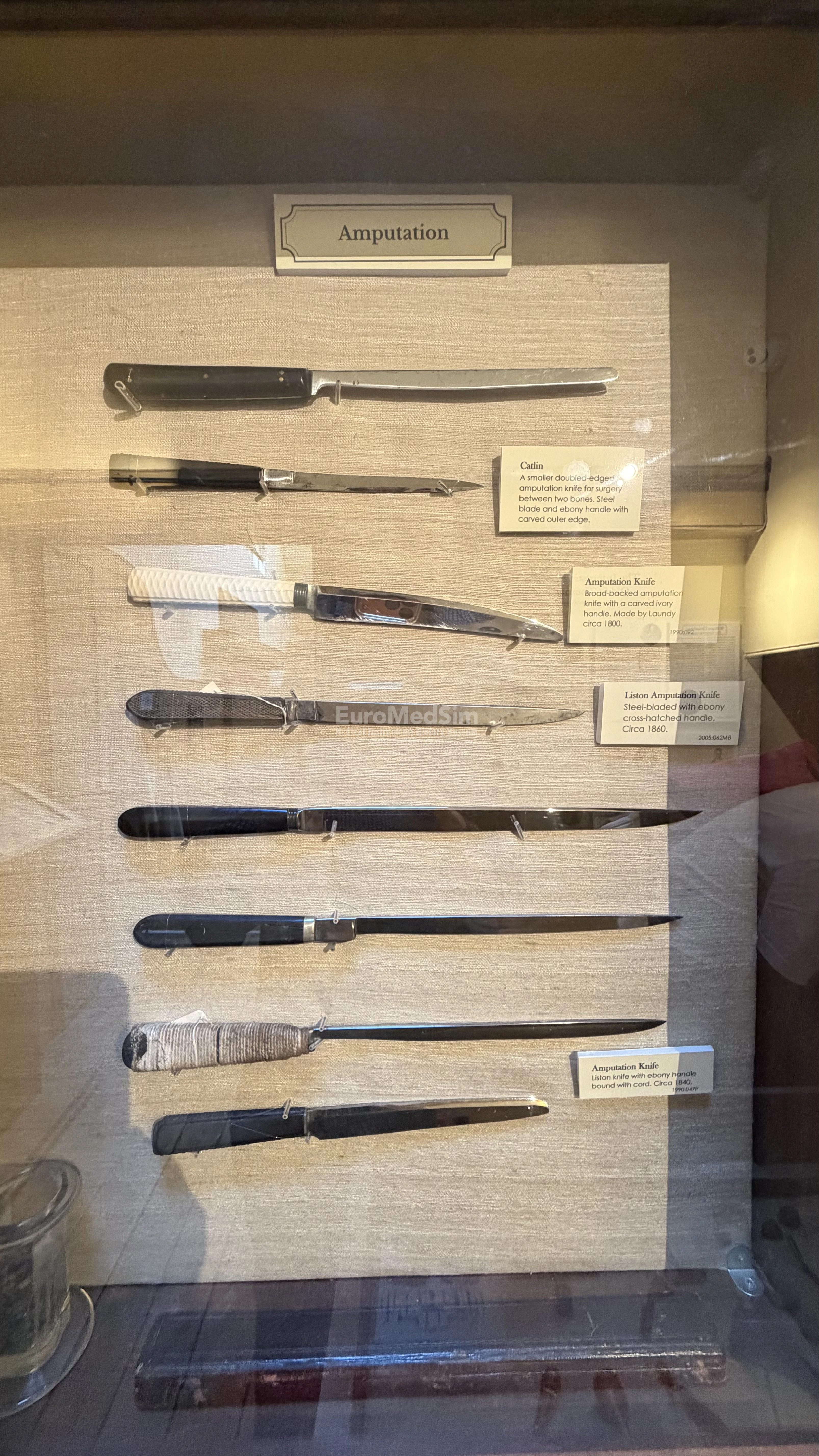
The apothecaries used this stock to prepare tinctures, poultices, and remedies for patients throughout the hospital. Today, the Garret preserves that history through a collection of Victorian pharmaceutical jars, bundles of dried botanicals, mortars, pestles, and the surgical and medical instruments of the era — offering visitors a tactile sense of how medicine was practiced before the rise of modern pharmacology.