
Search results4 results
COLLECTION
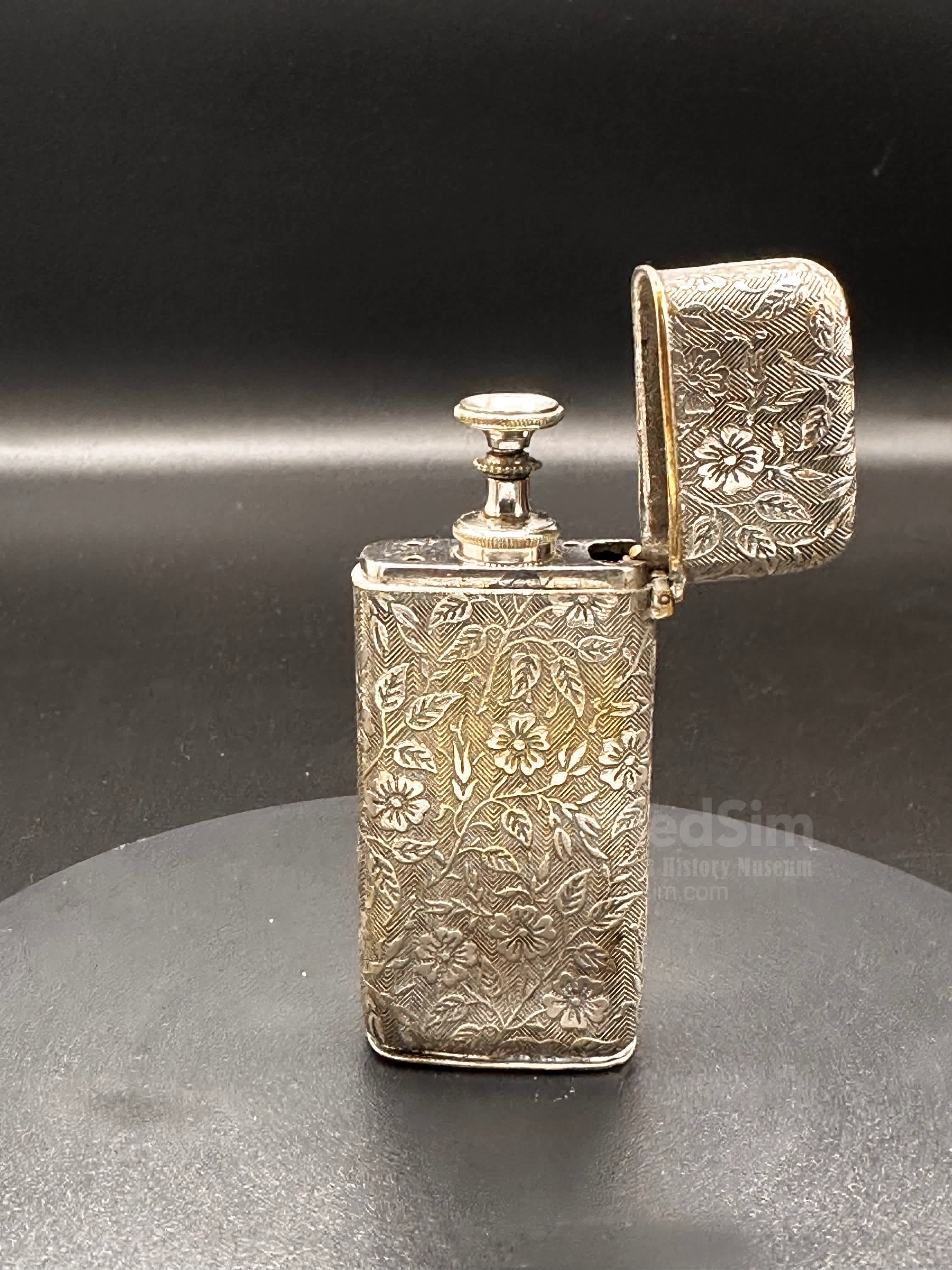
USA, 20 C. 1 half
Hypodermic Pravaz syringe in a rich floral ornamented metal case with an inscription on the bottom "T.A.M. Ear & Throat Class. 1901"
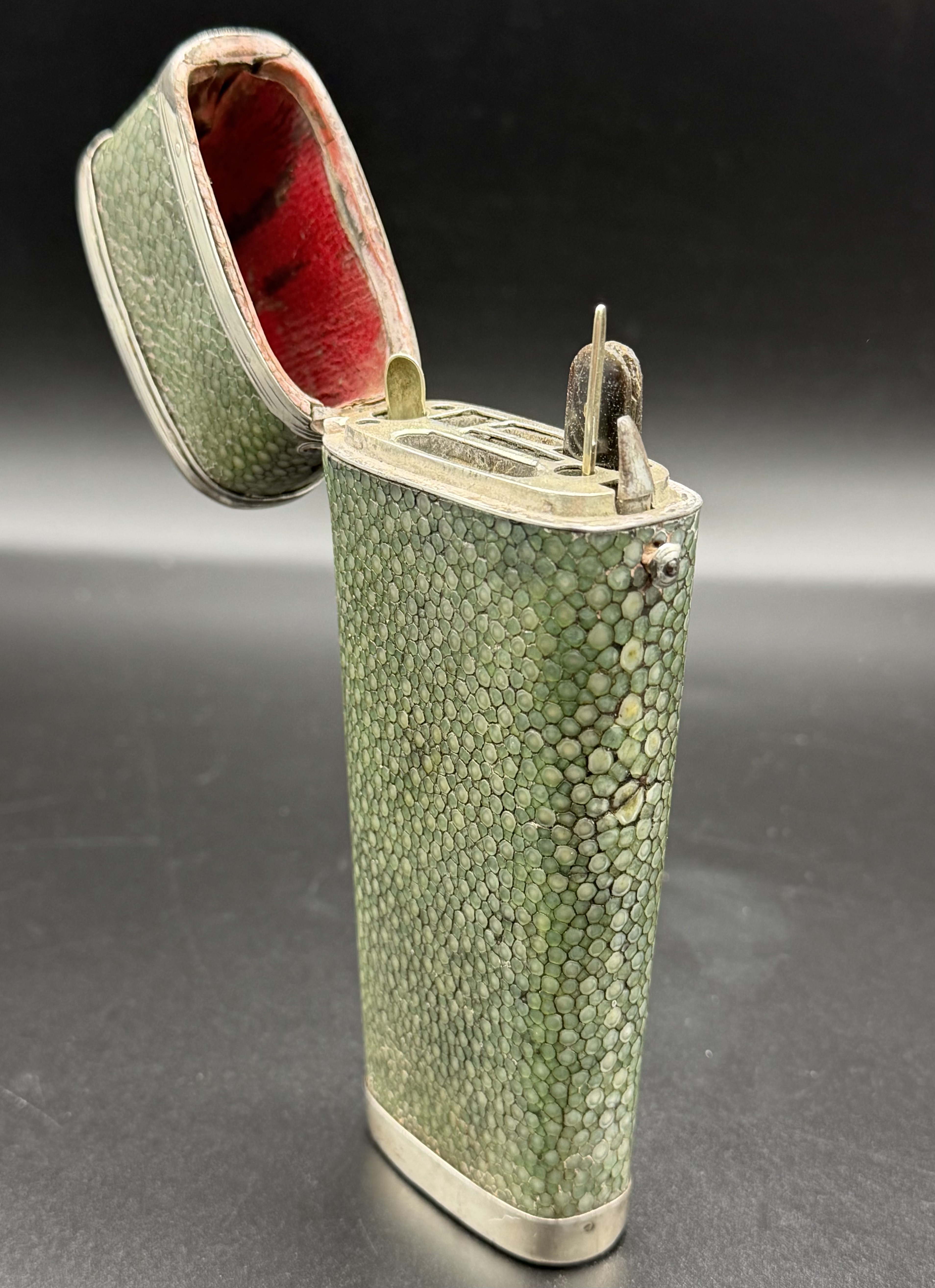
England, 19 C. 1 half
A Pocket Case for Surgical Instruments covered by green-stained shagreen, English, ca. 1800, with silver metal mounts, hinged cover engraved letter 'C', with slots for forceps, lancets, probes and others minor surgical instruments. Now is filled with several later instruments: lancet with tortoise shell handle, a probe and blunt needle. A part of shagreen on the the lid is detached.
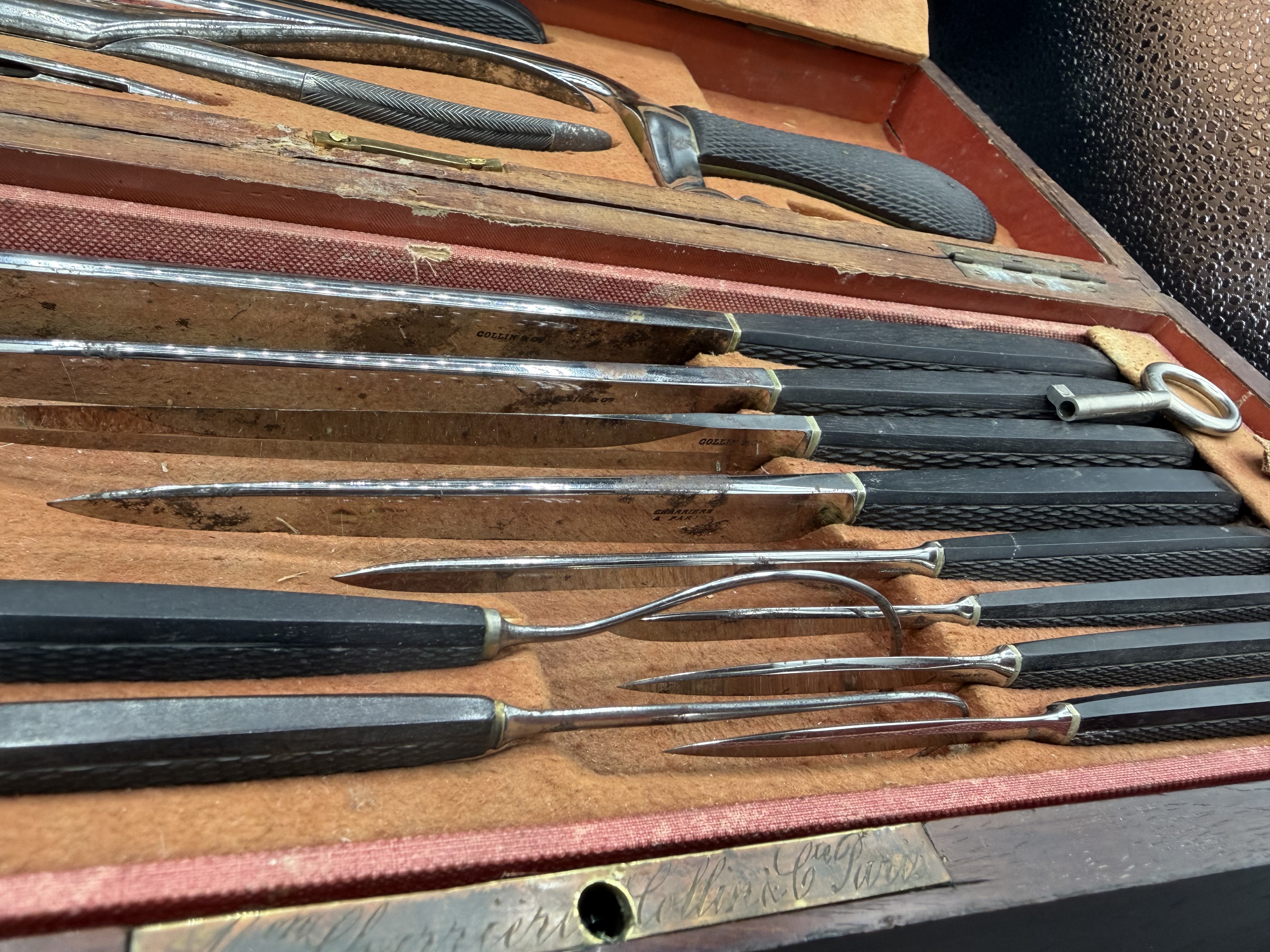
France, 19 C. 2 half
Amputation instrument case by Charrière/COLLIN & Cie, dating from around 1880. The case is complete with its set of eight knives, two curved needles on handles, one large curved needle without a handle, large bow amputation saw with a spare blade, smaller metacarpal saw, powerful detachable bone forceps, small clamping forceps and red haemostatic band, a pair of forceps and a curved needle. All the instruments including saws have ebony handles. All instruments have markings of the house of Charrière: Charrière á Paris or COLLIN & Cie.
Articles
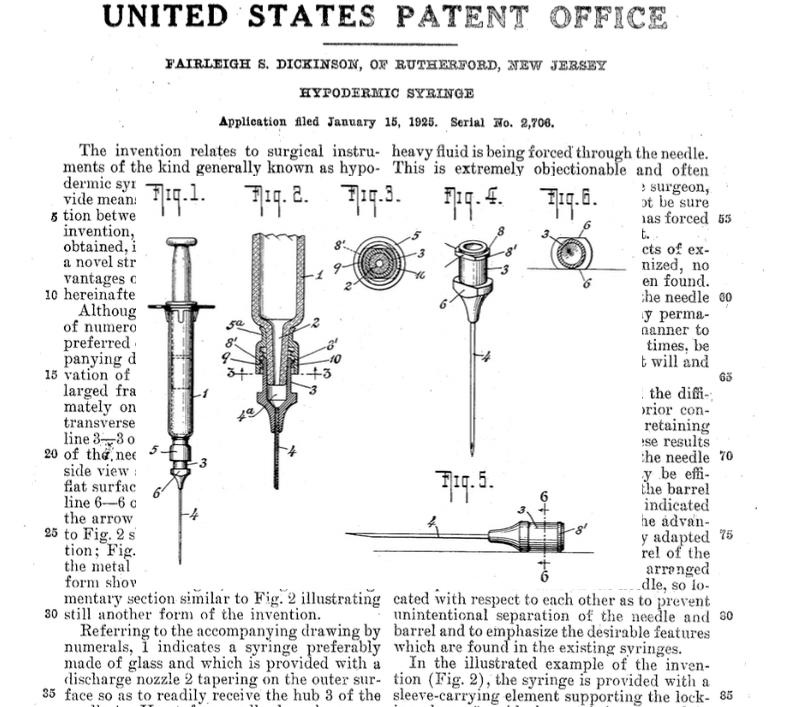
Becton & Dickinson invented the world-known standard for connecting needles to syringes and registered it under the trademark name 'Luer-Lok'. Why did the American company name their innovation after the French company Maison Lüer? Here is the story behind one of the most practical inventions in the field of medicine.