180 Years of the Ether Day
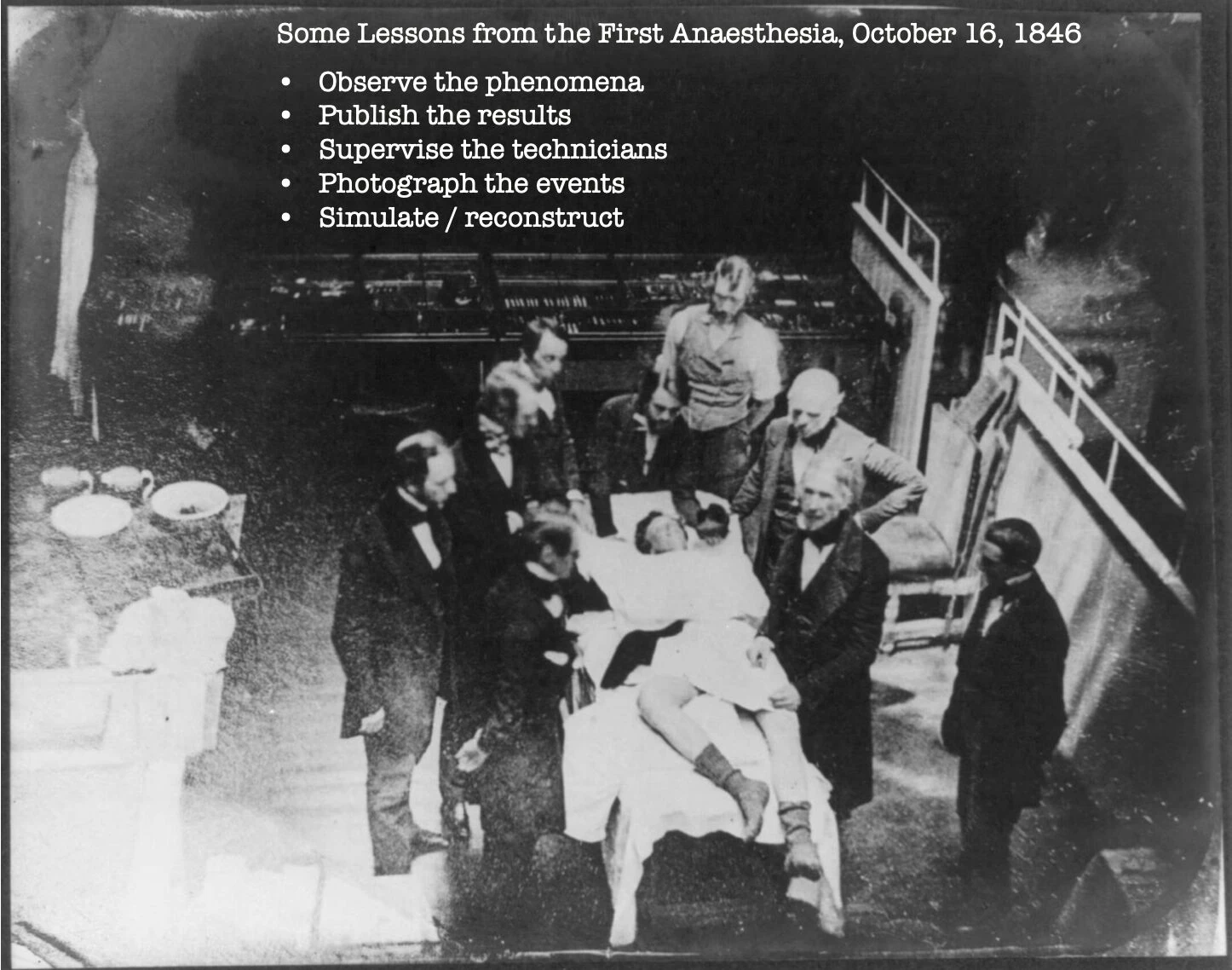
Today, October 16, 2026, marks the 180th anniversary of the famous public demonstration of ether anesthesia in Boston. American dentist William Thomas Green Morton successfully demonstrated public ether anesthesia for the first time in history by painlessly removing a tumor from a patient’s neck. The operation took place at Massachusetts General Hospital in Boston, MA, in the presence of the leading surgeons of the time, and the historic room itself later became known as the “Ether Dome.” This event sparked a true revolution in medicine, forever ridding surgery of shock and pain during operations. This date is celebrated today as "Ether Day" or "Anaesthesiology Day". Here are several stories that make the occasion rather more human than the usual grand account of the “discovery of anaesthesia.”
First came aether parties, then surgery
In the nineteenth century, people attended ether frolics: gatherings where participants inhaled ether for amusement and watched each other’s antics. Physician Crawford Long noticed that people sometimes injured themselves without feeling pain. This observation prompted him to use ether while removing a neck mass on March 30, 1842, four years before Morton’s demonstration. However, he did not publish his results until 1849. A reminder that making a discovery and publishing it are two separate achievements. [2, 3]
Morton arrived late for his own historic triumph
The surgeon and audience were waiting, but the man administering the anaesthetic was missing. The reason was a technical one: the glassmaker had not finished his inhaler. An account appended to the hospital records notes that those present began to doubt whether he would appear at all. The famous demonstration nearly stumbled over unfinished equipment. [1]
Morton brought along a “satisfied customer.”
To reassure Gilbert Abbott, the patient awaiting surgery, William Morton brought Eben Frost, whose tooth he had recently extracted painlessly under ether. It sounds surprisingly familiar: before undergoing a new procedure, a patient gets to speak with someone who has already experienced it. [4]
The operation was less successful than its historical reputation suggests
A re-examination of the original records showed that the surgeon attempted to ligate the blood supply to a congenital vascular malformation. At discharge, the mass remained unchanged in size. The anaesthesia was also incomplete: Abbott moved and cried out during the later stages, although he subsequently reported that he had felt no pain. One of medicine’s greatest turning points began with a decidedly imperfect demonstration. [1]
Ether became a secretive commercial brand
Morton gave his preparation the trade name Letheon, evoking oblivion, and sought to profit from patenting the method. Behind the mysterious preparation was ether. The effort to free humanity from surgical pain was quickly accompanied by disputes over intellectual property. [5, 6]
The famous early photographs do not document October 16 itself
The MGH museum dates a well-known staged reconstruction of an operation in the Ether Dome to 1847 (used as an image to this article). Describing that image as a photograph of the first ether demonstration is therefore misleading. For anyone interested in simulation education, there is a pleasing connection: reenactment, modelling reality helped preserve the memory of a historic medical event. [3]
Anesthesia arrived before sterile surgery
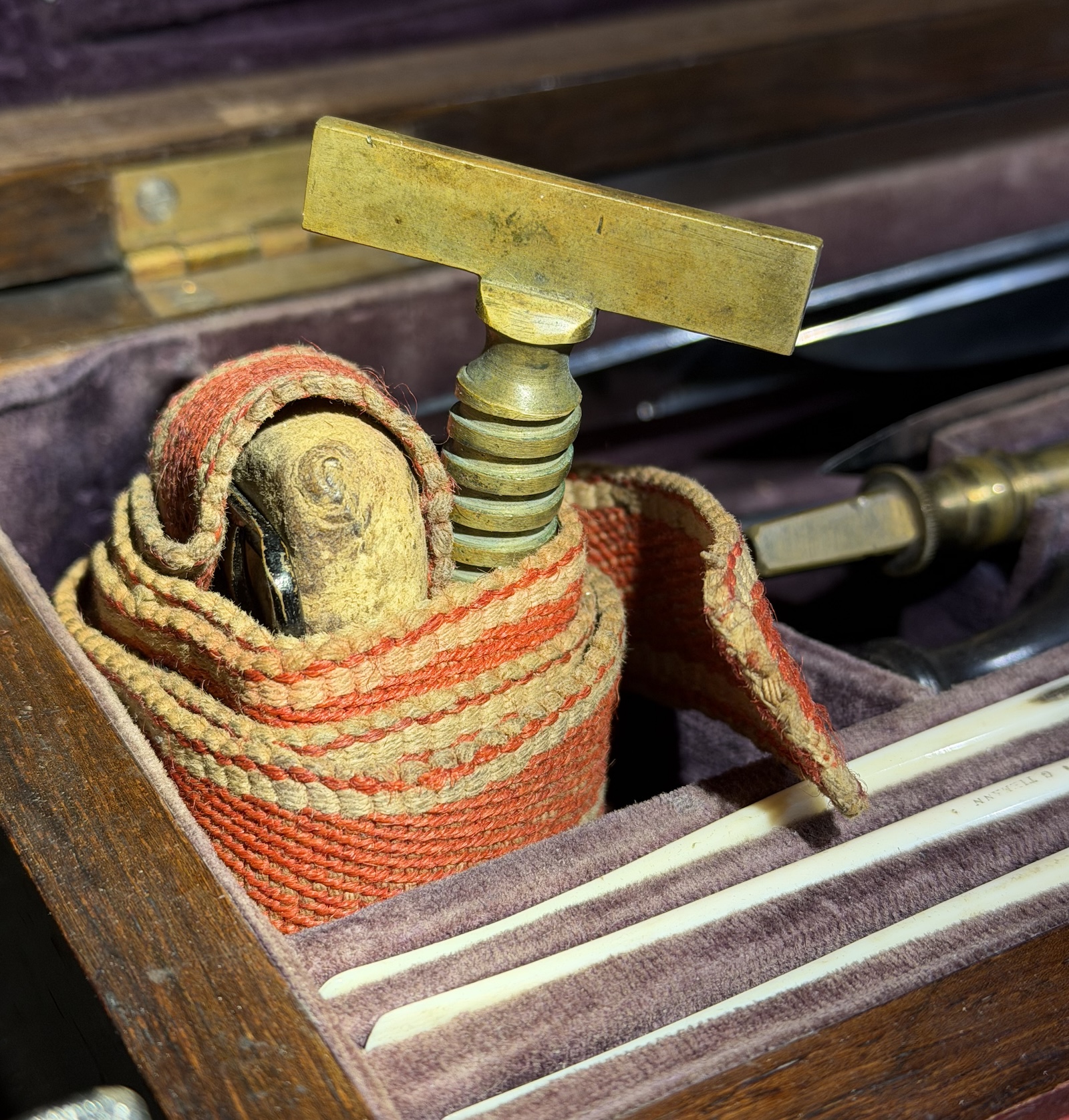
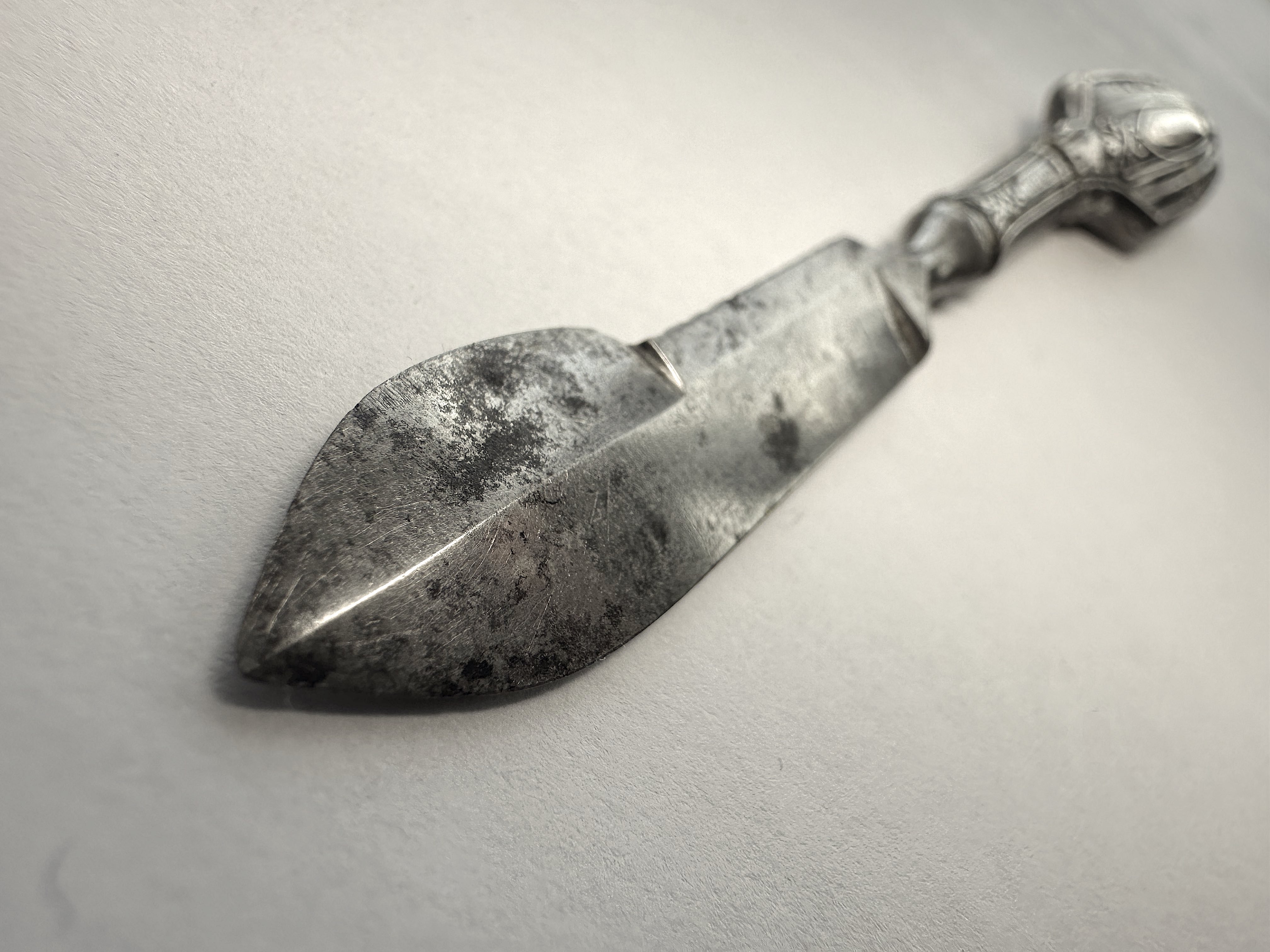
Surgeons operated in frock coats, while prestigious instruments featured ivory or ebony handles that made them difficult to clean. According to the MGH museum, sterile surgery did not arrive at the hospital until the 1880s. Doctors learned to suppress surgical pain decades before they could reliably prevent surgical infection. [3]
References
[1] Firth, Paul G. “Ether Day Revisited: The Surgical Records of Edward Gilbert Abbott.” Annals of Surgery Open 3, no. 2 (2022): e166. https://doi.org/10.1097/AS9.0000000000000166. PMC
[2] Wood Library-Museum of Anesthesiology. “Long Mulberry Gavel.” Accessed October 16, 2026. https://www.woodlibrarymuseum.org/museum/long-mulberry-gavel/. www.woodlibrarymuseum.org
[3] Paul S. Russell, MD Museum of Medical History and Innovation. “The Ether Dome.” Massachusetts General Hospital. Accessed October 16, 2026. https://www.russellmuseum.org/ether-dome/. www.russellmuseum.org
[4] Paul S. Russell, MD Museum of Medical History and Innovation. “‘Ether Day 1846’ Character Study.” Massachusetts General Hospital. Accessed October 16, 2026. https://www.russellmuseum.org/ether-day-1846-character-study/. Russell Museum
[5] Haridas, Rajesh P., Michael Gionfriddo, and George S. Bause. “Etymology of Letheon: Nineteenth-Century Linguistic Effervescence.” Anesthesiology 131, no. 6 (2019): 1210–22. https://doi.org/10.1097/ALN.0000000000002969. PubMed
[6] University of Texas Medical Branch. “William T. G. Morton.” Osler Hall of History. Accessed October 16, 2026. https://www.utmb.edu/osler/hall-of-history/morton.