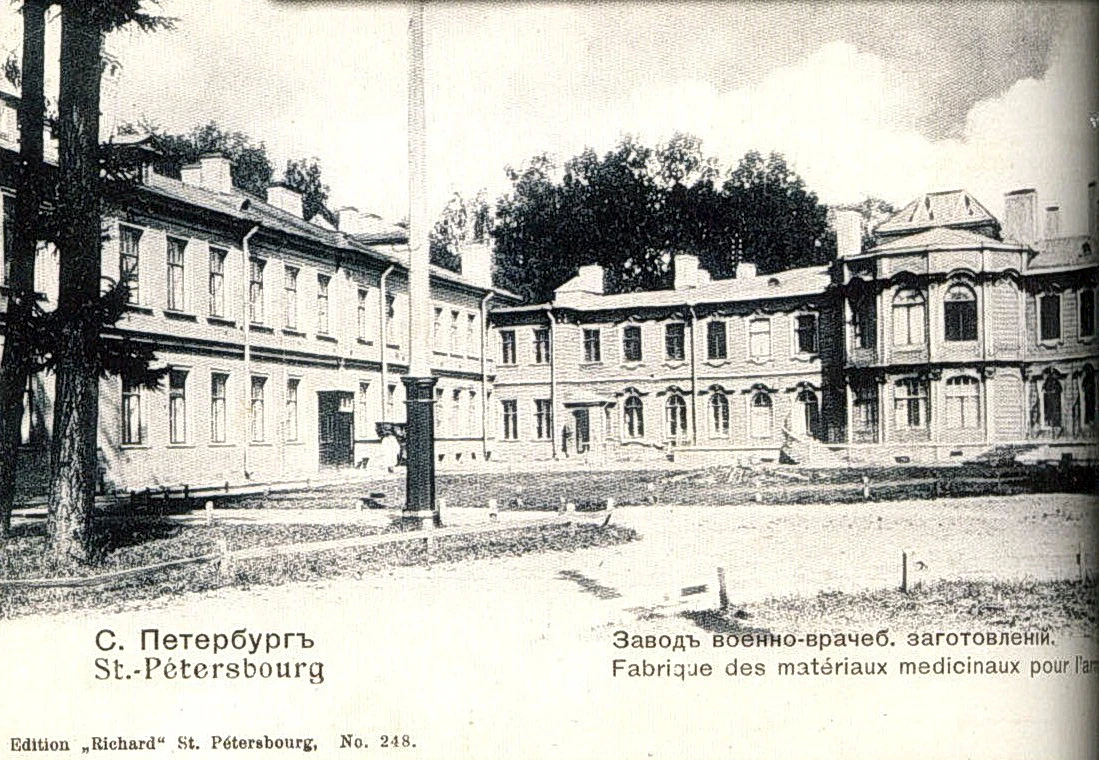
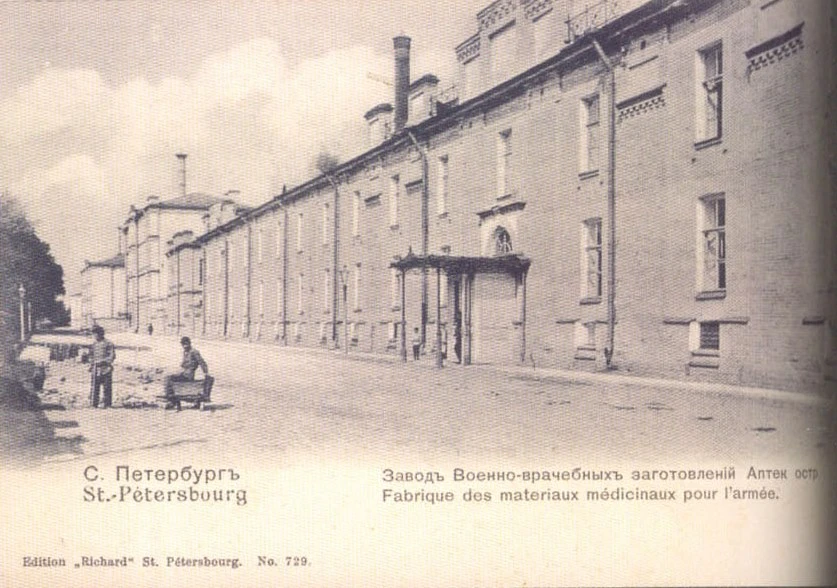
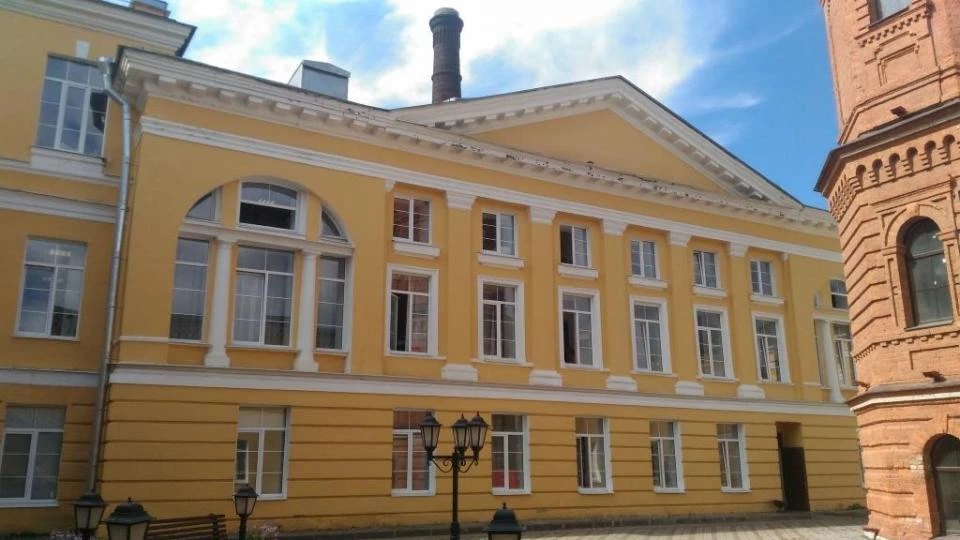
Krasnogvardeets Medical Instruments Plant in Leningrad / St-Petersburg
Krasnogvardeets: Three Centuries of Medical Instrument Manufacturing
From the surgical instrument workshops of Peter the Great to modern medical equipment
The Krasnogvardeets Medical Equipment Factory in St. Petersburg (Leningrad in USSR) traces its history to the early 18th century. Established during the reign of Peter the Great, it developed from a small workshop producing surgical instruments into a manufacturer of medical equipment. Over three centuries, its activities have included the production of surgical instruments, mechanical stapling devices, anesthesia equipment, ventilators, and other medical technologies.
The factory's history is connected with the development of Russian surgery, military medicine, and medical engineering. Among the physicians associated with the enterprise were James Wylie, Ilya Buyalsky, and Nikolay Pirogov. In the twentieth century, the factory participated in the development and production of surgical stapling instruments that became an important part of Soviet surgical technology.
Peter the Great and the Establishment of Medical Instrument Manufacturing
The origins of the factory date to the reforms of Tsar Peter I (Peter the Great, 1672–1725), who sought to establish domestic production of equipment for the Russian army, navy, and medical institutions and founded in 1721 on Aptekarsky Island by his decree the first Russian Medical manufacture as Ivan Sultanayev’s Workshop for Medical Instruments.
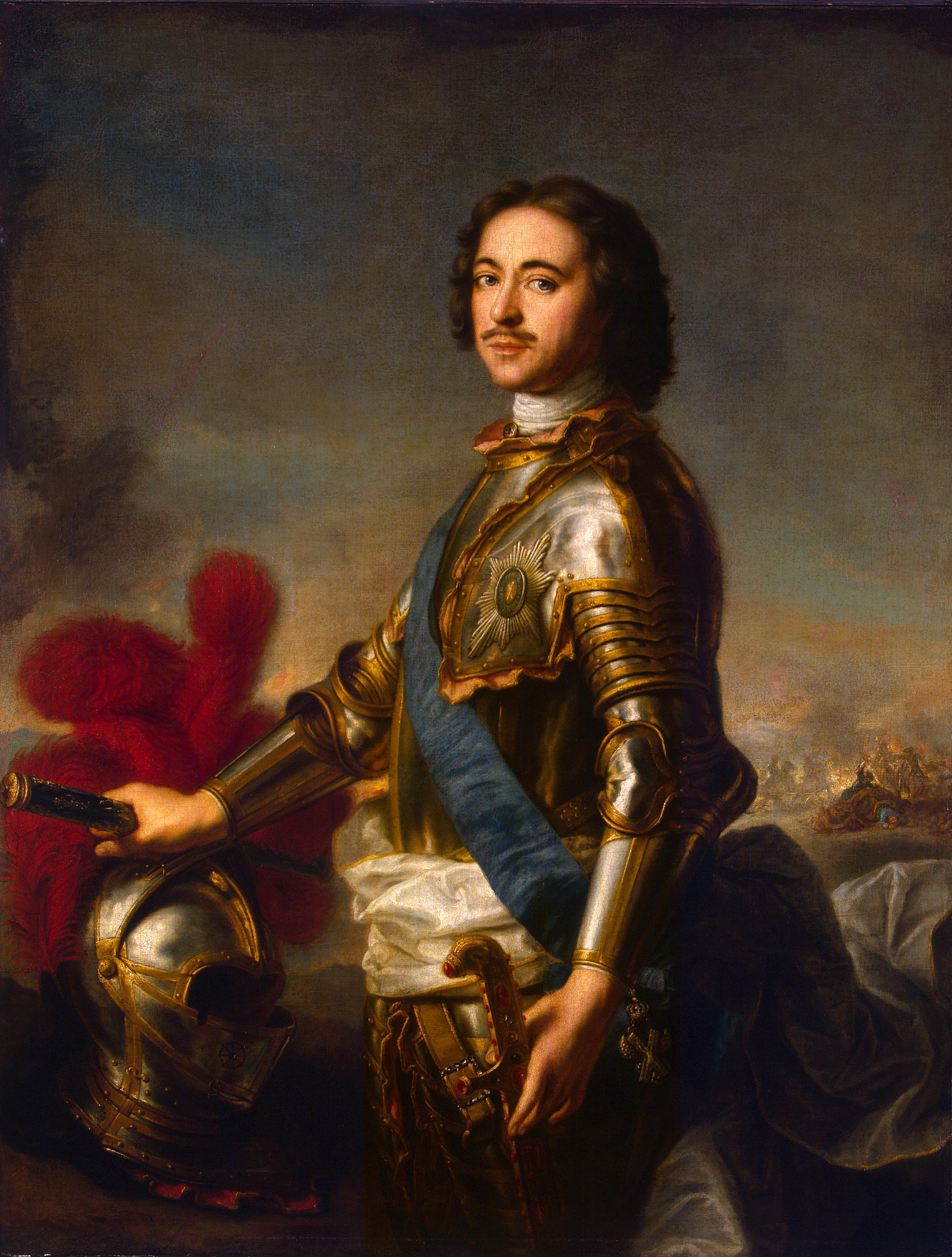
Portrait of Tsar Peter the Great, Unknown after J.-M. Nattier, 1717. Ermitage Museum, St-Petersburg. Source: wikipedia
During his travels in Western Europe, particularly in the Netherlands, Peter became acquainted with European medicine, anatomy, and surgical practice. He visited hospitals, anatomical collections, and medical workshops, and took a personal interest in surgical instruments and dental procedures.
At the beginning of the eighteenth century, Russia depended substantially on imports of surgical instruments from Western Europe. The expansion of the Russian army and navy, together with the establishment of military hospitals, increased the demand for such equipment.
The establishment of an instrument workshop in St. Petersburg is documented in 1718. The factory traditionally dates its foundation to 1721, when the production of surgical instruments was organized on Aptekarsky Island (Аптекарский Остров), near the Main Pharmacy.
Initially, the workshop produced scalpels, lancets, forceps, probes, catheters, and other instruments used in surgery and medical practice. Production was manual, and the quality of the instruments depended on the skills of metalworkers and craftsmen. Over the following decades, the workshop expanded its range of products and became part of the developing system of medical services in the Russian Empire.
European Physicians and the Development of the Factory
During the eighteenth and early nineteenth centuries, Russian medicine was strongly influenced by physicians and surgeons trained in Western Europe. German, Dutch, Scottish, and other European specialists contributed to the establishment of medical schools, hospitals, military medical services, and instrument manufacturing.
One of the physicians involved in the development of the St. Petersburg instrument factory was James Wylie (1768–1854), known in Russia as Yakov Vasilyevich Villie (Яков Васильевич Вилле). Born in Scotland and educated in medicine in Britain, Wylie entered Russian military service and eventually became one of the leading figures in the organization of military medicine in the Russian Empire. He supported the development of domestic medical instrument manufacturing and the improvement of instruments used by military surgeons.
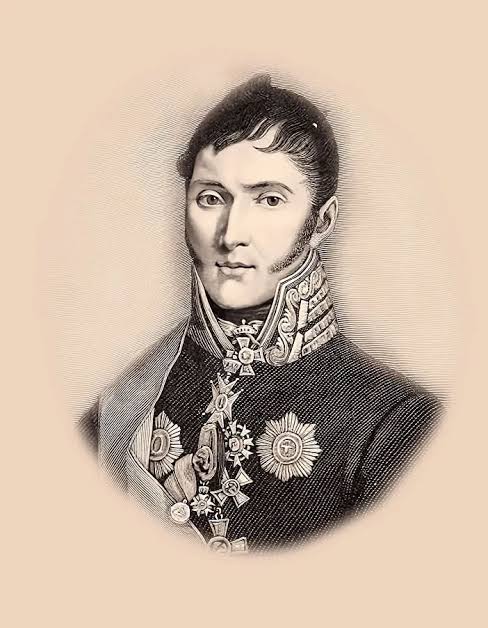
James Wylie (1768–1854), known in Russia as Yakov Vasilyevich Villie (Яков Васильевич Вилле)
In 1807, Wylie became president of the Imperial Medical-Surgical Academy (Медико-Хирургическая Академия) in St. Petersburg. The Academy, founded in 1798, like the Josephinum in Vienna (founded by Emperor Joseph II in 1785), was established primarily as a training ground for qualified military doctors and surgeons for the army and navy. Foreign policy was based on bayonets and canons, and the priority given to training military and naval surgeons was evident. However, one cannot deny the general spirit of the times—during the Age of Enlightenment, Paul I personally initiated reforms in medical education as a whole, continuing the traditions of the hospital and medical-surgical schools that had existed since the early 18th century (under Peter I and Nikolai Bidloo). The factory's connections with the Medical-Surgical Academy allowed its production to be adapted to the needs of clinical practice.
Another physician associated with the factory was Ilya Buyalsky (1789–1866), a Russian surgeon and anatomist who became its director in 1829. Buyalsky participated in the design and improvement of surgical instruments, particularly those used in ophthalmology, obstetrics, and urology. His work contributed to the development of specialized instrument sets and the introduction of new surgical techniques into medical practice.
The manufacture of surgical instruments also required improvements in metallurgy. During the early nineteenth century, the factory became involved in the use of high-quality steel developed by the Russian metallurgist Semyon Badayev. These developments helped reduce dependence on imported materials.
By the middle of the nineteenth century, the factory was producing instruments for different surgical specialties and supplying them to hospitals, military medical institutions, and physicians.
Nikolay Pirogov and Surgical Instrument Design
Nikolay Ivanovich Pirogov (1810–1881), a surgeon and anatomist whose work influenced the development of military field surgery and topographic anatomy, was closely associated with the St. Petersburg instrument factory.
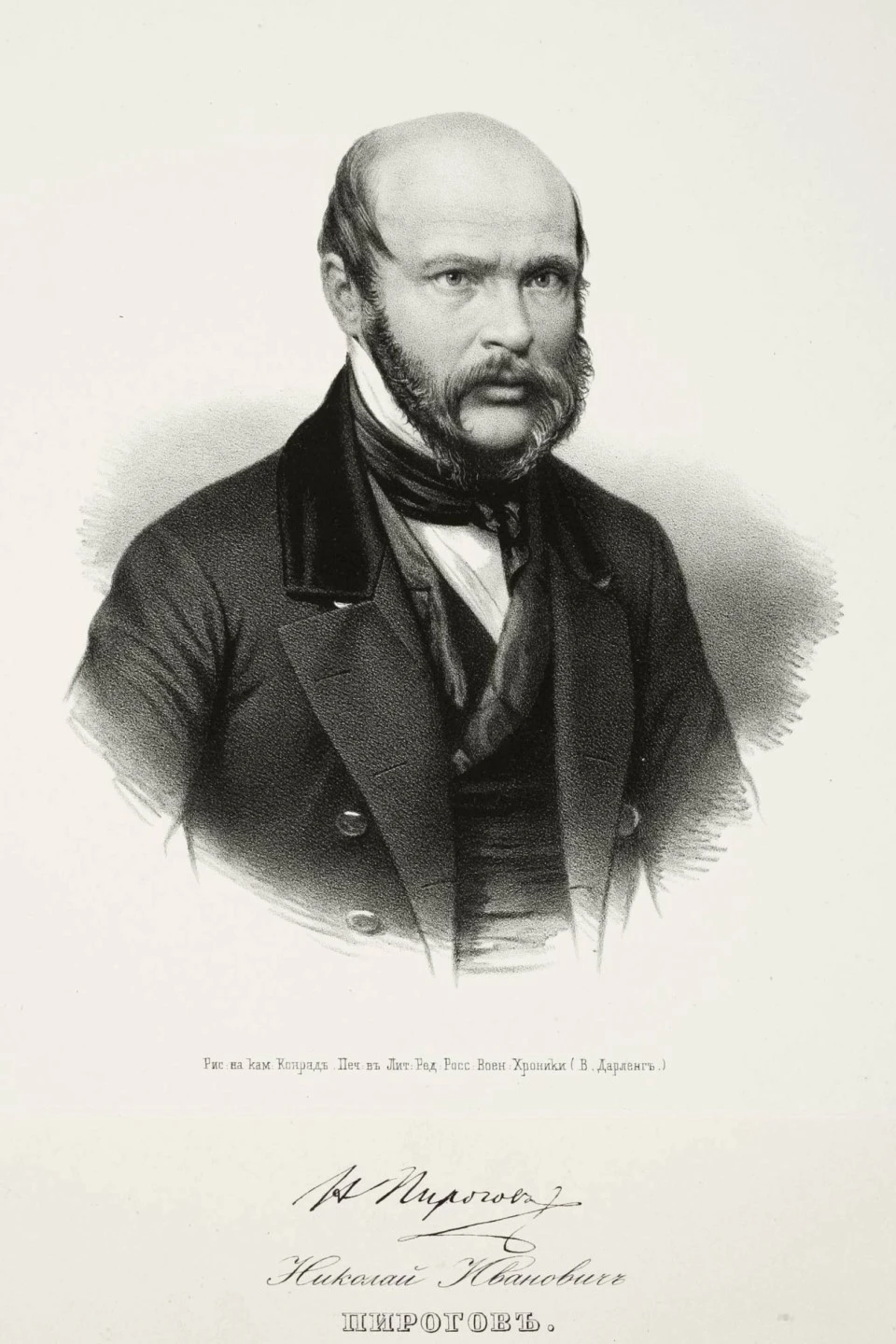
Nikolay Pirogov in the time after the Crimea War, 1860
In 1841, Pirogov was appointed professor at the Imperial Medical-Surgical Academy. During the following years, he collaborated with the factory in the development and improvement of surgical instruments.
Pirogov examined the design and practical application of instruments used in surgery. He proposed modifications to existing models and participated in the development of new instruments and surgical sets. Particular attention was given to instruments used by military surgeons. Pirogov reviewed standard military surgical kits and recommended changes to their composition, removing unnecessary instruments and adding those required for common surgical procedures.
His approach reflected the importance he attached to anatomical knowledge and the practical requirements of surgery. Instruments were evaluated not only in terms of their manufacturing quality but also according to their suitability for particular surgical procedures. During approximately fifteen years of cooperation, Pirogov contributed to the improvement of numerous instruments and surgical sets manufactured at the factory.
His involvement also illustrates the relationship between clinical practice and instrument manufacturing in the nineteenth century. Surgeons participated directly in the design of instruments, while craftsmen and engineers adapted their proposals to the available manufacturing technologies.
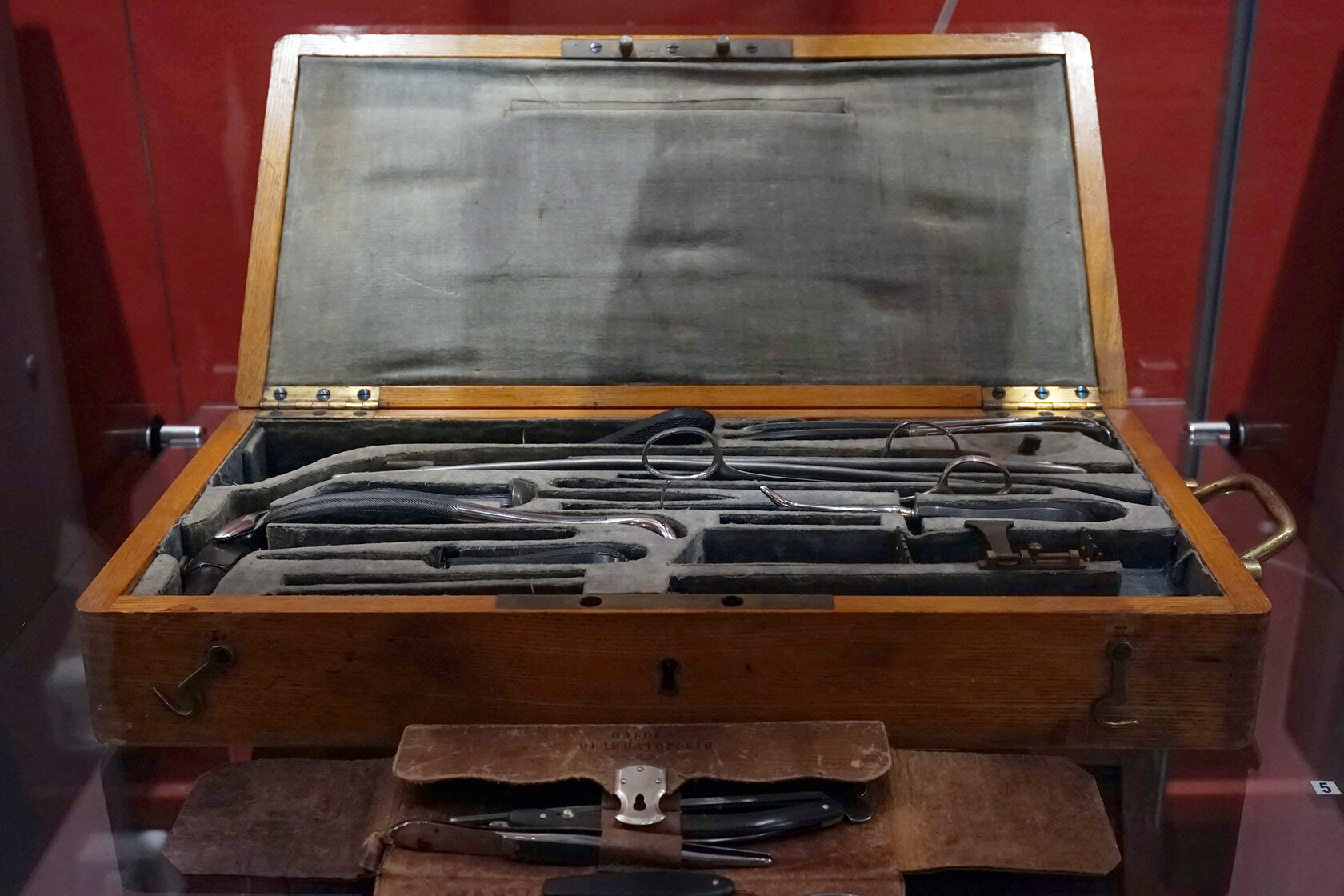
Pirogov's Surgical Set. Source: Fontanka.ru. History of the Medical Equipment Factory on Aptekarsky Island. February 18, 2021.
The Factory in the Late Nineteenth and Early Twentieth Centuries
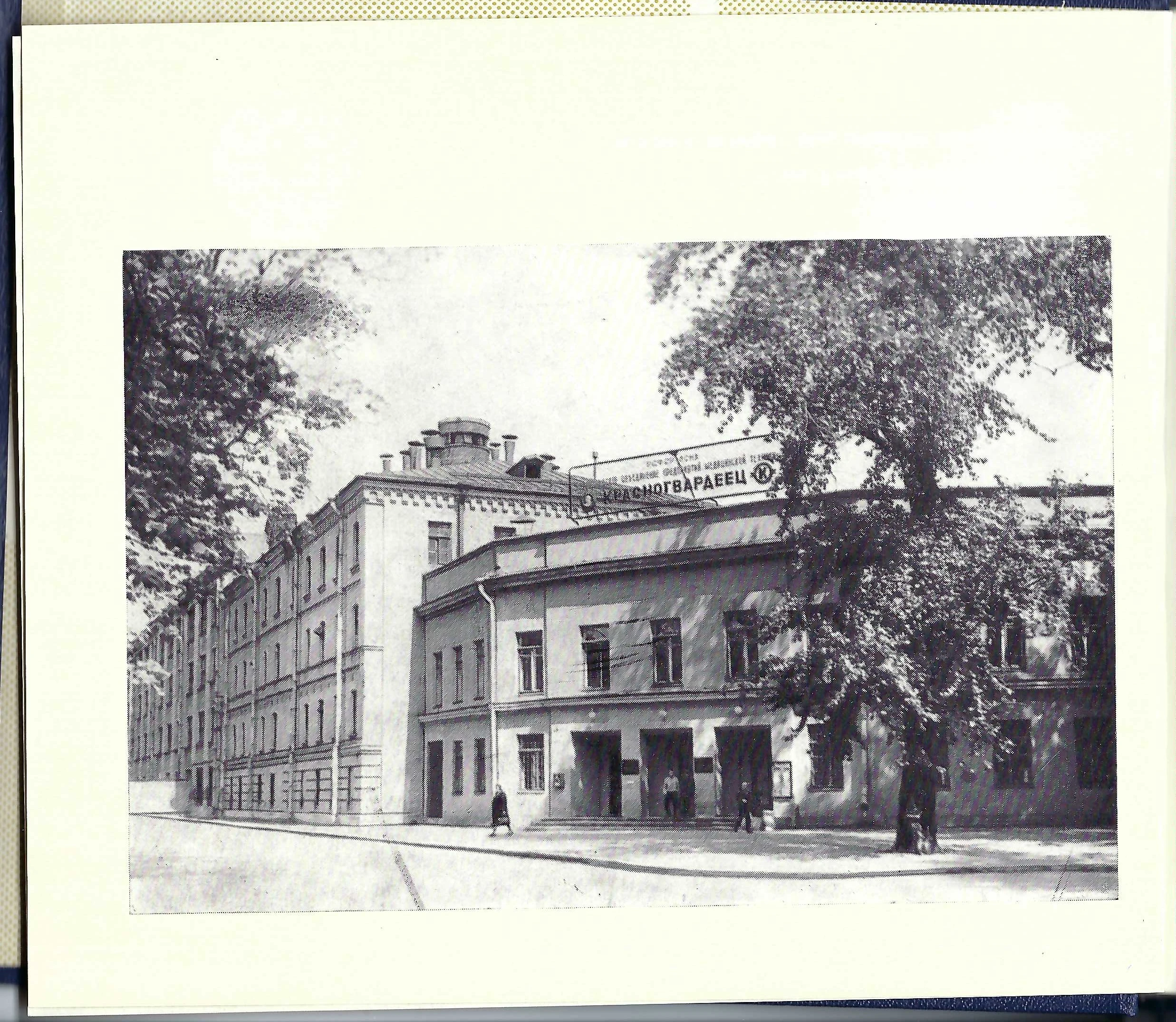
The enterprise was named the Military Medical Supplies Plant (Завод военно-медицинских заготовлений, ЗВВЗ) in 1896. This occurred during a large-scale reorganization: the War Ministry merged three independent production facilities located on Aptekarsky Island: The State Instrument and Surgical Plant (formerly the Peter the Great Master’s Workshop); The Pharmaceutical Factory (the Main Pharmacy Store); The Dressing Production Facility.
Following this merger, the unified, massive complex came to be known as the Military Medical Supplies Plant. During this period that the revamped enterprise required new capacity, and literally a few years later, that very brick water tower was erected in the courtyard to serve the needs of the combined workshops (Today, locals call it the “Princess’s Tower,” maybe believing that their very own Rapunzel of Petersburg is still languishing inside the abandoned building).

The three-story building in classicism style was erected in 1898. Later, the water tower (“Princess’s Tower”) was built in the courtyard to serve the needs of the new factory.
Following the Russian Revolution of 1917, the enterprise underwent administrative changes. In March 1922, it received the name Krasnogvardeets (Красногвардеец — russ. "red-army guardsman").
During the second half of the nineteenth century, the factory continued producing surgical instruments for military and civilian medicine. Changes in surgical practice, including the introduction of anesthesia, antisepsis, and asepsis, created new requirements for instrument design and manufacturing.
The development of abdominal, orthopedic, ophthalmological, and other surgical specialties increased the demand for specialized equipment.
During the 1920s and 1930s, production was reorganized to meet the needs of the Soviet healthcare system. The factory continued manufacturing conventional surgical instruments and expanded into more technically complex products, including bronchoscopes, gastroscopes, and instruments for ophthalmology, otolaryngology, gynecology, and urology.
During the Second World War, and particularly throughout the Siege of Leningrad (1941–1944), the factory continued producing medical instruments needed by military hospitals and medical units.
Production was maintained under difficult conditions, including shortages of materials, fuel, electricity, and personnel. Many workers were mobilized, and women increasingly took their places in the workshops.
After the war, the factory resumed and expanded the development of medical instruments and equipment.
Surgical Stapling Instruments
One of the principal areas of Krasnogvardeets' postwar development was the manufacture of mechanical surgical stapling instruments.
The history of mechanical stapling began before the Soviet period. In 1908, the Hungarian surgeon Hümér Hültl (1868–1940) introduced a surgical stapling device designed to close tissues using metal staples. Subsequent European developments, including the work of Aladár von Petz, contributed to the refinement of the technique.
Early stapling instruments were mechanically complicated, relatively heavy, and expensive to manufacture. Their clinical application remained limited. In the Soviet Union, research into mechanical suturing developed during the 1940s and 1950s. One of the pioneers was Vasily Gudov (1908–1983), who developed instruments for mechanical vascular anastomosis.
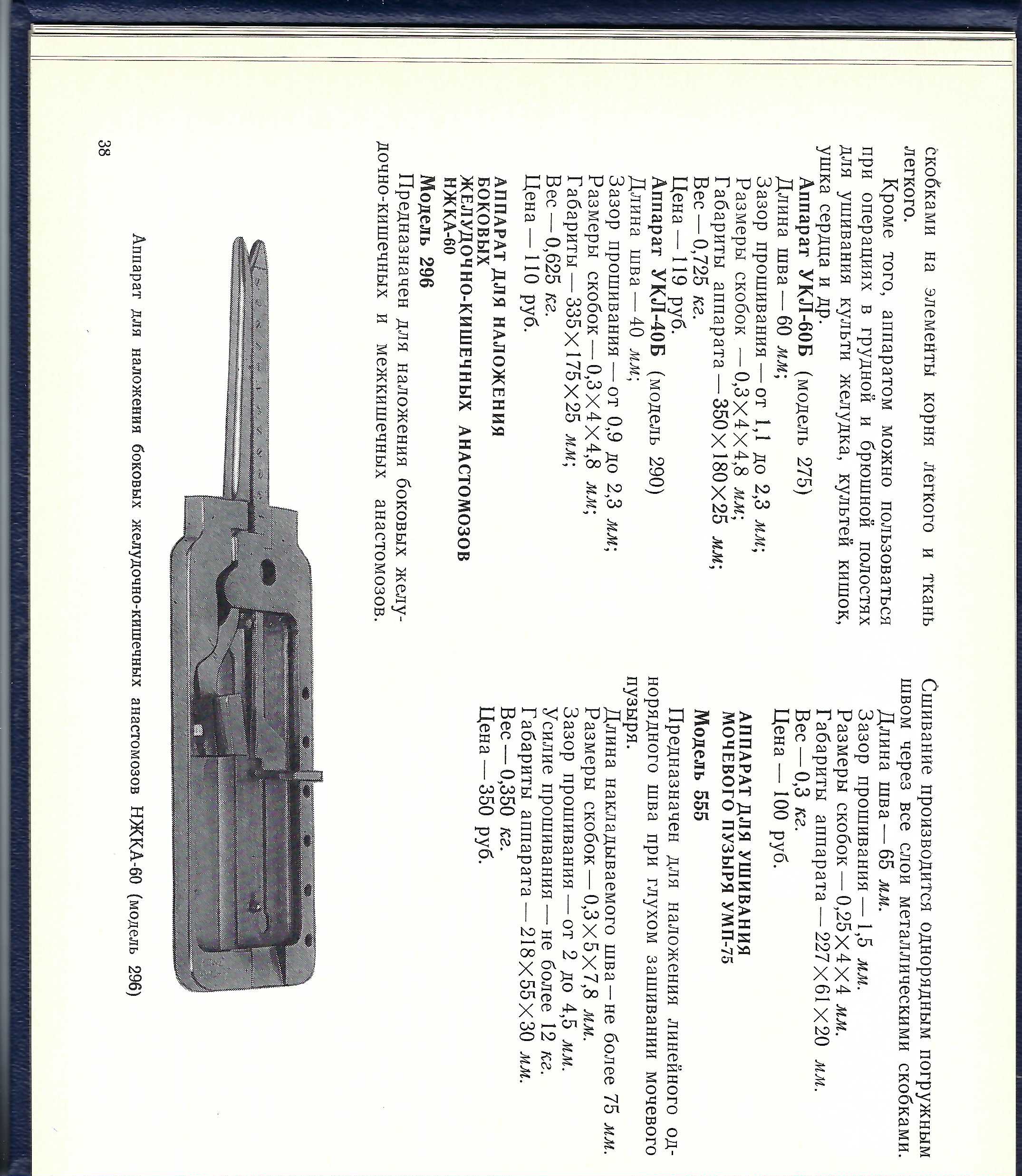
Surgical stapler for lateral gastro-intestinal anastomoses NZhKA-60. Page 38 from the Catalog of the Medical Devices, Apparatus and Instruments by “Krasnogvardeets” plant ( Leningrad, USSR, 1968)
The technique involved joining tissues or blood vessels using small metal staples applied by a mechanical device. In selected procedures, this allowed surgeons to create a series of regularly spaced tissue connections without placing each suture individually.
Krasnogvardeets participated in the development, refinement, and serial production of different types of surgical stapling instruments. These included devices intended for:
- Anastomosis of blood vessels;
- Closure of bronchi and lung tissue;
- Resection and closure of the stomach and intestines;
- Creation of gastrointestinal anastomoses;
- Other surgical procedures requiring mechanical tissue closure.
Among the instruments produced in the Soviet Union were the UKL series of linear staplers for bronchial and pulmonary tissue closure, the UKZh devices for gastrointestinal surgery, and several types of instruments for vascular and intestinal anastomoses.
Soviet stapling technology also attracted international attention. In 1957, American surgeon Mark Ravitch (1910–1989) visited the Soviet Union and obtained a Soviet surgical stapler for further examination and clinical evaluation. The subsequent adaptation of Soviet stapling principles by American surgeons and manufacturers contributed to the development of modern mechanical stapling systems. In particular, the work of Mark Ravitch and John Y. Smith, together with the engineering developments undertaken by United States Surgical Corporation (USSC with trade mark Auto Suture), helped establish surgical stapling as a routine technique in several surgical specialties.
The development of disposable stapling instruments and the increasing use of titanium staples further expanded their clinical application. Today, mechanical staplers are widely used in thoracic, gastrointestinal, bariatric, and minimally invasive surgery. Their development reflects contributions from European, Soviet, American, and other surgical and engineering traditions.
Anesthesia, Respiratory Equipment, and Artificial Organs
During the second half of the twentieth century, Krasnogvardeets expanded its production beyond conventional surgical instruments. The factory manufactured equipment for anesthesiology, intensive care, and clinical diagnostics. Its product range included endoscopic instruments, anesthesia machines, mechanical ventilators, and other devices used in hospitals.
In the 1950s and 1960s, the enterprise participated in the production of extracorporeal circulation equipment, including heart–lung machines. Equipment manufactured in Leningrad was also supplied to medical institutions abroad.
Another area of production was artificial kidney equipment used for hemodialysis. A Soviet artificial kidney manufactured by the factory received a gold medal at an international exhibition in Brno in 1965. The factory also manufactured mechanical ventilators, including devices of the RO series, which were used in Soviet hospitals and intensive care units.
The expansion into anesthesia and respiratory equipment reflected broader developments in twentieth-century medicine, particularly the growth of intensive care, cardiac surgery, and complex surgical procedures requiring advanced physiological support.
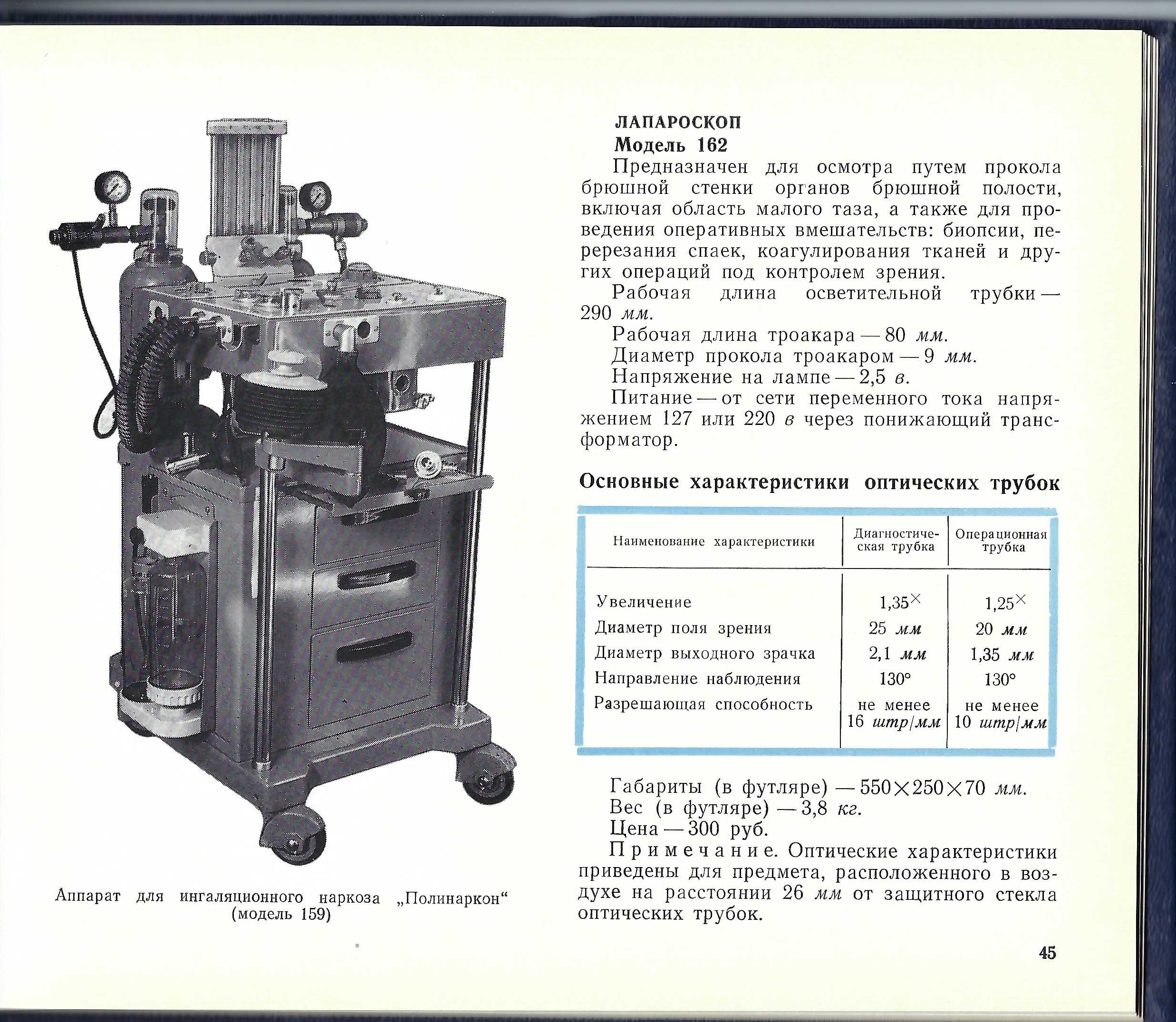
Inhalation Anesthesia Machine "Polynarcon". Page 45 from the Catalog of the Medical Devices, Apparatus and Instruments by “Krasnogvardeets” plant ( Leningrad, USSR, 1968)
Krasnogvardeets Today
Krasnogvardeets continues to operate in St. Petersburg as a manufacturer of medical equipment. Its contemporary product range includes anesthesia and respiratory equipment, mechanical ventilators, and surgical stapling instruments. Among its products is the Orfey-M anesthesia workstation, intended for inhalational anesthesia and mechanical ventilation.
The company also maintains a catalogue of mechanical surgical stapling devices, continuing a production area developed during the Soviet period. In recent years, the enterprise has reported modernization of its manufacturing processes and the expansion of production capacity for respiratory equipment.
Historical Significance
The history of Krasnogvardeets reflects several major developments in medical technology over the past three centuries.
In the eighteenth century, its activities were associated with the establishment of domestic surgical instrument manufacturing under Peter the Great. During the nineteenth century, the factory developed through cooperation with physicians and surgeons, including James Wylie, Ilya Buyalsky, and Nikolay Pirogov.
In the twentieth century, industrial manufacturing methods allowed the enterprise to expand from traditional surgical instruments to mechanical staplers, anesthesia systems, ventilators, and extracorporeal medical equipment.
The development of surgical stapling instruments is particularly relevant to the history of international medical technology. Soviet designs contributed to subsequent developments in mechanical suturing and influenced the wider adoption of surgical stapling techniques.
The history of the factory also documents changes in the relationship between medical practice and industrial production: from instruments made individually by craftsmen to standardized equipment manufactured through mechanical and industrial processes.
Main Dates
January 23, 1721 (January 10, Old Style) – By decree of Peter the Great, Ivan Sultaneev's Workshop for the Manufacture of Surgical Instruments was established on Aptekarsky Island in St. Petersburg.
1763 – The workshop was expanded and reorganized into the St. Petersburg Instrument Factory.
1796 – The factory moved into a new stone building on Aptekarsky Island and was renamed the St. Petersburg Surgical Instrument Plant.
1896 – The plant was reorganized into the Military Medical Supplies Plant, responsible for supplying medical equipment and materials to the Russian Army and Navy.
1917 – Following the October Revolution, the plant was nationalized and placed under Soviet state administration.
1922, March – The plant operated as Factory No. 100 before being renamed "Krasnogvardeets" (“Red Guardsman”) in March 1922.
1925 – The Leningrad Medical Supply Plant was established as a separate enterprise, later becoming the Oktyabr Chemical and Pharmaceutical Association.
1931 – The plant became part of Rosinstrument, the Soviet state association of instrument manufacturers.
June 29, 1967 – The enterprise was reorganized as the Leningrad Krasnogvardeyets Production Association, under the USSR Ministry of Medical Industry.
1993 – The enterprise was reorganized into Krasnogvardeyets Joint-Stock Company (JSC).
References and Further Reading
- Krasnogvardeets Medical Equipment Factory. History of the Company. Official company website.
- Kirill Kravchenko. List of Industrial Architecture Landmarks. Military Medical Supplies Plant
- Military Medical Museum, St. Petersburg. Museum of N. I. Pirogov.
- Fontanka.ru. History of the Medical Equipment Factory on Aptekarsky Island. February 18, 2021.
- “Surgical Staplers: The History of Conception and Adoption.” PubMed, 2021.
- Krasnogvardeets Medical Equipment Factory. Surgical Stapling Instruments Catalogue.
- Peterburgsky Dnevnik. Modernization of Ventilator Production in St. Petersburg. August 26, 2026