
Search results29 results
COLLECTION
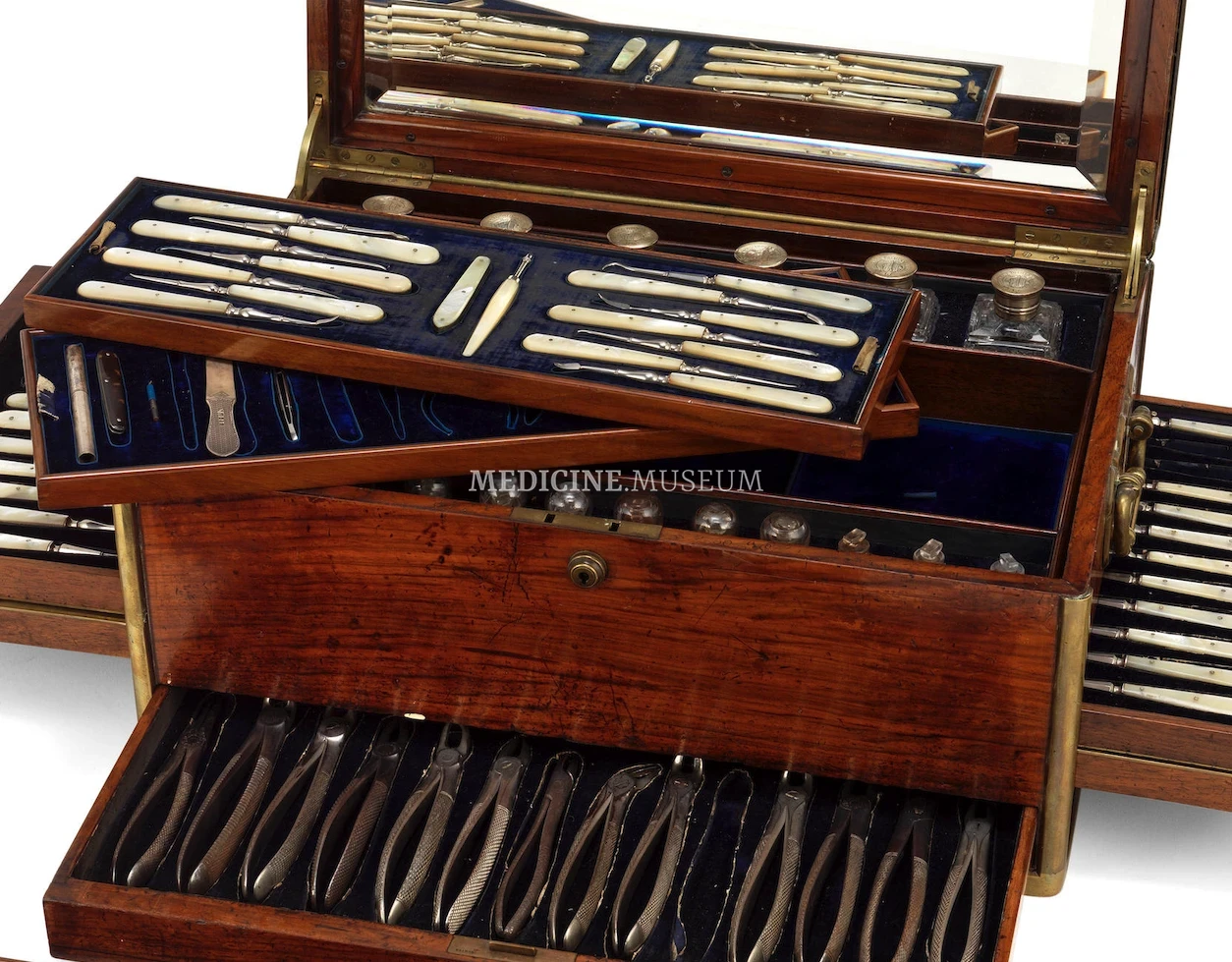
England, 1880
A fine presentation Dentistry and Surgical Chest, English, late 19th century is contained in the walnut brass-bound case, with an engraved brass plaque on the lid with a leopard coat of arms inscribed LABOR OMNIA VINCIT, C.I.H. ("Work conquers all"), with four Bramah locks and associated key for the lid and the front and side compartments. The compartments (three with beveled mirrors), fitted with blue velvet covering lodgements for instruments, contain cut-glass bottles with glass stopper and hinged metal cap bearing the same motto, a Claudius Ash & Sons booklet with dental tin foil leaves, dental and surgical instruments with mother-of-pearl (nacre) or tortoiseshell handles, some with decorative carved mother-of-pearl handles. The instruments are marked: SAVIGNY & CO, LONDON; MAW SON & THOMPSON, SWS, and SMALE. Property from a private collection, acquired in the mid-20th century. By repute commissioned and used by a dental surgeon aboard an early Transatlantic luxury liner.
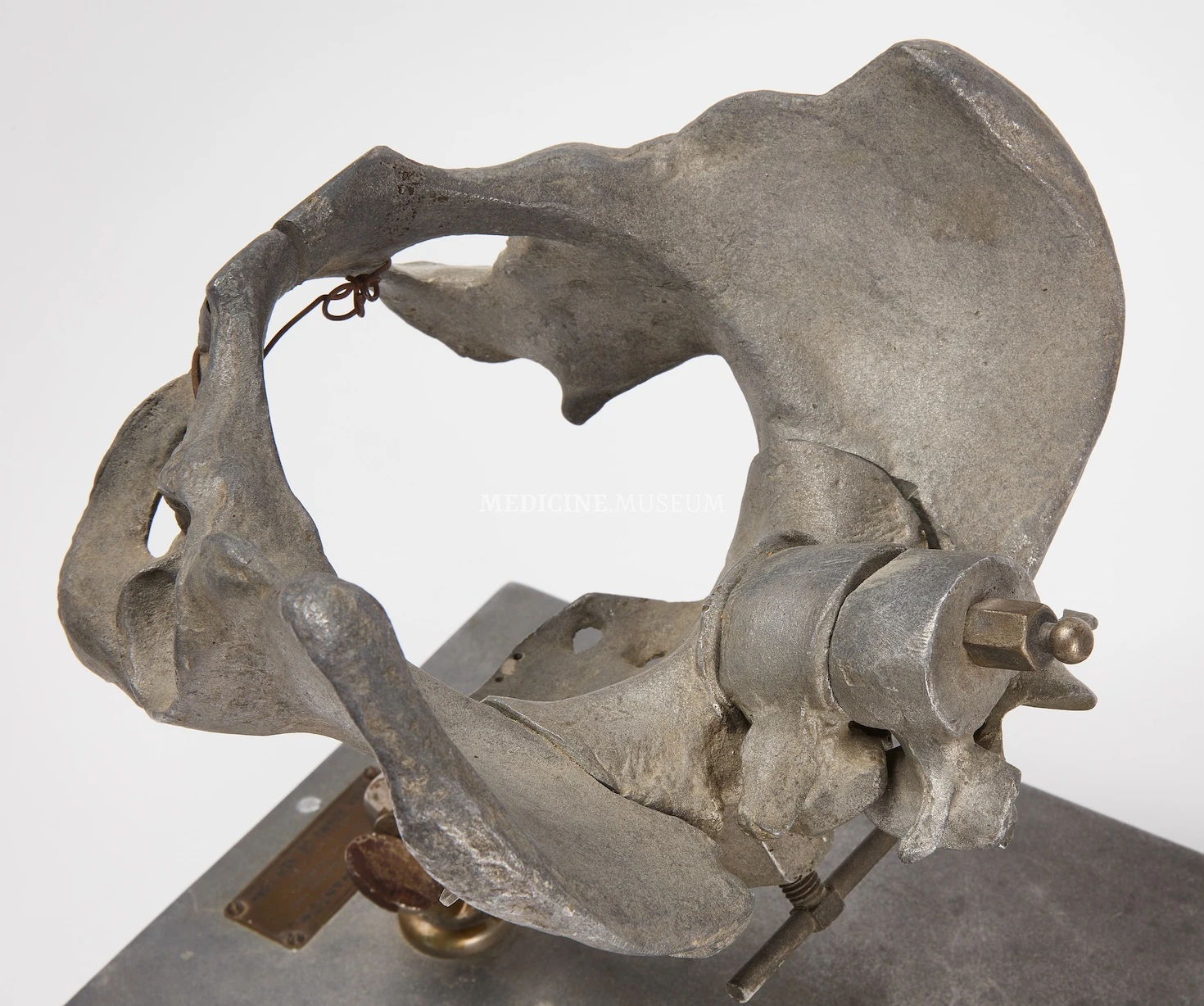
USA, 1920
Stander Female Pelvis Phantom, a Manikin for Teaching and Practice of Obstetrics (Educational Aid). Made by Clay Adams Co. New York, 1920
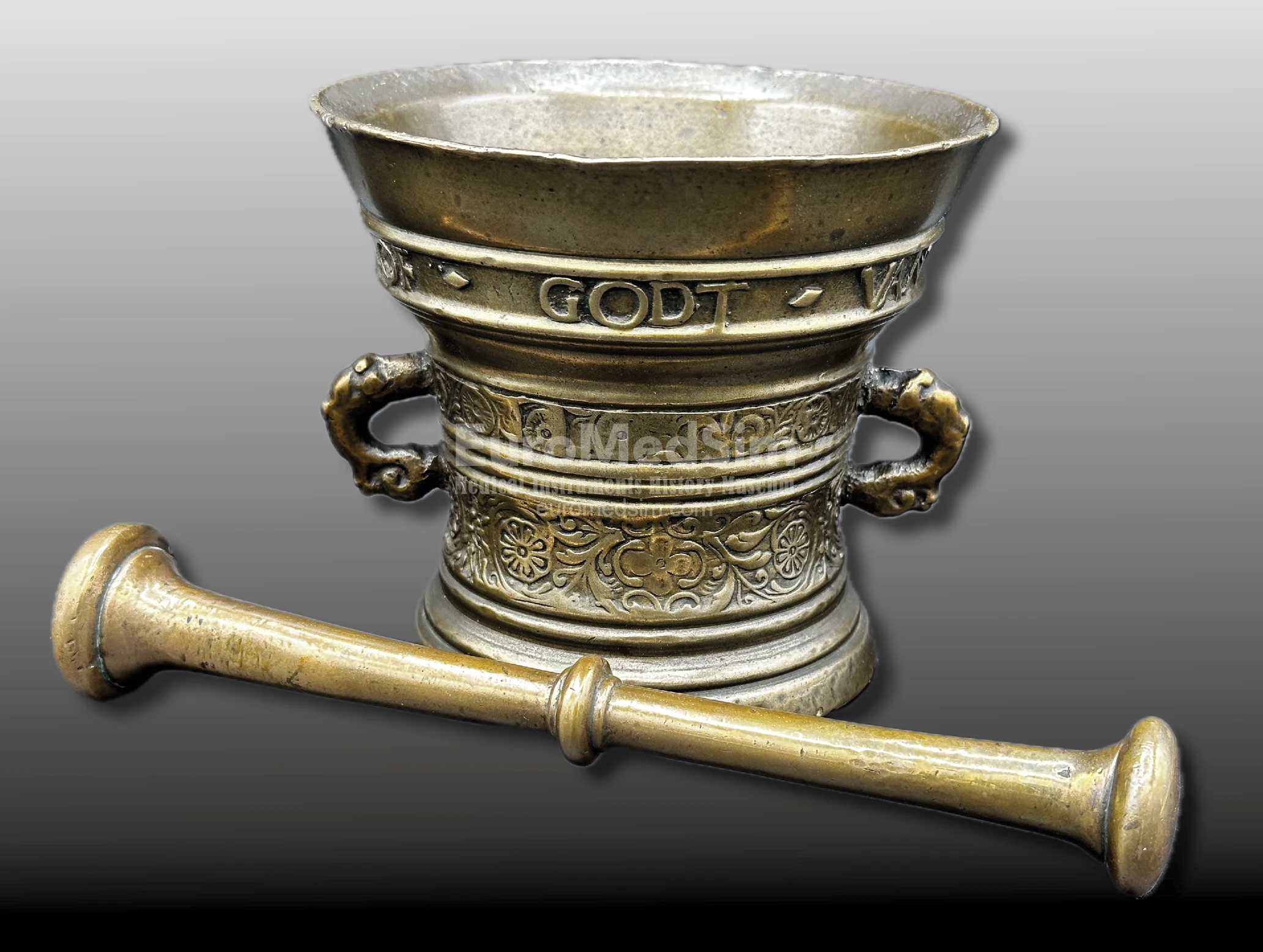
Netherlands, 1638
Mortar and pestle, baroque, The Netherlands, 1638. Bell shaped, two carved handles, and two floral friezes. On the upper part circular inscription: LOF * GODT * VAN * AL * Ao * 1638 (Praise God by all, in the year 1638), 11 cm
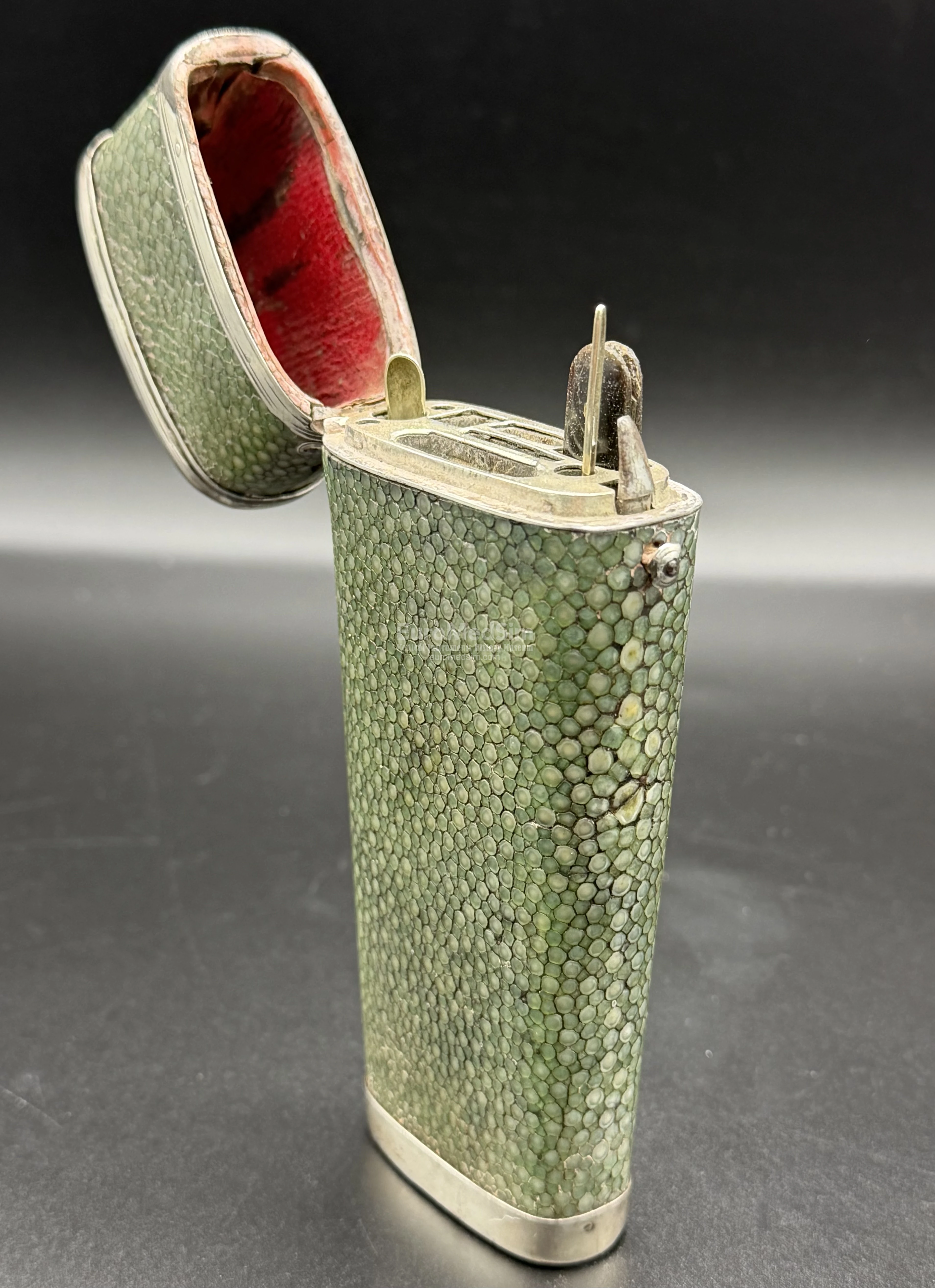
England, 1800
A Pocket Case for Surgical Instruments covered by green-stained shagreen, English, ca. 1800, with silver metal mounts, hinged cover engraved letter 'C', with slots for forceps, lancets, probes and others minor surgical instruments. Now is filled with several later instruments: lancet with tortoise shell handle, a probe and blunt needle. A part of shagreen on the the lid is detached.
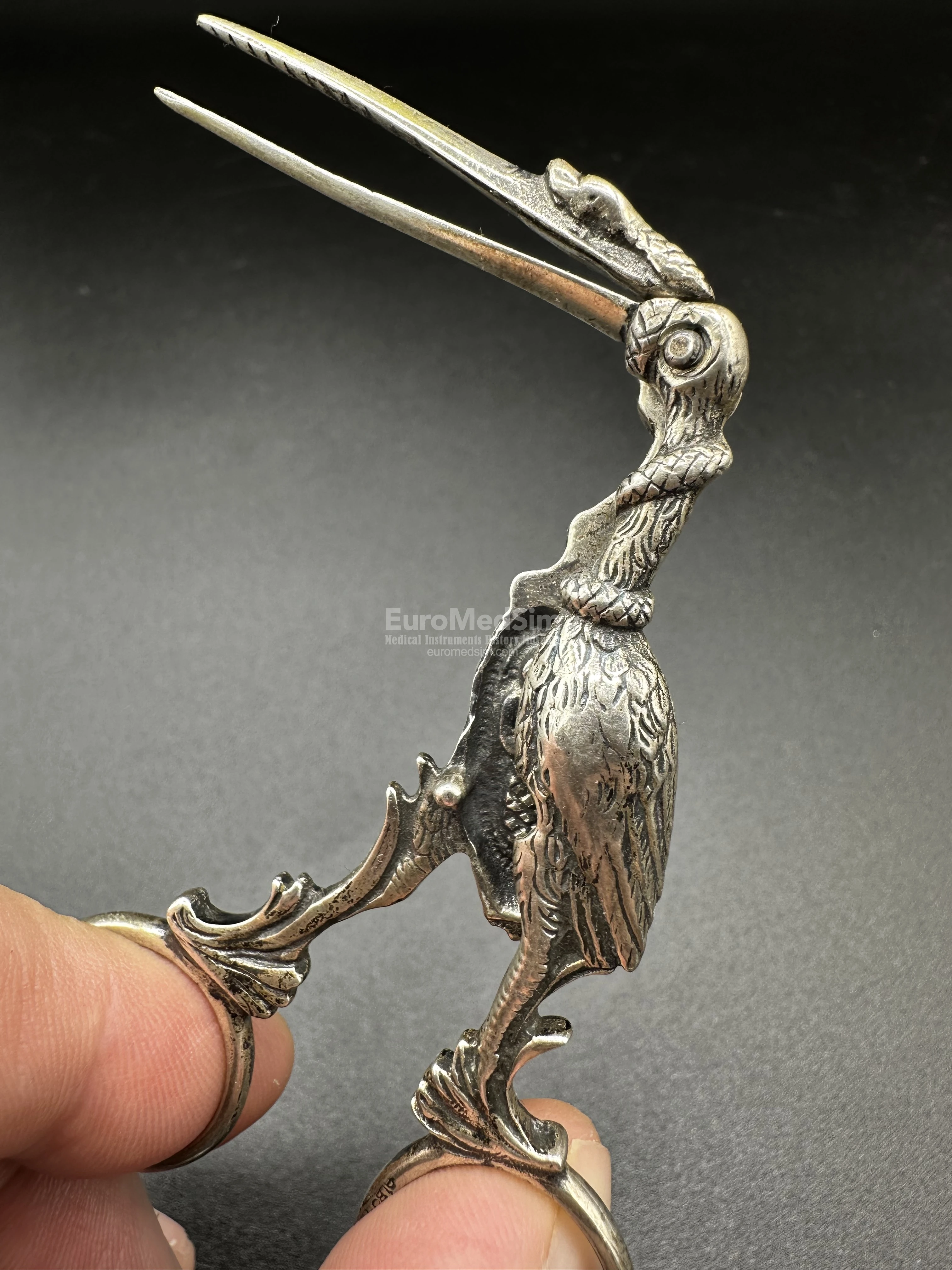
Germany, 1800
A umbilical clamp in the shape of a stork made of 835 silver. Inside the stork is a swaddled baby, which becomes visible when the handles are opened. Used by the midwifes in 19. century to compress and bind the umbilical cord.
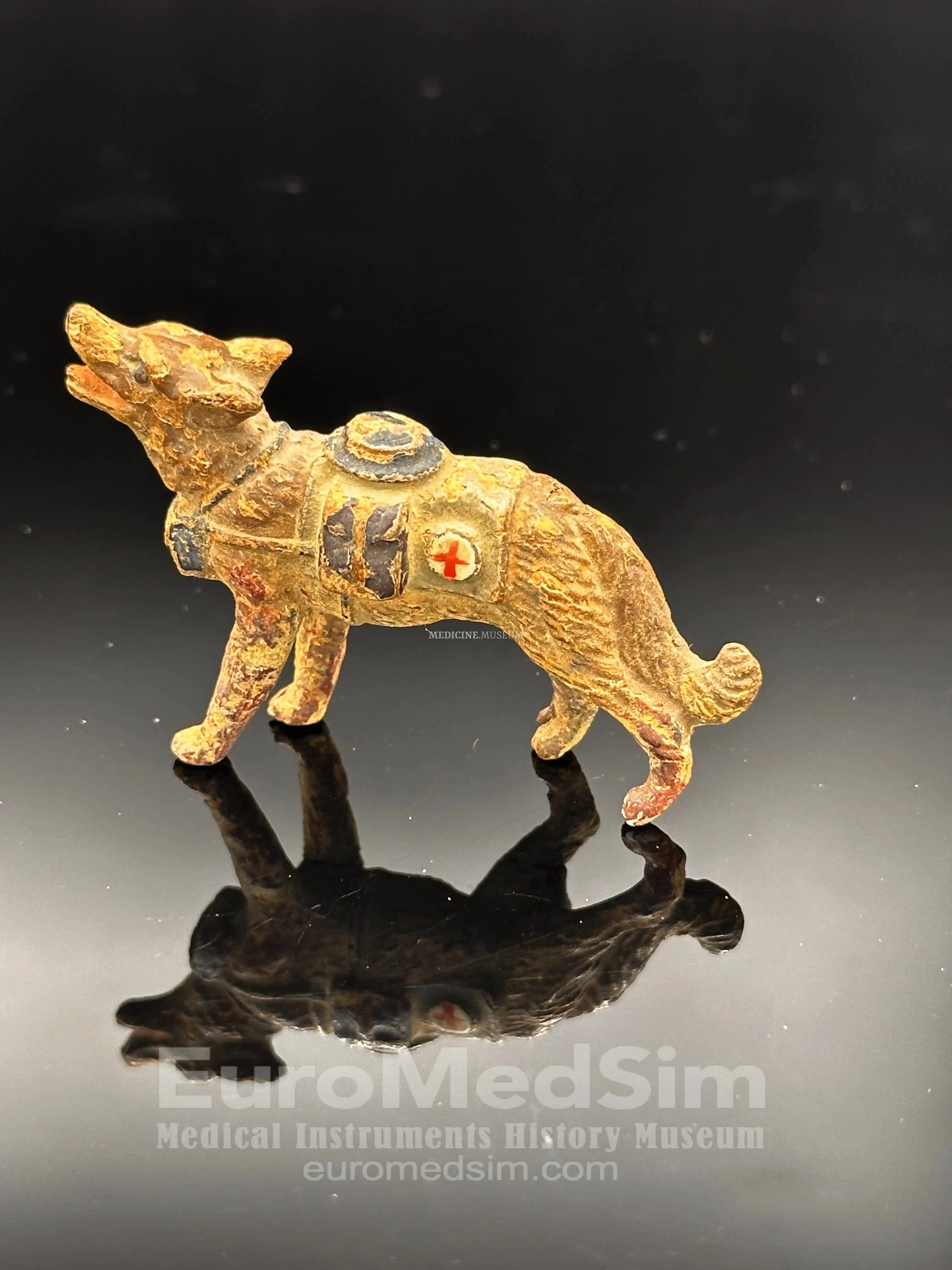
Germany, 1935
Sanitary dog, standing and barking, Nr. 5/186, production period: 1928-1939. Toy-soldiers by Lineol, Germany
LIBRARY
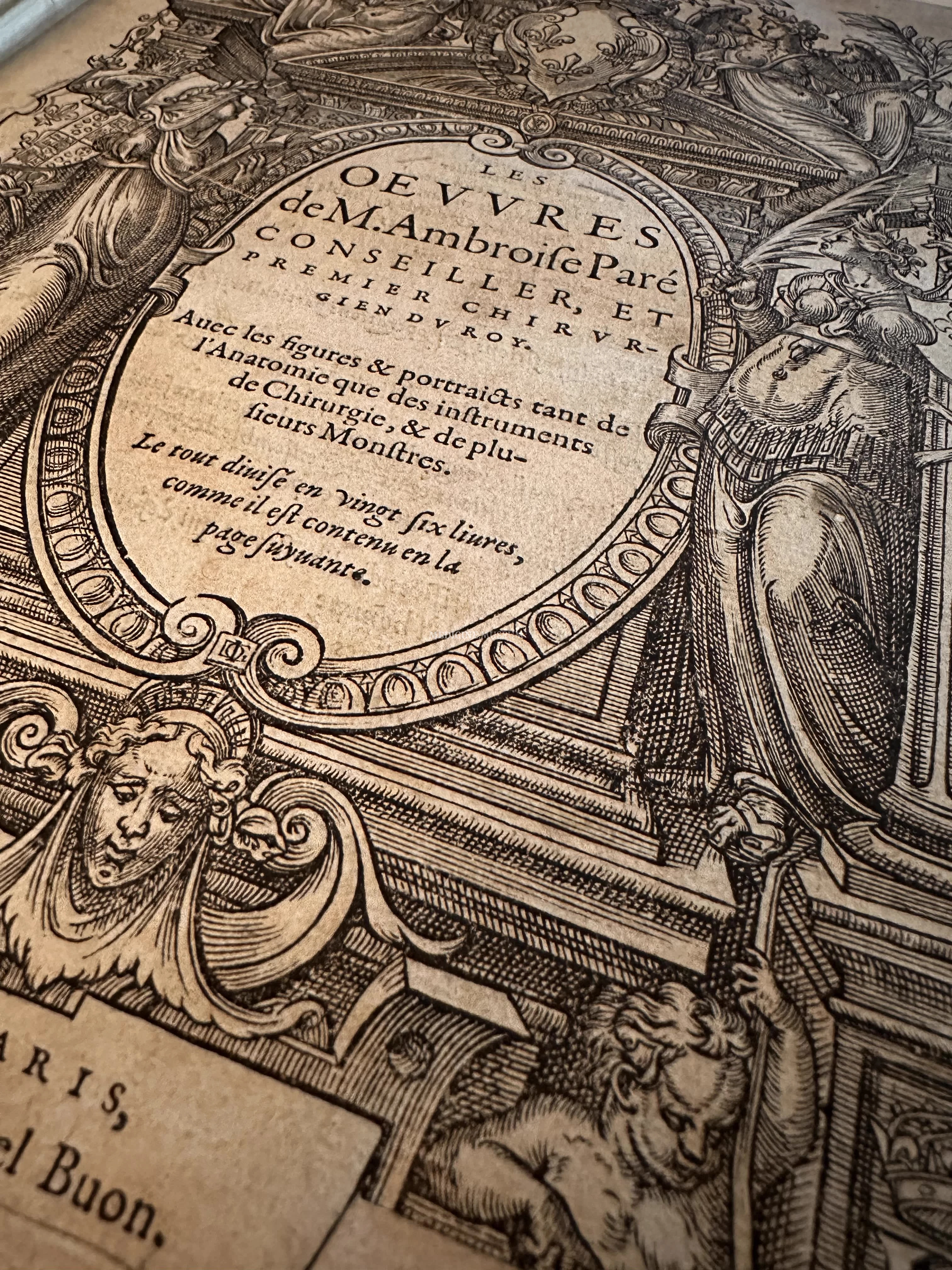
France, 1575
Paré, Ambroise
Paré, Ambroise, 1510?-1590. Les Œuvres de M. Ambroise Paré, conseiller et premier chirurgien du Roy. Avec les figures & portraicts tant de l'anatomie que des instruments de chirurgie, & de plusieurs monstres. Le tout divise en vingt six livres (transl. from French: The works of Mr. Ambroise Paré, advisor and first surgeon to the King. With figures & portraits of both anatomy and surgical instruments, & several monsters. The whole is divided into twenty-six books). Paris, Gabriel Buon, 1575, the first edition. This unique book is the cornerstone that laid the foundation for modern surgery in France and the rest of Europe, the most important surgical book of the 16th century.
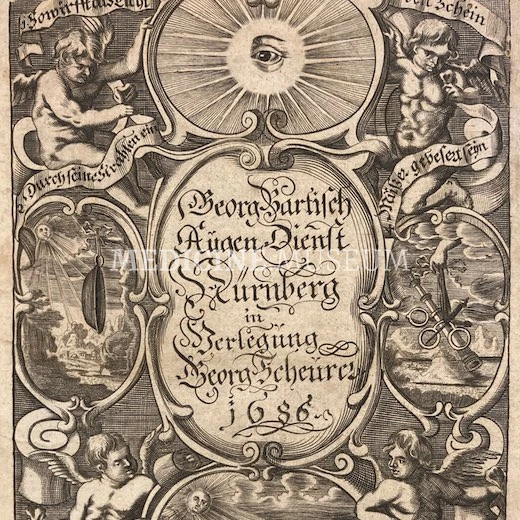
Germany, 1686
Bartisch, Georg
Augen-Dienst: Oder Kurtz und deutlich verfasster Bericht von allen und jeden in- und äusserlichen Mängeln Schäden Gebrechen und Zufällen der Augen (Eye Service: or report of all and every internal and external defects, damages, infirmities, and accidents of the eyes), Author: Georg Bartisch, Publisher: Georg Scheurer, Nuremberg, 1686
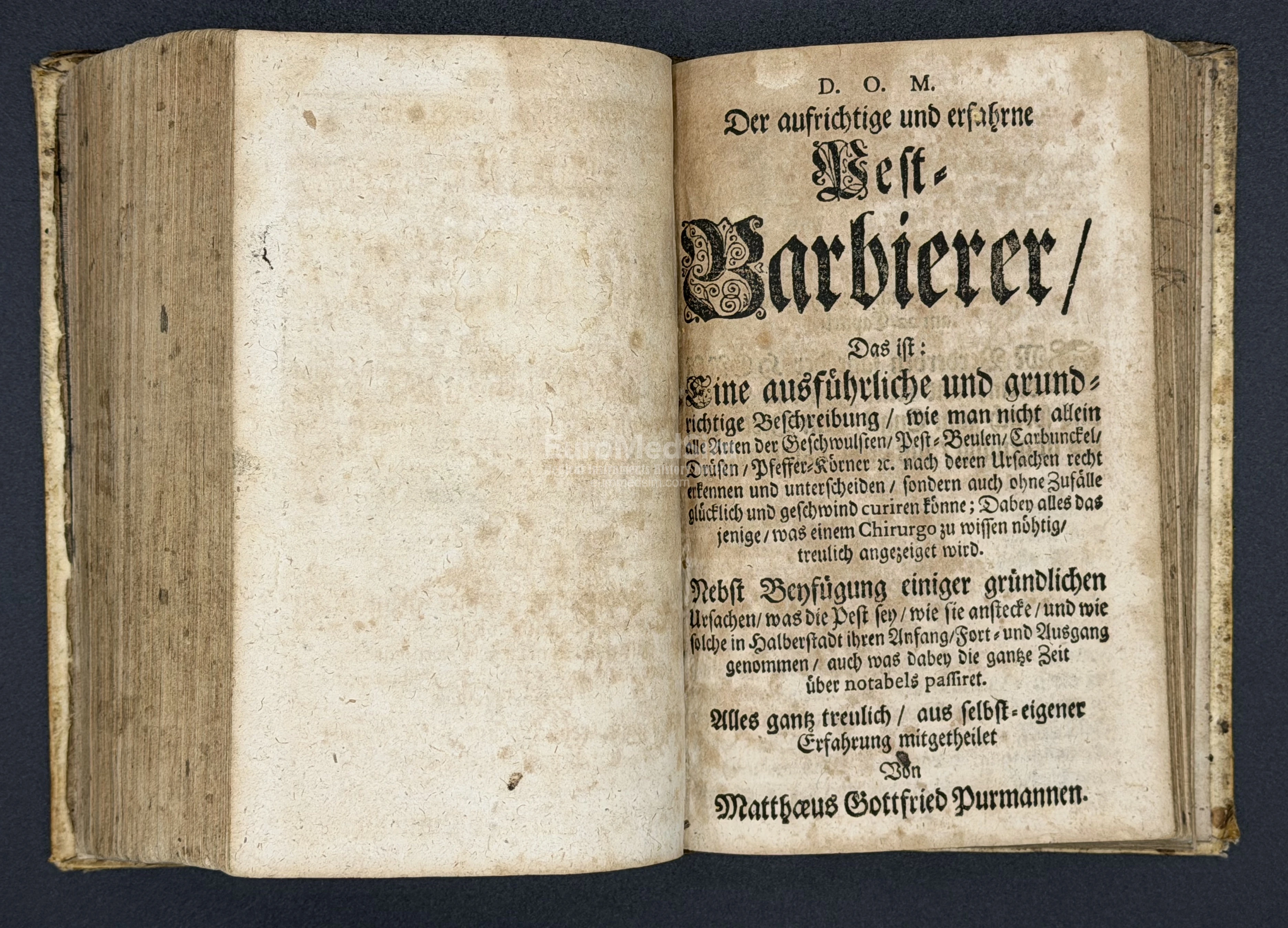
Germany, 1708
Purmann, Matthaeus Gottfried
Der aufrichtige und erfahrne Pest-Barbierer (The sincere and experienced plague barber) by Matthæus Gottfried Purmann (1648–1711), surgeon and city physician in Breslau... Frankfurt and Leipzig, published by Michael Rohrlach, bookseller in Liegnitz, 1708
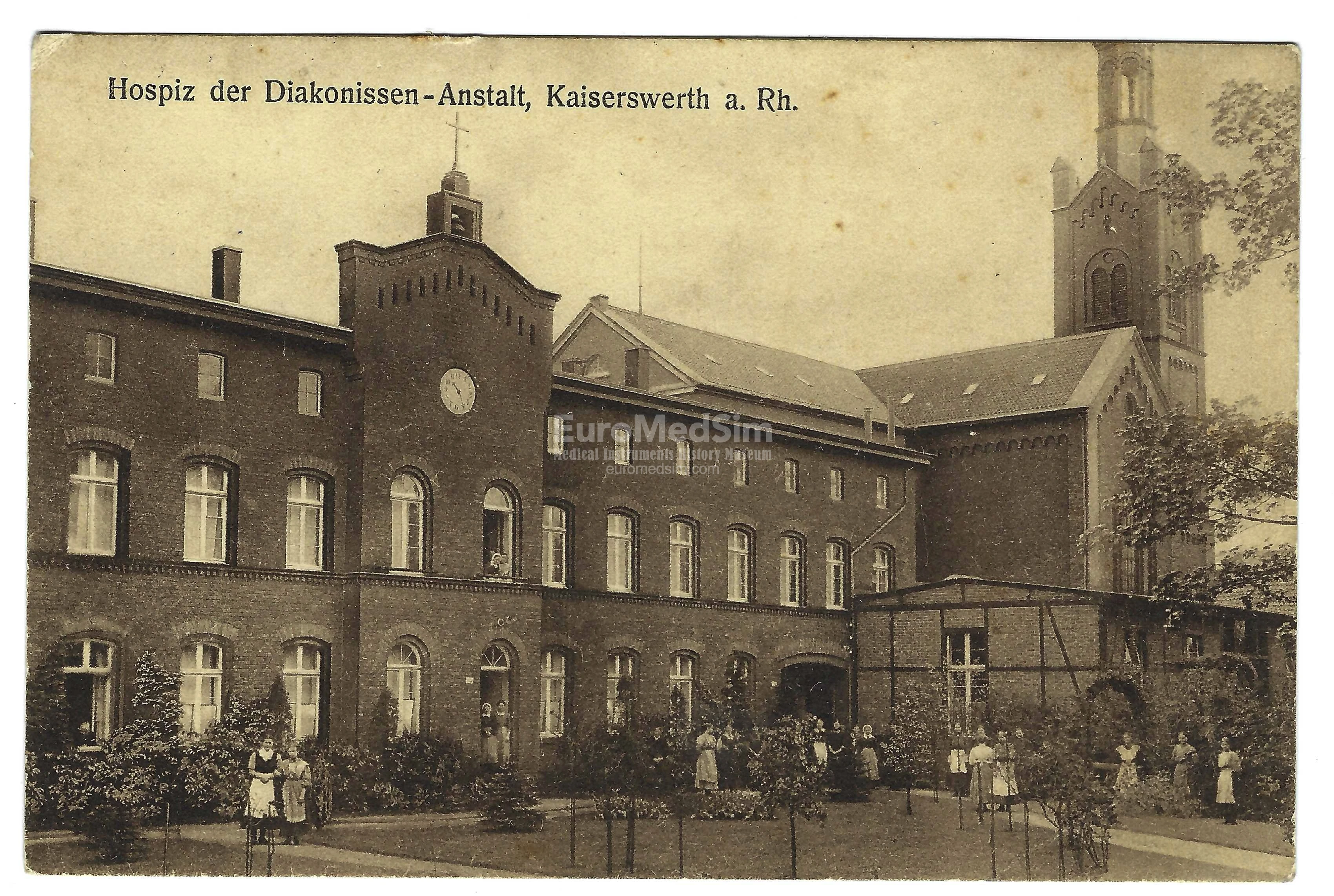
Germany, 1918
Fliedner, Theodor , Nightingale, Florence
Postcard titled “Hospiz der Diakonissen-Anstalt, Kaiserswerth a. Rh.” with a handwritten private message on the back, bearing a green “German Empire” 5 Pf., postally used stamp, cancelled on August 9, 1913. Cardboard, letterpress printing, handwritten text in ink.
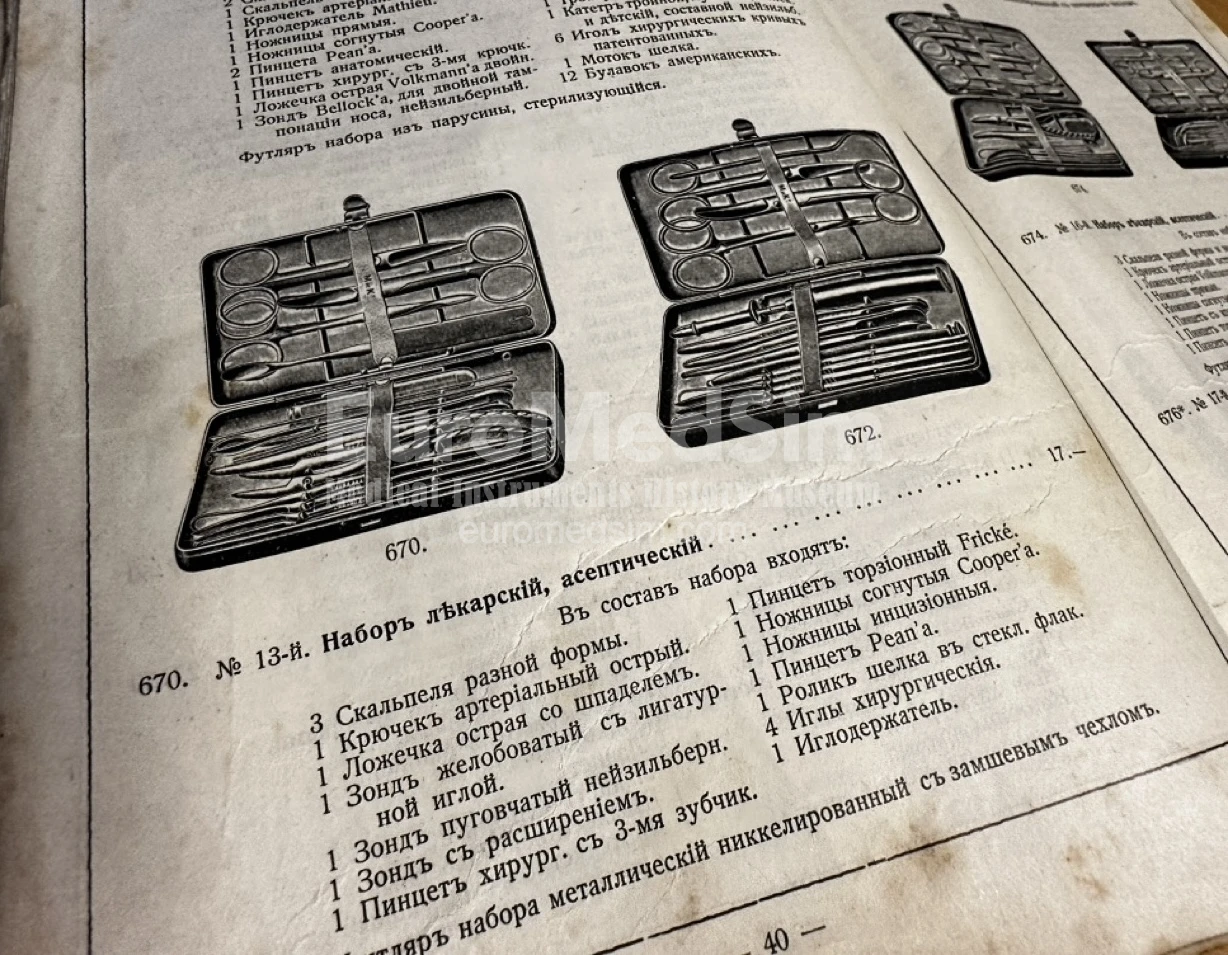
Russia, 1914
Каталог медицинских инструментов, принадлежностей для ухода за больными и перевязочных материалов Товарищества П. И. Махина и Ко в Москве (Catalog of medical instruments, nursing supplies and dressing materials of the Partnership of P. I. Makhin and Co. in Moscow). Year of publication: 1914. Condition: significant traces of use, Missing title page and the first unnumbered and the first 5 pages, as well as the last unnumbered pages. Page 6 is badly damaged. Half cloth binding of its time, traces of unprofessional restoration. First and last pages damaged, heavily soiled, inner pages in good condition. Here and there contemporary marginalia and underlinings. Size: 170x245 mm. Pages: 912. Publisher: Tipo-lithography Tva I.N. Kushnerev and Co. The drawings by engraver Kalugin A.I.
USA, 1961
Weck | Surgical Instruments | Hospital Supplies and Specialties
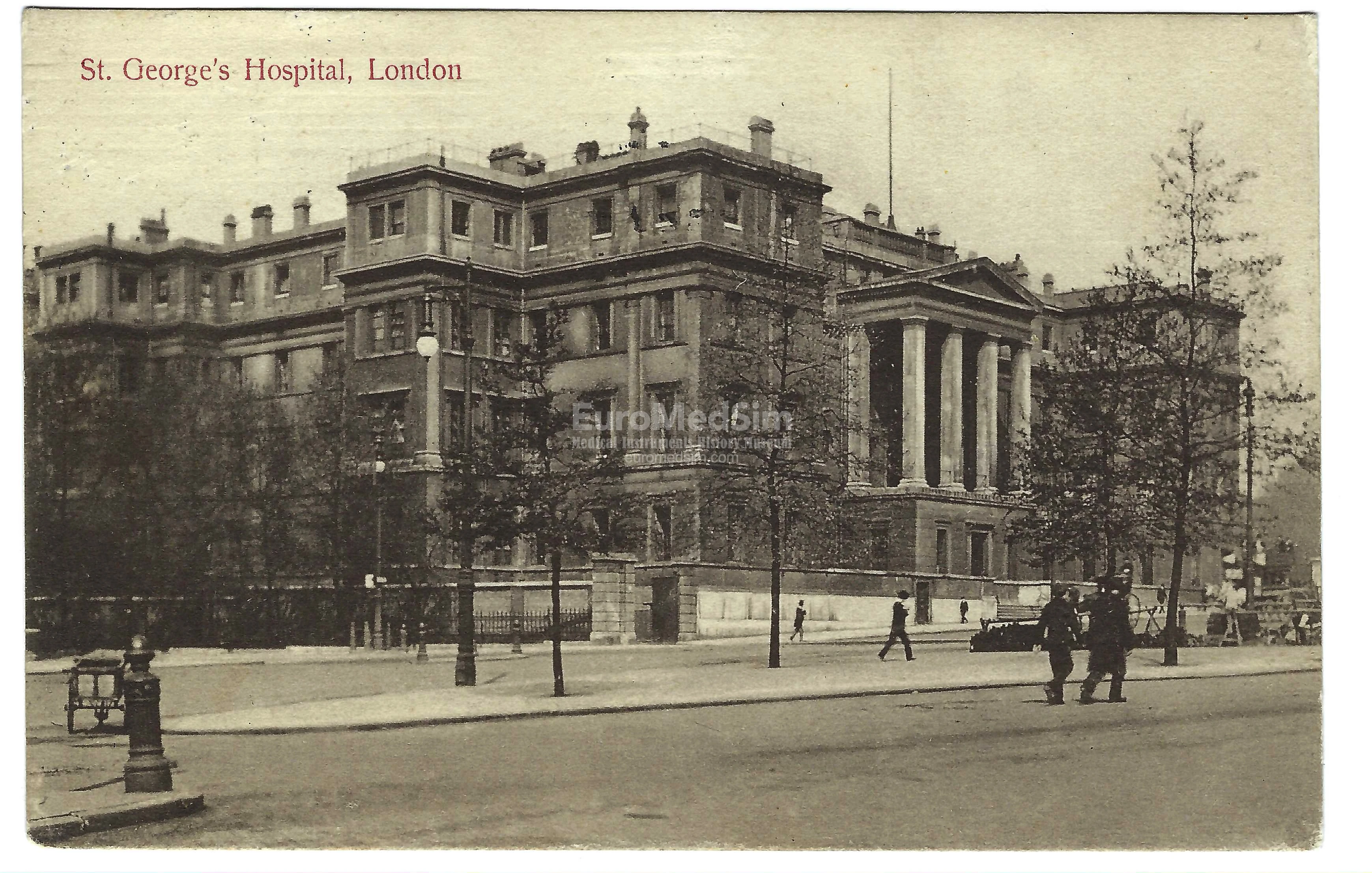
England, 1908
Postcard with depicted St. George’s Hospital in London, sent on April 2, 1908. St. George’s Hospital was founded in 1733 at Lanesborough House near Hyde Park Corner. From its very first decades of operation, the hospital was involved in training doctors: its surgeons and physicians took on apprentices. The medical school was officially established at 1834 and since 1868, it was housed directly within the hospital complex.
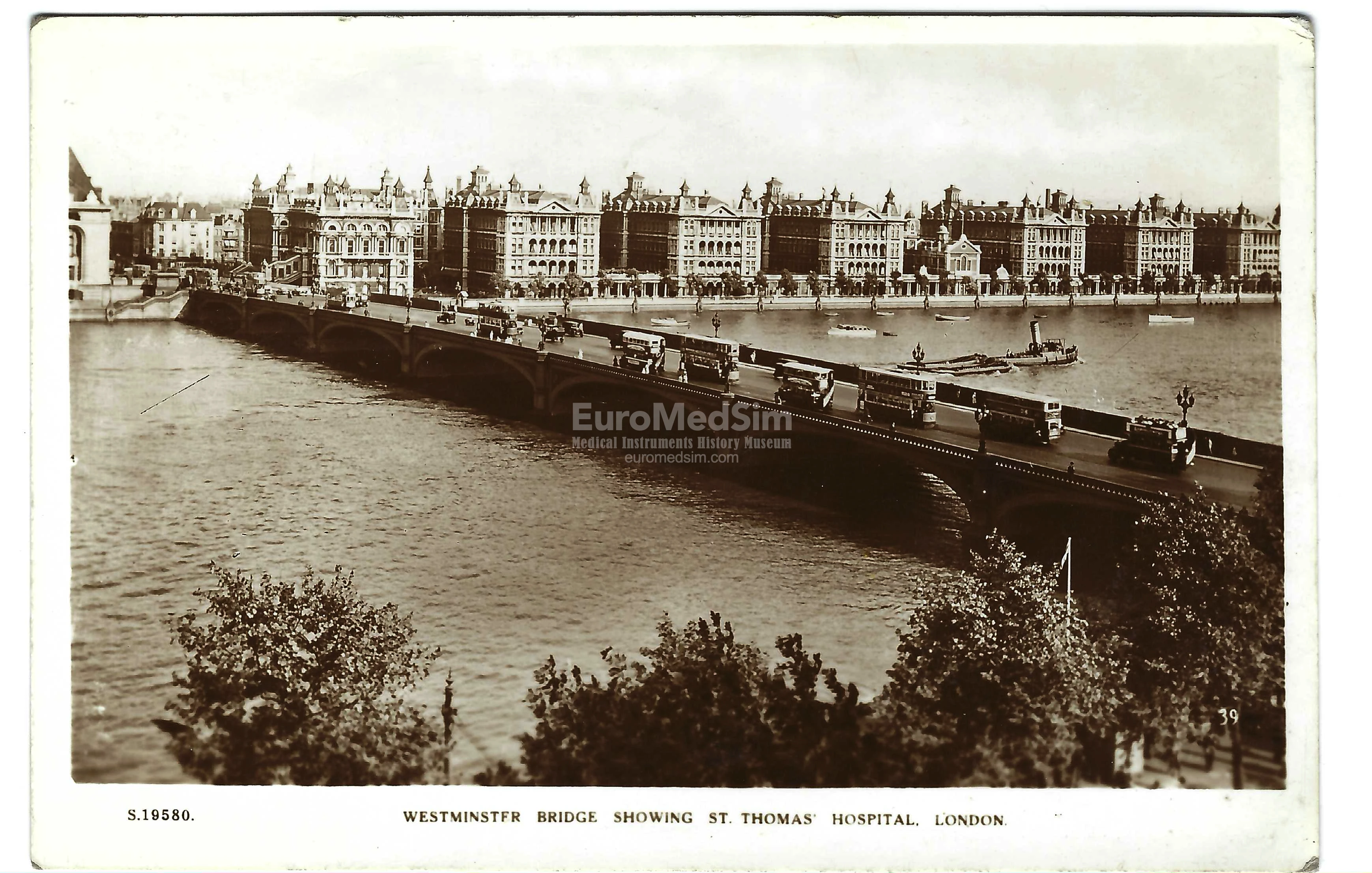
England, 1935
Nightingale, Florence
Westminster Bridge and St. Thomas’ Hospital in London, Scenic photographic postcard, presumably from the 1930s, not mailed. Original title: Westminster Bridge showing St. Thomas’ Hospital, London. Series: Bridge House Real Photo Series (1930s–1940) by publisher W. H. Smith & Son, London.
PEOPLE
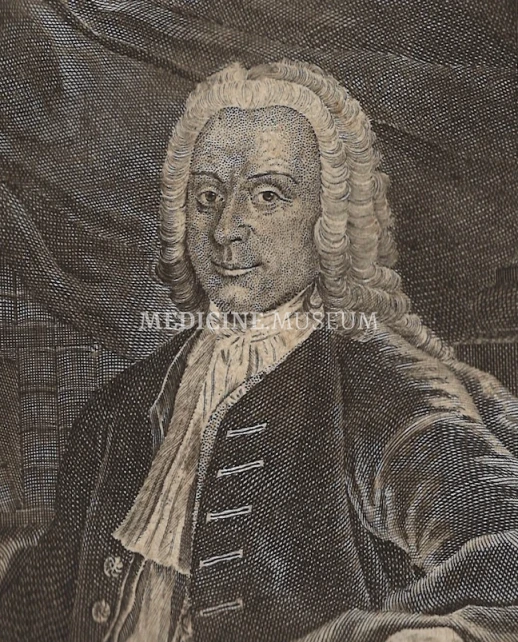
Lorenz Heister, an 18th-century prominent German surgeon, Professor of Anatomy and Surgery at the University of Altdorf, Germany. He authored influential books translated into multiple languages, leaving a lasting impact on medical education, including famous "Chirurgie, in welcher alles was zur Wund Artzney gehöret, nach der neuesten und besten Art, gründlich abgehandelt wird." translated in all main European languages.
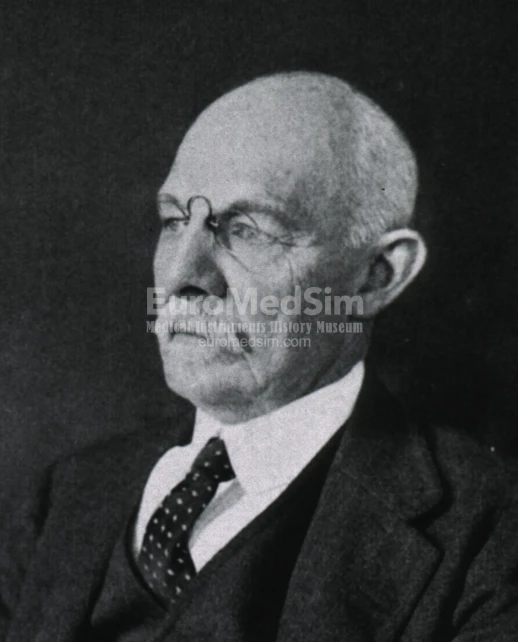
William Stewart Halsted (1852–1922) was an American surgeon, born in New York City, and one of the “Big Four” founding professors of Johns Hopkins Hospital. He studied medicine at Columbia University (graduating in 1877) and refined his skills in Europe (1878-1880). He pioneered aseptic surgical techniques, adopted German surgeons' training system and introduced the first American surgical residency program at Johns Hopkins in 1889. He established the Halstedian principles: gentle tissue handling, meticulous hemostasis, and layered wound closure. In 1889, he also became the first Chief of Surgery at Johns Hopkins. He introduced rubber surgical gloves (1890), initially to protect his nurse and future wife from skin irritation. Halsted also made major contributions to breast cancer surgery (Halstedian radical mastectomy) and the use of local anesthesia, though his experiments led to lifelong cocaine and morphine addiction. He died in 1922 in Baltimore, leaving a legacy as the architect of American modern surgical training and technique.
FIRM

Norway, Stavanger
Laerdal is the company that made medical education different. Instead of 'see one, do one, teach one' future medical doctors today 'learn, practice, improve, repeat' – and all this without harming the real patients! It is here, in this company the world-wide used CPR mannequin Resusci Anne was born.

Germany, Tuttlingen
German company Karl Storz, "King of Endoscopy", is nowadays a world-leading manufacturer of minimally invasive surgical instruments and integrated operation room solutions
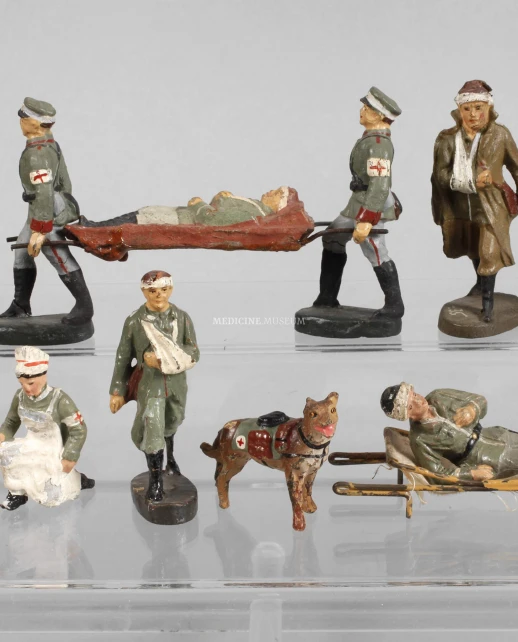
Germany,
Elastolin was a trademark of O. & M. Hausser — a company founded in 1904 by Otto and Max Hausser in Ludwigsburg (Baden-Württemberg, Germany). In 1910, the company began producing parlor games and mass-produced figurines. These mostly depicted soldiers and other war toys and were made from ELASTOLIN - a paste of sawdust, casein, glue and kaolin with wire frames in tin moldes. In 1935 the company moved to Neustadt near Coburg in Bavaria. After the Second World War, production was gradually reduced and the company was finally closed down in 1983. The Elastolin figurines had an oval base (not rectangular like their competitor Lineol).
MUSEUM
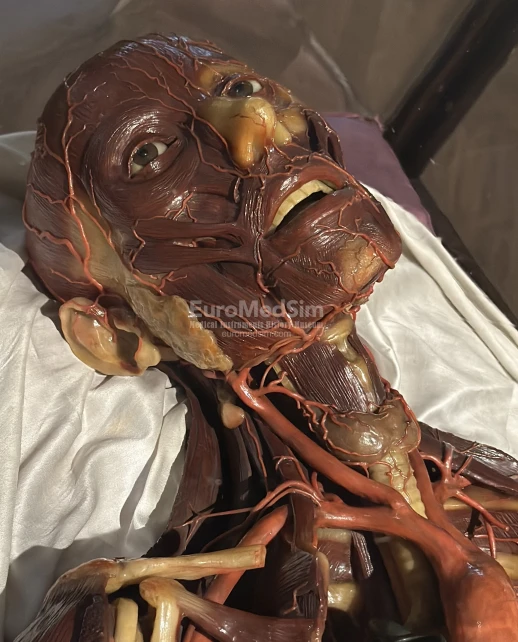
Austria, Vienna
The Josephinum in Vienna is a renowned medical history museum situated in the historical building of the Medical-Surgical Joseph's Academy established in 1785 under Joseph II, Holy Roman Emperor. Today, the museum houses the collections of the Medical University of Vienna, celebrated for its one of the world's largest anatomical wax models collection, which were crafted between 1784 and 1786 by Florence masters including renowned Clemente Susini. These models provide detailed insights into human anatomy and have been pivotal in medical education. After comprehensive renovations, the Josephinum reopened its doors in September 2022, offering visitors a blend of historical artifacts and modern exhibitions that chronicle over 650 years of medical history.
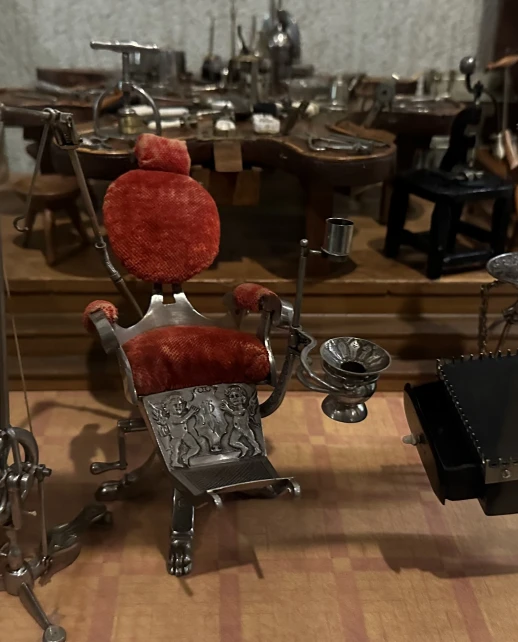
Hungary, Budapest
The Hungarian people are proud of Ignaz Philipp Semmelweis (1818–1865), born in Pest to a catholic German family, the discoverer of the cause of childbed fever – fatal infectious complications in women in labor, and introduced effective measures of it's prevention in 1846. In his honour, the building where he was born in 1818 now houses a museum of the history of medicine bearing his name, which tells not only about Dr. Semmelweis, but also provides a multifaceted illustration of the main milestones in the development of European and world medicine. The remarkable permanent exhibition is complemented by regularly updated temporary exhibitions.
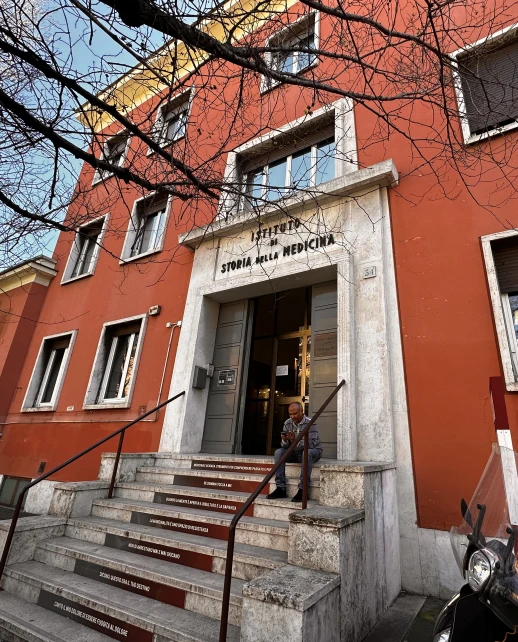
Italy, Rome
The Museo di Storia della Medicina at Rome University, founded in 1938 by Adalberto Pazzini, is located in the Institute of the Medical History and showcases the evolution of medical science across three floors. The basement features reconstructions like an apothecary and an alchemist’s lab. The first floor spans from prehistoric times to the 17th century, highlighting ancient Mediterranean and medieval medicine. The second floor explores the shift to experimental medicine, biomedicine, genomics, and their technological applications.
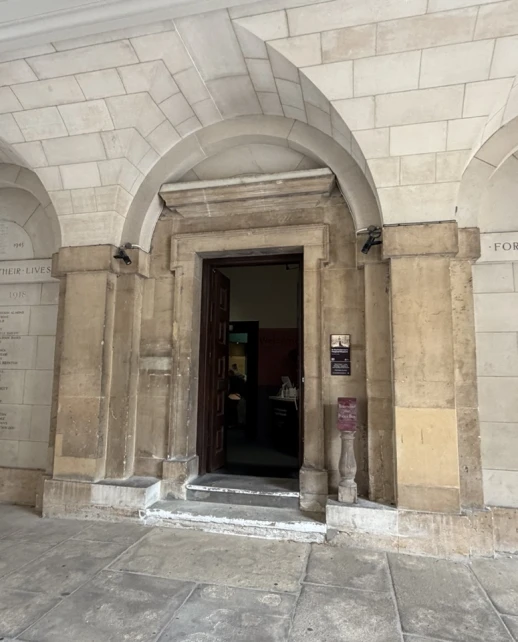
England, London
Barts Museum in the City of London is Britain's oldest working hospital on its original site, founded in 1123 by Rahere. Housed in the Grade I listed North Wing, it reopened in October 2025 after a £5.3m restoration. Entry is free. Highlights include the Great Hall, Hogarth's murals, and the Henry VIII Gatehouse with London's only public statue of the king. Famous names: Florence Nightingale, Elizabeth Blackwell, James Paget. Literary link: Sherlock Holmes met Dr Watson here. Nearby: St Bartholomew-the-Great church and Smithfield Market. Open Mondays, Tuesdays, and first Sundays.

England, London
St Thomas’ Hospital, founded c. 1100 in Southwark, was relocated in 1862 due to railway expansion. Its current building (1872) at the Thames-side site opposite of the Westminster Palace, designed by Henry Currey was laid by Queen Victoria. In 1860, Nightingale founded Britain’s first nursing school at St. Thomas’s, which today is part of King’s College London. The hospital’s Central Hall houses a free mini-museum dedicated to the hospital’s history, and the new wing is home to the Florence Nightingale Museum.
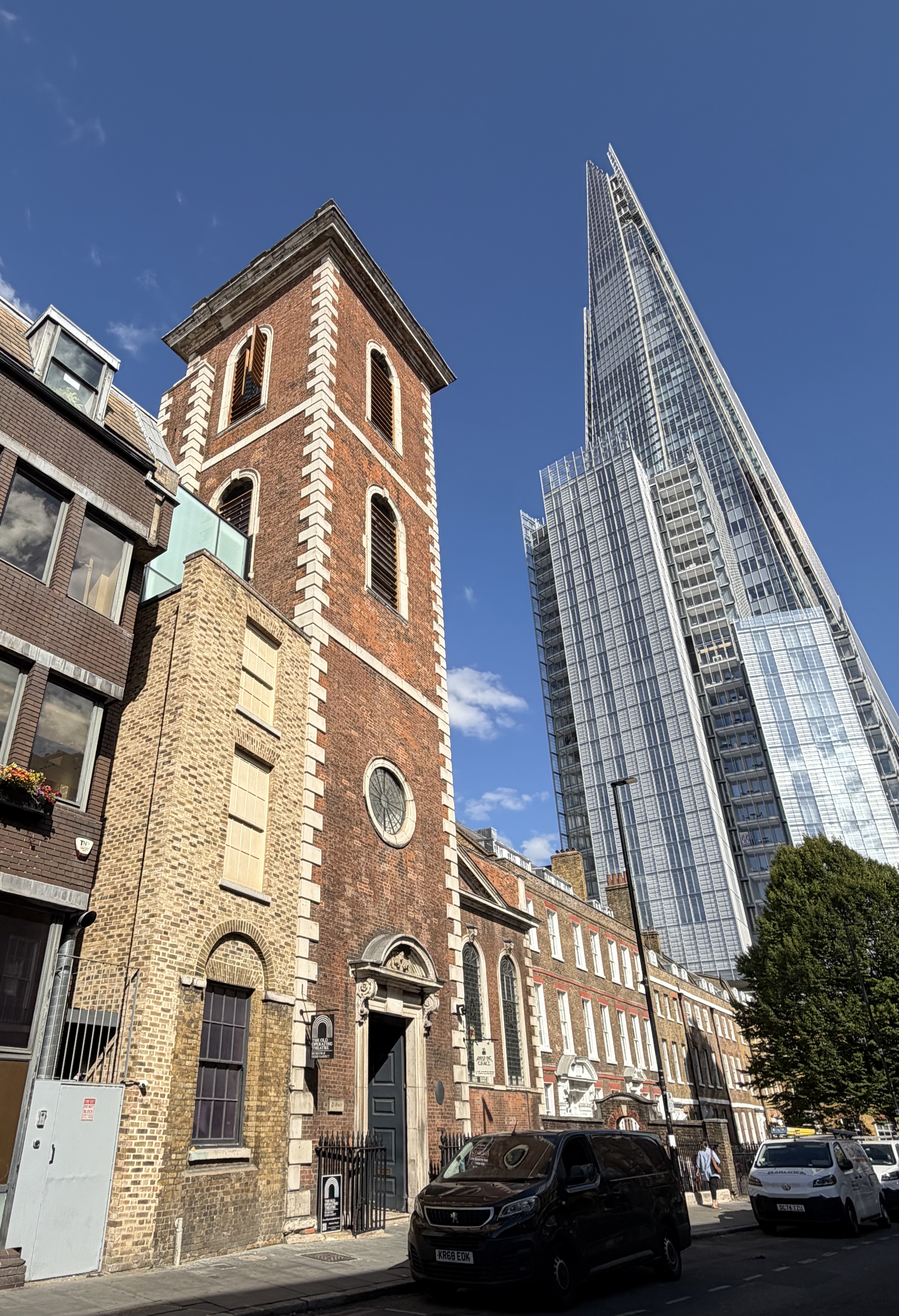
England, London
The Old Operating Theatre Museum and Herb Garret in London is Europe's oldest surviving surgical theatre. Tucked away inside the timber-framed attic of St Thomas' Church, this unique institution dates back to 1822. It predates both anaesthetics and antiseptics, offering a visceral look into 19th-century medical procedures. It was closed in 1862 and was then sealed up and forgotten until being rediscovered in the 20th century — it reopened as a museum in 1962.
Articles
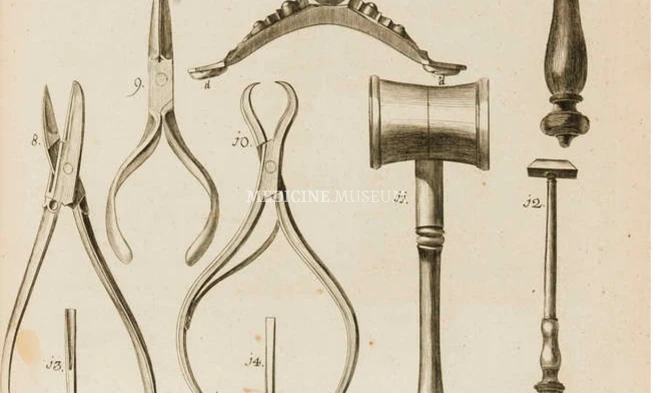
Establishing the publication date of a medical trade catalogs is not always trivial. Many medical instrument manufacturers did without catalogs for many years – there was simply no need for them. Then, when the first trade catalogs of medical and surgical instruments appeared, they often omitted the date of their publications. There are several indications that can be used to determine the approximate year of publication of catalogs, which are discussed in this article.
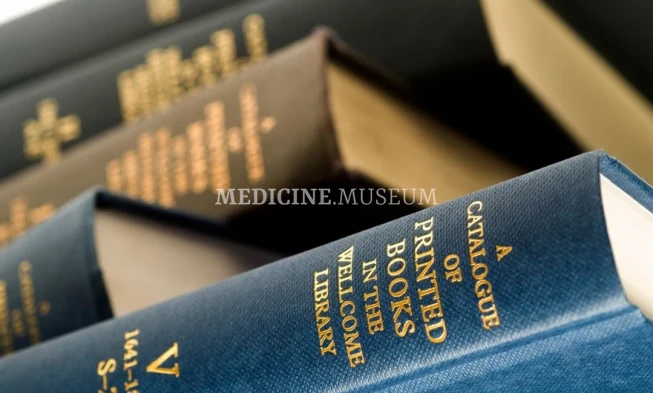
To find the right path in the ocean of historical books, we can turn to some catalogs of the most important examples of historical literature in medicine. The most respected for their thoroughness and historical value are seminal resources for researchers looking for rare and important medical books of the past. References to their records are often found in the reference departments of university libraries and specialized institutions and are often cited by booksellers of scientific and antiquarian books: Wellcome Historical Medical Library Catalogue; Garrison-Morton's Medical Bibliography; Hirsch's Biographisches Lexikon der hervorragenden Ärzte; Osler's Bibliotheca Osleriana; The Bibliotheca Walleriana; The Harvey Cushing Catalogue; Heirs of Hippocrates; Catalogue of the History of Medicine Collection in the National Library of Medicine.
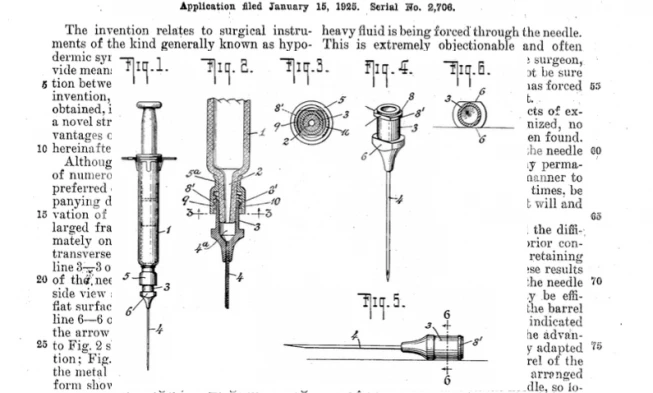
Becton & Dickinson invented the world-known standard for connecting needles to syringes and registered it under the trademark name 'Luer-Lok'. Why did the American company name their innovation after the French company Maison Lüer? Here is the story behind one of the most practical inventions in the field of medicine.
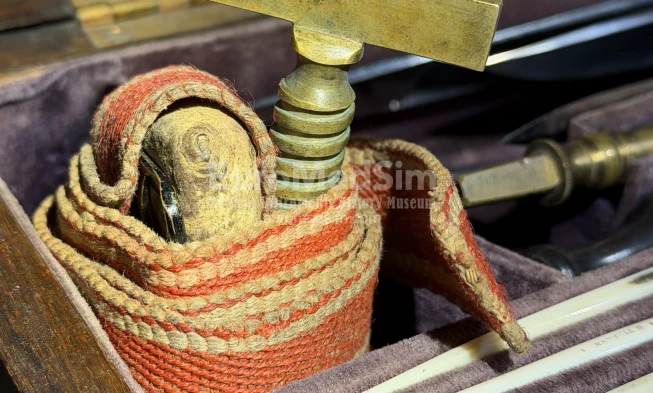
The tourniquet is considered by many to be one of the most significant inventions in the history of surgery, having saved millions of soldiers and trauma victims. The earliest documented methods of blood control emerged in ancient India, as evidenced by Sushruta's ligatures, and referenced by Roman medici for vessel tying and cauterisation, in addition to external limb binding. Medieval and Renaissance barber-surgeons utilised tight bands, and in the 18th century, Jean-Louis Petit developed the screw tourniquet. The evolution of emergency care has been characterised by significant developments, with innovations ranging from Esmarch's elastic bandage to modern C-A-T devices.